APULICA / Food guides
Longobardi violet aubergine: a vegetable garden between sea and Monte Cocuzzo
Longobardi is a small village on the hills of the Cosenza Tyrrhenian coast, in an area that rises within a few kilometres from the sea to the 1,541 metres of Monte Cocuzzo. This variety of settings has produced a farming rich in biodiversity, with ancient grains, historic vineyards and local vegetables. Among them is the violet aubergine, Milingiana violetta 'de Luanguvardi in Cosenza dialect, now a Slow Food Presidium: a long, glossy, deep purple fruit with firm flesh and few seeds, ideal for preserving in oil. This guide covers the plant, its cultivation, the traditional recipe, its recovery and how to fit Longobardi into a coastal trip.
A village between plain, hill and mountain
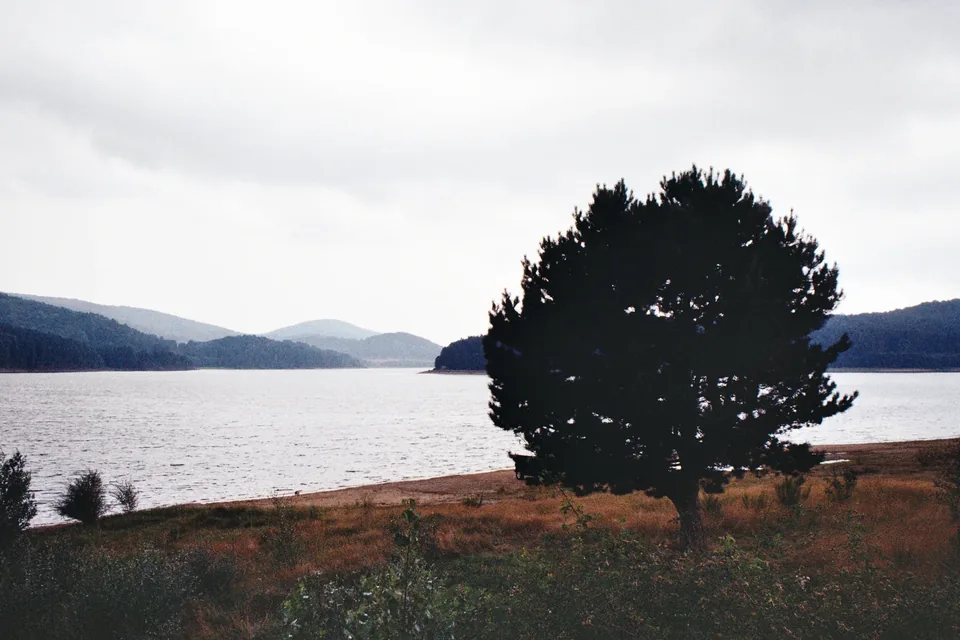
Slow Food describes Longobardi, in the province of Cosenza, as a small village on the hills overlooking the Cosenza Tyrrhenian coast, in an area that climbs quickly from the shore to the 1,541 metres of Monte Cocuzzo. Within a few kilometres you pass from the sea to vegetable plots, from olive groves to woods.
This shape of the land has deeply influenced local farming, which harmoniously combines products of plain, hill and mountain. Even today, according to the same source, Longobardi stands out for a high level of agricultural biodiversity: ancient wheats such as Carosella and Senatore Cappelli are grown, historic vineyards of Greco and Gaglioppo survive, and local varieties grow in the vegetable plots, including the violet aubergine.
Its dialect name, Milingiana violetta 'de Luanguvardi, shows how closely the variety is tied to the village. It is an aubergine belonging to a precise place, which is best understood by driving up from the coast to the village and seeing how the plots fit between sea and mountain.
Sources: Fondazione Slow Food — Presidio Melanzana violetta di Longobardi
The plant and the fruit
The Presidium's profile describes a plant that can reach a metre and a half in height. The leaves are green and spineless, the flowers large and violet, and even in bloom the vegetable plot takes on the colours later found in the fruit.
The fruit is elongated and club-shaped, with smooth, thin, glossy skin of a deep purple that fades to white near the calyx. The flesh is greenish-white, firm and not spongy, with little water and few seeds.
These are the very features that make the difference in the kitchen: firm flesh with little water and few seeds lends itself very well to preserving. Slow Food stresses that the violetta is appreciated in many ways in the kitchen, but that its most representative use remains the preserve in oil, made at home. Recognising it at the market is easy: a long shape, bright purple colour and that white shading near the stalk.
Sources: Fondazione Slow Food — Presidio Melanzana violetta di Longobardi
Growing upright, harvesting in stages
The Longobardi violetta is grown upright: the plants are supported by stakes of wood, iron or string, which keep them straight and make harvesting easier. It is a typical sight in the village plots, with rows of tall plants and glossy fruit hanging among the leaves.
Harvesting is done by hand and begins 60-90 days after transplanting. Thanks to targeted pruning it can continue until the first cold weather: Slow Food describes a staggered harvest that starts at the end of June and lasts until early November, while the processed product, the preserve, is available all year.
The Presidium promotes agro-ecological growing and a short, sustainable supply chain, linking the fields to processing workshops and local cooking. For travellers, this means that from early summer to autumn the fresh aubergine can be found, and in every season the preserved version can be tasted. Visits to the plots should always be arranged with the growers.
Sources: Fondazione Slow Food — Presidio Melanzana violetta di Longobardi
Milingiana sutt'uagliu: the family preserve
The most representative preparation, according to Slow Food, is aubergine in oil, milingiana sutt'uagliu in dialect. Ripe aubergines are selected, washed, peeled, sliced, salted and left to rest for about twelve hours.
They are then squeezed and soaked in vinegar for a few hours. After squeezing again, they are packed into glass jars with extra virgin olive oil and local spices such as oregano and chilli. It is a long process of simple steps and waiting that reflects a household economy: it is made in summer, when aubergines are plentiful, and eaten all year.
The firm, low-water flesh of the violetta is what lets the slices stay compact in the jar without falling apart. The preserve comes to the table as a starter, on a slice of bread, alongside cheeses and cured meats or as a side dish. Tasting it next to the fresh aubergine, grilled or fried, shows how the same fruit changes between the summer garden and the winter pantry.
Sources: Fondazione Slow Food — Presidio Melanzana violetta di Longobardi
From decline to Presidium
In the past, Slow Food recalls, the violet aubergine grew in every family plot in Longobardi and was known beyond the local market. In recent decades severe rural depopulation led to the abandonment of much farmland and the gradual decline of the variety; on top of the shrinking number of growers and fields came commercial hybrids, which threaten local biodiversity.
Today small farmers, seed keepers, restaurateurs and local associations are working to rediscover and promote it. The Presidium is organised around a cooperative that brings the growers together.
The Calabria Region presented, with Slow Food Italia and Slow Food Calabria, the project Presidiamo la Calabria, designed to protect small quality productions and give farmers, livestock keepers and fishers a leading role in their territories. The regional agriculture councillor described it as a way to promote products tied to territories whose environmental, historical and cultural resources reflect the beauty of the region.
Sources: Fondazione Slow Food — Presidio Melanzana violetta di Longobardi · Regione Calabria — Regione e Slow Food presentano il progetto Presidiamo la Calabria
Belmonte Calabro: tomato and gammune
A few kilometres from Longobardi, Belmonte Calabro rests on the back of a rocky hill at about 200 metres, and Slow Food describes it as a ship with its prow stretched towards the sea. The village has two products protected by Slow Food, which round off a day devoted to the coast's vegetable plots.
The first is the Belmonte tomato, in the Ark of Taste: a large pink oxheart that turns red when ripe and can reach a kilo and a half. It was brought from America in the early twentieth century by an emigrant from Belmonte, and local growers have kept it pure, with family selections. It is sold mainly on the local market.
The second is gammune, a Slow Food Presidium: a cured meat similar to culatello, made in the Belmonte hills since the nineteenth century from boned pork leg, salted and flavoured with pepper sauce. Encased in bladder or pleura, it ages for at least sixteen months in house cellars, where according to Slow Food the sea breeze helps to perfect it.
Sources: Fondazione Slow Food — Arca del Gusto: Pomodoro di Belmonte · Fondazione Slow Food — Presidio Gammune di Belmonte
The Isca rocks and the Tyrrhenian coast
Longobardi lies on a stretch of the Tyrrhenian coast that Italia.it describes as one of the most beautiful in the region. Between Amantea and Belmonte stand the two Isca rocks, where in 1991 the WWF set up the protected area of the Isca Rocks Blue Oasis, a favourite with divers.
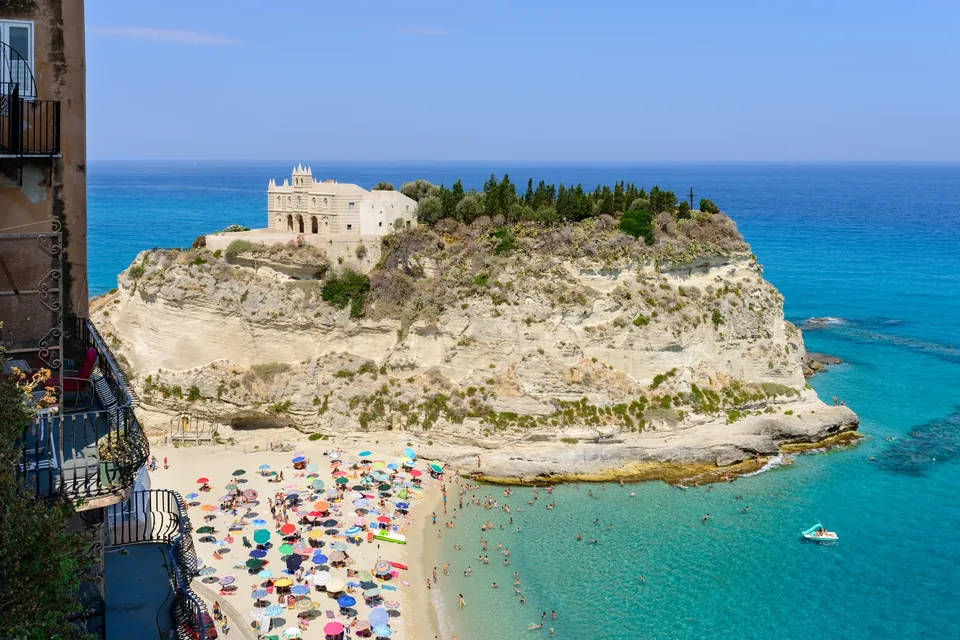
Further north the same guide describes the Riviera dei Cedri, with Praia a Mare, Dino Island and Scalea, and Diamante, with about a hundred murals on the fishermen's houses in the old town, the seat of the Chilli Pepper Academy and, nearby, Cirella Island. Further south opens the Costa degli Dei, with Pizzo, Tropea and Capo Vaticano.
The Calabrian coast, Italia.it writes, alternates kilometres of wild shoreline, sandy beaches and villages overlooking a clear sea. Longobardi is a quiet starting point for this journey: a morning in the vegetable plots and an afternoon at the sea between Amantea and Belmonte fit together within a few tens of minutes' drive.
Fiumefreddo Bruzio, the walled village
North of Longobardi, Fiumefreddo Bruzio is one of the oldest villages on the Calabrian Tyrrhenian coast. Italia.it dates its origins to the Middle Ages, around the year 1000, and describes it enclosed by largely preserved defensive walls, with fortified gates and watchtowers.
The village holds features of great artistic value: the sixteenth-century doorways of its main buildings, the nearby abbey of Santa Maria di Fontelaurato and above all the remains of the seventeenth-century castle of the Alarcón Mendoza, with frescoes by the painter Salvatore Fiume.
Climbing towards the top of the village, the guide suggests stopping to admire the view, which takes in the sea as far as the horizon. Fiumefreddo, Longobardi and Belmonte thus form a small sequence of hill villages overlooking the Tyrrhenian, each with its own character: walls and frescoes, violetta plots, tomato and gammune. Combining them in one itinerary lets you read the same coast through history, landscape and food.
Sources: Italia.it — Fiumefreddo Bruzio
In the kitchen: fresh or preserved
The Longobardi violetta, with its firm flesh and few seeds, is an aubergine that stands up well to both grilling and frying. Fresh, it suits parmigiana, aubergines stuffed with breadcrumbs, cheese and eggs, or simply grilled and dressed with oil, garlic and mint. Its deep colour and thin skin make it look good in long slices too.
The preserve in oil, on the other hand, is the way to enjoy it all year: on a slice of country bread, beside a fresh cheese or as a side to grilled meat. With Belmonte's gammune and a slice of local tomato it makes a starter that tells the story of this coast's products on a single plate.
To recognise a traditionally made preserve I would look at the texture of the slices, which should stay firm, and at the simple ingredients on the label: aubergines, vinegar, extra virgin olive oil, oregano and chilli. If possible, it is worth asking whoever made it how they chose the salting and vinegar times.
When to go and what to take home
To see the plants laden with fruit, summer is best, between July and September, when the harvest is in full swing; early autumn is also a good time, with less heat and the sea still pleasant. Visits to the plots and processing workshops must always be arranged with the operators: they are small family businesses and cooperatives.
Fresh aubergines are delicate and ill-suited to long journeys. It is much better to take home a few jars of aubergines in oil, which keep for a long time if sealed and away from light; once opened they should go in the fridge, with the slices always covered in oil.
We found no event devoted to the aubergine with dates confirmed for 2026 on the municipality's website, so we list none. A typical day can begin in Longobardi's plots, continue with a lunch of fresh aubergines and the preserve, move on to the sea near the Isca rocks and end in the evening in Belmonte or Fiumefreddo, with the sun setting over the Tyrrhenian.
A thread for your journey
Journey idea: a summer day between Longobardi and Belmonte Calabro. Morning in Longobardi's vegetable plots, with a visit arranged with operators to see the upright-grown plants; lunch with fresh aubergines and a taste of milingiana sutt'uagliu; afternoon by the sea towards the Isca rocks and evening in Belmonte with the local tomato.
Talk to us