Why go
Tropea stands on a cliff above the Tyrrhenian Sea, in the province of Vibo Valentia, along the Costa degli Dei: the stretch of coast between Pizzo and Nicotera that, legend says, the ancient gods chose for its beauty. The national tourism portal describes it as one of the loveliest places on the Calabrian coast, with clear water, seabeds full of life and the Aeolian Islands on the horizon.
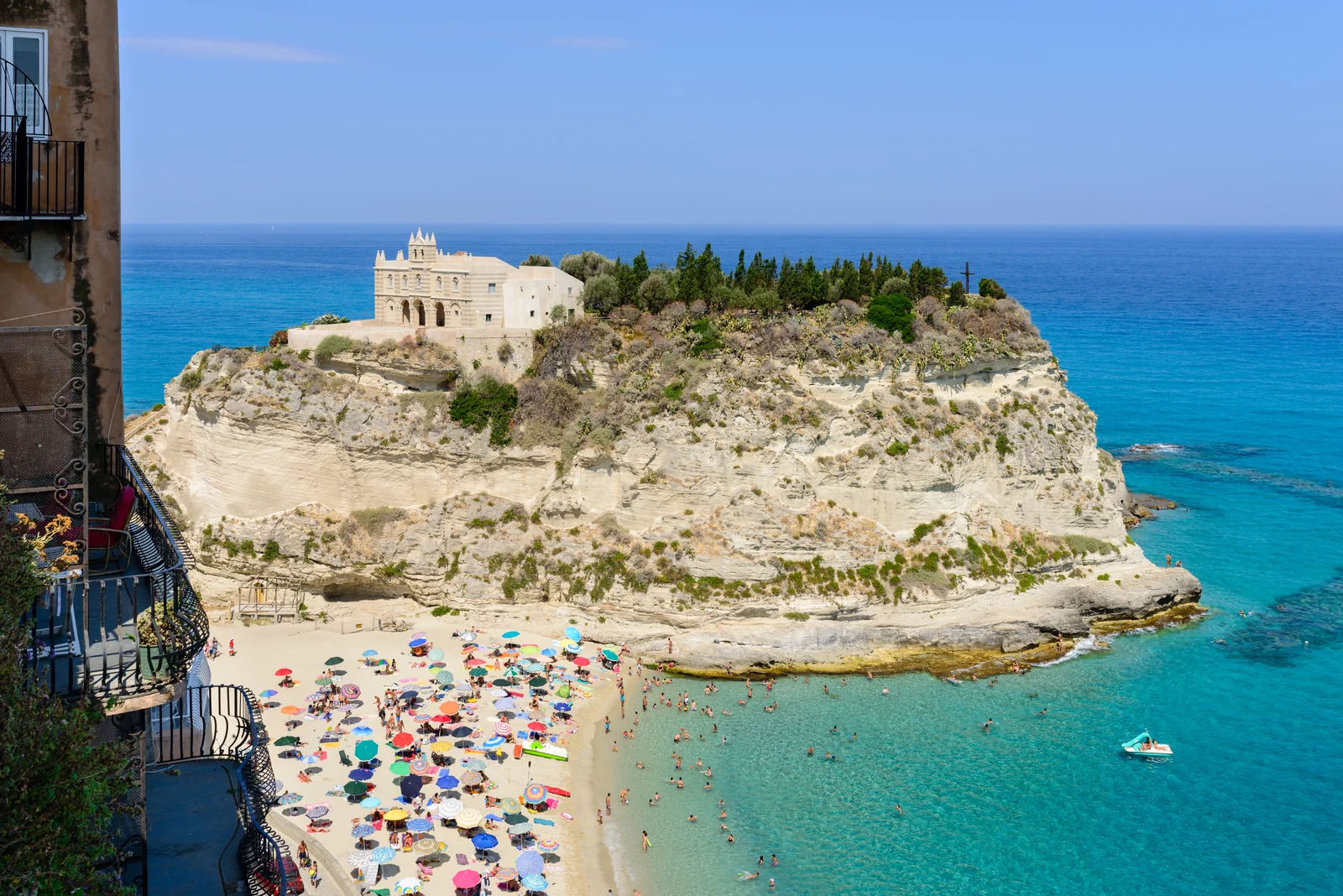
The first reason to go is the old town: lanes and small squares lined with 17th- and 18th-century churches and noble palaces, the Norman cathedral, the viewpoint looking out to sea from the main street and, below the cliff, the sanctuary of Santa Maria dell’Isola, on a rock once cut off from the mainland.
The second is the surrounding coast. A few kilometres away, the Capo Vaticano headland, in the municipality of Ricadi, combines granite cliffs, pale beaches reached on foot or from the sea and a panoramic path to the lighthouse. The third is the table, tied to a product that carries the town’s name around the world: the red onion. With Capo Vaticano and the rest of the Costa degli Dei, Tropea suits a coastal journey on foot and without hurry.
Sources: Italia.it — Costa degli Dei · Italia.it — Tropea · Italia.it — Tropea, gemma della Costa degli Dei · Comune di Tropea — Santuario di Santa Maria dell’Isola · Italia.it — Capo Vaticano: il tratto di “Costabella”
History
Tropea was already frequented in Roman times and in the 8th century became a bishop’s seat. The sea that made its fortune was also a threat, and its defences still tell the story: tradition credits the Arabs with the Torre Lunga on the highest part of the cliff, the Byzantines with the walls and the Aragonese with the Torre Maestra. Prosperity came above all with the Normans, then with the Angevins and the Aragonese.
The cathedral of Maria Santissima di Romania, now a co-cathedral, was built in the 12th century under Norman rule; repeatedly altered to repair earthquake damage, it keeps two Gothic portals and fine works inside. A local legend links two unexploded bombs, kept at the entrance, to the Virgin’s protection of the town.
Other places show the layers of religious history. The church of the Gesù stands where the old Greek-Byzantine rite cathedral of San Nicola once stood, demolished in 1594 when the Jesuits arrived. The sanctuary of Santa Maria dell’Isola is thought to have begun in the 6th century as a hermit community of eastern monks dedicated to Saint Menas; it then passed to the Benedictines, who dedicated it to Santa Maria del Presepe, and after the 1905 earthquake took on its present form.
Sources: Italia.it — Tropea, gemma della Costa degli Dei · Italia.it — Tropea · Comune di Tropea — Cattedrale di Maria Santissima di Romania · Comune di Tropea — Chiesa del Gesù · Comune di Tropea — Santuario di Santa Maria dell’Isola
What to see
The sanctuary of Santa Maria dell’Isola is the emblem of Tropea: it is reached by a stairway cut into the rock that climbs from the sea to the church, surrounded by a panoramic garden. From the cathedral on Largo Duomo you continue to the church of the Gesù on Largo Padre di Netta and to the Baroque palaces between Via Boiano and Largo Galluppi, where the church of San Demetrio has a 14th-century chapel. Corso Vittorio Emanuele opens onto a wide view of the sea.
Capo Vaticano is the second focus. The headland, at San Nicolò di Ricadi, is made of white-grey granite, tuff cliffs and spurs covered in Mediterranean vegetation ranging from ferns to dwarf palms, with vineyards on terraces held by dry-stone walls. The name is said to recall the “vaticinium”, the oracle that legend places in a cave, answering sailors’ questions. Among the beaches, the sources list Grotticelle, Torre Ruffa, Formicoli, Riaci, Praia di Fuoco, Tono and Santa Maria.
The municipality of Ricadi runs the Mu.Ri civic museum, spread over five sites: the Sea Museum and the Onion Museum at Capo Vaticano, the Towers Museum at Torre Marrana di Brivadi, the Museum of Rural Arts at Ricadi and the Anthropological and Palaeontological Museum at Santa Domenica.
Sources: Italia.it — 10 motivi per scegliere il mare della Costa degli Dei d’inverno · Comune di Tropea — Cattedrale di Maria Santissima di Romania · Comune di Tropea — Chiesa del Gesù · Italia.it — Tropea, gemma della Costa degli Dei · Italia.it — Capo Vaticano: il tratto di “Costabella” · Italia.it — Capo Vaticano
Food and wine
Cipolla Rossa di Tropea Calabria PGI is the product that defines the town. The specification limits it to the local Tonda piatta, Mezza campana and Allungata types, grown along the mid-upper Tyrrhenian coast of Calabria in municipalities of the provinces of Cosenza, Catanzaro and Vibo Valentia. It is sold as spring onion, as fresh onion in bunches and as storage onion in braids. Its sweetness, according to the sources, comes from the meeting of variety, climate and soil; tradition says the Phoenicians and Greeks brought it to Calabria. In the kitchen it is perfect raw in salads, with vegetables and cheese, and its fresh tops go into omelettes.
From the plateau behind the coast comes Pecorino del Monte Poro PDO, made from raw whole sheep’s milk in 27 municipalities of the province of Vibo Valentia, fresh, semi-aged or aged; grazing among broom, myrtle, mastic and hawthorn shapes its flavour. It is grated over pasta with kid or lamb sauce and over baked onions.
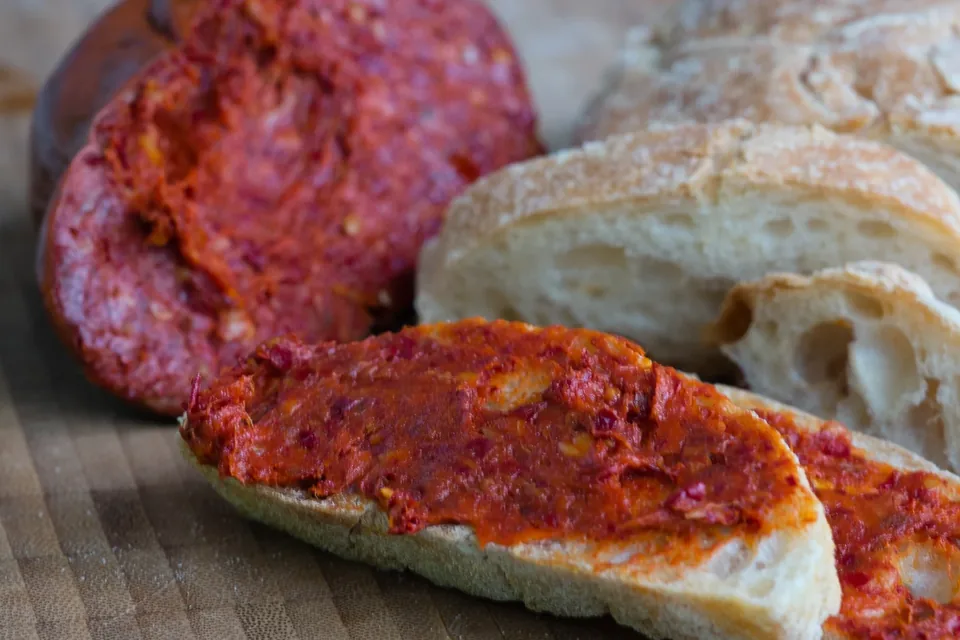
Local cooking, the national portal notes, is rooted in farm tradition: macaroni with ’nduja, filea, a Vibo-area pasta made at home with water and flour and rolled around a thin stick, and oily fish, which shares a summer festival with the onion.
Sources: Qualigeo (Fondazione Qualivita) — Cipolla Rossa di Tropea Calabria IGP · Qualigeo (Fondazione Qualivita) — Pecorino del Monte Poro DOP · Italia.it — Capo Vaticano: il tratto di “Costabella” · Italia.it — Tropea, gemma della Costa degli Dei
Things to do
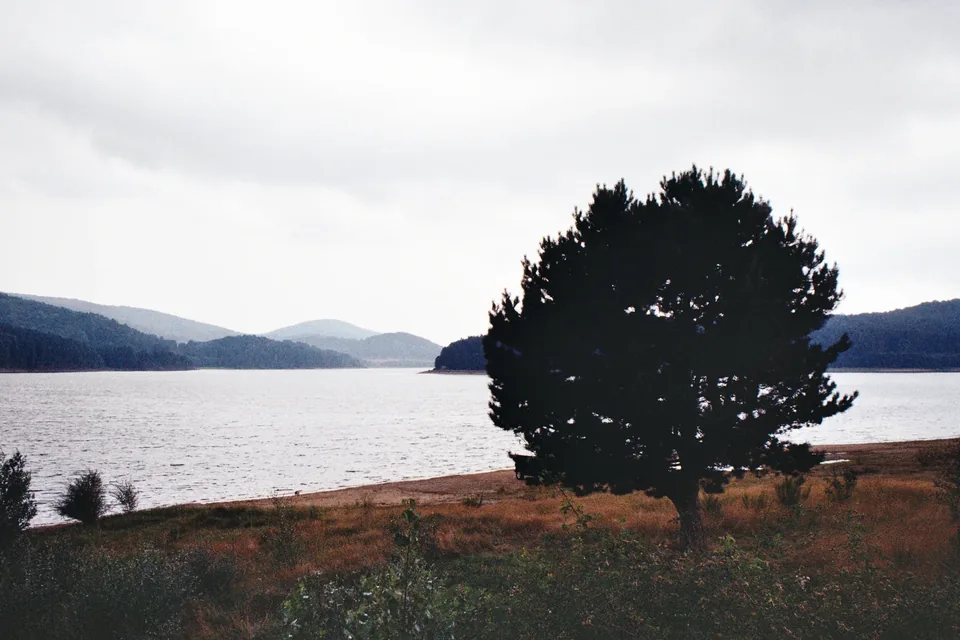
The Capo Vaticano panoramic path runs about one hundred metres above the sea to the lighthouse, with views from the Grotticelle beaches to the small bay of Santa Maria; at sunset the lighthouse viewpoint looks out to Stromboli and the Aeolian Islands. Around Tropea, the so-called Monks’ Paths pass the hermits’ caves, and from Joppolo the Mare-Monti route climbs about five kilometres to a pine wood at 700 metres on Monte Poro.
The sea can also be explored by boat. Along the coast between Capo Vaticano and Tropea small boats reach coves and beaches accessible only from the water, the local “Blue Grotto” and the foot of the Santa Maria dell’Isola rock. The seabed, fed by currents from the gulfs of Sant’Eufemia and Gioia Tauro, is among the most varied in Italy: snorkelling and diving around the Mantineo, Vadaro and Galea rocks are an experience of their own.
From Tropea and nearby, mini-cruises also leave for the Aeolian Islands, a UNESCO site. Further north, at Zambrone and Briatico, the coast suits canoeing, windsurfing and kitesurfing. Film lovers will recognise the settings of the TV series Gente di mare and some scenes of The Marvels shot in Tropea.
Sources: Italia.it — Capo Vaticano · Italia.it — Capo Vaticano: il tratto di “Costabella” · Italia.it — 10 motivi per scegliere il mare della Costa degli Dei d’inverno · Italia.it — Tropea, gemma della Costa degli Dei
When to go
Spring, summer and autumn are Tropea’s seasons, each with its own emphasis. Spring brings the new onions: under the specification the Tonda piatta is harvested from mid-April to the end of May and the Mezza campana from mid-May to mid-June, while sowing begins in August. It is also the best season for the Capo Vaticano and Monks’ paths, before the heat.
Summer is the season for the sea, boat trips and mini-cruises to the Aeolian Islands; in July the town holds the festival of oily fish and red onion, which draws many visitors. It is also the busiest period on the Costa degli Dei, so choose times and days carefully.
Autumn extends the good season for swimming and walking. Those who can travel in winter will find, according to the national portal, a quiet coast and clear sunsets: from Monte Poro the sun sets over the sea with the Aeolian Islands on the horizon, and in Pizzo the tartufo ice cream is available all year. For boat trips and seasonal services outside summer, check in advance.
Sources: Qualigeo (Fondazione Qualivita) — Cipolla Rossa di Tropea Calabria IGP · Italia.it — Tropea, gemma della Costa degli Dei · Italia.it — Capo Vaticano · Italia.it — 10 motivi per scegliere il mare della Costa degli Dei d’inverno
Getting there and around
Tropea has its own station on the RFI rail network in Calabria, with three tracks and assistance for passengers with disabilities managed by the Reggio Calabria Sala Blu. On the same network, further north, are Vibo Valentia-Pizzo and Lamezia Terme Centrale stations, useful for those arriving from further away and continuing along the coast.
The old town is explored on foot: lanes, small squares and stairways, with the Santa Maria dell’Isola sanctuary reached only by the stairway cut into the rock, without a ramp for people with reduced mobility. The cathedral and the church of the Gesù, on the other hand, have an access ramp.
For Capo Vaticano, Ricadi and the rest of the Costa degli Dei, distances are short; organised transfers or a car help, and for the more secluded beaches the sea is the way, with boat excursions leaving from the coast. Many Capo Vaticano beaches can be reached only by narrow paths or by sea.
Sources: RFI — Stazione di Tropea · RFI — Stazione di Vibo Valentia-Pizzo · RFI — Stazione di Lamezia Terme Centrale · Comune di Tropea — Santuario di Santa Maria dell’Isola · Comune di Tropea — Cattedrale di Maria Santissima di Romania · Comune di Tropea — Chiesa del Gesù · Italia.it — Capo Vaticano: il tratto di “Costabella”
Nearby
North of Tropea the Costa degli Dei continues with Parghelia, where the twin Michelino beaches form a heart when seen from above and a path climbs to a clifftop viewpoint, then with Zambrone and Briatico. Pizzo is built on a sheer drop above the sea, with houses pressed together and lanes opening onto bright little squares; a kilometre from town the small Piedigrotta church is carved into the tuff, tied to the vow of sailors saved from a 17th-century shipwreck and enlarged in the late 19th century.
Inland, Vibo Valentia preserves the medieval layout laid out under Frederick II and an archaeological museum in the Norman-Swabian castle, built on the Greek acropolis; from its Belvedere Grande the view takes in the coast as far as Messina. To the south, Nicotera is a great terrace over the coast, and between Joppolo and Nicotera lie the Santa Maria beach, the Baia dei Corsari and Coccorino.
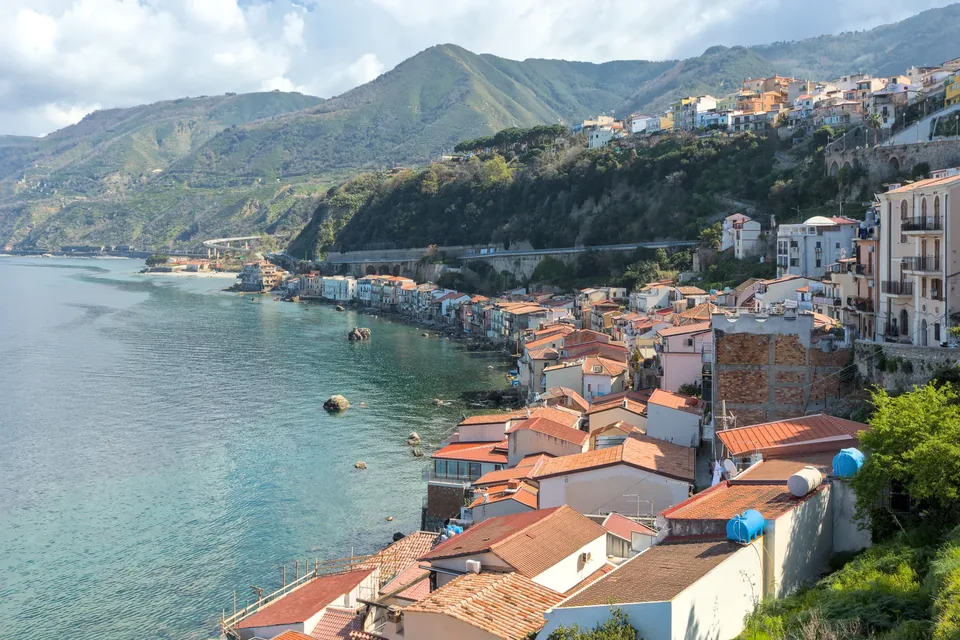
Further on, heading towards the Strait, the Calabrian Tyrrhenian coast leads to Scilla and the Costa Viola: a journey along this sea can combine Tropea, Capo Vaticano and Scilla in a single week.
Sources: Italia.it — 10 motivi per scegliere il mare della Costa degli Dei d’inverno · Italia.it — Costa degli Dei · Italia.it — Scilla
Where to stay
In the municipality of Tropea the national database of the Ministry of Tourism lists 791 accommodation businesses with a verified CIN code: 19 hotels, 301 other licensed accommodation and 471 other types such as B&Bs and private rentals.
Sources: Ministero del Turismo – Banca Dati Strutture Ricettive (dashboard pubblica), 2026-10-12
YOUR JOURNEY
How to shape a journey here
Three days between Tropea’s old town, the Capo Vaticano path and a stretch of the Costa degli Dei, best outside the summer peaks. Excursions and accommodation to be arranged with local operators.
Talk to us about it