APULICA / Food guides
Reggio Calabria bergamot: the perfume citrus of the Ionian coast
Bergamot is a citrus with a sour, bitter taste that hardly anyone eats in segments, yet almost everyone has smelt at least once: its essence is a cornerstone of perfumery, from eau de cologne to the finest scents, and it flavours tea, candied fruit and sweets. It grows in a narrow strip of the province of Reggio Calabria, where bergamot groves line the coast. The essential oil extracted from these fruits has been a Protected Designation of Origin since 2001. This guide covers the varieties, harvest and extraction, the history, kitchen uses and the places in Reggio where you can get to know it.
A citrus born here
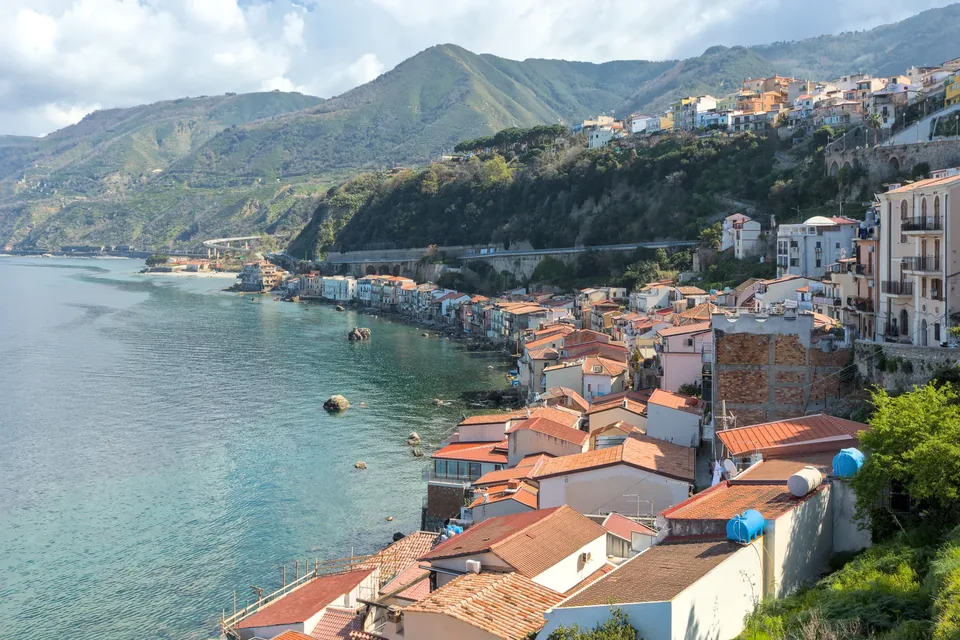
Bergamot, Citrus bergamia Risso, is according to Qualigeo most likely the result of a spontaneous mutation of other species, such as bitter orange or lime, which occurred in the late 17th century in what is now the production area, the province of Reggio Calabria. Italia.it also describes it as a mutation of lemon or bitter orange in the area around Reggio, as far as the Costa dei Gelsomini on the Ionian shore. The fruit has a fairly thin, smooth rind clinging to the flesh, lemon-yellow in colour, pale green-yellow flesh and a sour, bitter taste. The National Archaeological Museum of Reggio, in a note on an event pairing bergamot and the Riace Bronzes, reports historian Pasquale Amato's remark that the citrus fruits poorly away from the Reggio coastal strip, from Scilla to Monasterace.
Sources: Qualigeo — Bergamotto di Reggio Calabria - Olio essenziale DOP · Italia.it — Il bergamotto di Calabria, dalla tavola ai profumi · Museo Archeologico Nazionale di Reggio Calabria (MiC) — Nota stampa: Bergamotto e Bronzi di Riace
Three varieties and a winter harvest
The PDO covers the essence extracted from the fruit of three varieties: Feminella, Castagnaro and Fantastico. The production area, according to Qualigeo, covers the towns along a strip of about a hundred kilometres on the Ionian coast of the province of Reggio Calabria. The rules are precise: no more than 450 trees per hectare and a maximum yield of 400 quintals of fruit per hectare. Picking is by hand, from November to March, when the fruit starts turning from green to yellow; the fruit is then taken to processing plants. For travellers, this means winter is bergamot season: the groves can be seen all year, but harvesting and processing happen between November and March.
Sources: Qualigeo — Bergamotto di Reggio Calabria - Olio essenziale DOP
Cold extraction
The essential oil is obtained by the cold-pressed method. Qualigeo describes a dedicated peeling machine that uses only pressurised, nebulised water; the oil is then separated from the process water by centrifuge. Yield must be between 350 and 750 grams of oil per quintal of fruit: many kilos of bergamots are needed for a few grams of essence. The oil is stored in stainless steel and sold all year in drums of 25 to 180 kilos or in glass containers. It is clear, sometimes with sediment, green to greenish-yellow, with a fresh scent recalling the rind. Italia.it mentions Reggio's citrus museum, where you can see the machines used over time to extract essence and juice, including one derived from a model invented in 1840 by Reggio-born Nicola Barillà.
Sources: Qualigeo — Bergamotto di Reggio Calabria - Olio essenziale DOP · Italia.it — Il bergamotto di Calabria, dalla tavola ai profumi
The PDO and its uses
The name Bergamotto di Reggio Calabria - Olio essenziale is a PDO registered on 15 March 2001, according to the Qualigeo record, in the essential oils category. Italia.it lists it among Calabria's PDOs alongside cured meats, oils, cheeses, Fichi di Cosenza and Liquirizia di Calabria. The uses described by Qualigeo go well beyond cooking: in cosmetics the essence fixes the bouquet of perfumes and harmonises other essences, lasting over 24 hours compared with three or four for synthetic fixatives; in pharmaceuticals it is valued for antiseptic and antibacterial properties; it flavours pipe tobacco, candied fruit and tea, and is also used in sun creams. Remember that the PDO covers the essential oil, not the fresh fruit, which can nonetheless be found in local markets in season.
Sources: Qualigeo — Bergamotto di Reggio Calabria - Olio essenziale DOP · Italia.it — Calabria, gastronomia e prodotti tipici
From aqua mirabilis to eau de cologne
The essence's international fortune runs through perfumery. Qualigeo recounts that Gian Paolo Feminis, who emigrated to Cologne in 1680, created a preparation called aqua admirabilis, which his heirs patented under the German city's name: this is where eaux de cologne come from, and ever since bergamot has remained one of perfumery's basic essences. Italia.it adds a story set in Paris, where in the late 17th century an old café is said to have served ices and syrups flavoured with bergamot, helping make the essence known, and names Gabriele D'Annunzio among its admirers. These stories are best taken as part of the bergamot legend rather than precise dates; what is certain is the bond between this citrus and the history of European perfumery.
Sources: Qualigeo — Bergamotto di Reggio Calabria - Olio essenziale DOP · Italia.it — Il bergamotto di Calabria, dalla tavola ai profumi
Reggio, the bergamot city
Italia.it suggests getting to know bergamot from Reggio Calabria: the citrus museum, a walk on the Falcomatà seafront, the National Archaeological Museum with the Riace Bronzes and the Art Nouveau buildings housing perfumeries and herbalists where you can buy a bergamot cologne. Italia.it's city guide recalls that Reggio was the oldest Magna Graecia colony in southern Italy, that the 1908 earthquake forced it to rebuild in the Art Nouveau era, and that the Bronzes were found in 1972 in the sea off Riace. The Archaeological Museum has linked the two treasures in an annual Bronzes and bergamot event, with tastings of bergamot products on the museum terrace, promoted together with a bergamot committee, pastry makers and Calabria's writers' centre.
Sources: Italia.it — Il bergamotto di Calabria, dalla tavola ai profumi · Italia.it — Reggio Calabria, guida · Museo Archeologico Nazionale di Reggio Calabria (MiC) — Nota stampa: Bergamotto e Bronzi di Riace
In the kitchen and at the table
Bergamot is not eaten like an orange, but it gives a lot in the kitchen. Grated rind perfumes cakes, creams and ice cream; the juice, sourer and more bitter than lemon, is used sparingly to dress raw fish, citrus salads or a fennel salad; candied peel is one of the most traditional ways of keeping it. Sweet versions such as marmalades and nougat bars are easier to enjoy at first taste. In tea too, where bergamot is known for flavouring certain blends, the real essence is recognised by a fresh scent that never cloys. A tip: taste the fresh fruit first, if in season, to understand how bitter and intense it is; then the preparations, which soften it. And use essential oil only if labelled as food-grade, in minimal doses.
When to go and what to take home
The best time to see the groves heavy with fruit and smell the processing is winter, between November and March; spring instead brings citrus blossom and longer days on the coast. Visits to groves and extraction plants must be arranged with operators, as they are workplaces. As a souvenir, a small bottle of cologne or essence is light and keeps for a long time; for the PDO essential oil, look on the label for the full name, Bergamotto di Reggio Calabria - Olio essenziale, and the PDO reference. Candied peel, marmalades and liqueurs are the easiest food products to carry. If flying, remember the liquid limits for hand luggage.
A thread for your journey
Journey idea: a winter day in Reggio Calabria between the National Archaeological Museum, the Falcomatà seafront and the citrus museum, followed by an outing along the Ionian coast among the bergamot groves; alternatively, a day in Scilla and one in Reggio. Visits to groves and extraction plants arranged with operators.
Talk to us