APULICA / Food guides
Nocciola di Giffoni: the round hazelnut of the Picentini Mountains
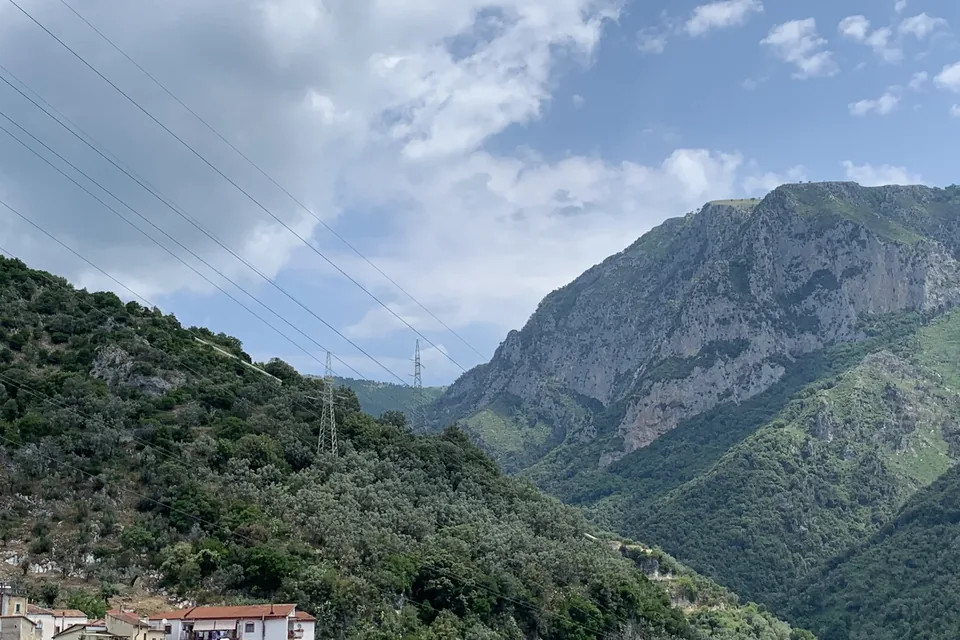
On the hills between the Picentino and Irno valleys, at the foot of the Picentini Mountains, hazel groves form orderly rows that give shade in summer. This is the home of Nocciola di Giffoni, a PGI since 1997, from a single cultivar, the Tonda di Giffoni, prized by the confectionery industry because it skins easily after roasting. This guide tells of the ancient link between Campania and the hazelnut, explains the designation's rules and suggests how to experience the harvest season.
Avellana, a Campanian name
Qualigeo regards Campania as the region where hazelnut growing has its deepest roots, and the exhibition curated by the protection consortium with the Ministry explains it starting from the name: Corylus avellana, the species Linnaeus named this way, refers to Abella, today's Avella in the province of Avellino.
The evidence is old. Latin authors mention hazelnuts in Campania from the 3rd century BC; paintings in Pompeii and Herculaneum show the fruit, and charred hazelnuts from the excavations are kept at the National Archaeological Museum of Naples. The Campania Region also recalls these finds and adds that the crop seems to have spread to the rest of Italy from here.
In the 17th century, the exhibition says, Campanian hazelnuts were sold on the markets of Egypt, the Barbary Coast and the Levant; in the 18th century the Giffoni area was identified as ideal because the hazel grows wild there. The Salerno historian Vincenzo De Caro described its spread at the end of that century.
Sources: Qualigeo (Fondazione Qualivita) — Nocciola di Giffoni IGP · Consorzio di Tutela Nocciola di Giffoni con il Ministero delle politiche agricole — mostra storica (Google Arts & Culture) · Regione Campania, Assessorato all'Agricoltura — Nocciola di Giffoni IGP
From the Middle Ages to the confectionery industry
The first evidence of dedicated cultivation around Salerno dates from the Middle Ages, when, according to the consortium's exhibition, hazelnut growing expanded strongly and became truly specialised. The Campania Region adds that it was above all in the Bourbon period, through trade with the rest of Italy and abroad, that the quality of the Giffoni hazelnut became known beyond the valley.
In the 20th century the crop grew further, driven by demand from the confectionery industry. The reason is technical: the Tonda di Giffoni has a medium, even size, a thin skin that comes away easily after roasting and an excellent shelling yield, qualities that suit it to becoming chopped nuts, paste and an ingredient in widely sold sweets.
The land plays its part. The Picentini and the Irno valley, the Region explains, are naturally suited to the hazel, which has always grown wild there, and the volcanic soil offers good fertility: environment and human work together explain the quality of the nut.
Sources: Consorzio di Tutela Nocciola di Giffoni con il Ministero delle politiche agricole — mostra storica (Google Arts & Culture) · Regione Campania, Assessorato all'Agricoltura — Nocciola di Giffoni IGP
Twelve municipalities between the Picentino and the Irno
The PGI was registered by European Regulation no. 2325 of 24 November 1997; the Region notes that in 2006 the Commission approved amendments to the specification concerning the logo and some administrative points. The text published in the Official Gazette that year covers the whole of Giffoni Valle Piana, Giffoni Sei Casali, San Cipriano Picentino, Fisciano, Calvanico, Castiglione del Genovesi and Montecorvino Rovella, and part of Baronissi, Montecorvino Pugliano, Olevano sul Tusciano, San Mango Piemonte and Acerno, all in the province of Salerno.
The name applies only to the fruit of the Tonda di Giffoni cultivar: other varieties may grow in the orchards as pollinators, but they do not carry the name.
The protection consortium is based in Giffoni Valle Piana and its mandate was confirmed by decrees of 21 December 2020 and 20 February 2024. Qualigeo counts 190 operators and, for 2023, about 257 certified tonnes, that is, the share of the crop that reaches the market under the name.
Sources: Gazzetta Ufficiale n. 214 del 14 settembre 2006 — Disciplinare di produzione dell'IGP «Nocciola di Giffoni» · Regione Campania, Assessorato all'Agricoltura — Nocciola di Giffoni IGP · Gazzetta Ufficiale — Conferma dell'incarico al Consorzio di tutela Nocciola di Giffoni IGP (decreto 20 febbraio 2024) · Qualigeo (Fondazione Qualivita) — Nocciola di Giffoni IGP · Gazzetta Ufficiale — Conferma dell'incarico al Consorzio di tutela della Nocciola di Giffoni IGP (decreto 21 dicembre 2020)
Stools, small trees and a cap on plants
The specification describes the area's traditional training systems: the multi-stemmed bush known as a ceppaia, the bush vase and the small tree, with no more than 660 plants per hectare. Hedges with paired bushes and the Y shape are also allowed, but in no case may there be more than 1,000 plants per hectare.
To ensure pollination, up to 10% of other varieties is allowed in the orchards. The 2006 text also sets a maximum yield of 40 quintals per hectare, registration of the orchards on a list kept by the inspection body and storage in rooms with suitable humidity and ventilation.
In the Picentini the hazel has never been only a fruit tree. The consortium's exhibition recalls that master basket weavers wove the plant's sturdy branches into baskets, covers for demijohns and flasks, seats and other everyday objects: a craft born from the same rows that give shade in summer today.
Sources: Gazzetta Ufficiale n. 214 del 14 settembre 2006 — Disciplinare di produzione dell'IGP «Nocciola di Giffoni» · Qualigeo (Fondazione Qualivita) — Nocciola di Giffoni IGP · Consorzio di Tutela Nocciola di Giffoni con il Ministero delle politiche agricole — mostra storica (Google Arts & Culture)
The Tonda: measurements of a hazelnut
The specification describes the Giffoni hazelnut precisely. The nut is subspherical, at least 18 millimetres in size, with a medium-thick shell of 1.11 to 1.25 millimetres, hazel-coloured with darker streaks. The kernel is also subspherical, with few fibres, at least 13 millimetres, and its peelability must reach 85%: the skin comes away easily after roasting.
The flesh is white, firm and aromatic; the shelling yield is not below 43% and kernel moisture after drying does not exceed 6%. The consortium's exhibition gives an average fruit weight of around 2.6 grams and speaks of crunchy, highly fragrant flesh.
The Campania Region stresses one point: the perfectly round kernel and the even size make the hazelnut suitable for grading and peeling, but also for eating as it is. Qualigeo confirms that it stands up well to every stage of processing.
Sources: Gazzetta Ufficiale n. 214 del 14 settembre 2006 — Disciplinare di produzione dell'IGP «Nocciola di Giffoni» · Qualigeo (Fondazione Qualivita) — Nocciola di Giffoni IGP · Consorzio di Tutela Nocciola di Giffoni con il Ministero delle politiche agricole — mostra storica (Google Arts & Culture) · Regione Campania, Assessorato all'Agricoltura — Nocciola di Giffoni IGP
Late August: harvest and drying
The Tonda di Giffoni is a fairly early cultivar: according to Qualigeo and the Region, harvesting starts in the last ten days of August. Right afterwards the hazelnuts are sorted, graded and dried to a moisture of no more than 6%; the consortium's exhibition describes the natural sun-drying stage, when expanses of nuts break up the green of the countryside.
The product is then kept in dry, cool, ventilated places free of odours. The PGI covers dried in-shell hazelnuts, shelled ones and roasted ones, in shell or shelled and peeled.
It is sold in jute sacks in shell, in paper or cloth bags and cardboard boxes when shelled, and processed into chopped nuts, flour, pastes and creams. For industry, shelling is done with rollers and roasting in high-temperature fan ovens. The Region notes that alongside industry a short supply chain for direct consumption is growing, which rewards producers better.
Sources: Qualigeo (Fondazione Qualivita) — Nocciola di Giffoni IGP · Consorzio di Tutela Nocciola di Giffoni con il Ministero delle politiche agricole — mostra storica (Google Arts & Culture) · Regione Campania, Assessorato all'Agricoltura — Nocciola di Giffoni IGP
A crop that shapes the land
The Campania Region's page offers some figures, dating from 2004, that help to show how much the hazelnut matters in the Picentini. That year Campania was Italy's leading producing region; in the province of Salerno about 90% of hazelnuts were Tonda di Giffoni, grown on about 2,600 hectares by some 1,200 farms, with employment estimated at 4,000 people, rising sharply at harvest. The figures are twenty years old, but they describe a clear calling.
Anyone driving through the valleys sees it: the orchards stretch in neat rows over hills and valley floors and in summer offer shelter from the heat, as the consortium's exhibition notes.
The Region adds that in Giffoni the hazelnut has become a symbol, together with the famous children's film festival, and one of the emblems of the Salerno area's basket of typical products. It is a good reason to look at the landscape as well as to taste the nut.
Sources: Regione Campania, Assessorato all'Agricoltura — Nocciola di Giffoni IGP · Consorzio di Tutela Nocciola di Giffoni con il Ministero delle politiche agricole — mostra storica (Google Arts & Culture)
In the kitchen and in pastry
Qualigeo and the Region list many uses. The hazelnut is eaten plain, shelled and whole as a snack, coated in chocolate, with honey or in nougat; it is this direct consumption, the Region notes, that has revived interest in the product, abroad as well. In the kitchen it goes into unusual pasta dishes and meat preparations, and in Salerno pastry into cakes, small sweets, ice creams, creams and liqueurs.
The confectionery industry seeks it out for its easy peeling and shelling yield, which make it ideal for pastes and chopped nuts used in widely sold sweets.
In Campania the hazelnut also features in other traditional products. The national list of traditional food products records for the region the camponica, San Giovanni, mortarella and riccia di Talanico hazelnuts, as well as several nougats, from Benevento's to that of Ospedaletto d'Alpinolo: a small flavour itinerary leading towards Irpinia and the Sannio.
Sources: Qualigeo (Fondazione Qualivita) — Nocciola di Giffoni IGP · Regione Campania, Assessorato all'Agricoltura — Nocciola di Giffoni IGP · Masaf — Elenco nazionale dei prodotti agroalimentari tradizionali 2022, allegato I (copia pubblicata dal progetto regionale Biodiversità Puglia)
How to enjoy the season
The most interesting time is between late August and September, when the orchards are harvested and the Picentini landscape reads in rows. We found no hazelnut festival announced by a local municipality with verifiable dates, so we do not list one: it is better to build the day around a walk among the orchards of Giffoni Valle Piana and Giffoni Sei Casali and a visit to a farm or processing workshop, arranged with the operators.
For tasting I would try the same hazelnut three ways: raw, freshly roasted and peeled, then in a cake or a cream. Differences in aroma and texture are easier to grasp that way than by reading a product sheet.
Shelled hazelnuts suffer from heat and light: for travelling, in-shell nuts or roasted ones in sealed packs are better, kept somewhere cool. Those with an extra day can head up to Irpinia, where Avella recalls the origin of the name avellana.
A thread for your journey
Journey idea: two days between late August and September in the Picentini Mountains, with a walk among the hazel groves of Giffoni Valle Piana and Giffoni Sei Casali, a farm or workshop visit to be arranged with the operators and a detour into Irpinia, where the name avellana recalls ancient Abella.
Talk to us