
Why go
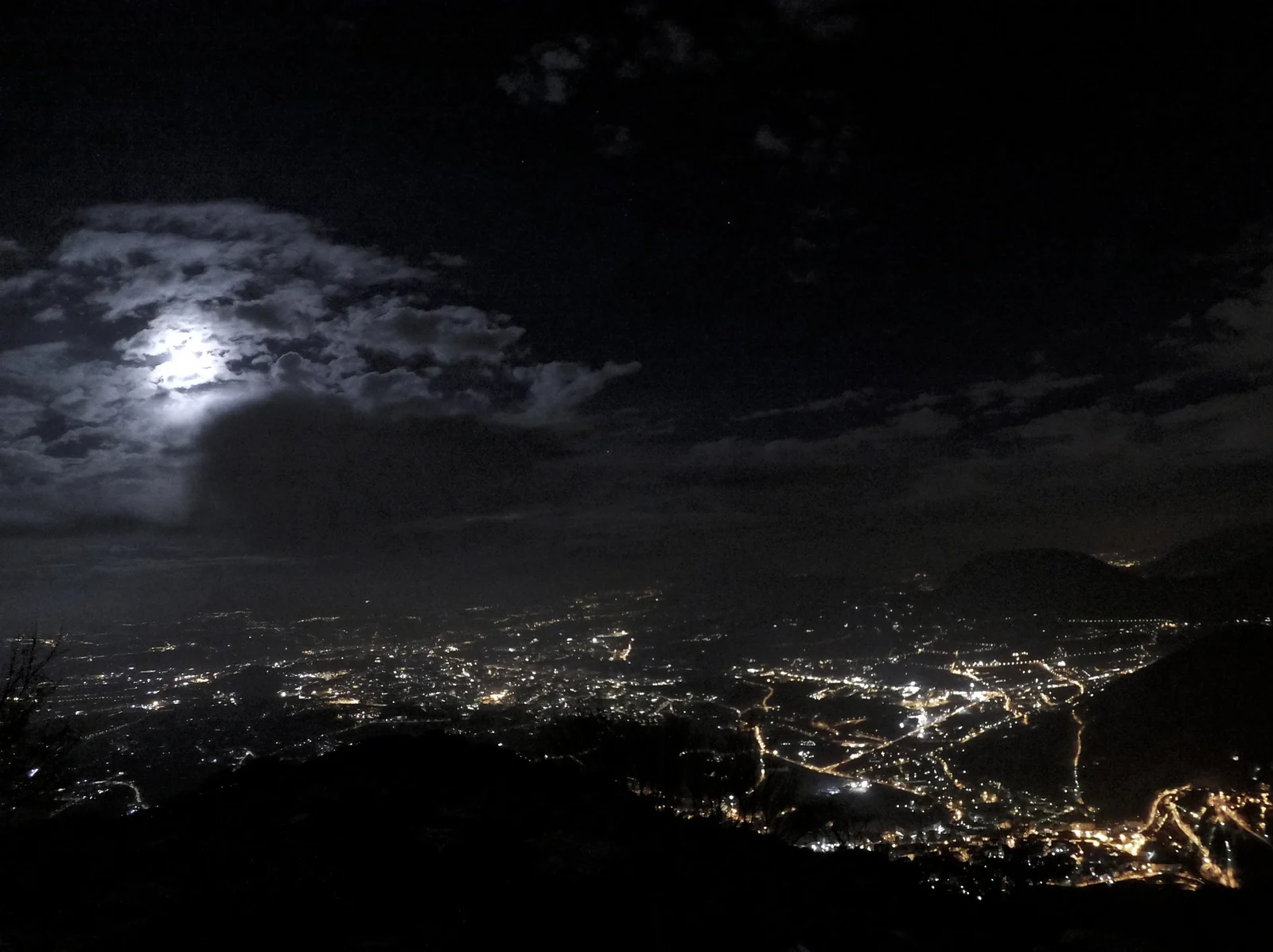
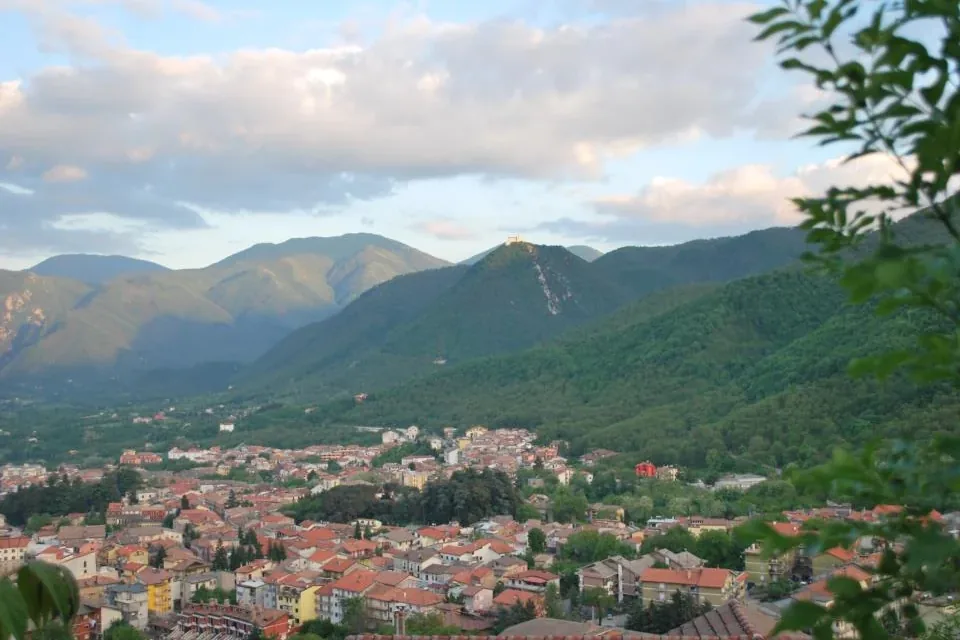
Avellino is the capital of Irpinia, set at about 350 metres in the valley of the Sabato river, with the Fenestrelle stream crossing its territory. For anyone travelling among the villages, vineyards and mountains of inland Campania, it is the place where the whole province can be read at once: the collections of the Museo Irpino trace its history from prehistory to the Risorgimento, the old centre preserves the Baroque layout commissioned by the Caracciolo princes, and the surrounding hills lie within the Fiano di Avellino wine area.
Even the name carries a food clue: the provincial tourism account derives it from the Latin abellana, the hazelnut, a crop still widespread in the area. It is a city to visit slowly, choosing one theme and letting the rest of the journey continue it.
Avellino works equally well at the start or at the end of a journey through Irpinia. At the beginning it provides the coordinates for what you will see in Taurasi, Montella or Bagnoli Irpino; at the end it helps you put your impressions in order, in front of a museum case or along the main street.
Sources: Provincia di Avellino, Sistema Irpinia — Avellino · Museo Irpino — Le sedi · Regione Campania — Fiano di Avellino DOCG
History
The ancient city was not here. Abellinum, the first settlement, stood in what is now the territory of Atripalda: it became a Roman colony after the Samnite wars, was a bishop’s seat in the fourth century and was laid waste between the Gothic war and the arrival of the Lombards. The new Avellino grew as a fortified village on a spur of tuff, part of the Duchy of Benevento and seat of a gastaldate in the ninth century, later a county.
After Norman, Swabian and Angevin rule, in 1418 the fief passed to the Caracciolo family, who held it until feudalism was abolished in 1806. That period shaped the city: wool working and the grain trade, which moved from Apulia towards Naples along the line of today’s main street, paid for squares, fountains and palaces. In 1820 Avellino was a stage of the uprisings against Ferdinand I of Bourbon.
The earthquake of 23 November 1980 is a break that can still be read: the Clock Tower collapsed almost entirely and was rebuilt partly with its own fallen stone, becoming a symbol of reconstruction too. A civic detail shows another side of the city: in 1888 Avellino was among the first in Italy to switch on electric street lighting.
Sources: Provincia di Avellino, Sistema Irpinia — Avellino · Sistema Irpinia — Atripalda e l’antica Abellinum · Provincia di Avellino, Sistema Irpinia — Torre dell’Orologio di Avellino
What to see
The heart of the historic city is Piazza Amendola, the old public square, shaped by the seventeenth-century project of Prince Francesco Marino Caracciolo: Cosimo Fanzago redesigned the space, completing in 1668 the obelisk to Charles II of Habsburg beside the Palazzo della Dogana, which served as the grain exchange. Just above rises the Clock Tower, about 36 metres high and visible from almost everywhere in the centre. Fanzago also made the Fountain of Bellerophon, known locally as the fountain of the Three Spouts. The cathedral, dedicated to the Assumption and the patron saints, keeps a Romanesque crypt.
The Bourbon Prison is the most surprising building: designed in 1826, it has a hexagonal plan with five wings radiating from a circular tholos that served as a chapel. It was a prison until 1987; today it houses sections of the Museo Irpino, including the picture gallery, the lapidarium, the Risorgimento rooms and the exhibition “Irpinia. Memory and Evolution”, as well as the State Archive. The museum’s other seat is the Palazzo della Cultura.
Along Corso Umberto I, the late sixteenth-century Casino del Principe hides an underground hall carved from the cistern of an ancient Roman aqueduct. Guided walks offered by the municipality have also included crypts, Lombard tunnels, the caves of Villa Amendola and the botanical garden.
Sources: Sistema Irpinia — Palazzo della Dogana · Provincia di Avellino, Sistema Irpinia — Torre dell’Orologio di Avellino · Provincia di Avellino, Sistema Irpinia — Avellino · Sistema Irpinia — Carcere Borbonico di Avellino · Sistema Irpinia — Museo Irpino del Carcere Borbonico · Museo Irpino — Le sedi · Sistema Irpinia — Casino del Principe · Comune/Provincia — percorsi nel centro storico
Food and wine
Avellino’s cooking is that of a city that has always lived off the countryside around it. The provincial account lists cicci di Santa Lucia, a soup of local cereals and pulses dressed with garlic and peppers and recognised as a traditional food product; pizza chiena, home-style bread stuffed with spicy sausage, lard and scamorza; pizza con l’erba, with ricotta, escarole and maize; and fusilli al ferretto with meat sauce. Among the sweets are crespelle, struffoli and calzoncelli.
The wine carrying the city’s name is Fiano di Avellino, a DOCG since 2003. The Region recalls that the Romans knew the grape as Vitis apiana because it attracted bees, and describes an intensely scented white with notes of toasted hazelnut, one of the few Italian whites suited to ageing. The production area covers 26 municipalities at the heart of the province: the city is the gateway, the vineyards are on the hills around it.
The hazelnut is the product that ties Avellino most closely to its land: sources mention the Mortarella, San Giovanni, Tonda Bianca and Tonda Rossa varieties. Travellers heading on to Taurasi will find the red wine made from Aglianico; towards Montella, the chestnut.
Sources: Provincia di Avellino, Sistema Irpinia — Avellino · Regione Campania — Fiano di Avellino DOCG
Things to do
The simplest way to get to know Avellino is on foot. The Province suggests urban trekking routes that encourage visitors to look for lesser-known corners of the city, and the municipality has run guided walks with licensed guides in the old centre, organised by theme: the Heart of Avellino, the Prince’s Walk, the discovery of the “Carluccio” and Underground Avellino, with crypts, Lombard tunnels and the underground hall of the Casino del Principe. These describe a programme already held and show what the city can offer; future editions need checking.
The Museo Irpino deserves a long visit. In the Bourbon Prison, the Risorgimento section holds weapons, flags, uniforms and portraits of Irpinian figures such as Francesco De Sanctis and Pasquale Stanislao Mancini; the exhibition “Irpinia. Memory and Evolution” gives an overview of the whole province, useful before setting out for the villages.
For film lovers, the municipal account recalls the Laceno d’Oro, a festival founded in 1959 by Pier Paolo Pasolini and Camillo Marino and devoted to documentary and realist cinema. Avellino is also the starting point of the Irpinia Railway: a heritage-train journey along the line to Rocchetta Sant’Antonio, when scheduled, is one of the finest ways to cross the province.
Sources: Provincia di Avellino, Sistema Irpinia — Avellino · Comune/Provincia — percorsi nel centro storico · Sistema Irpinia — Museo Irpino del Carcere Borbonico · Fondazione FS — Binari senza tempo, la Ferrovia dell’Irpinia Avellino–Rocchetta
When to go
Avellino can be visited in any season, and the calendar of traditions helps choose when. Holy Week has its oldest moment in the Good Friday procession of Our Lady of Sorrows, which the provincial account dates to the early sixteenth century. Every year there is also the procession of Saint Rita, held in the city since 1937 and so closely tied to the eighteenth-century church of San Francesco Saverio that the church is known as Saint Rita’s.
Summer brings the Palio della Botte, a historical-style contest among the city’s seven districts held in August, and the programme of the Avellino Ferragosto, with music, culture and food; on 15 August the city honours the Assumption with a procession recorded since the eighteenth century. In June the Sportdays sports event takes place.
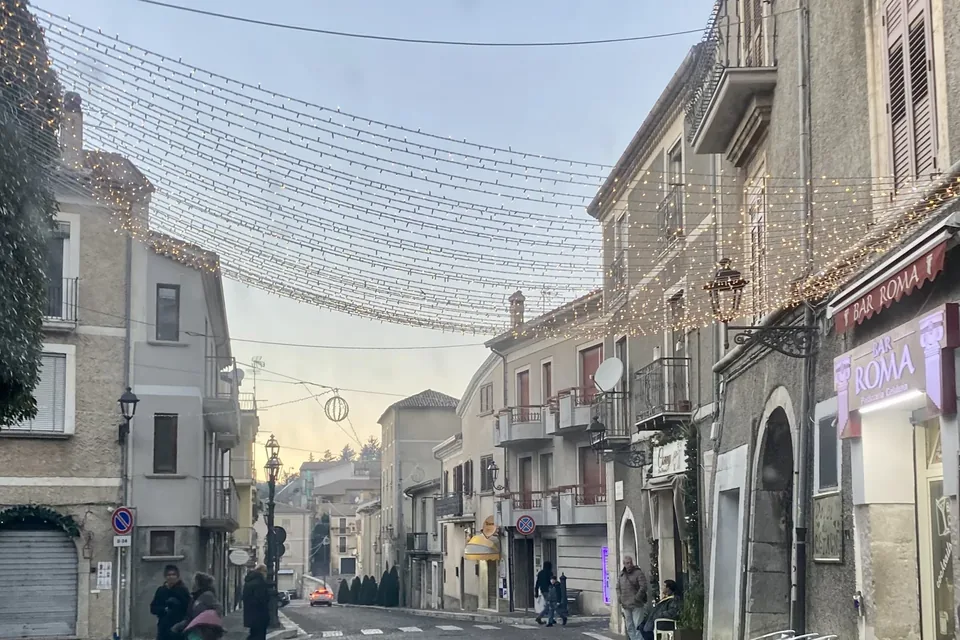
At Christmas Corso Vittorio Emanuele II fills with stalls and food stands, while Carnival brings to town the masked groups of the province and the Zeza of Bellizzi Irpino on Shrove Tuesday. Exact dates change every year, so check them on the municipal website before fixing the journey.
Getting there and around
Avellino has a railway station on the RFI network, listed on the infrastructure manager’s website with information on services and accessibility; before travelling, check the official channels for timetables and connections, which we do not reproduce because they change.
The city is also kilometre zero of the Irpinia Railway, the 119-kilometre line that reaches Rocchetta Sant’Antonio-Lacedonia through the Calore valley, Taurasi, Montella, Bagnoli Irpino and Nusco. According to the FS Foundation, regular service was suspended in December 2010; from 2016 the line was gradually reactivated for tourist trains, and in May 2018 the entire route reopened for this use. It is a way of travelling tied to the heritage-train calendar, not a daily connection.
Otherwise the province is explored mainly by road: according to the provincial pages, Atripalda is 3 kilometres away, Mercogliano 5, Taurasi 35, Montella 36 and Bagnoli Irpino 40. In the city, the old centre is best covered on foot along Corso Vittorio Emanuele II and Corso Umberto I, the old grain road between Apulia and Naples onto which the main squares and monuments open.
Sources: RFI — Stazione di Avellino · Fondazione FS — Binari senza tempo, la Ferrovia dell’Irpinia Avellino–Rocchetta · Sistema Irpinia — Atripalda e l’antica Abellinum · Sistema Irpinia — Mercogliano e Montevergine · Provincia di Avellino, Sistema Irpinia — Torre dell’Orologio di Avellino
Nearby
Three kilometres away, Atripalda holds the city’s origins: the archaeological area of ancient Abellinum preserves the remains of the Roman colony from which the capital descends. In the same town, the church of Sant’Ippolisto Martire has a crypt, the Specus Martyrum, an early Christian cemetery of Abellinum, and the museum in the Grain Customs House displays objects recovered after the 1980 earthquake. It is the visit that completes the story told in the Museo Irpino.
Five kilometres away, Mercogliano climbs towards the Partenio Park and the Sanctuary of Montevergine, seat of one of Italy’s territorial abbeys, where the image of the Madonna known as Mamma Schiavona is venerated; provincial sources speak of about one and a half million pilgrims a year. In the town itself, the Abbey Palace of Loreto is also worth attention.
To the east and south, Avellino is the natural base for the other Irpinian stops: Taurasi and the Calore valley for Aglianico wine and the castle housing the Regional Wine Library; Montella for the PGI chestnut and the convent of San Francesco a Folloni; Bagnoli Irpino for black truffles and the Laceno plateau, in the Monti Picentini Park.
Sources: Sistema Irpinia — Atripalda e l’antica Abellinum · Sistema Irpinia — Mercogliano e Montevergine · Provincia di Avellino, Sistema Irpinia — Avellino
Local tourist information
Local tourist offices help with opening times, events and transport on the day.
- InfoPoint Distretto 26 — Sistema Irpinia (Provincia di Avellino) · Piazza della Libertà 2, 83100 Avellino (AV) · Official website
Source: Sistema Irpinia — InfoPoint Distretto 26 · checked on - Comune di Avellino — Assessorato al Turismo · Piazza del Popolo, 83100 Avellino (AV) · +39 0825 200271 · settorecultura@comune.avellino.it
Source: Comune/Provincia — percorsi nel centro storico · checked on
Where to stay
In the municipality of Avellino the national database of the Ministry of Tourism lists 60 accommodation businesses with a verified CIN code: 2 hotels, 12 other licensed accommodation and 46 other types such as B&Bs and private rentals.
Sources: Ministero del Turismo – Banca Dati Strutture Ricettive (dashboard pubblica), 2026-10-12
YOUR JOURNEY
How to shape a journey here
A cultural introduction to Irpinia before villages and producers. Visits and guiding are defined for the programme.
Talk to us about it

.jpg)

.jpg)
