
Why go
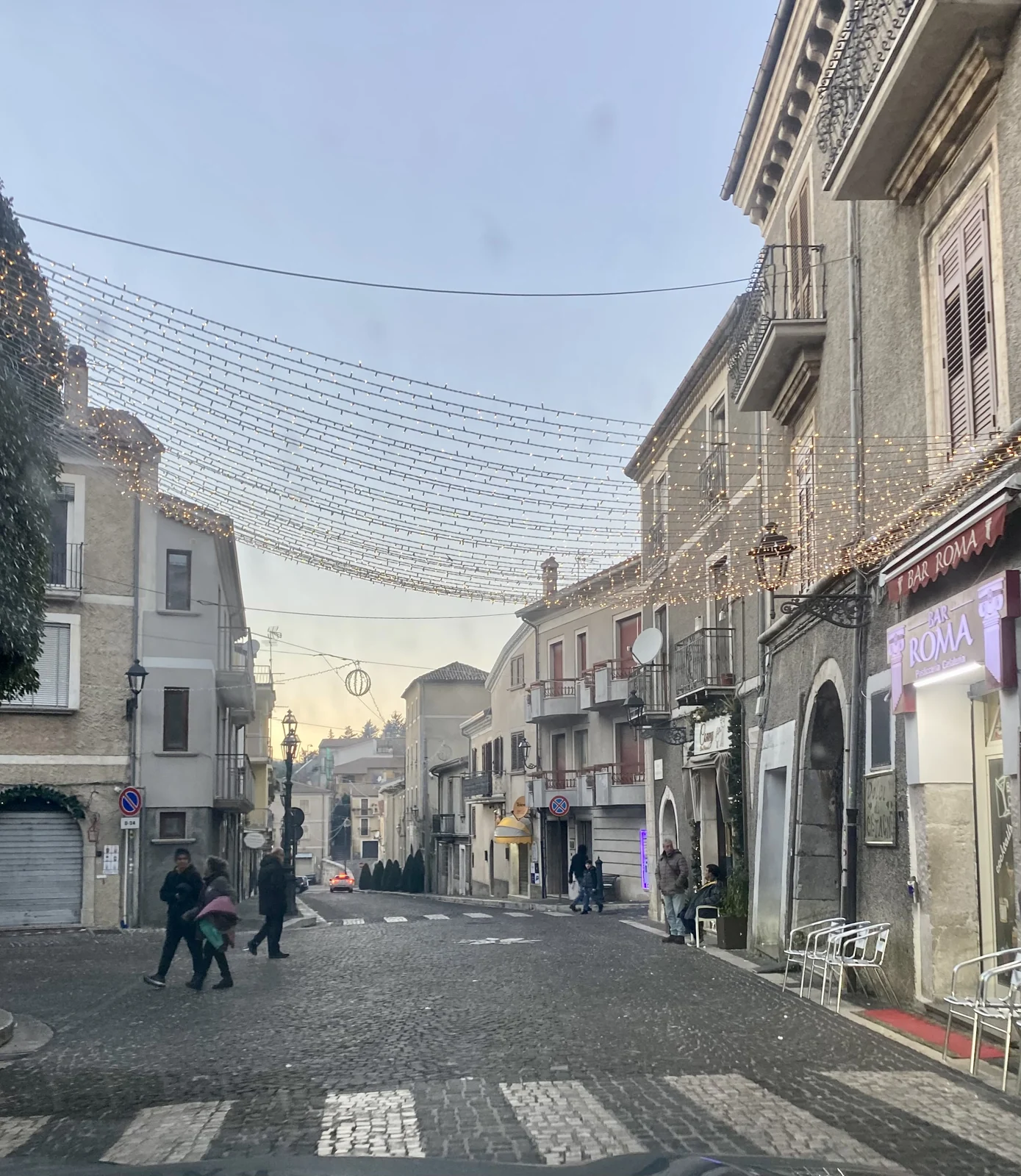
Bagnoli Irpino is a mountain town at about 650 metres, in the upper Calore valley and inside the Monti Picentini Regional Park, some forty kilometres from Avellino. According to the provincial account its name comes from the Latin baniolum and recalls the abundance of water: the territory has many springs and a network of caves.
There are two reasons to come, and each deserves its own time. The first is the town, with an old centre gathered around the Collegiate Church and the Giudeca quarter, a castle reopened to visitors and a long craft tradition, so much so that in 1958 it was called the little Florence of Irpinia. The second is the Laceno plateau, about eight kilometres away, with its karst lake, woods and trails towards the province’s highest peaks.
The table ties them together: Bagnoli is Campania’s most important centre for the black-truffle trade, and its territory falls within the area of the Castagna di Montella PGI. The municipal portal holds these two sides together, with sections on the town and the plateau, on products, resources and folklore.
Sources: Sistema Irpinia — Bagnoli Irpino: luoghi, eventi, prodotti, storia · Sistema Irpinia — Altopiano del Laceno · Regione Campania — Tartufo nero di Bagnoli Irpino · Regione Campania — Castagna di Montella IGP · Comune — Bagnoli e altopiano Laceno
History
Bagnoli grew before the year 1000 as a fortified centre defending the Lombard Duchy of Salerno. Its oldest core is the Giudeca, the quarter behind the Collegiate Church that developed around the first Lombard castle; the name recalls the settlers of Jewish origin who lived there first and later merged with the local population.
Later, Diepold of Hohenburg made it a walled stronghold, with a castle on the Serra hill overlooking the upper Calore valley. For centuries the town was royal demesne; under the Aragonese it was granted in fief, together with Montella and Cassano Irpino, to the Cavaniglia, a family of Spanish origin related to the Orsini, who turned the castle into a noble residence. In 1611 Bagnoli became a duchy and remained with the Mayorga-Strozzi until feudalism was abolished in 1806.
The sixteenth and seventeenth centuries left the strongest mark: the palace built by the Cavaniglia for a dye works serving the textile trade, the Collegiate Church rebuilt after the fire of 1651, and the wooden choir carved between 1652 and 1657 by local craftsmen. Photographs from the 1950s and 1960s kept on the municipal portal show instead the town and plateau of the twentieth century.
Sources: Sistema Irpinia — Bagnoli Irpino: luoghi, eventi, prodotti, storia · Sistema Irpinia — Giudeca · Sistema Irpinia — Castello Cavaniglia · Sistema Irpinia — Collegiata di Santa Maria Assunta · Comune — Bagnoli e altopiano Laceno
What to see
The Collegiate Church of Santa Maria Assunta, in Piazza Umberto I, is the monument not to miss. Built around the twelfth century and enlarged in the sixteenth, it has a Latin-cross plan with three naves; it holds Domenico Di Venuta’s statue of Our Lady of Sorrows in a gold-embroidered robe and paintings by Andrea D’Asti. The most precious work is behind the altar, reached through the sacristy: the 19-seat wooden choir by Scipione Infante and Giacomo Bonavita, a story carved in high relief.
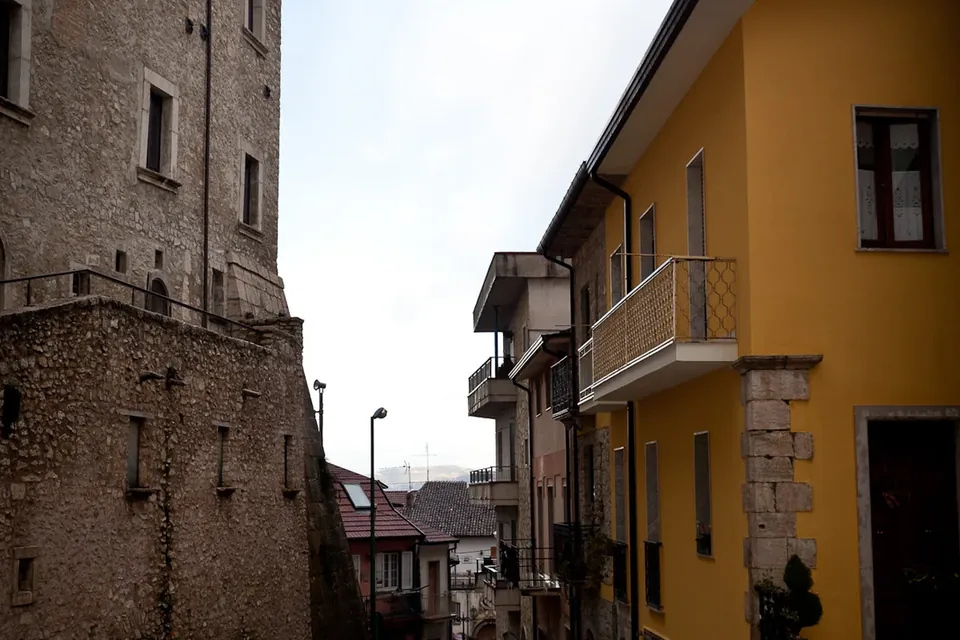
Behind the church you enter the Giudeca, with narrow lanes, houses opening straight onto the alleys and architectural details of Spanish taste. Higher up, at about 670 metres, the Cavaniglia Castle, a quadrangular building of Norman origin with a massive square tower, reopened in 2017 and houses the Michele Lenzi municipal picture gallery; its terrace overlooks the upper Calore valley.
The walk is completed by the church of San Domenico of 1490 with its 30-metre bell tower, the fifteenth-century Gavitone fountain topped by the civic clock tower and a hornbeam some three centuries old, and the seventeenth-century town hall, once the conservatory of Santa Caterina da Siena. In autumn the lanes turn red with peppers sewn on thread and hung up to dry.
Sources: Sistema Irpinia — Collegiata di Santa Maria Assunta · Sistema Irpinia — Giudeca · Sistema Irpinia — Castello Cavaniglia · Sistema Irpinia — Bagnoli Irpino: luoghi, eventi, prodotti, storia
Food and wine
The emblematic product is the black truffle of Bagnoli Irpino. The Campania Region explains that it grows between 800 and 1,500 metres in the Picentini massif, in symbiosis with beech and black pine; it has a black skin with low warts and flesh veined greyish-white. It has been hunted for at least two and a half centuries, and documents record its use as early as the reign of Charles III of Bourbon. The most typical dish is truffle salad in the Bagnoli style, a side dish for Christmas lunches; truffle also dresses spaghetti with garlic and oil, omelettes and even pizza. Today it is available all year round preserved or in truffle pastes.
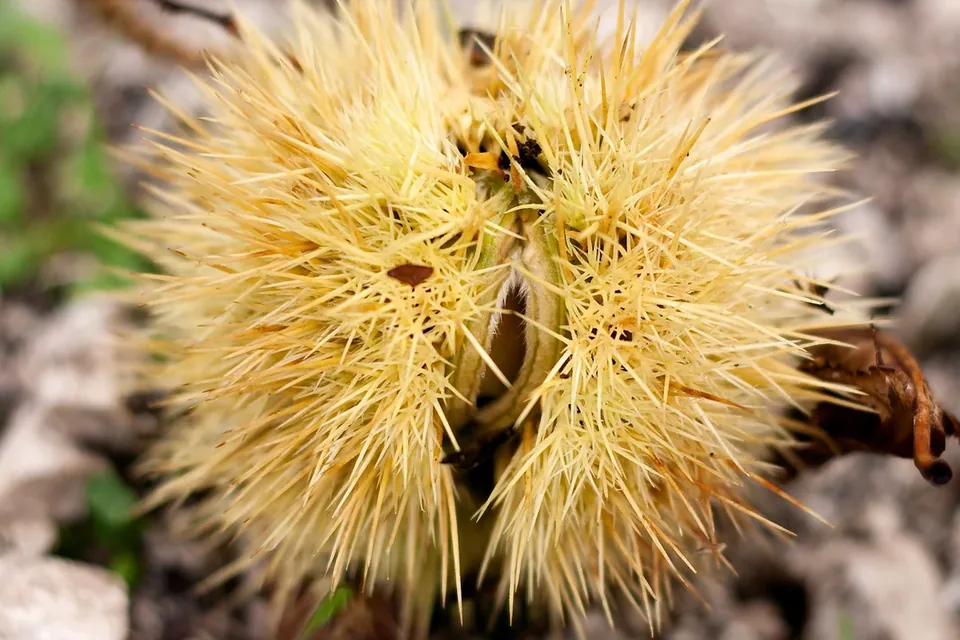
The other pillar is the chestnut: the territory falls within the area of the Castagna di Montella PGI, from the Palummina and Verdole varieties, with sweet white flesh. From here also come chestnut nougat and black-truffle liqueur, both listed among traditional products.
The pastures give cheeses of character: pecorino and ricotta from the Bagnolese sheep, a breed also called malvizza; the podolico caciocavallo of the Picentini; and Irpinian caciocavallo aged in caves. Among pulses stand out the tobacco-coloured tabacchini beans, good for soups, and pork “nnoglia” for minestra maritata.
Sources: Regione Campania — Tartufo nero di Bagnoli Irpino · Regione Campania — Castagna di Montella IGP · Sistema Irpinia — Bagnoli Irpino: luoghi, eventi, prodotti, storia
Things to do
The Laceno plateau is Bagnoli’s great open space. The karst lake is surrounded by woods, streams and peaks over 1,500 metres; from several points trails of varying difficulty lead towards Cervialto, the highest summit of the Picentini, and Rajamagra. Visitors hike, ride horses, mountain-bike and join guided excursions, and the plateau is visited all year; the ski lifts have been closed since 2017, but in winter the frozen lake and snowy woods remain a landscape to explore on snowshoes.
Beneath the plateau open the Caliendo Caves, among the best-known caverns in Campania: today they can be entered only by experienced cavers in summer, at low water, while a possible tourist use is being studied. The municipal territory also includes the Santa Nesta cave and the springs of Acqualeggia, Muliniello and Tronola.
The Monti Picentini Regional Park, established under the 1993 regional law, offers routes through beech woods, springs and viewpoints, as well as environmental education activities. In the town the experience is quieter: the Collegiate Church and the castle, a walk through the Giudeca and, in the right months, a conversation about truffles with those who hunt and work them.
Sources: Sistema Irpinia — Altopiano del Laceno · Sistema Irpinia — Bagnoli Irpino: luoghi, eventi, prodotti, storia · Ente Parco Regionale dei Monti Picentini
When to go
Bagnoli Irpino’s calendar follows the mountains. The most awaited season is autumn, when the black truffle of the Picentini meets the chestnut: the Region notes that the traditional harvest runs from October to March, and between October and November the town hosts the Black Truffle Market with the festival of chestnuts and Laceno produce, which has grown to national standing. The municipal notice of 5 October 2026 sets the 47th edition in two three-day blocks, 23–25 and 29–31 October 2026: not a continuous week, and dates valid for this year only.
Religious feasts mark the rest of the year. On the Monday after Pentecost the statue of Our Lady of Sorrows is carried in procession up to Laceno for the feast of Santa Nesta; the feast of the patron Saint Lawrence takes the procession to the district bearing his name; that of Saint Roch ends with the “fire cow”, a papier-mâché figure set alight in the main square. In late December the town has staged a living nativity.
Summer is the season for trails and nights outdoors on the plateau; in winter, even with the lifts closed, the frozen lake and snowy woods draw those who enjoy snowshoeing.
Sources: Sistema Irpinia — Bagnoli Irpino: luoghi, eventi, prodotti, storia · Regione Campania — Tartufo nero di Bagnoli Irpino · Comune Bagnoli Irpino — avviso 2026-10-05 · Sistema Irpinia — Altopiano del Laceno
Getting there and around
Bagnoli Irpino lies about 40 kilometres from Avellino, the provincial capital with a station on the national network; the neighbouring municipalities are Montella, Nusco, Lioni, Caposele, Calabritto and Acerno. The most practical way to arrive, and to reach the Laceno plateau about eight kilometres from the centre, is by road.
The town does, however, have a station on the Irpinia Railway, the historic Avellino–Rocchetta Sant’Antonio line. According to the FS Foundation, after Montella the route bends towards Bagnoli Irpino and reaches its highest point, 672 metres, at Nusco station. Regular service has been suspended since December 2010 and the line is used by tourist trains: the provincial pages recall, for example, a heritage train organised for the Black Truffle Market. Anyone wishing to arrive this way should check the tourist-train calendar.
In town you move on foot: the old centre, the Giudeca and the castle are close together, but the climbs are steep. During the truffle market the municipality arranges parking areas and, for those far from the centre, shuttle services; the rules change with each edition and are set out in municipal notices.
Sources: Sistema Irpinia — Bagnoli Irpino: luoghi, eventi, prodotti, storia · Sistema Irpinia — Altopiano del Laceno · Fondazione FS — Binari senza tempo, la Ferrovia dell’Irpinia Avellino–Rocchetta · Comune Bagnoli Irpino — avviso 2026-10-05
Where to stay
For overnight stays Bagnoli offers two different settings. On the Laceno plateau the provincial account lists hotels, residences and places to eat, as well as riding stables, a children’s play park and sports grounds: it is the natural choice for those who come to walk, cycle or spend a few days outdoors, in summer or in winter. Sleeping at altitude lets you set out on the trails early, when the light on the lake is at its best.
Those who prefer the town will find a compact old centre, ideal for visitors coming for the Collegiate Church, the castle or truffle cooking who want to move on foot in the evening. It is also the most convenient solution during the truffle market, when the centre fills with stalls and traffic is regulated.
We do not name specific establishments: what is open changes with the season, so we describe types of stay. Up-to-date information is available from the district InfoPoint or the municipal tourism portal, which has a section on facilities and services. On autumn weekends it is wise to book ahead.
Sources: Sistema Irpinia — Altopiano del Laceno · Provincia di Avellino, Sistema Irpinia — Bagnoli Irpino e Laceno · Comune — Bagnoli e altopiano Laceno · Comune Bagnoli Irpino — avviso 2026-10-05
Nearby
Montella is the closest neighbour, a few kilometres along the Calore valley: it shares with Bagnoli the history of the Cavaniglia and the area of the PGI chestnut, and adds the convent of San Francesco a Folloni, the sanctuary of the Santissimo Salvatore and the chestnut eco-museum. Together, the two stops tell the story of the same inhabited mountains through two different products.
Climbing east you reach Nusco, at over 900 metres, where the springs of the Ofanto rise. The village preserves the co-cathedral of Sant’Amato, founded in the eleventh century, the eighteenth-century bishop’s palace with the diocesan museum, and the cathedral treasury. On the historic railway, Nusco station marks the highest point of the line.
Finally, the Monti Picentini Regional Park opens up the whole range towards Acerno and Calabritto, among beech woods, springs and viewpoints. For travellers arriving from Avellino, a stop in Taurasi adds the wine of the Calore valley to the journey.
Sources: Provincia di Avellino, Sistema Irpinia — Bagnoli Irpino e Laceno · Regione Campania — Castagna di Montella IGP · Sistema Irpinia — Nusco · Fondazione FS — Binari senza tempo, la Ferrovia dell’Irpinia Avellino–Rocchetta · Ente Parco Regionale dei Monti Picentini
Local tourist information
Local tourist offices help with opening times, events and transport on the day.
- InfoPoint Distretto 18 — Sistema Irpinia (Provincia di Avellino), per Bagnoli Irpino e Montella · Via San Pietro 91, 83048 Montella (AV) · +39 0827 69332 · Official website
Source: Sistema Irpinia — InfoPoint Distretto 18 · Sistema Irpinia — Bagnoli Irpino: luoghi, eventi, prodotti, storia · checked on
Where to stay
In the municipality of Bagnoli Irpino the national database of the Ministry of Tourism lists 42 accommodation businesses with a verified CIN code: 4 hotels, 11 other licensed accommodation and 27 other types such as B&Bs and private rentals.
Sources: Ministero del Turismo – Banca Dati Strutture Ricettive (dashboard pubblica), 2026-10-12
YOUR JOURNEY
How to shape a journey here
Laceno, village and truffle cooking. Activities, calendar and services are defined for the travel period.
Talk to us about it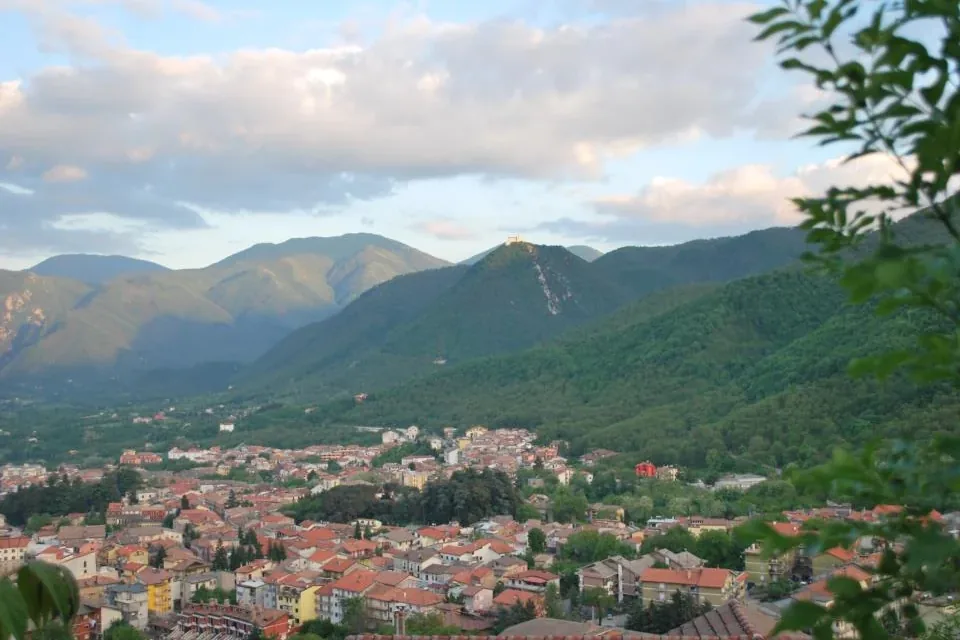
.jpg)

.jpg)
