
APULICA / FRUIT, VEGETABLES AND PULSES
Castagna di Montella (chestnut)
PGI · Fruit, vegetables and pulses · Campania
In brief
- A fresh or dried chestnut, 90% of the Palummina variety. (Qualigeo — Castagna di Montella IGP)
- It is produced in Montella, Bagnoli Irpino, Cassano Irpino, Nusco, Volturara Irpina and Montemarano, in the province of Avellino. (Qualigeo — Castagna di Montella IGP)
- It is hand-picked between September and October; fresh chestnuts are kept in water for 4-8 days and dried ones are slow-dried over a fire in stone kilns. (Qualigeo — Castagna di Montella IGP)
History and origin
The chestnut tree, native to Asia Minor, is thought to have reached the Montella area as early as the sixth or fifth century BC, helped by the climate and the volcanic soils of Irpinia. The Lombards are credited with the first recorded law protecting the crop, already considered a precious resource, not least because chestnut flour kept for a long time.
Since then the history of Montella and that of the chestnut have never parted: the tree gave fruit but also timber for building, and shaped rural life in the Terminio-Cervialto area. In the nineteenth century Montella chestnuts followed emigrants as far as the United States and Canada.
It was the first Italian fruit or vegetable product to receive a controlled designation of origin from the Ministry of Agriculture, in 1987; European recognition as a Protected Geographical Indication followed in 1996.
Sources: Qualigeo — Castagna di Montella IGP · Regione Campania — Prodotti tipici: Castagna di Montella IGP
Area and method of production
The production area is the Terminio-Cervialto district, in the province of Avellino, in the municipalities of Montella, Bagnoli Irpino, Cassano Irpino, Nusco, Volturara Irpina and Montemarano, the latter limited to the Bolifano district. The main variety is Palummina, which must account for at least 90 per cent; the rest comes from other native varieties, Verdola in particular.
Ripening is gradual and can last more than a month. Harvest, usually by hand and with careful selection, runs from September to October, followed by sorting, sizing and storage.
Fresh chestnuts are kept by curing, a soak in water at room temperature for four to eight days. Dried ones follow the traditional method of slow, continuous drying over a fire in two-level stone drying houses: it takes on average fifteen to twenty days, turning the nuts several times and checking the temperature daily.
Sources: Qualigeo — Castagna di Montella IGP · Regione Campania — Prodotti tipici: Castagna di Montella IGP
How to recognise it
Castagna di Montella is medium or medium-small in size, between 75 and 90 nuts per kilogram. The shape is rounded, with a flat lower face, a convex base and a blunt, slightly hairy tip.
This very shape is said to explain the name of the Palummina variety: it recalls a dove, palomma in dialect.
The skin is thin, dark brown and peels away easily; the flesh is white, crisp, sweet and pleasant. The chestnut is valued for its fragrance, flavour and keeping quality, and is sold fresh or dried, in the shell, shelled or as flour. It reaches the market from October; fresh chestnuts come in jute sacks or nets.
Sources: Regione Campania — Prodotti tipici: Castagna di Montella IGP · Qualigeo — Castagna di Montella IGP
In the kitchen
It is enjoyed roasted or boiled in water or milk. In the kitchen it goes into first and second courses, is excellent in soups and as a garnish for meat, but is at its best in desserts of every kind.
The best-known speciality is the castagna del prete, typical of Christmas: chestnuts in their shells are dried on racks over chestnut-wood fires, then toasted and rehydrated in water, sometimes in water and wine. Once shelled they are a deep brown, with a flavour reminiscent of caramelised sugar.
It is also much sought after for marrons glacés, jams, preserves and creams; locally a chestnut nougat is made too, listed among the traditional products.
Sources: Qualigeo — Castagna di Montella IGP · Regione Campania — Prodotti tipici: Castagna di Montella IGP · Sistema Irpinia (Provincia di Avellino) — Montella
Where to taste it
Montella lies in the Monti Picentini Park, in the Calore valley, surrounded by chestnut woods, beech forests and springs. The Verteglia plateau, on the slopes of Mount Terminio, is one of the places where the chestnut groves meet the mountain.
In town the MUCAM, the Montella Chestnut Eco-Museum, tells the product's story through a multimedia exhibition. Every year the town hosts the Festa della Castagna di Montella IGP, now at its forty-second edition, a festival of national importance with a food trail through the area's specialities.
The trip easily widens to nearby villages in the production area such as Bagnoli Irpino and Nusco: in season, between September and October, the fresh chestnut is the reason to explore this whole part of the Monti Picentini.
Sources: Sistema Irpinia (Provincia di Avellino) — Montella · Comune di Montella — Festa della Castagna di Montella IGP · Qualigeo — Castagna di Montella IGP
Protection
- Protected geographical indication (PGI) — PGI-IT-0309 (eAmbrosia — Castagna di Montella (PGI-IT-0309))
When
- Harvest: September–October (Qualigeo — Castagna di Montella IGP)
- Autumn
Where
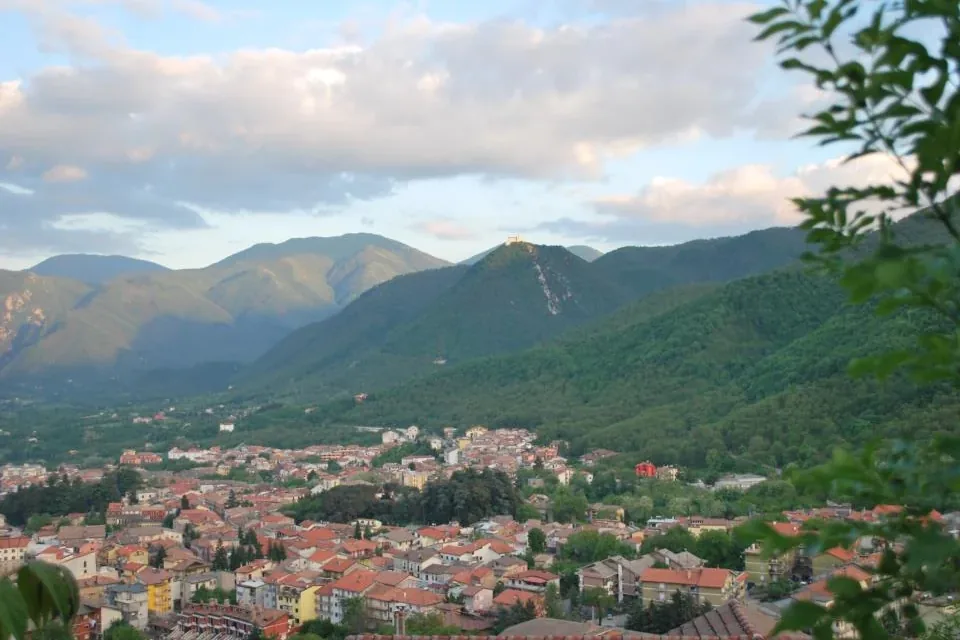
Montella
Chestnuts, heritage and nature as threads of a rural journey, with experiences chosen for the season.
Read the guide →Photo: Mies me at Italian Wikipedia / Wikimedia Commons — Public domain · Resized and converted to WebP.

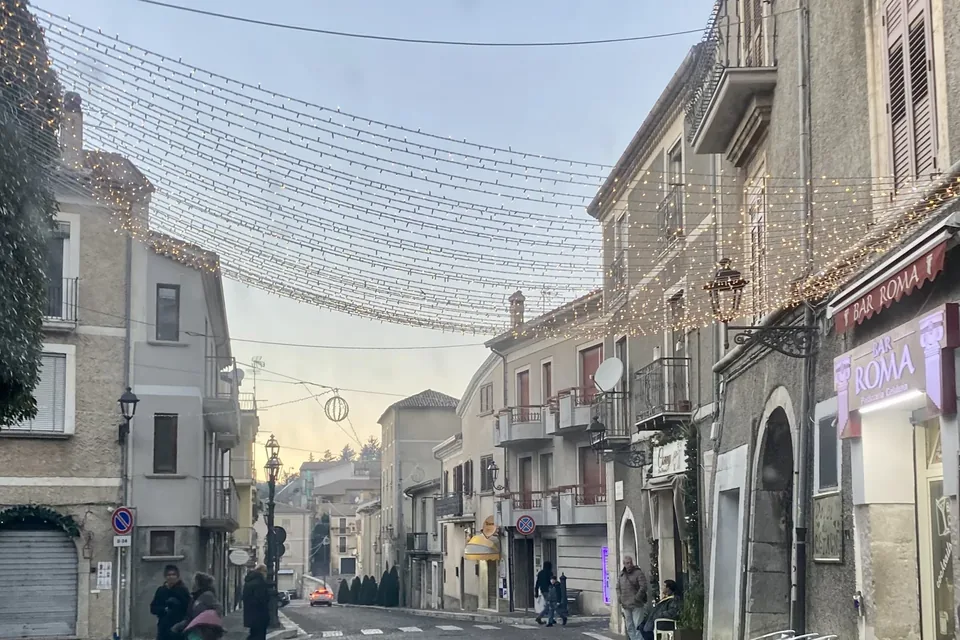
Bagnoli Irpino
A thread connecting village, mountains and truffles: a journey designed around the season rather than a single festival.
Read the guide →Photo: Corvettec6r / Wikimedia Commons — CC BY 4.0 · Resized and converted to WebP.
.jpg)
Read more
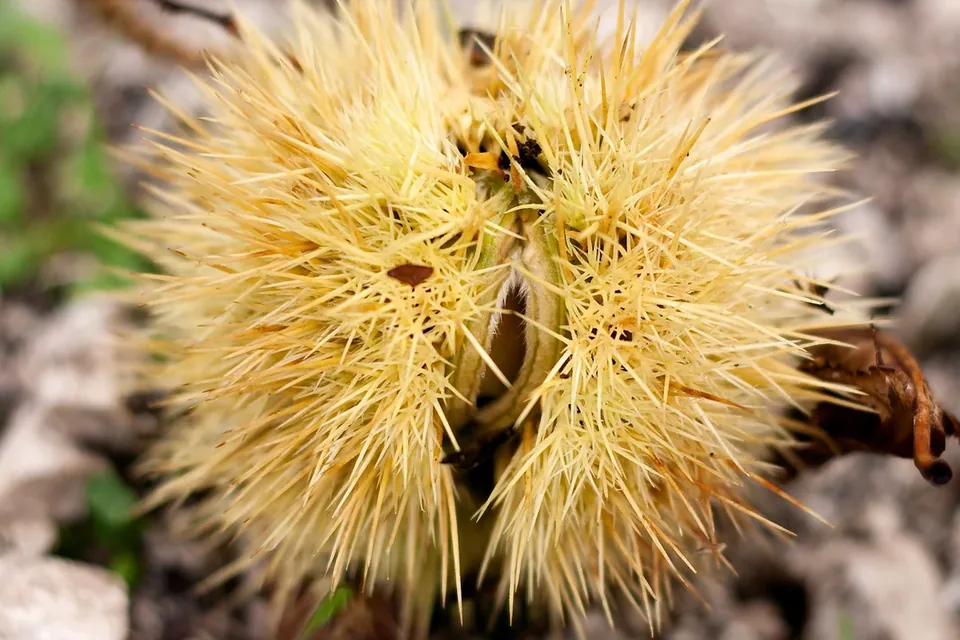
Castagna di Montella PGI
The PGI chestnut of upper Irpinia: varieties, history, water-curing and drying, the castagna del prete and the autumn festivals in Montella and Bagnoli Irpino.
Read the guide →Photo: Gianfranco Di Nuzzo / Wikimedia Commons — CC BY-SA 2.0 · Resized and converted to WebP.

Food festivals of Basilicata and Irpinia
Wine, truffle, chestnut, cheese and pasta festivals documented by provinces, municipalities and official bodies, with recent editions and tips for enjoying them without rushing.
Read the guide →