
Palummina and Verdola
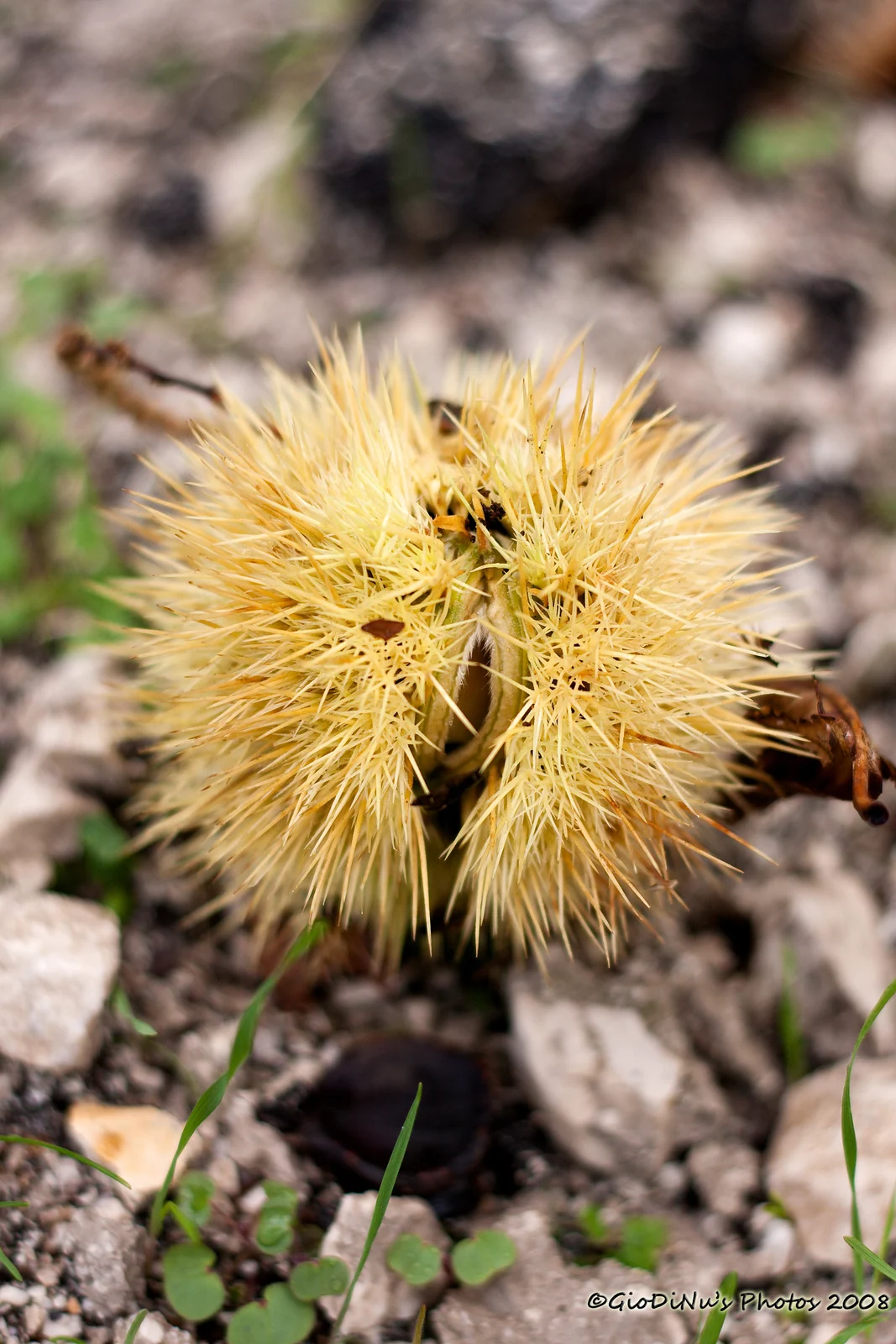
The Campania Region's profile defines the Castagna di Montella PGI as the fruit, fresh or dried, obtained 90 per cent from the Palummina variety and the remaining 10 per cent from Verdola and other local varieties. It is a medium or medium-small chestnut, 75 to 90 nuts per kilo, roundish, with a flat lower face, a convex base and a blunt, slightly hairy tip.
That shape explains the name: it recalls a dove, called palomma in the local dialect. The skin is thin, dark brown and easy to peel; the flesh is white, crisp and sweet. The Region sums up these qualities in three words: fragrance, flavour and keeping quality, meaning its ability to last a long time.
That is why the chestnut is used fresh, frozen too, and dried, with or without its shell. Besides roasting, it is much sought after by industry for marrons glacés, jams, chestnuts in syrup and purée; in the kitchen it garnishes meat and soups, but it is at its best in sweets.
Sources: Regione Campania, Assessorato Agricoltura — Castagna di Montella IGP
A long history, from the Lombards to emigrants
Evidence of chestnut trees in this area is very old. According to some theories reported by the Region and Qualigeo, cultivation of the tree, native to Asia Minor, dates back here to the 6th-5th century BC; the climate and the volcanic soils of the province of Avellino gave it an ideal setting.
The Lombards, in 571, are credited with the first recorded law protecting this crop, already precious then. In the Middle Ages chestnut flour mattered a great deal, as it kept for a long time and was used during the sieges of towns and castles. The chestnut tree was also the main source of timber for building, and since then the history of Montella and that of the tree have never parted.
In the nineteenth century the chestnut followed emigrants to the United States and Canada, which according to the Region still take more than half of the production. In 1987 it was the first and only Italian fruit or vegetable product to receive a DOC from the Ministry, replaced nine years later by the PGI under European regulation no. 1107 of 1996, among the first designations registered.
Sources: Regione Campania, Assessorato Agricoltura — Castagna di Montella IGP · Qualigeo — Castagna di Montella IGP
The area: six towns between Terminio and Cervialto
Production is concentrated in the Terminio-Cervialto area, in the territories of Montella, Bagnoli Irpino, Cassano Irpino, Nusco, Volturara Irpina and Montemarano, where Qualigeo singles out the Bolifano district. The Region stresses that quality comes from the variety, the soils, the climate and the skill of the chestnut growers together.
The figures in the regional profile show how much the chestnut matters in upper Irpinia: more than 4,000 hectares of groves, 40 per cent of the provincial area, and about 60 per cent of the entire chestnut harvest of the province of Avellino. In 2003 the area registered for certification was about 664 hectares, with 120 farms and four certified packers.
The Region also notes where the product goes: about half overseas, a quarter to European markets and the rest in Italy. For travellers this means that the best way to get to know the Castagna di Montella is still to come and look for it here, in the months when the groves are full of fruit.
Sources: Regione Campania, Assessorato Agricoltura — Castagna di Montella IGP · Qualigeo — Castagna di Montella IGP
Harvest, water-curing and drying
According to Qualigeo, ripening is gradual and can last more than a month. Harvesting is usually done by hand, using traditional methods with careful selection, from September to October; sorting, sizing and storage follow. The product goes on sale from October.
To keep the fruit fresh, water-curing is used: the chestnuts are soaked in water at room temperature for 4-8 days. Fresh chestnuts are sold in jute bags, nets or other containers of 1 to 10 kilos. For dried chestnuts the traditional technique of slow, continuous fire drying is followed, in two-level dryers usually built of stone.
During drying the nuts are turned several times and the inside temperature is checked daily to keep it constant; the process lasts on average 15-20 days. Dried chestnuts are sold whole, in or out of the shell, or ground into flour. Qualigeo advises storing them in cool, dry places away from heat sources.
Sources: Qualigeo — Castagna di Montella IGP
The castagna del prete
Among the ways the Castagna di Montella is prepared, the best known is the oven-baked chestnut called castagna del prete, typical of Christmas. The Campania Region describes how it is made: chestnuts in their shells are dried on wooden racks under which, for about fifteen days, fires of chestnut wood are lit.
Qualigeo calls these rooms gratali and completes the process: after slow fire drying the chestnuts are roasted in ventilated ovens and then rehydrated with water, or with water and wine. Shelled, they are deep brown with a distinctive flavour reminiscent of caramelised sugar.
The Region notes that an addition to the production rules has been requested for this type. In its catalogue of Montella's typical products, the Province of Avellino's Sistema Irpinia portal also mentions chestnut nougat, called pantorrone or spantorrone, a speciality made for over thirty years in chestnut-growing areas. These are two different ways of carrying the chestnut beyond autumn, into the winter festivities.
Sources: Regione Campania, Assessorato Agricoltura — Castagna di Montella IGP · Qualigeo — Castagna di Montella IGP · Provincia di Avellino, Sistema Irpinia — Montella
Montella: convents, castle and chestnut museum
Montella lies in the Monti Picentini Regional Park, in the Calore valley, at about 634 metres, and is a village rich in water and waterfalls. The Sistema Irpinia portal lists its sights: the sanctuary of the Santissimo Salvatore at 954 metres, a pilgrimage destination, the Castello del Monte, a Roman and Lombard stronghold where excavations revealed a necropolis, the Santa Maria della Neve complex and MUCAM, a multimedia eco-museum devoted to the PGI chestnut.
The best-known site is the convent complex of San Francesco a Folloni, a national monument, named after the wood where the first Franciscan community settled in 1222. After the violent earthquake of 1732 a new Baroque-Rococo church was built, with a majolica floor from 1750.
In the sacristy, the mausoleum of Diego I Cavaniglia, carved by Jacopo della Pila, is known as the Lovers' Monument. The complex includes a cloister, a museum of sacred art and a library founded in the 15th century with about 20,000 volumes. On the slopes of the Terminio, the Verteglia plateau offers trails among chestnut and beech woods.
Sources: Provincia di Avellino, Sistema Irpinia — Montella · Provincia di Avellino, Sistema Irpinia — Complesso conventuale di San Francesco a Folloni
Bagnoli Irpino and the Laceno
A few kilometres from Montella, Bagnoli Irpino stands at about 654 metres, surrounded by peaks above 1,700 metres, also in the Monti Picentini Park and crossed by the Calore. Sistema Irpinia explains that the name probably comes from the Latin baniolum, linked to the abundance of water.
In the historic centre you can visit the Collegiata di Santa Maria Assunta, with paintings, a wooden choir and a baptistery, the Giudeca, the town's first quarter with its alleys, the Cavaniglia Castle with its Norman layout and the civic tower with the Gavitone fountain, topped by a hornbeam about three hundred years old.
Above the town opens the Laceno plateau, with a karst lake, hiking trails and many outdoor activities. The Laceno also gives its name to Bagnoli's autumn festival, devoted to black truffle, chestnut and the plateau's local products, which Sistema Irpinia places between October and November and describes as an event that has grown to national importance.
Sources: Provincia di Avellino, Sistema Irpinia — Bagnoli Irpino
Autumn festivals in Montella and Bagnoli
Autumn is chestnut time in the towns' calendars too. In Bagnoli Irpino the municipal website lists the 47th Black Truffle Market of Bagnoli Irpino, Festival of chestnut, truffle and typical products of the Laceno, on 23, 24, 25, 29, 30 and 31 October 2026; notices on parking and services are published by the municipality.
In Montella the municipality lists among its events the 42nd Festival of the Castagna di Montella PGI, set in November 2026, and has also published the call for sponsors of the edition. Sistema Irpinia describes the festival as an event of national importance, with guest artists and a food trail built around the chestnut.
The two festivals follow each other closely in time and distance, and can be combined in a single trip in late October or early November. The detailed programme, with days and venues, should be checked on the municipal websites before travelling, since editions change from year to year.
Sources: Comune di Bagnoli Irpino — 47ª Mostra mercato del tartufo nero e Sagra della castagna · Comune di Montella — 42ª Festa della Castagna di Montella IGP · Comune di Montella — Home page · Provincia di Avellino, Sistema Irpinia — Montella
In the kitchen
The Montella chestnut is small and sweet, with a skin that peels easily: roast chestnuts are the most direct way to get to know it, perhaps in the square during the autumn festivals. Boiled in water or milk, as Qualigeo suggests, it becomes a simple, warm snack.
The castagna del prete, darker and softer, has a roasted taste that goes well with a glass of Irpinian red; it is eaten on its own, shelled at the table. Dried or as flour it goes into bean soups, sweets and side dishes for pork, and Montella's fresh cheeses, such as the treccia or scamorza, offset its sweetness.
I would taste at least one fresh and one preserved preparation, to understand why this chestnut has always been dried to last all year. And if the trip falls in December, I would look for the castagna del prete, which at that time is the most traditional way of bringing it to the table.
Taking it home
Fresh chestnuts do not keep long and dislike heat: for a long journey, dried ones, flour or castagne del prete are better, as they last for weeks. If you buy fresh ones in autumn, keep them in a paper or cloth bag, somewhere cool, and eat them soon, checking that the shells are glossy and full.
On the label, look for the words Castagna di Montella and the PGI symbol. Packs of fresh chestnuts in jute sacks or nets are handy in the car too; dried ones, shelled or as flour, take up little room in a suitcase.
Travellers in late October or early November find the best time to buy them, during the festivals, when local producers are in the square and can explain the difference between a freshly picked nut and one cured in water. Visits to farms and chestnut groves should always be arranged with the operators, because during the harvest months work in the woods is intense.
A thread for your journey
Journey idea: an autumn weekend between Montella and Bagnoli Irpino, with the convent of San Francesco a Folloni, a walk in the chestnut groves and the late-October and early-November festivals, after checking the official programmes. Farm visits arranged with operators.
Talk to us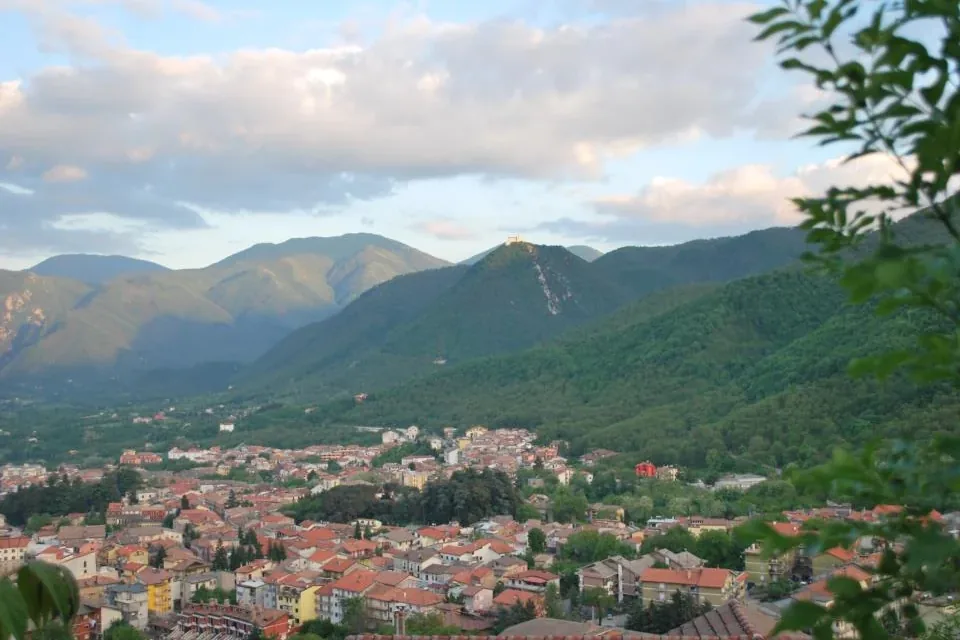


.jpg)
