
Why go
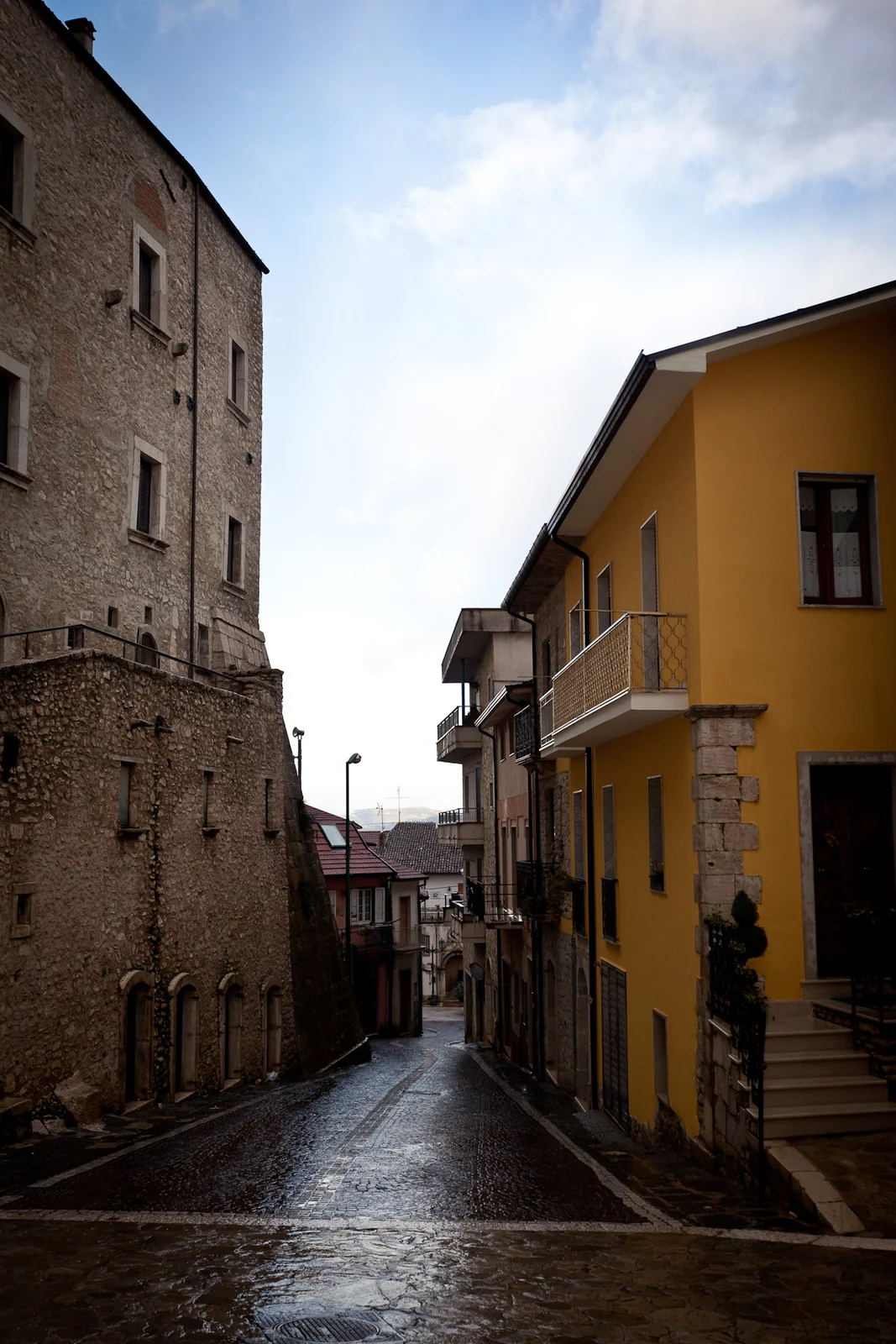
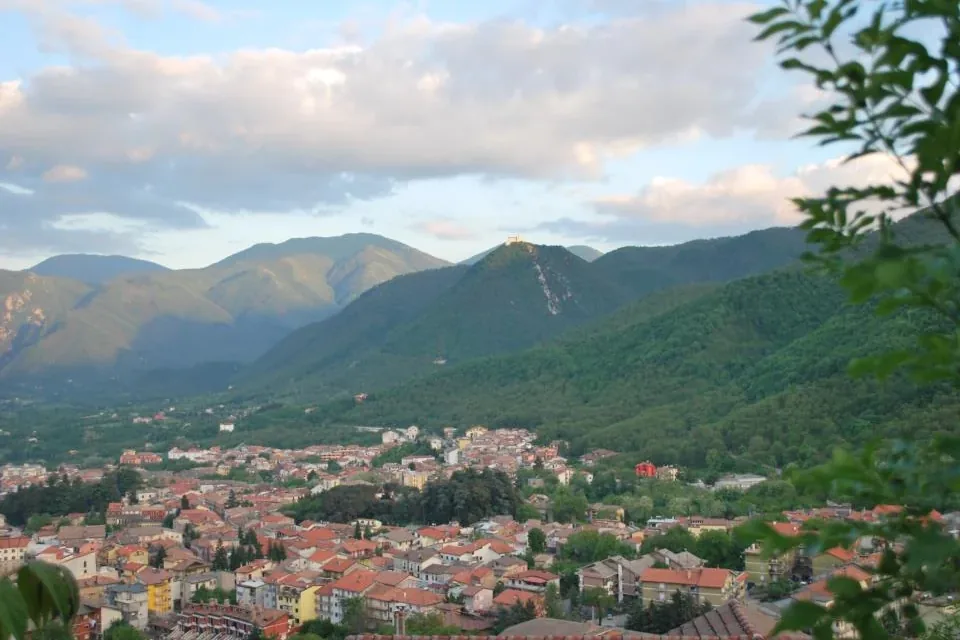
Taurasi is a village of just over two thousand people at about 400 metres, set on the hills of the Calore valley, 35 kilometres from Avellino. Its name is known far beyond Irpinia because it belongs to one of the most important reds of Campania and Southern Italy, Taurasi DOCG, made from Aglianico. The village belongs to the national Città del Vino association, founded in 1987 to bring together quality of landscape, wine and hospitality.
Coming here means understanding a wine through the place that gives it its name, and discovering that the place is older and richer than a label might suggest. The Castello Marchionale, where the composer Carlo Gesualdo was born, houses the Regional Wine Library of Irpinia with a sensory trail; the archaeological museum tells the story of a Copper Age village among the most significant in Campania; the Collegiate Church of San Marciano and the noble palaces form a compact historic centre.
The appellation, however, covers seventeen municipalities: Taurasi is the starting point for reading a landscape of hillside vineyards, not the only place to look for it.
Sources: Sistema Irpinia — Taurasi: luoghi, eventi, prodotti, storia · Provincia di Avellino, Sistema Irpinia — Castello Marchionale di Taurasi · ISPRA — Museo archeologico di Taurasi · Regione Campania — Taurasi DOCG
History
Taurasi’s history begins in prehistory. Excavations at San Martino, carried out by the archaeological superintendency between 1993 and 1996, uncovered many Eneolithic huts of different shapes and sizes, with a dry-stone perimeter wall that supported a wooden structure now lost; ISPRA describes them as the most significant evidence of that period in Campania. They add to earlier finds at Fontanalardo and Macchia dei Goti.
According to the provincial account the name may be of Osco-Sabellic origin, recalling the bull, guide animal of the local tribes. During the third Samnite war the town was taken by the Roman consul Lucius Cornelius Scipio Barbatus; later, as an ally of Rome, it saw its first villas built. The present village grew in Lombard times; the Normans rebuilt the castle that the Saracens had devastated and in 1101 entrusted it to the Sanseverino, under whom the community lived its most prestigious period.
The Caracciolo, Gesualdo, Carafa and finally the Latilla followed, until feudalism was abolished in 1806. Modern history is the story of wine: the production rules recall the founding in Avellino, in 1878, of the agricultural school promoted by Francesco De Sanctis, recognition as a DOC in 1970 and as a DOCG in 1993.
Sources: Sistema Irpinia — Museo Archeologico di Taurasi · ISPRA — Museo archeologico di Taurasi · Sistema Irpinia — Taurasi: luoghi, eventi, prodotti, storia · Regione Campania / Gazzetta Ufficiale — Disciplinare Taurasi, 2020 · Regione Campania — Taurasi DOCG
What to see
The Castello Marchionale dominates the old centre. Probably of Lombard origin, destroyed by the Saracens in the early tenth century and enlarged by the Normans with a keep, it was owned in turn by the De Taurasi, Gesualdo, Caracciolo, Pignatelli and Carafa families. Today it belongs to the municipality and since 2006 its second floor has housed the Regional Wine Library of Irpinia; in the old stables, the Tau Sensory Trail introduces Taurasi, Fiano di Avellino and Greco di Tufo. Among its rooms stand out the Prince’s Room, where Carlo Gesualdo was born in 1566, and the chapel of San Pietro a Castello with its marble altar and stuccoed vault. The provincial page indicates visits by booking.
Beside the castle, the Collegiate Church of San Marciano, known as the Duomo, may have been founded in the seventh century on the ruins of a pagan temple; it was reconsecrated in 1150, became a collegiate church in 1590 and was rebuilt in Baroque style in 1745; its plain façade is partly hidden by the castle.
In the municipal building on Via del Convento, near the sixteenth-century church of the Santissimo Rosario, the Archaeological Museum displays pottery, cinerary urns and stone tools from the Eneolithic huts, arranged hut by hut with reconstruction panels. The walk ends among the noble palaces, from Palazzo degli Uberti to Palazzo Maffei.
Sources: Provincia di Avellino, Sistema Irpinia — Castello Marchionale di Taurasi · Sistema Irpinia — Collegiata di San Marciano Vescovo · Sistema Irpinia — Museo Archeologico di Taurasi · Sistema Irpinia — Taurasi: luoghi, eventi, prodotti, storia
Food and wine
Taurasi DOCG is made from at least 85 per cent Aglianico, with any balance from other non-aromatic red grapes. The production rules set two types: Taurasi, aged at least three years including one in wood, and Taurasi Riserva, aged at least four years including eighteen months in wood. The Region describes it as deep ruby turning to garnet and, with time, to orange glints, with an ethereal bouquet and a dry, full, harmonious taste; it is served with pasta in meat sauce, game, roast red meat and mature hard cheeses.
The rules also explain the landscape: only well-exposed hillside vineyards are allowed, never damp valley floors, between 400 and 700 metres; around Taurasi the clays are covered with volcanic ash and lapilli deposits. Rain falls mostly in autumn and winter, while summer is dry. The area covers seventeen municipalities, from Lapio to Paternopoli, from Montemarano to Mirabella Eclano.
Besides wine, the provincial account mentions the Maiatica cherry, a traditional product of the Taurasi countryside, large, deep red and juicy, and the Irpinia – Colline dell’Ufita PDO extra virgin olive oil, mostly from Ravece olives, with a bitter and peppery taste.
Sources: Regione Campania / Gazzetta Ufficiale — Disciplinare Taurasi, 2020 · Regione Campania — Taurasi DOCG · Sistema Irpinia — Taurasi: luoghi, eventi, prodotti, storia
Things to do
The most natural experience is a winery visit. Set up the tasting around two comparable wines from the same producer, a Taurasi and a Riserva, or two vintages, and ask what was decided in the vineyard and the cellar: the rules on time in wood and in bottle provide concrete questions. A visit to the Regional Wine Library and the Tau Sensory Trail in the castle is a good introduction before entering the wineries.
Over the years Taurasi has hosted public sensory-analysis sessions and trails devoted to Aglianico, and days when the Irpinia Express heritage train stopped in the village with guided visits and tastings: the provincial site keeps an archive of them. They show what the village can offer; for future editions check with the municipality or the InfoPoint.
Between tastings it is worth walking. The old centre can be covered on foot in a short time, from the castle to the Collegiate Church, from the archaeological museum to the palaces; around it, country lanes cross the vine rows of the Calore valley, and that is where wine becomes landscape. The museum, with its reconstruction of the huts, is a stop that also suits families.
Sources: Regione Campania / Gazzetta Ufficiale — Disciplinare Taurasi, 2020 · Provincia di Avellino, Sistema Irpinia — Castello Marchionale di Taurasi · Sistema Irpinia — Taurasi: luoghi, eventi, prodotti, storia · Sistema Irpinia — Museo Archeologico di Taurasi
When to go
The liveliest month is August. The Taurasi Wine Fair, an event of national standing, takes place every year at that time and draws thousands of people to the village; in 2022 it filled the days around the mid-August holiday. Also in August is the Taurasi Film Festival, devoted to short films.
The rest of the year has a quieter rhythm, suited to visiting wineries and the museum at leisure. In spring 2024 the village offered sensory trails devoted to Aglianico, and in 2023 a celebration for the thirtieth anniversary of the DOCG; in summer the Irpinia Express heritage train stopped in Taurasi with visits and tastings. These are past events, cited to give an idea of the occasions: future dates need checking.
As for the landscape, the production rules describe dry summers and rain concentrated in autumn and winter: spring and early autumn are pleasant times to walk among the vines, while the harvest months are when wineries are busiest and visits should be arranged well in advance. The patron saint, San Marciano, binds the community to its Collegiate Church.
Sources: Sistema Irpinia — Taurasi: luoghi, eventi, prodotti, storia · Regione Campania / Gazzetta Ufficiale — Disciplinare Taurasi, 2020 · Sistema Irpinia — Collegiata di San Marciano Vescovo
Getting there and around
Taurasi lies 35 kilometres from Avellino, the provincial capital with a station on the national rail network. It borders Lapio, Luogosano, Mirabella Eclano, Montemiletto, Sant’Angelo all’Esca and Torre le Nocelle, all wine villages: the most practical way to move between the village and the wineries scattered over the hills is by car, with a driver if tastings are planned.
The village is also a station on the Irpinia Railway, the historic 119-kilometre line between Avellino and Rocchetta Sant’Antonio-Lacedonia. The FS Foundation describes the stretch where the track, after Montemiletto, crosses the Calore on the Ponte Principe and follows the river; on the Foundation’s map the Principe viaduct is marked near Taurasi. Regular service has been suspended since 2010, and the line, now part of the Binari senza tempo heritage-railway project, carries tourist trains on scheduled dates. Sistema Irpinia lists Taurasi among the railway villages, along with Lapio, Luogosano and Sant’Angelo all’Esca.
Once in the village, everything is on foot: castle, Collegiate Church, Rosario church, the municipal building with the museum and the palaces are all within a very short radius.
Sources: Sistema Irpinia — Taurasi: luoghi, eventi, prodotti, storia · Fondazione FS — Binari senza tempo, la Ferrovia dell’Irpinia Avellino–Rocchetta · Fondazione FS — Binari senza tempo · Sistema Irpinia — Borghi della Ferrovia Avellino–Rocchetta
Nearby
The Calore valley is a single landscape of vines, and the neighbouring villages show other faces of it. Lapio, along the railway, is a village linked to Fiano di Avellino, the white DOCG that the Region describes with notes of toasted hazelnut and as capable of ageing; Luogosano, a land of Taurasi and olive oil, and Sant’Angelo all’Esca, with its winemaking traditions, also belong to the DOCG area. Visiting two or three of these centres lets you compare different wines of the same family.
Avellino, 35 kilometres away, provides cultural context: the Museo Irpino in the Bourbon Prison and the Palazzo della Cultura, the Clock Tower and the Baroque centre of the Caracciolo, and city cooking with cicci di Santa Lucia and pizza chiena. It is a good stop at the start or end of the journey.
To the south the historic railway and the road climb to the Monti Picentini: Montella with its PGI chestnut and the convent of San Francesco a Folloni, Bagnoli Irpino with black truffles and the Laceno plateau. To the east, Villamaina and the Ansanto valley add water, archaeology and a quieter dimension to the journey.
Sources: Sistema Irpinia — Borghi della Ferrovia Avellino–Rocchetta · Regione Campania — Fiano di Avellino DOCG · Regione Campania — Taurasi DOCG · Sistema Irpinia — Avellino · Fondazione FS — Binari senza tempo, la Ferrovia dell’Irpinia Avellino–Rocchetta
Local tourist information
Local tourist offices help with opening times, events and transport on the day.
- InfoPoint Distretto 15 — Sistema Irpinia (Provincia di Avellino) · Largo Duomo 1, 83030 Taurasi (AV) · +39 0827 74206 · Official website
Source: Sistema Irpinia — InfoPoint Distretto 15 · Sistema Irpinia — Taurasi: luoghi, eventi, prodotti, storia · checked on
Where to stay
In the municipality of Taurasi the national database of the Ministry of Tourism lists 7 accommodation businesses with a verified CIN code: 1 hotels, 2 other licensed accommodation and 4 other types such as B&Bs and private rentals.
Sources: Ministero del Turismo – Banca Dati Strutture Ricettive (dashboard pubblica), 2026-10-12
YOUR JOURNEY
How to shape a journey here
Village, wine and food. Wineries, encounters and services are selected for the journey; availability is not pre-promised.
Talk to us about it
.jpg)


