
APULICA / WINES
Taurasi
DOCG · Wines · Campania
In brief
- A red from at least 85% Aglianico, optionally completed with other non-aromatic red grapes from the area. (Qualigeo — Taurasi DOP)
- The area takes in seventeen municipalities in the province of Avellino, among them Taurasi, Lapio, Mirabella Eclano and Montemarano. (Qualigeo — Taurasi DOP)
- It ages for at least three years, one of them in cask; the Riserva for at least four, with eighteen months in wood. (Qualigeo — Taurasi DOP)
- Winemaking and the compulsory ageing must take place in the province of Avellino. (Qualigeo — Taurasi DOP)
- Aglianico ripens late, often between late October and early November, giving thick-skinned grapes. (Consorzio tutela vini d'Irpinia — Vitigni)
History and origin
Taurasi is made from Aglianico, a very ancient grape, probably from Greece, which reached Italy between the seventh and sixth centuries BC. The wine takes its name from the town of Taurasi, called Taurasia by the Romans. The story goes that after the battle of Philippi the land was given to Roman veterans, who planted the vine they had brought from Macedonia alongside the Greek one: from then on history and legend intertwine.
In the nineteenth century, between the Sabato and Calore hills, what is now called the wine railway was built, and Taurasi station was among its most important. The Royal School of Viticulture and Oenology in Avellino studied the wine closely and helped make the area one of Italy's leading wine centres for production and exports.
Taurasi became a DOC in 1970 and a DOCG in 1993, the first controlled and guaranteed designation of origin in southern Italy.
Sources: Consorzio Tutela Vini d'Irpinia: il vitigno Aglianico · Regione Campania, Assessorato Agricoltura: Taurasi DOCG · eAmbrosia — Taurasi (PDO-IT-A0237)
Area and method of production
The DOCG area covers seventeen towns in the province of Avellino around Taurasi: among them Bonito, Castelfranci, Castelvetere sul Calore, Fontanarosa, Lapio, Luogosano, Mirabella Eclano, Montemarano, Montemiletto, Paternopoli and Venticano. It is a landscape of hills, mostly between 300 and 700 metres, with harsh, often snowy winters, mild summers and wide day-night temperature swings.
The wine is made from at least 85% Aglianico, with a possible balance of other non-aromatic local red grapes. Aglianico ripens late: harvest falls between the second half of October and the first half of November. The grape is rich in tannins and needs care in maceration and in the choice of wood for ageing.
The specification requires at least three years of ageing, one of them in barrel; the Riserva needs four, with at least eighteen months in wood. Winemaking and mandatory ageing must take place in the province of Avellino.
Sources: Regione Campania, Assessorato Agricoltura: Taurasi DOCG · Qualigeo — Taurasi DOP · Consorzio Tutela Vini d'Irpinia: Taurasi DOCG
How to recognise it
The Aglianico bunch is cylindrical or conical, compact but not too large; the berry is small, round or slightly oval, blue-violet and covered in bloom, sweet and slightly tart.
In the glass Taurasi is deep ruby red, which with age turns towards garnet and finally takes on orange glints. The nose offers black plum, blueberry, ripe red fruit, aromatic herbs, spices, liquorice, tobacco and leather; the palate is dry, full and warm, with lively tannins, marked acidity, light savouriness and a long finish. Minimum alcohol is 12%.
It is a wine for long ageing: the consortium says a good Taurasi can develop for 15-20 years and more, gaining notes of leather, tobacco, mushrooms and undergrowth, and that the Riserva often shows its best ten years after the harvest.
Sources: Regione Campania, Assessorato Agricoltura: Taurasi DOCG · Qualigeo — Taurasi DOP · Consorzio Tutela Vini d'Irpinia: Taurasi DOCG · Consorzio Tutela Vini d'Irpinia: il vitigno Aglianico
In the kitchen
Taurasi is served at 16 to 18 degrees and calls for dishes with character. The regional sheet suggests pasta with meat sauce, game birds cooked in a casserole, roast red meats and hard aged cheeses.
The consortium adds grilled meats, wild boar, hare, braised dishes, roast pork, lamb and kid, and among cheeses the long-aged ones such as caciocavallo podolico and mature provolone.
With age the wine also opens up to truffle dishes and the spiced dishes of Irpinian tradition. As a curiosity, the consortium even suggests trying it with chocolate, a sign of a wine able to stand up to strong, lingering flavours.
Sources: Regione Campania, Assessorato Agricoltura: Taurasi DOCG · Consorzio Tutela Vini d'Irpinia: Taurasi DOCG
Where to taste it
The place to start is Taurasi, a village in the Calore Valley at about 400 metres, crossed by the river. Here the Marchional Castle, probably Lombard in origin, the Collegiate Church of San Marciano and the archaeological museum tell a very old story, and the town belongs to the national Città del Vino association.
Every August Taurasi hosts the Fiera Enologica, a wine fair of national standing that draws thousands of people. Autumn, with the late Aglianico harvest between October and November, is the other right time to visit the hills.
Around it, DOCG towns such as Lapio, Mirabella Eclano, Montemarano, Paternopoli and Castelfranci complete an itinerary through the vineyards and villages of Irpinia.
Sources: Sistema Irpinia, Provincia di Avellino: Taurasi · Consorzio Tutela Vini d'Irpinia: Taurasi DOCG
Protection
- DOCG, PDO wine — PDO-IT-A0237 (eAmbrosia — Taurasi (PDO-IT-A0237) · Qualigeo — Taurasi DOP)
When
- Harvest: October–November (Consorzio tutela vini d'Irpinia — Vitigni)
- Autumn
Where
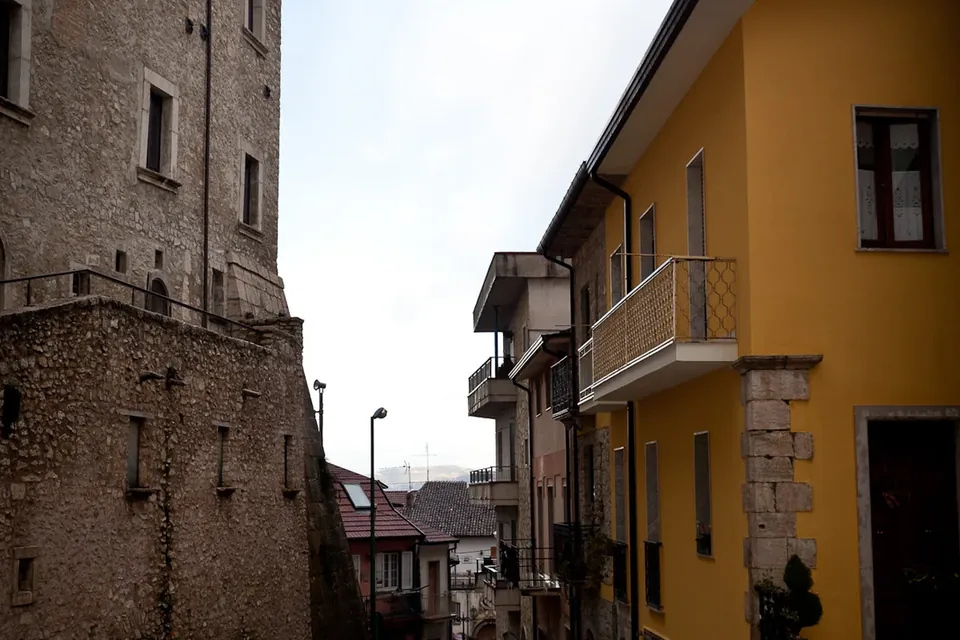
Taurasi
An Irpinia village from which to develop a journey around wine, heritage and food, with encounters still to be selected.
Read the guide →Photo: jimmyweee / Wikimedia Commons — CC BY 2.0 · Resized and converted to WebP.
.jpg)
Read more
Food festivals of Basilicata and Irpinia
Wine, truffle, chestnut, cheese and pasta festivals documented by provinces, municipalities and official bodies, with recent editions and tips for enjoying them without rushing.
Read the guide →Taurasi DOCG
Irpinia's great red: grape, history and land, DOCG rules, the Castello Marchionale with the regional wine library, the village and the festival calendar.
Read the guide →