
APULICA / Food guides
Taurasi: Irpinia's Aglianico among hills, a castle and late harvests
Taurasi is Irpinia's most structured red, made from Aglianico on inland hills of the province of Avellino, only a few dozen kilometres from the sea yet with a mountain climate. It is one of Irpinia's three DOCGs, with Fiano di Avellino and Greco di Tufo. This guide lines up the grape, the land and the appellation rules, then leads to the Castello Marchionale in Taurasi and the events documented by the Province.
Aglianico, an old grape that ripens late
The Consorzio tutela vini d'Irpinia presents Aglianico as the red grape that symbolises southern Italy, probably of Greek origin and brought to Italy between the 7th and 6th centuries BC. It does best in clay and limestone soils, has medium or low vigour, buds late, is sensitive to downy and powdery mildew but resists rot well; the berries are small, juicy and blue-violet.
Ripening is late: for Taurasi the harvest falls between the second half of October and the first half of November. The consortium describes a tannic, delicate grape that calls for care in maceration and in the choice of wood for ageing.
The result is a deeply coloured wine with structured tannins, whose aromas of red fruit and spice evolve over the years towards leather, tobacco and liquorice. In Irpinia Aglianico is grown mainly in the Taurasi municipalities and in the Campi Taurasini.
Sources: Consorzio tutela vini d'Irpinia — Vitigni · Consorzio tutela vini d'Irpinia — Aglianico · Consorzio tutela vini d'Irpinia — Taurasi DOCG
From the Wine Railway to the South's first DOCG
The name comes from the town of Taurasi, which the Romans called Taurasia. The consortium relates a story in which history and legend blend: after the battle of Philippi the lands of Taurasia were reportedly given to Roman veterans, who planted the vine brought from Macedonia alongside the local one.
The modern milestones are better documented. In the 19th century, between the hills of the Sabato and Calore rivers, what is now called the Wine Railway was built, with one of its main stations at Taurasi; the Royal School of Viticulture and Oenology in Avellino spread studies on the wine and helped make the area a major centre of production and export.
In 1970 Taurasi was the first wine in central-southern Italy to obtain DOC status, and in 1993 the first DOCG in the South. The consortium still regards it as a benchmark among the great southern reds for structure and longevity.
Sources: Consorzio tutela vini d'Irpinia — Aglianico · Consorzio tutela vini d'Irpinia — Taurasi DOCG
Mountain country close to the sea
According to the consortium, Irpinia lies between 300 and 1,800 metres and receives about 1,300 millimetres of rain a year, mostly in winter. Soils are marly-limestone and marly-sandstone, with tuff deposits, and have benefited from the activity of nearby volcanic areas: Vulture, Vesuvius and the mountains around Caserta.
The province of Avellino is less than 50 kilometres from Naples and about 40 from the Amalfi Coast, yet it has an inland climate, with harsh, often snowy winters and mild summers. It has more than seventy castles, mostly Lombard and Norman, and three DOCGs: Taurasi, Greco di Tufo and Fiano di Avellino.
This mix of altitude, rainfall and varied soils explains why three such different wines are born a few kilometres apart: two whites and a red that, on the same trip, show three sides of the same province.
Sources: Consorzio tutela vini d'Irpinia — Territorio · Consorzio tutela vini d'Irpinia — Taurasi DOCG
Seventeen municipalities on the Calore hills
The DOCG area, the Campania Region and the consortium note, covers the whole territory of seventeen municipalities in the province of Avellino: Taurasi, Bonito, Castelfranci, Castelvetere sul Calore, Fontanarosa, Lapio, Luogosano, Mirabella Eclano, Montefalcione, Montemarano, Montemiletto, Paternopoli, Pietradefusi, Sant'Angelo all'Esca, San Mango sul Calore, Torre le Nocelle and Venticano, about 245 square kilometres in all.
The consortium describes a landscape of low, middle and high hills, between about 180 and 700 metres, with the band from 300 to 500 metres covering more than half the area. The subsoil is very varied, with sandstones, conglomerates and clays, marly limestones in the north-west, and soils ranging from deep ones on marl to those formed from volcanic ash.
The climate is harsh in winter and mild in summer, with strong temperature swings in the warm months: according to the consortium, these day-night differences have the greatest effect on grape quality.
Sources: Regione Campania, Assessorato all'Agricoltura — Taurasi DOCG · Consorzio tutela vini d'Irpinia — Taurasi DOCG · Qualigeo — Taurasi DOP
The rules: a three-year wait
The specification requires at least 85% Aglianico; the rest may come from other non-aromatic red grapes authorised in Campania. Taurasi ages for at least three years, one of them in wood; the Riserva for at least four, 18 months in wood. It is a wine built to last: the consortium writes that a good vintage can age fifteen or twenty years, and that the Riserva often shows its best after ten.
Qualigeo describes it as intense ruby turning garnet and orange, with aromas of black plum, blueberry and herbs, lively tannins and a savoury note. The Campania Region speaks of an ethereal, characteristic nose and a dry, full, harmonious taste.
The consortium adds that Taurasi's true colour appears only after a long journey, when garnet tones and, over time, orange glints emerge; the bouquet recalls jams of red and black fruit, liquorice, tobacco and spice.
Sources: Qualigeo — Taurasi DOP · Consorzio tutela vini d'Irpinia — Taurasi DOCG · Regione Campania, Assessorato all'Agricoltura — Taurasi DOCG
Who protects the designation
By a decree of 27 September 2017, published in the Official Gazette on 17 October 2017, the Ministry of Agriculture recognised the Consorzio tutela vini d'Irpinia and entrusted it with protecting, promoting and enhancing the Fiano di Avellino, Greco di Tufo and Taurasi DOCGs and the Irpinia DOC.
The same consortium therefore looks after the province's three great wines, a useful detail for anyone wanting to compare them on one trip. The consortium also clarifies a distinction that often confuses: Campi Taurasini is a subzone of the Irpinia DOC, covers 24 municipalities, has shorter ageing and a more approachable style, while Taurasi DOCG has 17 municipalities and a longer minimum ageing.
For buyers the difference is on the label: Taurasi and Taurasi Riserva are DOCG, while Irpinia Aglianico and Irpinia Campi Taurasini belong to the DOC.
Sources: Gazzetta Ufficiale — Riconoscimento del Consorzio tutela vini d'Irpinia (2017) · Consorzio tutela vini d'Irpinia — Taurasi DOCG
The Castello Marchionale and the regional wine library
Italia.it relates that the Castello Marchionale of Taurasi probably dates from the 7th century and was enlarged by the Normans with a keep. Since 2006 the palace, owned by the municipality, has housed the regional wine library for the wines of Irpinia; in the stables the Tau sensory trail introduces Taurasi, Fiano di Avellino and Greco di Tufo.
In the Prince's Room a plaque marks the spot where Carlo Gesualdo, one of Italy's best-known composers, was born in 1566. Sistema Irpinia notes that the castle, well preserved and altered several times, was home to families such as the Gesualdo, Filangieri, Ludovisi and Carafa.
It is the natural starting point for a visit: in a few rooms you find the village's feudal history, Renaissance music and the province's three guaranteed-origin wines, before heading down to the vineyards.
Sources: Italia.it — Castello Marchionale di Taurasi · Sistema Irpinia, Provincia di Avellino — Il comune di Taurasi
The village of Taurasi
Sistema Irpinia, the Province of Avellino's portal, describes Taurasi as a village of just over two thousand people in the Calore valley, at about 400 metres and 35 kilometres from Avellino. The name may have an Osco-Sabellian origin linked to the bull, a mythical animal of the local tribes; the patron saint is San Marciano.
Its history is long: finds at San Martino attest to its prehistoric origins, and the archaeological museum holds objects back to the Eneolithic. Conquered by the Romans in the third Samnite war, the present town arose in the Lombard period; the Normans rebuilt the castle wrecked by the Saracens and in 1101 gave it to the Sanseverino family, after which other feudal lords followed until 1806.
In the village you can visit the Baroque collegiate church of San Marciano, the church of the Holy Rosary and several noble palaces. The portal also points to two local products: the Maiatica cherry, a traditional product of the Taurasi area, and Irpinia Colline dell'Ufita PDO extra virgin olive oil, made largely from Ravece olives.
Sources: Sistema Irpinia, Provincia di Avellino — Il comune di Taurasi
August: the Wine Fair
The Province of Avellino's Sistema Irpinia portal collects the events linked to Taurasi DOCG and describes the Taurasi Wine Fair as an event of national importance that draws thousands of people every August. In 2026 it was held from 11 to 15 August, with wine and music in the village; in 2025 from 13 to 17 August.
In 2023 the Fair marked the DOCG's thirtieth anniversary, also celebrated with meetings in Montemarano and at the Castello Marchionale. The portal also lists guided tours and tastings in Taurasi linked to the Irpinia Express initiative, with stops at the castle and the regional wine library, and notes that in August the village also hosts the Taurasi Film Festival, devoted to short films.
Taurasi is a member of the national Città del Vino association, founded in Siena in 1987 to promote tourism combining landscape, wine and local products. Dates for future years should be checked on the Province's portal.
Sources: Provincia di Avellino, Sistema Irpinia — Taurasi DOCG · Sistema Irpinia, Provincia di Avellino — Il comune di Taurasi
Winter: the soffritto challenge
Among winter events, Sistema Irpinia documents the Pork Soffritto Challenge, promoted by the Slow Food Condotta Irpinia Colline dell'Ufita e Taurasi. The 16th edition took place on Sunday 15 March 2026 in the old centre and at the Castello Marchionale: fifteen food communities competed with their own version of soffritto, 'o suffritt, a pork offal soup emblematic of the inland areas, judged by technical juries and a popular jury. The day began in the morning with the 'Prima Mangiata' and ended in the evening with the bonfire of San Ciriaco, with local Aglianico reds in the glasses. The 2027 dates have not yet been published: the challenge usually falls in March, but check the Province's portal.
Sources: Provincia di Avellino, Sistema Irpinia — XVI Disfida del Soffritto di Maiale, Taurasi (2026) · Provincia di Avellino, Sistema Irpinia — Disfida del soffritto di maiale a Taurasi
At the table and in the suitcase
Taurasi is a wine that asks for time and food. The Campania Region recommends serving it at 16-18 degrees with pasta in meat sauce, casseroled game birds, roast red meat and aged hard cheeses; the consortium adds hare, wild boar, lamb and kid, braises and grilled dishes, and long-aged cheeses such as caciocavallo podolico.
It is worth opening it a little in advance and serving it in large glasses. If possible, I would try two different vintages: the gap between a young Taurasi and one with a few more years tells the Aglianico story better than any description.
Aglianico is harvested late, so late autumn is when the hills are liveliest; August has the fair and the evenings in the village. Winery visits must always be arranged with the operators. Taurasi travels well and can wait for years in a cellar, as long as it is kept lying down, dark and cool.
Sources: Regione Campania, Assessorato all'Agricoltura — Taurasi DOCG · Consorzio tutela vini d'Irpinia — Taurasi DOCG
A thread for your journey
Journey idea: a day in Taurasi between the Castello Marchionale, the regional wine centre's sensory route and the village, with a winery visit in the Campi Taurasini arranged with operators and two vintages compared at dinner.
Talk to us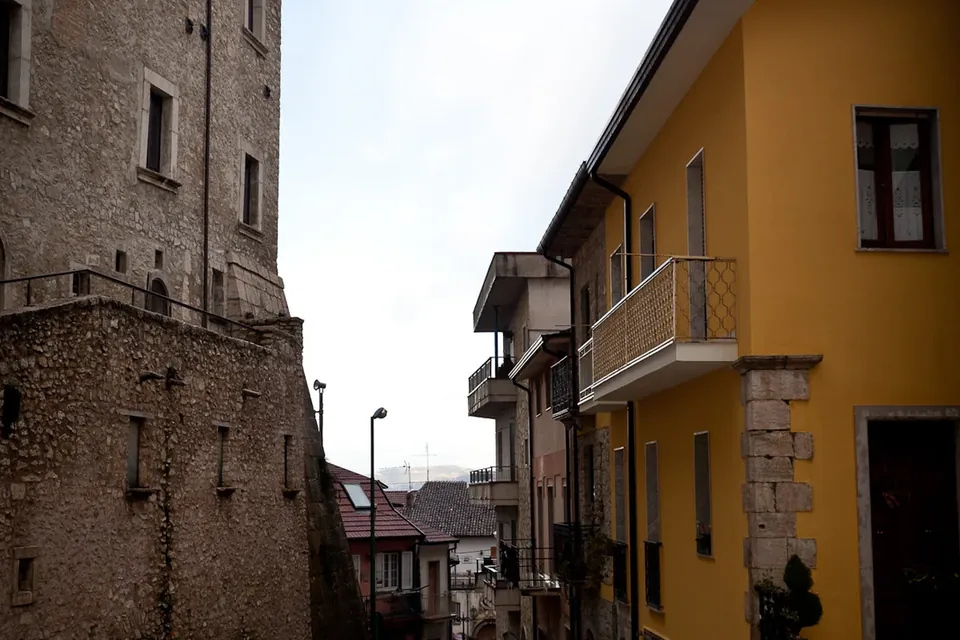
.jpg)
