
APULICA / Food guides
Pecorino di Carmasciano: the cheese that tastes of sulphur, in the Mefite valley
Pecorino di Carmasciano comes from a place Virgil considered a gateway to the underworld: the Ansanto valley, where a small sulphurous lake bubbles with gas emissions and sulphur reaches the pasture grass. The result is a unique sheep's cheese with a recognisable sulphur note, made by a few families between Rocca San Felice, Guardia Lombardi, Frigento and Sant'Angelo dei Lombardi. This guide explains how it is made, why it is a Slow Food Presidium, what to see around the Mefite and how to plan a day in the quietest part of upper Irpinia.
A small grazing area
The Slow Food Foundation describes Carmasciano as a small grazing area extending about four kilometres around, in the Ansanto valley at the heart of upper Irpinia. Most of the pastures lie on the south-facing slope that descends from Monte Forcuso, between 800 and 500 metres. The locality falls within the municipalities of Sant'Angelo dei Lombardi, Rocca San Felice, Guardia Lombardi and Frigento, in the province of Avellino. The Province's Sistema Irpinia portal places production in the locality of the same name between Guardia Lombardi and Rocca San Felice and stresses an entirely artisanal method. The Campania Region, in its list of traditional cheeses, notes that hill and mountain pastures are the ideal food for Bagnolese and Laticauda sheep, local breeds often at risk of extinction that give little milk but of high quality.
Sources: Fondazione Slow Food — Presidio Pecorino di Carmasciano · Provincia di Avellino, Sistema Irpinia — Rocca San Felice · Regione Campania — Prodotti agroalimentari tradizionali: formaggi
The Mefite's sulphur in the grass
The cheese's secret lies in the Mefite of Rocca San Felice, a small sulphurous lake fed by sulphur pools that bubbles with gas rising from below. Sistema Irpinia calls it a rare phenomenon of gas emissions in non-volcanic land, and explains that the emissions affect vegetation within a radius of about three kilometres: the species that survive are grasses and hay destined precisely for pecorino di Carmasciano. According to Slow Food, the sulphur released by the waters marks the forage plants, which in turn give the milk a particular, complex flavour. The result is a cheese with a strong sulphur aroma, alongside hints of fresh milk, freshly cut grass and flowers. On the palate it is first sweet and delicate, then slightly piquant, with a light sulphurous finish.
Sources: Fondazione Slow Food — Presidio Pecorino di Carmasciano · Provincia di Avellino, Sistema Irpinia — Geosito della Mefite in Valle d'Ansanto
How it is made
The Presidium's production rules, as summarised by Slow Food, start with raw sheep's milk, without added starter cultures, poured into the 'caccavo', a copper cauldron, and warmed to 36-38 degrees over a wood fire. Coagulation uses lamb, kid or even calf rennet. The curd is broken into rice-sized grains and left to settle at the bottom of the cauldron; then the paste is gathered, placed in wicker moulds and scalded in hot whey. Salting is dry. Production is concentrated between February and July. The cheese reaches its best at around twelve months of ageing, and the rooms where it matures matter a great deal: the moulds that grow there help it ripen. The leftover whey also yields ricotta di Carmasciano, soft and creamy.
Sources: Fondazione Slow Food — Presidio Pecorino di Carmasciano · Provincia di Avellino, Sistema Irpinia — Rocca San Felice
The recipe in the regional profile
The Campania Region's traditional products profile describes the process with a few more steps than the Presidium. Milk from sheep grazing around the Mefite is warmed to about 37-40 degrees and curdled with artisanal lamb or kid rennet. After about thirty minutes the curd is broken and the whey removed, to be used for ricotta; the solid part is worked by hand into a compact paste and placed in the fuscella, a small wicker basket, where it rests for about 48 hours. The cheeses are then scalded in hot whey and rubbed with salt; after ten days they are brushed with olive oil, white wine and vinegar. The result, the Region writes, is a pecorino with a unique flavour, aged to varying degrees, eaten sliced or grated. The profile presents the influence of sulphur on the cheese as a traditional belief.
Sources: Regione Campania — Prodotto tradizionale: pecorino di Carmasciano
Earthquake, abandonment and the Presidium
Until the 1950s, Slow Food recounts, every farming family in the area made pecorino for itself and kept two sheep breeds, the laticauda and the bagnolese, also called malvizza. Later those who stayed increased their flocks, up to fifty sheep, and the cheese became a source of income. The Irpinia earthquake of November 1980, however, marked the start of land abandonment, and small flocks almost disappeared; reconstruction took over forty years and many looked for work in factories built in the meantime. Some families resumed production and in 2008 the Pecorino di Carmasciano Association was founded to make the cheese known, save the laticauda breed and promote the area. The Presidium is supported by the Slow Food chapters of Alta Irpinia and Valle dell'Ufita e Taurasi. The Campania Region lists pecorino di Carmasciano among its traditional products.
Sources: Fondazione Slow Food — Presidio Pecorino di Carmasciano · Regione Campania — Prodotti agroalimentari tradizionali: formaggi
The Ansanto valley between Virgil and Cicero
Sistema Irpinia notes that the Mefite pond was home to a sanctuary of the Italic goddess Mefite, worshipped by the ancient Irpini who asked for protection, wealth for worshippers and farmers, and fertility, especially for women. In Roman times the place took on a darker image: in Book VII of the Aeneid Virgil describes the Ansanto valley as famous and mysterious, considered because of its lethal fumes a passage to the underworld, and Cicero, in De Divinatione, speaks of it as an ill-omened place. According to the portal, the area has been a pilgrimage site since the 7th century BC. Even today the flat, arid area gives off the acrid smell of the emissions and the water boils noisily. The geosite should be visited with caution, following on-site instructions, precisely because of the gases.
Sources: Provincia di Avellino, Sistema Irpinia — Geosito della Mefite in Valle d'Ansanto · Provincia di Avellino, Sistema Irpinia — Rocca San Felice
Rocca San Felice and Guardia Lombardi
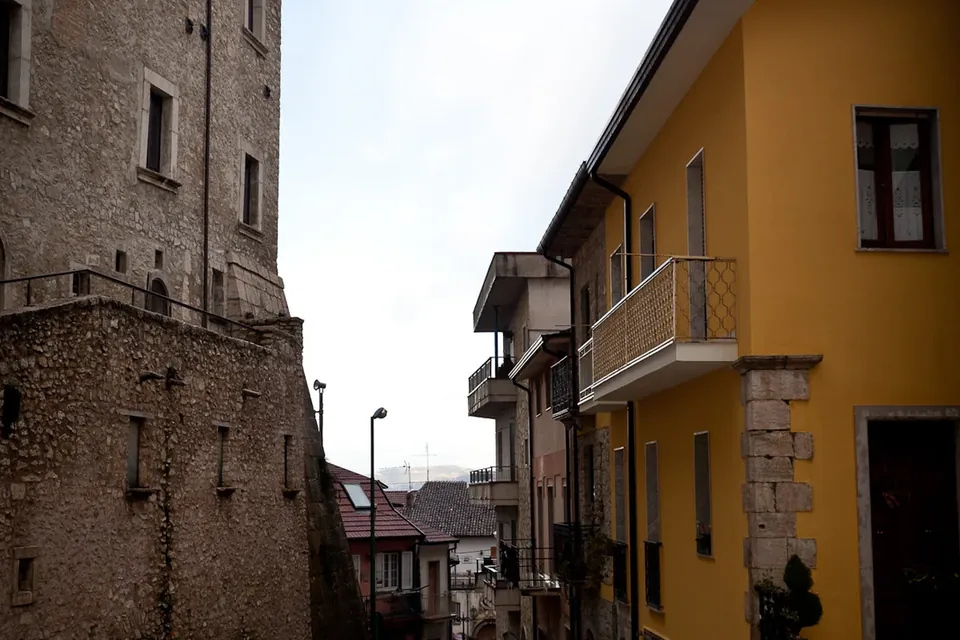
Rocca San Felice, writes Sistema Irpinia, has about 840 inhabitants at 750 metres and is 52 kilometres from Avellino. The medieval village dates from around 848, when King Louis had the fortress built on the border between the principalities of Salerno and Benevento. You can visit the castle, linked to the legend of Margherita, wife of Henry son of Frederick II, the 12th-century church of Santa Maria Maggiore, the sanctuary of Santa Felicita and the Don Nicola Gambino civic museum with finds from the excavations; Piazza San Felice has a centuries-old lime tree. Guardia Lombardi, at 998 metres, takes its name from a Lombard watch post; the Fredane river rises here and the museum of rural life of upper Irpinia displays about 480 objects. Among local dishes the portal lists acqua sala, cìngule e foglie with broccoli, and migliatieddri, Easter rolls of lamb offal.
Sources: Provincia di Avellino, Sistema Irpinia — Rocca San Felice · Provincia di Avellino, Sistema Irpinia — Guardia Lombardi
Local festivals and products
The sources consulted do not show an official pecorino di Carmasciano festival with fixed dates, but the villages' calendars offer good opportunities. In Rocca San Felice the 29th edition of 'Medioevo alla Rocca', organised by the Pro Loco Ansanto, took place from 20 to 23 August 2026, with medieval crafts, falconers, music and a costumed banquet by reservation in Piazza San Felice; in 2024 the banquet menu included spelt and pulse soup, wild boar stew, dried fruit, hippocras and mead. The village also hosts the Festival dei Cortili, with early music, tastings and straw bonfires, and the Santa Felicita fair, usually in July. Sistema Irpinia lists among the area's traditional products, besides the pecorino, Carmasciano lamb, from laticauda and bagnolese lambs fed on grass and hay marked by the Mefite's emissions, and ricotta di Carmasciano.
Sources: Provincia di Avellino, Sistema Irpinia — Medioevo alla Rocca 2026, XXIX edizione · Provincia di Avellino, Sistema Irpinia — Medioevo a la Rocca 2024 · Provincia di Avellino, Sistema Irpinia — Rocca San Felice
How to taste it
Pecorino di Carmasciano should be tasted slowly and at room temperature, smelling it first: the sulphur note is its signature and is best recognised on its own, before bread and wine. If possible I would compare a younger cheese with one close to a year old, to feel how the initial sweetness gives way to the piquant edge. I would serve it with rustic bread and chestnut honey or a not-too-sweet preserve, and an Irpinian wine: a Taurasi for an aged cheese, a Fiano with a few years for a younger one. In cooking little is needed: grated over homemade pasta with wild greens. Since it is a small-scale raw-milk cheese, availability is not guaranteed: purchases and visits to producers should be arranged in advance with operators.
A thread for your journey
Journey idea: a morning in the Ansanto valley, viewing the Mefite from a safe distance, then the village of Rocca San Felice with its castle and civic museum; at lunch a tasting of young and aged pecorino di Carmasciano arranged with a producer, and in the afternoon Guardia Lombardi and its museum of rural life, or the spa and Roman fountain of nearby Villamaina.
Talk to us

.jpg)