
Why go
Villamaina is a small village of fewer than a thousand people, on a hill between 500 and 550 metres in the heart of Irpinia, near the Ansanto valley. It has no grand monuments to photograph, and that is exactly why it offers a different way of travelling: here the thread of the story is water. The territory is rich in springs, from Formulano to Vallipari, from San Giovanni to Pietrapiana, and some are thermal waters that flow at about 28 degrees.
Around this resource two thousand years of history can be read: a spring used in Roman times where mosaic floors came to light in the nineteenth century, an ancient brick and tile works, a municipal collection with more than nine hundred finds, and a spa with a tradition documented since the seventeenth century. A few kilometres away, the sulphurous pool of the Mefite, sanctuary of the ancient Irpini, completes the picture.
Villamaina suits travellers who prefer a few focused stops to a list of attractions, and those who want to add to a journey among the vineyards of Taurasi or the city of Avellino a slower day of archaeology, nature and the memory of a botanist who gave scientific names to several plants.
Sources: Provincia di Avellino, Sistema Irpinia — Villamaina · Sistema Irpinia — Fonte di Formulano · Provincia di Avellino, Sistema Irpinia — Raccolta Museale di Villamaina · Sistema Irpinia — Terme di San Teodoro · Sistema Irpinia — Geosito della Mefite in Valle d’Ansanto
History
Villamaina’s history is older than the village seen today. The municipal collection holds evidence from prehistory through the Samnite period to Roman times, and as early as the seventeenth century local scholars pointed to archaeological areas such as Formulano and Cisterne. Proximity to the ancient Via Appia explains the Roman presence: at Formulano, remains of buildings with mosaic floors were found in the nineteenth century, and bricks stamped Ploti Vitelliae point to a brick and terracotta works.
In the Middle Ages the territory lay between the Lombard and Norman lordships of nearby centres such as Gesualdo and Frigento. In the fifteenth century it was ruled by the Caracciolo; in the sixteenth the count of Conza, Luigi Gesualdo, granted it to Annibale Caracciolo, who turned Villamaina into a kind of fortified citadel. The Caracciolo rose from barons to dukes of San Teodoro and kept the title until the nineteenth century; the last notable family were the Sanfelice, counts.
The village has been through hard times, starting with the plague of 1656, which by tradition wiped out much of its population. The nineteenth century gave it its best-known figure, the botanist Giovanni Gussone, born here in 1787.
Sources: Provincia di Avellino, Sistema Irpinia — Raccolta Museale di Villamaina · Provincia di Avellino, Sistema Irpinia — Villamaina · Sistema Irpinia — Fonte di Formulano · Sistema Irpinia — Parco Comunale Giovanni Gussone
What to see
The Municipal Collection, in the town hall on Via Roma, holds 933 finds arranged by place of origin. Among the best preserved are a decorative architectural element shaped like a wolf’s head, perhaps from a public building or temple, and a small votive head; the display is completed by many stamped bricks from Roman works and a lapidarium of inscriptions that help reconstruct the area’s history. The municipality also owns the Museo Paolino Macchia, at the Taverna, for which in September 2026 it began seeking an association to manage its opening and promotion: access should be checked.
At the foot of the hill, to the south, the Formulano spring is a place of both historical and everyday value: for centuries its water served residents and farmers for drinking, irrigation and watering livestock, and it was here that the Roman mosaics surfaced.
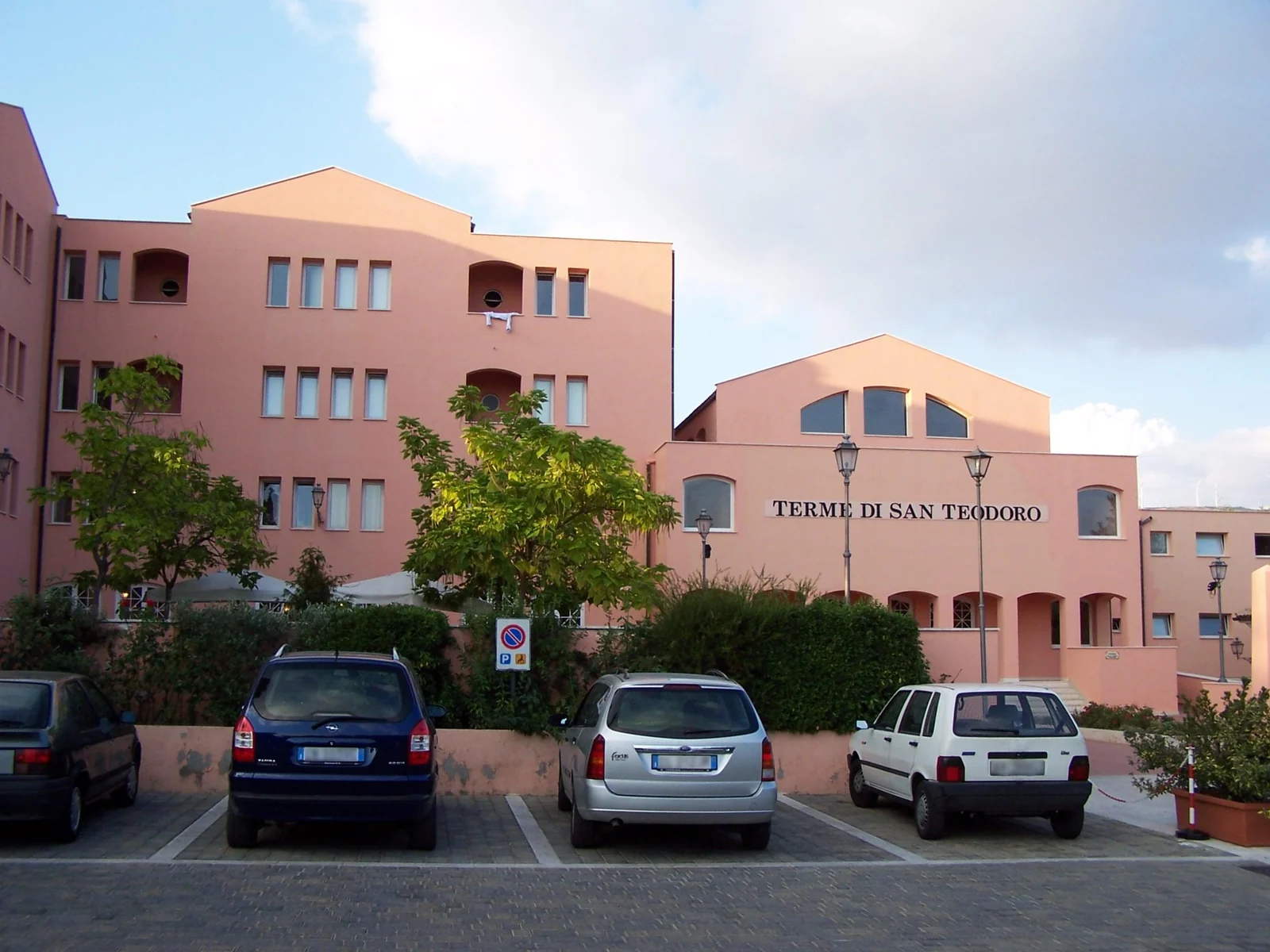
About three kilometres from the centre lie the San Teodoro thermal baths, with a spa tradition documented since the second half of the seventeenth century and mineral waters at 28 degrees; beside the complex stands a small old church, recently reconsecrated. In the village, the municipal park dedicated to Giovanni Gussone has olive-lined avenues and a small open-air amphitheatre.
Sources: Provincia di Avellino, Sistema Irpinia — Raccolta Museale di Villamaina · Comune di Villamaina — avviso pubblico sul Museo Paolino Macchia, 2026-09-25 · Sistema Irpinia — Fonte di Formulano · Provincia di Avellino, Sistema Irpinia — Villamaina · Sistema Irpinia — Terme di San Teodoro · Sistema Irpinia — Parco Comunale Giovanni Gussone
Food and wine
Villamaina belongs to a corner of Irpinia where food speaks mostly of shepherds and cultivated hills. The nearby locality of Carmasciano, between Guardia Lombardi and Rocca San Felice, gives its name to an artisan sheep’s cheese: Pecorino di Carmasciano. According to the provincial pages its distinctive character is linked to the Mefite: the gases of the Ansanto valley affect vegetation within a radius of about three kilometres, and the grasses and hay that grow there give the milk a unique quality.
The same area produces Carmasciano ricotta, white and creamy, made from the whey of the pecorino, and Carmasciano lamb, from laticauda and Bagnolese sheep fed on local grass and hay; all are listed among traditional food products. Local cheeses also include Irpinian caciocavallo, a stretched-curd cheese aged in caves.
The landscape around the village also includes vineyards: among the events recorded by the Province is a trek through the Villamaina vineyards on Saint Martin’s Day. For a simple lunch, rely on these products rather than looking for dishes exclusive to the village that the sources do not document.
Sources: Sistema Irpinia — Rocca San Felice · Sistema Irpinia — Geosito della Mefite in Valle d’Ansanto · Provincia di Avellino, Sistema Irpinia — Villamaina
Things to do
The most sensible route in Villamaina follows the water. Start at the municipal collection to locate Formulano, Cisterne and the other areas where the finds came from, then walk down to the Formulano spring, where thermal water rich in carbon dioxide flows at 28 degrees. A short walk thus answers a question that began in front of a display case.
The San Teodoro baths are linked to the Mefite by the same hydrogeological phenomena and offer mud therapy and other treatments in a facility with pools and a wellness centre. For us the story of the baths remains cultural and scenic: anyone wanting treatments chooses them as a separate service, with its own conditions.
Nature lovers can explore the Bosco della Rocca, a small steep wood between Villamaina and Rocca San Felice, near the Mefite, with oaks, elms, poplars, broom and butcher’s broom. Here the story of Giovanni Gussone comes in: court botanist under Francis I and founder of the experimental garden of Boccadifalco in Palermo, he found in the Mefite area a broom later described by Michele Tenore as Genista anxantica. The village has dedicated exhibitions and guided visits to Gussone, and the municipal park bears his name.
Sources: Provincia di Avellino, Sistema Irpinia — Raccolta Museale di Villamaina · Sistema Irpinia — Fonte di Formulano · Sistema Irpinia — Terme di San Teodoro · Provincia di Avellino, Sistema Irpinia — Villamaina · Sistema Irpinia — Parco Comunale Giovanni Gussone
When to go
Villamaina can be visited in any season. The provincial page on the baths speaks of a particularly favourable climate in almost every month of the year, and a visit to the museum and the spring does not depend on the weather. The patron saints are Saint Roch and Saint Paulinus of Nola, whose feasts mark the community’s calendar.
The calendar of events recorded by the Province gives an idea of the occasions. In September 2023 the “Fredane in festa” celebration brought hot-air balloon flights and water games to the village; in October of that year a guided visit accompanied the exhibition devoted to Giovanni Gussone; on 11 November, Saint Martin’s Day, a trek crossed the vineyards around the village. In August 2024 a day was devoted to energy communities and sustainable mobility, and between December 2024 and January 2025 Christmas brought bingo evenings and family events.
These are past events, cited to help you get your bearings: future editions should be checked with the municipality. For walking between the spring, the wood and the Mefite, a dry, clear day is still the best choice.
Sources: Sistema Irpinia — Terme di San Teodoro · Provincia di Avellino, Sistema Irpinia — Villamaina
Getting there and around
Villamaina is reached by road. The village sits on a hill between 500 and 550 metres and borders Rocca San Felice, which the provincial pages place 52 kilometres from Avellino; for those arriving by train, the reference is Avellino station on the national network, continuing by car. We do not give bus times or lines because we found no up-to-date official source: check before setting out.
Once there, the centre with the town hall and the municipal collection on Via Roma can be explored on foot, as can the Gussone park on Via Pianello. The Formulano spring lies on the southern slopes of the hill, while the San Teodoro baths, on Via Bagni, are about three kilometres from the village: you need transport to reach them, or a fairly long walk.
The Mefite, in the locality of the same name in the municipality of Rocca San Felice, is close to the baths; the Bosco della Rocca lies halfway between the two villages. For the district InfoPoint you need to go to the Abbey of Goleto, in the territory of Sant’Angelo dei Lombardi, which is well worth a visit anyway.
Sources: Provincia di Avellino, Sistema Irpinia — Villamaina · Sistema Irpinia — Rocca San Felice · RFI — Stazione di Avellino · Provincia di Avellino, Sistema Irpinia — Raccolta Museale di Villamaina · Sistema Irpinia — Parco Comunale Giovanni Gussone · Sistema Irpinia — Fonte di Formulano · Sistema Irpinia — Terme di San Teodoro · Sistema Irpinia — Geosito della Mefite in Valle d’Ansanto · Sistema Irpinia — InfoPoint Distretto 21
Nearby
The Mefite in the Ansanto valley, in the municipality of Rocca San Felice, is Villamaina’s natural complement. It is a sulphurous pool from which gases rise and make the water boil, a rare phenomenon in a non-volcanic land; here the ancient Irpini worshipped the goddess Mefitis, asking her for protection, prosperity and fertility. In Roman times the place took on a darker image: Virgil, in the seventh book of the Aeneid, makes it a passage to the underworld, and Cicero recalls it as a deadly spot. The acrid smell and boiling water are still striking today; visit with care and follow the guidance on site.
Rocca San Felice, at 750 metres, has a medieval centre of lanes, doorways and stairways, a castle, the twelfth-century church of Santa Maria Maggiore and the sanctuary of Santa Felicita, as well as a civic museum displaying finds from recent research.
A little further on, the Abbey of Goleto was founded in 1133 by Saint William of Vercelli for a community of monks and nuns led by an abbess; after the 1732 earthquake the Chiesa Grande by Domenico Antonio Vaccaro was built there. To the west, Taurasi takes the journey among the Aglianico vineyards.
Sources: Sistema Irpinia — Geosito della Mefite in Valle d’Ansanto · Sistema Irpinia — Rocca San Felice · Sistema Irpinia — Abbazia del Goleto · Sistema Irpinia — Taurasi
Local tourist information
Local tourist offices help with opening times, events and transport on the day.
- InfoPoint Distretto 21 — Sistema Irpinia (Provincia di Avellino), distretto di Villamaina · Via San Guglielmo, località Goleto, 83054 Sant’Angelo dei Lombardi (AV) · Official website
Source: Sistema Irpinia — InfoPoint Distretto 21 · Provincia di Avellino, Sistema Irpinia — Raccolta Museale di Villamaina · checked on
Where to stay
In the municipality of Villamaina the national database of the Ministry of Tourism lists 3 accommodation businesses with a verified CIN code: 0 hotels, 3 other licensed accommodation and 0 other types such as B&Bs and private rentals.
Sources: Ministero del Turismo – Banca Dati Strutture Ricettive (dashboard pubblica), 2026-10-12
YOUR JOURNEY
How to shape a journey here
Archaeology and the history of water. Access and local interpretation require agreement; thermal treatments are not automatically included.
Talk to us about it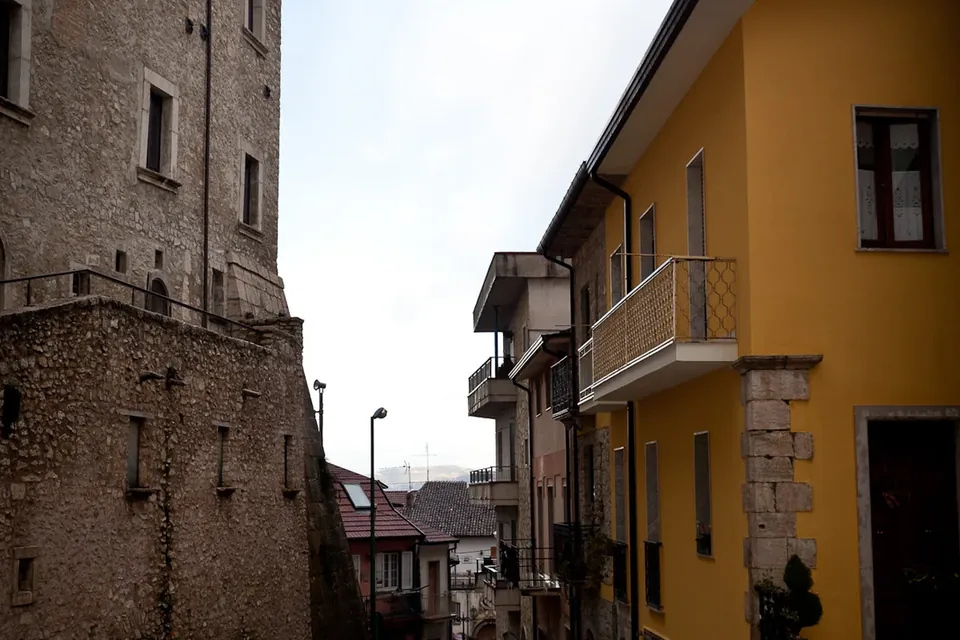

.jpg)
