
APULICA / Food guides
Bagnoli black truffle: beech woods, truffle dogs and an October festival
In Bagnoli Irpino the black truffle lent its name to a species: Tuber mesentericum is also called the 'Bagnoli truffle', because here, together with Colliano in the province of Salerno, a real culture has grown up around it over the centuries. It is a truffle with a very intense aroma that grows in the beech and oak woods of the Picentini mountains. This guide explains how to recognise it, what regional rules say about harvesting, what to see in Bagnoli and on the Laceno plateau, and how to enjoy the autumn fair without being overwhelmed by the crowds.
The 'Bagnoli truffle'
The Campania Region's guide to harvesting and selling truffles lists Tuber mesentericum Vittadini as one of the most widespread species in the region, also called 'ordinary black truffle' or 'Bagnoli Irpino truffle', after the town where for centuries, together with Colliano in the province of Salerno, a culture has grown up around this resource. It is not exclusive to Campania: it is found elsewhere in the Apennines and in several European countries, such as Hungary, Germany and Poland, as well as in England. The scientific name, the guide explains, comes from the Latin 'mesentericum' because the pattern of the inner veins resembles the folds of the intestinal mesentery. The Region also includes it in Campania's list of traditional food products as 'tartufo nero di Bagnoli Irpino'.
Sources: Regione Campania — Guida breve alla raccolta e commercializzazione del tartufo in Campania (2024) · Regione Campania — Prodotti agroalimentari tradizionali: prodotti vegetali
How to recognise it
The regional guide's profile describes a globular or roundish fruiting body, with irregular lobes and often a cavity at the base that gives it a kidney shape when cut. It measures 2 to 10 centimetres and can reach 100 to 120 grams. The skin is blackish or dark brown, with small, pyramidal, closely packed warts. The flesh is firm, at first whitish or beige, later greyish-hazel or brown, crossed by short, wide, pale veins that often converge towards the cavity. The aroma is very intense, so much so that the guide compares it to carbolic acid or tincture of iodine, with notes of musk, earth and mushroom, and warns that it tends to fade in the air or with cooking. The town's page on the Sistema Irpinia portal describes it with a black skin, low warts and whitish-grey veins.
Sources: Regione Campania — Guida breve alla raccolta e commercializzazione del tartufo in Campania (2024) · Provincia di Avellino, Sistema Irpinia — Bagnoli Irpino
Where it grows: beech and oak woods of the Picentini
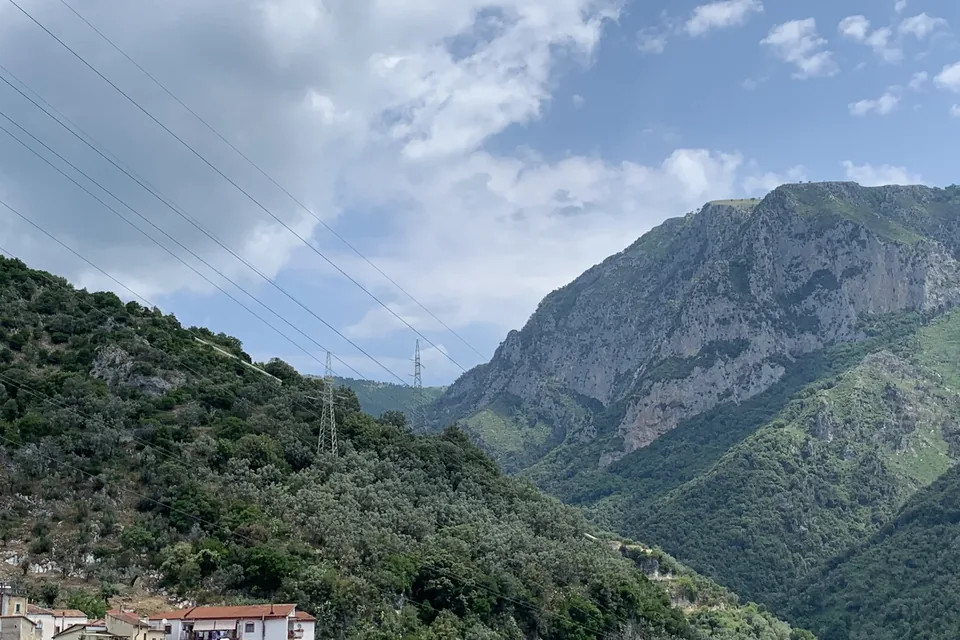
According to the Campania Region, the Bagnoli truffle typically lives in symbiosis with beech and also with other broadleaves such as downy oak, Turkey oak, hornbeam and hazel. It is found mainly in the beech woods of the Campanian Apennines, on soils derived from limestone, especially in Irpinia on the slopes of Monte Cervialto, at 1,809 metres, Monte Marzano and the Alburni, where tall trees and humus-rich leaf litter favour its growth. The mountain areas most involved are the Bagnoli district, Partenio, Picentini, Alburni and Cervati, Matese and Taburno. The Municipality of Bagnoli's portal notes that the woods around the village rise from chestnut groves at 700 metres up to the beech woods of Cervialto, the same woods where porcini and other mushrooms are sought from May to September.
Sources: Regione Campania — Guida breve alla raccolta e commercializzazione del tartufo in Campania (2024) · Comune di Bagnoli Irpino, sito tematico — Prodotti tipici
Harvest calendar and rules
The regional guide gives the Bagnoli truffle a ripening season from autumn to winter, sometimes into spring. Nationally, harvesting is allowed from 1 September to 31 January, but in Campania the implementing rules of regional law no. 13 of 2006 extended the period: the official regional calendar runs from 1 September to 15 April. Hunting truffles requires a permit issued by the Region after a qualifying exam on species, biology, harvesting methods and rules; it is valid for five years and must be validated every year. Searching is allowed only with a trained dog, using a small spade or hoe solely to lift the truffle, without damaging the truffle ground. Permitted hours run from one hour before dawn to one hour after sunset, and unripe truffles must not be collected.
Sources: Regione Campania — Guida breve alla raccolta e commercializzazione del tartufo in Campania (2024) · Regione Campania, Assessorato Agricoltura — Funghi e tartufi: raccolta e abilitazione
Two and a half centuries of hunting and the Bagnoli salad
The regional traditional products profile calls Bagnoli Irpino Campania's most important centre for the black truffle trade, harvested from October to March in truffle grounds of the Picentini mountains between 800 and 1,500 metres, in both Avellino and Salerno provinces, in symbiosis with beech and black pine. In the traditional areas, the Region writes, it has been hunted for at least two and a half centuries, and recent documents show it was used as early as the reign of Charles III of Bourbon. Until the 1970s it was sold only fresh, after brushing the skin clean. It went into the renowned 'Bagnoli-style' truffle salad, a characterful side dish for Christmas lunch, and was used to dress spaghetti or penne with garlic and oil, omelettes and even pizza. Today it is also available all year as truffle paste, in oil or in jars with water and salt.
Sources: Regione Campania — Prodotto tradizionale: tartufo nero di Bagnoli Irpino
Bagnoli Irpino, a village of waters
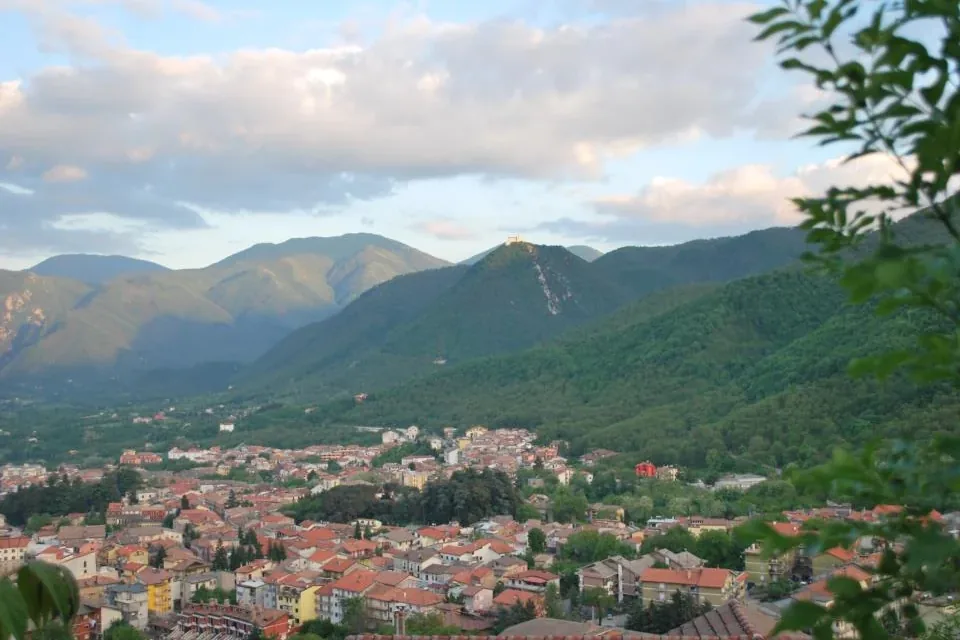
The Sistema Irpinia portal describes Bagnoli as a village of about 3,100 people in the Monti Picentini Regional Park, 654 metres up and 40 kilometres from Avellino, crossed by the Calore river and rich in springs; the name may come from the Latin 'baniolum', abundance of water. The old centre holds the Collegiate Church of Santa Maria Assunta, dating from around the 11th century and surviving a fire in 1651, with a fine wooden choir; the Giudeca, the first settlement; Castello Cavaniglia; the church of San Domenico from 1490 with its 30-metre bell tower; and the 15th-century Fontana del Gavitone, topped by a clock tower and a hornbeam about 300 years old. At about 1,000 metres, the Municipality explains, lies the Laceno plateau, with a lake fed by the Tronola stream, the Caliendo caves, woods and pastures.
Sources: Provincia di Avellino, Sistema Irpinia — Bagnoli Irpino · Comune di Bagnoli Irpino, sito tematico — L'altopiano del Laceno
'Il Nero di Bagnoli', the October fair
The festival began in December 1975 as a tribute to the chestnut harvest, the Province's portal recounts: women set up stalls with cured meats, cheeses and chestnut-cream sweets, men roasted chestnuts. Later the Pro Loco added the truffle, because on the Picentini the harvest began in October and continued until March. Today it is called 'Il Nero di Bagnoli – Mostra Mercato del Tartufo Nero di Bagnoli Irpino, Sagra della Castagna, del Tartufo e dei prodotti tipici del Laceno' and takes place over two weekends, along a food route of almost three kilometres through the old centre, organised by the Pro Loco Bagnoli Irpino-Laceno with the Municipality. The Municipality has set the 47th edition for 23, 24, 25 and 29, 30, 31 October 2026 and has published notices on parking and services. On the busiest Sundays of 2023 entry was staggered: it is worth arriving early.
Sources: Provincia di Avellino, Sistema Irpinia — «Il Nero di Bagnoli» 2024 · Provincia di Avellino, Sistema Irpinia — «Il Nero di Bagnoli» 2023 · Comune di Bagnoli Irpino — Avviso del 5 ottobre 2026 per la 47ª Mostra Mercato del Tartufo Nero e Sagra della Castagna
Contests, monuments and walks
The Municipality's thematic website lists some traditional events of the fair: a contest for the best truffle dog, one for the largest truffle, one for the largest chestnuts, judged by the fewest fruits per kilo, and an attempt to beat the record for the world's largest chestnut cake, handed out free once the record is declared. Stalls by craftspeople and traders fill the old centre's lanes with cheeses, grilled local meat, roast chestnuts and truffle products, with traditional music and dancing. The programme of the 2024 edition published by Sistema Irpinia also included guided visits to the Collegiate Church and its wooden choir, to the convent of San Domenico with Marco Pino da Siena's Madonna del Rosario, and to Castello Cavaniglia, as well as walks on the Laceno trails; the 2026 programme should be checked on the Municipality's channels.
Sources: Comune di Bagnoli Irpino, sito tematico — Mostra Mercato del Tartufo Nero e Sagra della Castagna · Provincia di Avellino, Sistema Irpinia — «Il Nero di Bagnoli» 2024
In the kitchen and the pantry
The Municipality of Bagnoli writes that the local truffle is used to make flavoured cheeses, including truffle pecorino, and a fine butter used on crostini and to dress pasta, meat and fish; the truffle also goes into grappa and liqueurs. The Province's portal lists among the village's traditional products a black truffle liqueur, light brown and 38-40 degrees, alongside pecorino bagnolese, bagnolese sheep's ricotta and the caciocavallo podolico of the Picentini. The regional guide notes that the intense aroma, made of musk, earth and phenolic notes, makes this truffle well suited to processing. To keep it fresh, it advises cleaning it and closing it in an airtight jar in the fridge, where it lasts about 15 days; the rice used to absorb moisture takes on the aroma and can be cooked.
Sources: Comune di Bagnoli Irpino, sito tematico — Prodotti tipici · Provincia di Avellino, Sistema Irpinia — Bagnoli Irpino · Regione Campania — Guida breve alla raccolta e commercializzazione del tartufo in Campania (2024)
How to taste it and when to go
Since the aroma of the Bagnoli truffle tends to fade with heat, I would taste it first raw, grated at the last moment over fresh pasta with butter or barely set eggs, and only afterwards in processed products. A useful comparison is fresh truffle against a flavoured butter or cheese: you see at once what remains and what is lost. With wine I would choose an Irpinian red that is not too powerful, or a Fiano with a few years of age. For the fair, arrive on Friday evening or Saturday morning and avoid Sunday afternoon; if you prefer calm, come on another weekend of the season and go up to Laceno. An outing with a licensed truffle hunter and his dog should be arranged with local operators and must respect the regional calendar.
A thread for your journey
Journey idea: an October weekend in Bagnoli Irpino, enjoying the fair on Friday evening or Saturday morning, visiting the Collegiate Church and Castello Cavaniglia and spending half a day on the Laceno plateau; an outing with a licensed truffle hunter and his dog can be arranged with operators, within the regional calendar. Montella and its chestnuts are a few kilometres away.
Talk to us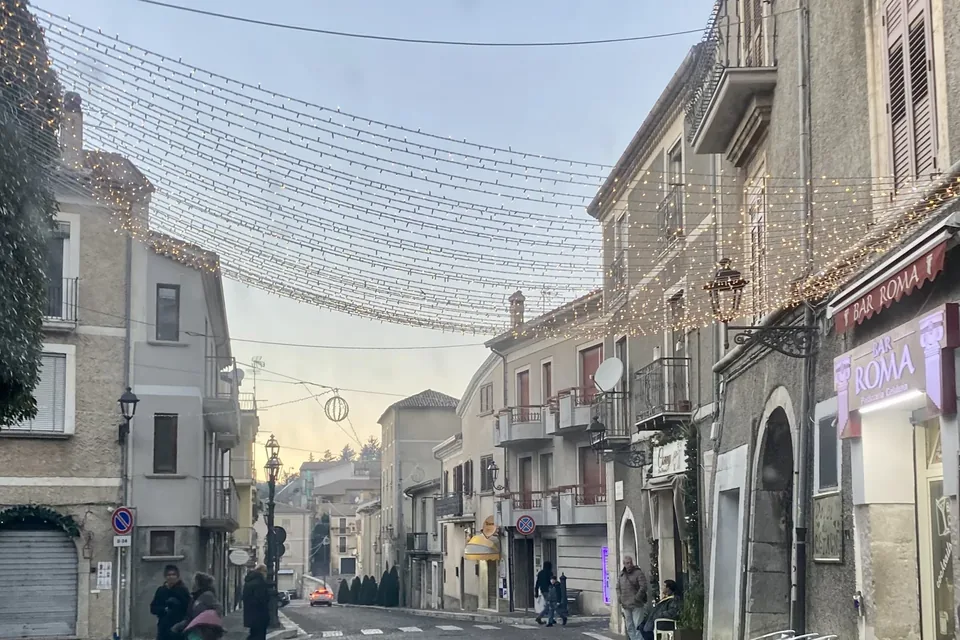
.jpg)

