
APULICA / FRUIT, VEGETABLES AND PULSES
Bagnoli Irpino black truffle
PAT · Fruit, vegetables and pulses · Campania
In brief
- It is Tuber mesentericum, also called the ordinary black truffle, named after Bagnoli Irpino, the main trading centre for it in Campania. (Regione Campania — Guida breve alla raccolta e commercializzazione del tartufo in Campania (2024) · Regione Campania, Assessorato Agricoltura — Prodotto tradizionale: tartufo nero di Bagnoli Irpino)
- It grows in the Picentini Mountains, between the provinces of Avellino and Salerno, at 800-1500 m, in symbiosis with beech and black pine. (Regione Campania, Assessorato Agricoltura — Prodotto tradizionale: tartufo nero di Bagnoli Irpino)
- It has been hunted for at least two and a half centuries; fresh, it is the heart of the Bagnoli-style truffle salad served at Christmas. (Regione Campania, Assessorato Agricoltura — Prodotto tradizionale: tartufo nero di Bagnoli Irpino)
- The regional calendar allows it to be gathered from 1 September to 15 April. (Regione Campania — Guida breve alla raccolta e commercializzazione del tartufo in Campania (2024))
History and origin
The black truffle of Bagnoli Irpino is Tuber mesentericum, a species also called the ordinary black truffle, which in Campania bears the name of the village where a true culture has grown up around it over the centuries. The regional guide notes that the same happened in Colliano, on the Salerno side of the mountains.
In the traditional areas it has been hunted for at least two and a half centuries, and recent documents show it was already used in the time of King Charles III of Bourbon. Bagnoli, with its many truffle grounds, became the leading centre in Campania for the truffle trade.
Until the 1970s the truffle was sold only fresh and eaten mostly on feast days. Since then preserving has extended its life, and today the Bagnoli black truffle is listed among Campania's traditional products. The species is not exclusive to the region: it also grows elsewhere in the Apennines and in several European countries, but here it found its name and its tradition.
Sources: Regione Campania, Assessorato Agricoltura — Prodotto tradizionale: tartufo nero di Bagnoli Irpino · Regione Campania — Guida breve alla raccolta e commercializzazione del tartufo in Campania (2024) · Masaf — Elenco nazionale dei prodotti agroalimentari tradizionali, XXVI revisione (2026)
Area and method of production
The Bagnoli black truffle is gathered in the truffle grounds of the mountain belt of the Picentini Mountains, between the provinces of Avellino and Salerno, at 800 to 1,500 metres. It lives in symbiosis with forest trees, especially beech and black pine; the regional guide describes it as most common in beech woods on limestone soils, but also found under hornbeams, hazels and oaks.
In Campania the Bagnoli area is the most important, alongside other massifs such as Partenio, Alburni and Cervati, the Matese and Taburno.
Harvest follows the regional calendar: for this species it runs from 1 September to 15 April, a period Campania extended by about two and a half months compared with the national calendar. Truffles are found with dogs, which pick up the scent and show where to dig. Bagnoli is home to the Picentini Mountains truffle hunters' association, recognised by the Region.
Sources: Regione Campania, Assessorato Agricoltura — Prodotto tradizionale: tartufo nero di Bagnoli Irpino · Regione Campania — Guida breve alla raccolta e commercializzazione del tartufo in Campania (2024)
How to recognise it
The truffle is globular or roundish, with irregular lobes, and often has a hollow at the base which, once cut, gives it a kidney-shaped look. It ranges from 2 to 10 centimetres, and can weigh up to 100-120 grams.
The rind, or peridium, is black or dark brown, covered in small, low, closely packed pyramidal warts. The flesh, or gleba, is firm and fleshy: whitish or beige in young truffles, it turns grey-hazel or brown when ripe, crossed by pale veins.
Its most recognisable trait is its aroma, very intense and strong, which the regional guide compares to carbolic acid or tincture of iodine. This aromatic strength is exactly what makes it suited to processing and preserving.
Sources: Regione Campania, Assessorato Agricoltura — Prodotto tradizionale: tartufo nero di Bagnoli Irpino · Regione Campania — Guida breve alla raccolta e commercializzazione del tartufo in Campania (2024)
In the kitchen
The signature dish is truffle salad alla bagnolese, a bold side dish served with the Christmas holiday meal. Traditionally the truffle was used fresh, after cleaning its rind with a small brush.
Home cooking also uses it to dress spaghetti or penne with garlic and oil, in omelettes and even on pizza: simple dishes in which the strong aroma of the black truffle takes centre stage.
Today it can be enjoyed all year thanks to preserves: truffle pastes, truffles in oil or in glass or tin jars with water and salt, after cleaning and sterilisation. Bagnoli also makes a black truffle liqueur, listed among traditional products, light brown in colour and with a very strong, aromatic flavour.
Sources: Regione Campania, Assessorato Agricoltura — Prodotto tradizionale: tartufo nero di Bagnoli Irpino · Sistema Irpinia, Provincia di Avellino: Bagnoli Irpino
Where to taste it
The place to taste it is Bagnoli Irpino, an Irpinia village at 654 metres within the Picentini Mountains Park, which also includes the Laceno plateau. Every autumn it hosts the Mostra Mercato del Tartufo Nero di Bagnoli Irpino, together with the Sagra della Castagna, del Tartufo e dei prodotti tipici del Laceno: a long-standing event that has grown over the years to national standing. According to the municipal notice, the 47th edition takes place on 23, 24, 25, 29, 30 and 31 October 2026.
Outside the festival, the black truffle appears in the village's cooking during the harvest season, from September to spring, and all year in preserves. Bagnoli is also a land of chestnuts and caciocavallo cheeses, such as the cave-aged one: an autumn visit brings them all together.
Sources: Sistema Irpinia, Provincia di Avellino: Bagnoli Irpino · Regione Campania, Assessorato Agricoltura — Prodotto tradizionale: tartufo nero di Bagnoli Irpino
Protection
- Traditional agri-food product (PAT) — Campania, n. 387, 26th revision (Masaf — Elenco nazionale dei prodotti agroalimentari tradizionali, XXVI revisione (2026))
When
- Harvest: January–April, September–December (Regione Campania — Guida breve alla raccolta e commercializzazione del tartufo in Campania (2024))
- Winter
- Spring
- Autumn
Where
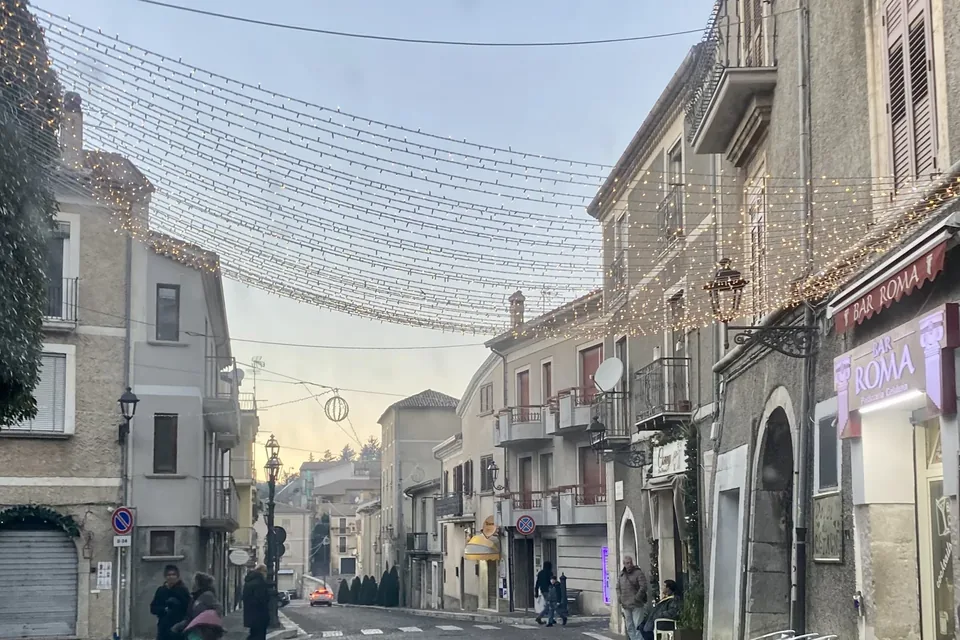
Bagnoli Irpino
A thread connecting village, mountains and truffles: a journey designed around the season rather than a single festival.
Read the guide →Photo: Corvettec6r / Wikimedia Commons — CC BY 4.0 · Resized and converted to WebP.
.jpg)
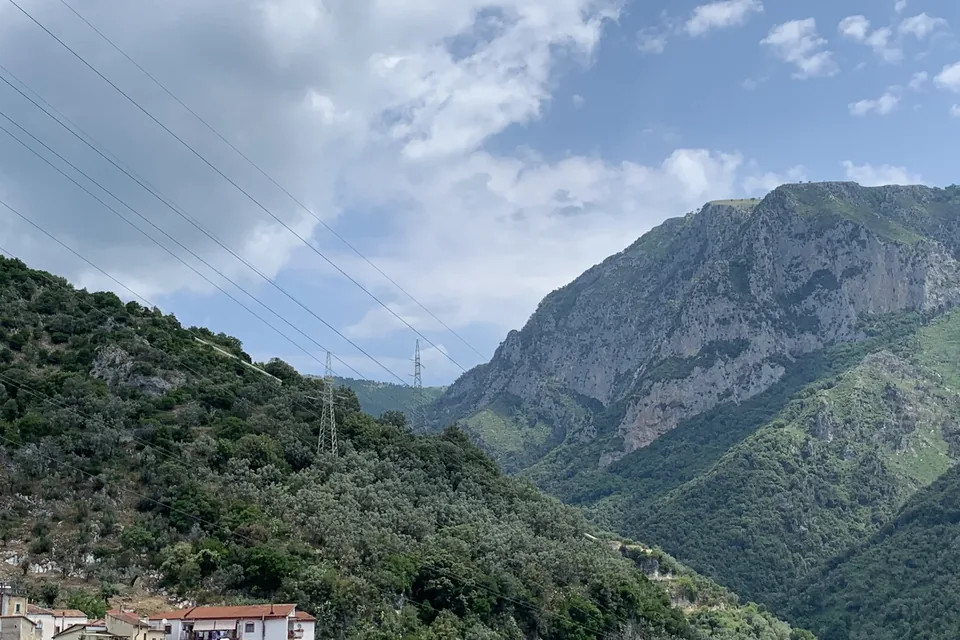
Picentini Mountains
A regional park of beech woods, springs and hill villages, with Giffoni Valle Piana and its film festival for young people.
Read the guide →Photo: Csal1933 / Wikimedia Commons — CC BY-SA 4.0 · Resized and converted to WebP.

Read more
Food festivals of Basilicata and Irpinia
Wine, truffle, chestnut, cheese and pasta festivals documented by provinces, municipalities and official bodies, with recent editions and tips for enjoying them without rushing.
Read the guide →Bagnoli Irpino black truffle
The Tuber mesentericum of the Picentini mountains: how to recognise it, where it grows, harvesting rules and calendar in Campania, the village, Laceno and 'Il Nero di Bagnoli'.
Read the guide →