APULICA / Food guides
Ospedaletto's 'cupeto': nougat, priest's chestnuts and the road to Montevergine
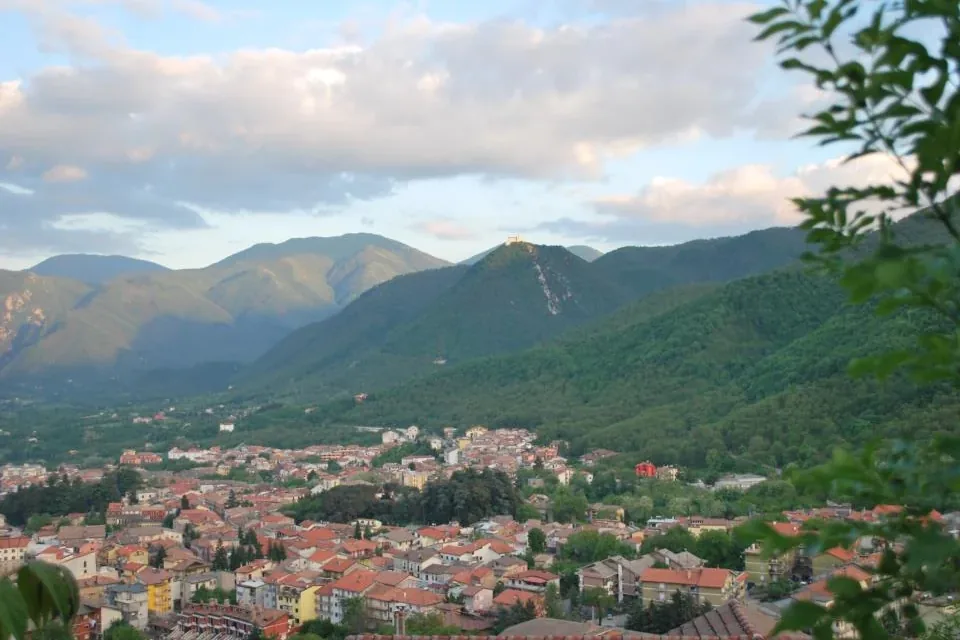
Ospedaletto d'Alpinolo, 725 metres up on the slopes of the Partenio and a few kilometres from Avellino, grew up to welcome pilgrims bound for the Sanctuary of Montevergine. Its specialities come from that bond too: nougat, called 'cupeto' in dialect, and priest's chestnuts, both recognised by the Campania Region as traditional food products. This guide tells the village's story, the two versions of the nougat, the festival calendar and the best way to combine a sweet tasting with the walk or the funicular to the sanctuary.
A village born for pilgrims
The Municipality of Ospedaletto explains that the village knows its exact birth date, January 1178, thanks to an original document, and that its history has always followed that of the Sanctuary of Montevergine. The first settlement, dependent on the abbey, was called 'Casale delle Fontanelle'; moved near the church of Santa Maria del Preposito, it took that name. The current name comes instead from the Hospital of San Tommaso, run by friars as a document of November 1184 shows, where pilgrims rested before climbing to the sanctuary and where Frederick II also stayed. The Province's Sistema Irpinia portal adds that a notarial deed of 1463 mentions the 'Casale di Ospedaletto', that in 1806, with the abolition of feudalism, the village joined the province of Principato Ultra, and that since 1861 it has carried the qualifier 'd'Alpinolo'.
Sources: Comune di Ospedaletto d'Alpinolo — Storia · Provincia di Avellino, Sistema Irpinia — Ospedaletto d'Alpinolo
Cupeto: two recipes
Ospedaletto d'Alpinolo nougat, writes Sistema Irpinia, has been made in the village since the end of the 19th century and is known by its dialect name, 'cupeto'. It comes in two versions. The first is the classic one, made with honey, egg white and hazelnuts or toasted almonds: a mixture that binds the nuts of the Partenio woods with the sweetness of honey. The second is filled with sponge cake, a softer, pastry-shop version. The portal also lists chocolate and other sweets with walnuts, hazelnuts and dried fruit, a sign of a confectionery specialisation going beyond a single product. The Municipality notes that the village's main source of work today is precisely its old nougat industries and the processing of farm and forest products such as hazelnuts and chestnuts.
Sources: Provincia di Avellino, Sistema Irpinia — Ospedaletto d'Alpinolo · Comune di Ospedaletto d'Alpinolo — Storia
Christmas, pilgrims and chocolate glaze
The Campania Region's profile of Ospedaletto d'Alpinolo nougat adds details the other sources do not mention. In Ospedaletto it is an old tradition to offer the locally made nougat, named after the town, during the Christmas holidays; tradition also has it eaten during pilgrimages to the nearby Sanctuary of Montevergine, a link that explains why the sweet is so common along the devotees' road. Production follows old rules and has two categories: the classic one, with honey, egg white and toasted hazelnuts or almonds, and the version filled with sponge cake. In both recipes, the Region specifies, there is a chocolate glaze coating, and other ingredients such as dried fruit or chestnut paste may be added to the mixture, a reminder that here nougat and chestnuts are two sides of the same woodland economy.
Sources: Regione Campania — Prodotto tradizionale: torrone di Ospedaletto d'Alpinolo
A recognised traditional product
Ospedaletto d'Alpinolo nougat appears in Campania's regional list of traditional food products, in the section covering fresh pasta, bakery, biscuits, pastry and confectionery. The same list includes other Campanian nougats, such as Benevento nougat, the crunchy nougat of San Marco dei Cavoti, Dentecane nougat and chestnut nougat: a list that shows how deeply this sweet is rooted in the inland areas between Irpinia and Sannio. This is not a PDO or PGI: the Region explains that with ministerial decree 350 of 1999 the Ministry, together with the Regions, created tools to safeguard these foods by preserving their traditional production methods while ensuring hygiene and safety. The village's priest's chestnut is also listed among traditional products, as Sistema Irpinia notes.
Sources: Regione Campania — Prodotti agroalimentari tradizionali: paste fresche, panetteria, pasticceria e confetteria · Provincia di Avellino, Sistema Irpinia — Ospedaletto d'Alpinolo · Regione Campania — Prodotti agroalimentari tradizionali
A 1924 tribute and winter trade
The Municipality quotes a 1924 article describing a thriving chestnut and hazelnut industry and stating that 'Ospedaletto's cupeto', though not wrapped in tinfoil and boxed in elegant cases like the nougat of the Sifo firm and other Benevento houses, was considered in no way inferior by connoisseurs. The same article describes a hard-working village that in summer lived from visitors bound for the sanctuary, with shops full of specialities, stalls, music and illuminations. In winter, when pilgrimages thinned out, many inhabitants set off almost like a nomadic people to sell their products in towns across the region. The Municipality notes that the 'primitive' presentation of those days is long gone and announces a museum of rural life devoted in particular to nougat and chestnut processing.
Priest's chestnuts
The village's other speciality is priest's chestnuts, 'castagne ro' prevete' in dialect. The Municipality explains that the name may come from the fact that monks once made them, and recounts a legend: a priest was given many chestnuts, loaded them on his mule and the animal stumbled into a river, spilling them into the water; mocked by the village, the priest dried them in the oven, inventing the recipe. The legend explains the real process. Freshly picked chestnuts are moist, so they are dried in 'gratai', structures heated continuously for about ten days; then they are toasted in very hot ovens for intense flavour; finally, now dry and fibrous, they are soaked in water until soft again without losing their sweetness. At the October festival you also find soups of beans, chestnuts and porcini and chestnut sweets.
Sources: Comune di Ospedaletto d'Alpinolo — Eventi · Provincia di Avellino, Sistema Irpinia — Ospedaletto d'Alpinolo
The village calendar and the Juta
Sistema Irpinia lists Ospedaletto's main festivals: the Nougat Fair, promoting the traditional product; the Priest's Chestnut Festival in October, with theatre and music; the Strawberry Festival in June; the feast of the patron saints Philip and James in May and that of Saint Roch in August. The latest Priest's Chestnut Festival we could verify took place in the old centre on 4 and 5 October 2025; we found no published dates for 2026. The most heartfelt event is the Juta a Montevergine, a re-enactment of the pilgrimage to the sanctuary: according to the portal it closes the cycle of pilgrimages to the 'Seven Madonnas' of Campania and opens the wait for Candlemas in February, with songs, dances, frame drums and music groups. In 2026, titled 'Juta a Montevergine – Devotio', it ran from 10 to 12 September, with the procession of carts and gigs on the 11th and the procession of the festone on the 12th.
Sources: Provincia di Avellino, Sistema Irpinia — Ospedaletto d'Alpinolo · Provincia di Avellino, Sistema Irpinia — Festa della Castagna del Prete 2025 · Provincia di Avellino, Sistema Irpinia — La Juta a Montevergine (2022) · Provincia di Avellino, Sistema Irpinia — Juta a Montevergine – Devotio (2026)
To Montevergine: footpath or funicular
The Municipality notes that the old footpath to the sanctuary starts right in the centre of Ospedaletto. Sistema Irpinia describes along this route, CAI trail 201, the Sedia della Madonna, also called Cappella Misura: a chair-shaped stone outcrop where, according to legend, the Virgin rested with the Child during the climb, protected by a wooden roof. Halfway up is the Cappella dello Scalzatoio, where some pilgrims still take off their shoes to continue barefoot. In the village, in Piazza Partenio, the Pilgrim Monument depicts five wayfarers of different ages heading for the sanctuary. If you prefer not to walk, you can ride the funicular from Mercogliano run by AIR Campania: about seven minutes over 1,669 metres, on one of the steepest funiculars in Europe.
Sources: Comune di Ospedaletto d'Alpinolo — Storia · Provincia di Avellino, Sistema Irpinia — Sedia della Madonna · AIR Campania — Funicolare Mercogliano-Montevergine
How to taste it and take it home
The clearest way to understand cupeto is to taste the two versions side by side: the classic one, where honey quality and the toasting of the nuts matter, and the softer sponge-cake version. In the classic one I would look for hazelnut aroma and a crunch that does not become hardness. I would pair it with a coffee or a Campanian dessert wine, or simply a glass of water after the walk. Nougat travels well and is one of the easiest souvenirs to carry: keep it away from heat and humidity, well sealed. Priest's chestnuts can be eaten as they are, as a snack, or softened in hot water or milk. Visits to a craft workshop, to watch the mixture being cooked, should be arranged with the operators.
A thread for your journey
Journey idea: half a day in Ospedaletto d'Alpinolo between the Fontana del Tritone, the Pilgrim Monument and a side-by-side tasting of the two cupeto versions; then the climb to Montevergine, on foot along CAI trail 201 if you are fit or by funicular from Mercogliano, and back to Avellino. In October the day can include the priest's chestnut festival.
Talk to us