
APULICA / Food guides
Miskiglio: the poor people's mixed flour and the rascatielli of the Serrapotamo valley
In the Serrapotamo valley, on the Lucanian side of the Pollino park, four villages keep alive a flour that tells peasant history better than any book: miskiglio, or mischiglio, a blend of wheat, pulses and other cereals born when wheat was mainly used to pay taxes. This flour makes rascatielli, a pasta worked with the fingertips and dressed with a very light sauce. This guide explains where it comes from, how the recipe changes from Teana to Chiaromonte, what to see in the four villages and when Teana's summer puts it at the heart of the festivities.
A 'little Mesopotamia' without wheat
The Slow Food Foundation places the Presidium in the Lucanian part of the Pollino park, in four municipalities of the Serrapotamo valley, between the Sinni and Serrapotamo rivers: Chiaromonte, clinging to a rocky spur overlooking the valley, then Teana, Fardella and Calvera. An area so fertile it was called 'little Mesopotamia', yet not well suited to cereals. In past centuries, Slow Food recounts, farmers grew wheat mainly to pay taxes, and what was left was not enough for the family; so they mixed it with oat and barley flours and pulses such as chickpeas and broad beans or field beans, obtaining the blend called mischiglio. This was used for a particular version of rascatielli, the 'pasta of the poor', a shape found across Basilicata and Calabria which in the Lucanian area dates back to the mid-18th century, when the Bourbon kingdom collected its duties in wheat.
One flour, four recipes
Today, Slow Food explains, mischiglio is made by blending soft wheat flour of the old Carosella variety or Senatore Cappelli durum wheat with varying proportions of oats, barley, chickpeas and broad beans, and each village has its own recipe. In Teana and Fardella it is half Carosella wheat and half broad bean flour; in Chiaromonte and Calvera, one third Senatore Cappelli, one third Carosella and one third pulses, barley and, when needed, oats. The Pollino National Park, on its page about local flavours, describes a flour made of chickpeas, barley, durum wheat semolina, broad beans and oats. The Presidium, Slow Food writes, aims to keep alive a tradition that starts in the fields, with agroecological growing of cereals and pulses, including old local varieties such as Carosella wheat or Latronico chickpeas, continues at the mill and ends in the kitchen; the flour is available all year.
Sources: Fondazione Slow Food — Presidio Mischiglio · Parco Nazionale del Pollino — Sapori
Rascatielli, tapparelle and 'scind scind'
Rascatielli, Slow Food writes, were and still are made by working the dough with the fingertips on a board, giving a shape like orecchiette but larger and longer. The traditional dressing is a very liquid sauce of tomato, garlic and basil called 'scind scind', sometimes with flakes of crusco pepper: almost a soup, to be eaten with a spoon or with bread. The Pollino park lists rascatieddi and tapparelle as the classic mischiglio shapes, dressed in the traditional recipe with cacioricotta and flakes of dried pepper. The national list of traditional products records several local variants for Basilicata: mischiglio flour, raskatiello di miskiglio of Teana, raškatiëllë dë mëškiglië of Chiaromonte, maccarun cu fierr di mischiglio of Calvera and raskatiell di legumi of Fardella.
Sources: Fondazione Slow Food — Presidio Mischiglio · Parco Nazionale del Pollino — Sapori · Elenco nazionale dei prodotti agroalimentari tradizionali, XXVI revisione (DM 6 febbraio 2026), suddiviso per regione — copia pubblicata dalla Regione Campania
The food basket of the Lucanian Pollino
Miskiglio is one of many products that the Pollino National Park places at the heart of its account of local flavours. The Park authority explains that it has supported these products with projects to improve quality, organise producers into supply chains and link them with those who host visitors, and it mentions miskiglio alongside the Senise pepper, the red aubergine of Rotonda, the bread of Cerchiara, soppressata, ricotta, honey and the moscato of Saracena.
For anyone travelling in the Serrapotamo valley, the closest neighbour is the Senise pepper: a PGI since 1996, it is grown in Senise and twelve other villages of the Sinni valley, has thin flesh and little water, and so is dried in the sun, threaded by hand into the traditional strings. It is the same pepper that, fried, becomes crusco and ends up in flakes on the rascatielli.
The Park also mentions the white beans and red aubergine of Rotonda, both PDO, and Lucanian soppressata, seasoned with salt and black and white pepper: ingredients that round off a day devoted to the pasta of the poor.
Sources: Parco Nazionale del Pollino — Sapori
Teana, the miskiglio village
The Pollino National Park presents Teana as a small village of uncertain origin: some suggest it was the summer seat of the Pythagorean school, while the presence of the Lombards and of Basilian monks, who built two monasteries, is certain. It was a fief of the Sanseverino, Missanello and Donnaperna families; in the 19th century a savings and loan institute for workers and farmers and the workers' society 'La Sentinella' were founded to promote agriculture. Worth seeing are the church of the Madonna del Carmine, the chapel of San Cristofaro, the ruins of the Lombard fortress, Palazzo Lecce and the Serra and Moreto woods; the Park also mentions a very evocative carnival. Teana is linked to Fardella: according to the Park, Fardella was founded by Teana people fleeing the abuses of the Marquis Missanello and named after Anna Maria Fardella, wife of Count Sanseverino, who offered them protection.
Sources: Parco Nazionale del Pollino — Teana · Parco Nazionale del Pollino — Fardella
Chiaromonte, Fardella and Calvera
The Park also describes the other miskiglio villages. Chiaromonte, of Norman origin, was a fief of Robert Guiscard and for centuries an important centre of the county; in the 17th century plague decimated its population. Worth visiting are the remains of the Ventrile convent, the Collegiate Church, the church of San Giovanni, the remains of the walls and castle, the ruins of the Cistercian abbey of Santa Maria del Sagittario, the noble palaces and the Magnano wood with the Tuvolo springs. Fardella keeps a stone mill and oil press at Pietrangelo and another at Fosso Cannalia, while clay and sand pyramids rise in the bed of the Sinni. Calvera, perhaps linked to rural development encouraged by Basilian monks, was a fief of the Sanseverino and Donnaperna families; in 1875 a landslide destroyed part of the village and of the Mother Church, which keeps 17th- and 18th-century paintings.
Sources: Parco Nazionale del Pollino — Chiaromonte · Parco Nazionale del Pollino — Fardella · Parco Nazionale del Pollino — Calvera
August in Teana: the miskiglio route
The Municipality of Teana presented its 'Estateana' programme for August 2026, built around community, culture, traditions and music. Events included the Miskiglio Book Festival, part of 'La Via del Miskiglio' route, the Teana miskiglio rasckatielli festival, a festival of porchetta, lagane and beans, stops of the Miskiglio Folk Festival and, from 7 to 9 August, the religious celebrations for the Madonna delle Grazie and Saint Anthony of Padua. The exact dates of the food events were given in the full programme published by the Municipality. It shows that miskiglio is not just a Presidium flour but part of the village's identity, around which music, books and shared tables are organised. For a trip in 2027 or later, check the updated calendar on the Municipality's website.
Sources: Comune di Teana — Estateana 2026
How to taste it and take it home
Miskiglio has a rustic, slightly sweet flavour with the earthy tone of broad beans and barley: to understand it I would try it first in its simplest form, with 'scind scind', then with cacioricotta and crusco pepper, which adds crunch and a smoky note. If you can, taste both the Teana and the Chiaromonte versions, because the different proportions change colour and texture. At home you can buy the flour, available all year, and try shaping rascatielli with your fingertips: the irregular shape is part of the result. Miskiglio goes well with a light Lucanian red. The valley landscape, with the Magnano woods and the Sinni clay pyramids, makes the day a journey rather than a tasting. Visits to mills and pasta workshops should be arranged with the operators.
A thread for your journey
Journey idea: a day in the Serrapotamo valley, with a morning in Chiaromonte between the Collegiate Church and the Magnano wood, lunch in Teana with miskiglio rascatielli 'scind scind' style or with cacioricotta and crusco pepper, and an afternoon in Fardella among the stone mills and the Sinni clay pyramids; in August, Teana's festival and events. Mill visits to be arranged with the operators.
Talk to us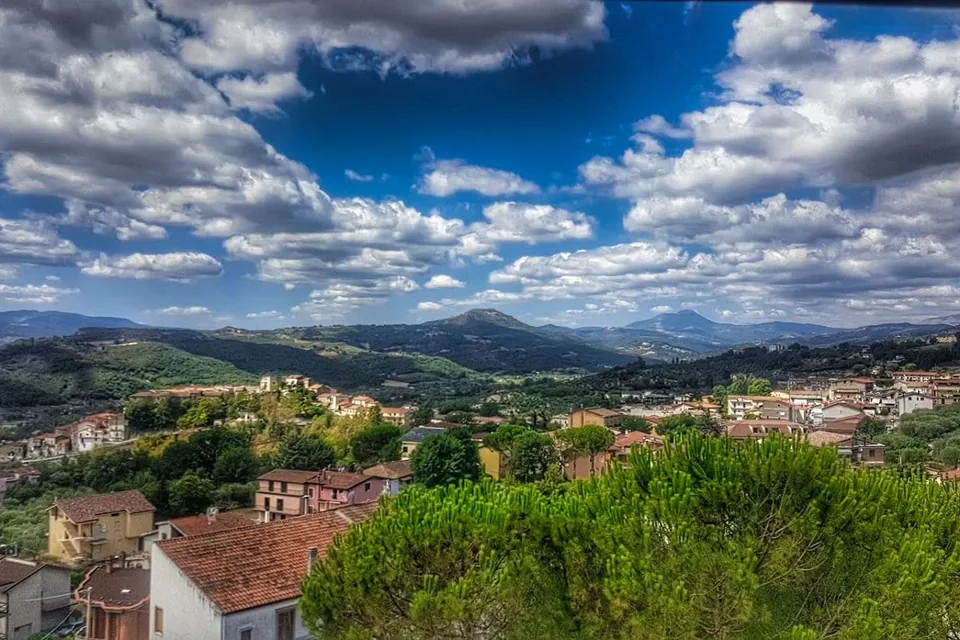

.jpg)
