
Why go
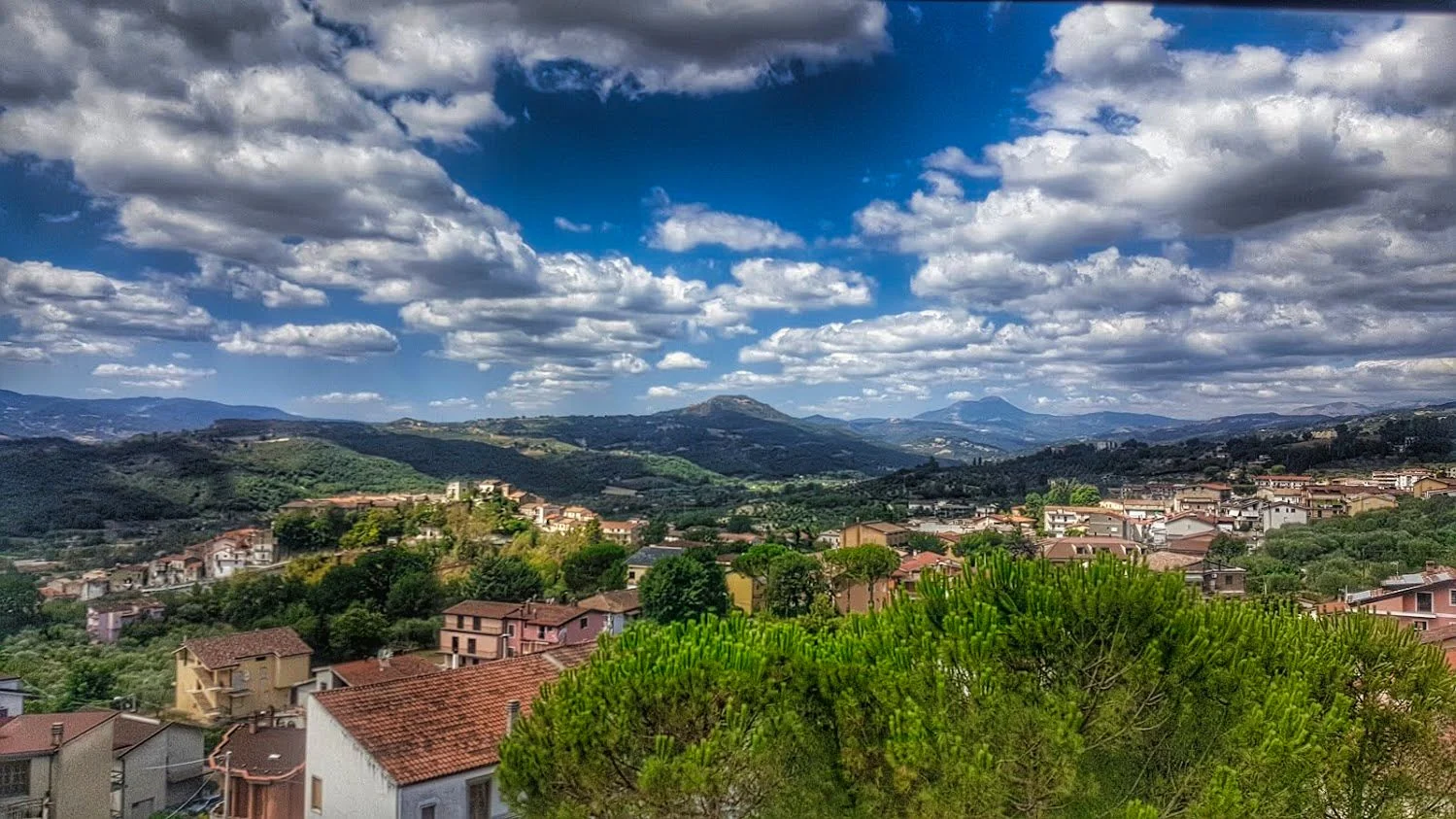
Senise lies in the valley of the Sinni river, at about 335 metres, west of the great Monte Cotugno lake and on the border with the province of Matera. It is a hill town where your journey can start from an ingredient: the Senise pepper PGI, which in summer hangs in long red garlands to dry between the houses and which, fried for a few seconds, becomes the crusco, crisp and sweet, one of the symbols of Lucanian cooking.
Behind the product is a town with a long history. The old centre, grown around the castle, keeps lanes and stairways, noble palaces and the former Franciscan convent, now the town hall, beside the church of Santa Maria degli Angeli with a precious 16th-century polyptych signed by Simone da Firenze.
And there is the landscape of water. The Monte Cotugno dam, in service since 1983, is Europe's largest earth-fill dam and transformed the valley, flooding the fertile «gardens of Senise» where vegetables were grown. Today the lake is part of the view, and from Senise you can climb towards the Pollino or descend to the Ionian coast and the badlands.
Sources: Catalogo generale dei beni culturali (MiC) — Centro storico di Senise · Qualigeo — Peperoni di Senise IGP · Agenzia di stampa della Regione Basilicata — U Strittul ru Zafaran · Italia.it — Prodotti e piatti tipici lucani · Regione Basilicata, patrimonio culturale — Convento di San Francesco a Senise · Catalogo generale dei beni culturali (MiC) — Polittico di Simone da Firenze · Regione Basilicata, patrimonio culturale — La diga di Monte Cotugno
History
The Senise area has long been inhabited: during excavations at San Filippo the remains of an Imperial Roman villa came to light, and at Pantano tombs with Lombard-age gold, the so-called «gold of Senise», were found, now kept in the National Archaeological Museum of Naples. According to local tradition, the present town grew in the early centuries of the second millennium around the convent on San Biagio hill, where survivors of a plague are said to have taken refuge.
The first historic centre, from the 13th century, grew around the old castle, rebuilt two centuries later with towers and battlements. The fief passed from lords installed by the Normans to the Angevins, the Sanseverino, the Sagro and finally the Pignatelli. The Sanseverino gave the baronial palace to the Franciscans, and on its ruins the convent rose in the 14th century, the eastern gate of the walled town. From the 18th century the fabric of rural houses and lanes gained noble palaces such as Palazzo Barletta and Palazzo Fortunato; the 1857 earthquake caused heavy damage.
The 20th century was marked by the dam. Studies began in 1951 and works in 1971, after years of protest by farmers who were losing the most fertile land; in exchange the community obtained, among other things, the Sinnica road and an industrial area.
Sources: Regione Basilicata, patrimonio culturale — La diga di Monte Cotugno · Catalogo generale dei beni culturali (MiC) — Centro storico di Senise · Regione Basilicata, patrimonio culturale — Convento di San Francesco a Senise
What to see
The Franciscan complex is the starting point. The convent, built in the 14th century, overlooks the Serrapotamo valley and is arranged round a small rectangular cloister with arches on the ground floor; Piazza del Municipio, between convent and church, was once the great cloister, where traces of the friars' workshops can still be seen. The ground floor houses the Science Centre, a museum of the territory. The cloister frescoes were commissioned by Fra Pietro Corona, the same friar who wanted the church's polyptych.
The church of Santa Maria degli Angeli, built in 1270 and once joined to the convent, keeps in its choir the polyptych signed in 1523 by Simone da Firenze: two tiers with the enthroned Madonna and Child, the Crucifixion and many saints, including Francis, Louis of Toulouse and Catherine of Alexandria, in a gilded frame blending Gothic and Renaissance forms. The ministry's catalogue sees in it the echo of Florentine painting by Botticelli, Ghirlandaio and Filippino Lippi.
In the old centre you walk through lanes and stairways to the mother church of Santa Maria della Visitazione and the Barletta and Fortunato palaces. The Ethnographic Museum of the Senise area opens during festivals and tells the story of rural life in the valley. Outside town, Lake Monte Cotugno and its dam make a landscape best viewed from above.
Sources: Regione Basilicata, patrimonio culturale — Convento di San Francesco a Senise · Catalogo generale dei beni culturali (MiC) — Polittico di Simone da Firenze · Catalogo generale dei beni culturali (MiC) — Centro storico di Senise · Agenzia di stampa della Regione Basilicata — U Strittul ru Zafaran · Regione Basilicata, patrimonio culturale — La diga di Monte Cotugno
Flavours
Senise pepper PGI is the star. The Pollino park notes that it has held the label since 1996 and is grown in Senise and twelve other villages of the Sinni valley; the specification allows the Appuntito, Tronco and Uncino types. It is sown in late winter, transplanted between May and June and picked by hand when the pods turn purple-red. For the dried product the peppers rest a few days in airy rooms, then are threaded in a spiral on string to form the «serte» and left in the sun until they turn wine-red; they can also be ground into powder.
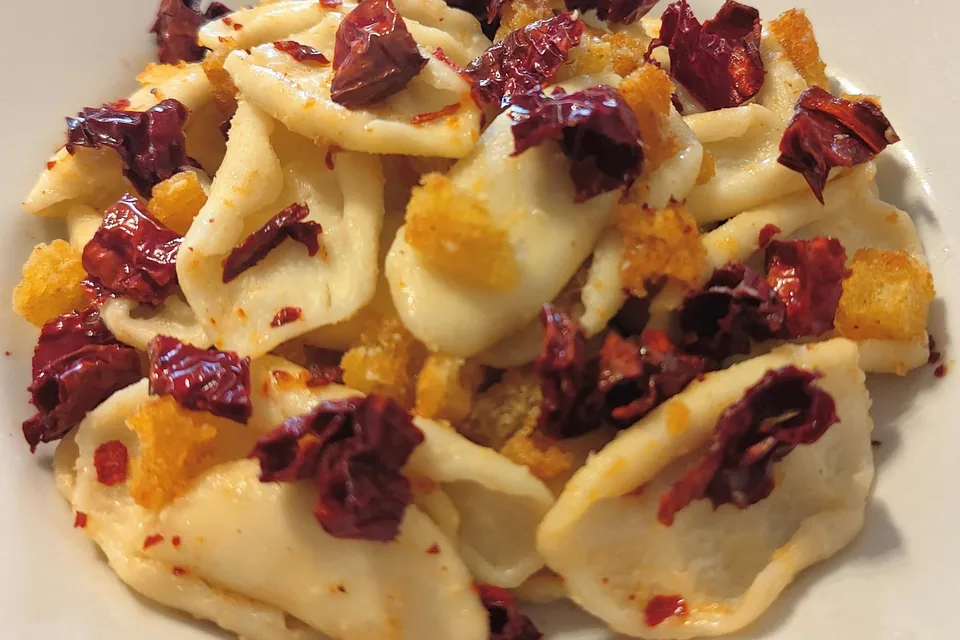
Fried for a few seconds in extra virgin olive oil they become peperoni cruschi, crisp and sweet, which Italy's national tourism portal calls the red gold of Lucania. Senise pepper powder also flavours the Pollino sausage, scented with wild fennel, and at Carnival people make chiculicchia with crusco pepper.
From the same valley comes the Pera Signora, a small yellow pear with red flecks and very fragrant white flesh, once grafted by shepherds onto wild pear trees at the edge of fields: a Slow Food Presidium protects the surviving trees and promotes new plantings. It is eaten freshly picked, in syrup, as jam or dried.
Sources: Parco nazionale del Pollino — Sapori · Qualigeo — Peperoni di Senise IGP · Italia.it — Prodotti e piatti tipici lucani · Regione Basilicata — Carnevale senisese 2026 · Fondazione Slow Food — Pera Signora della valle del Sinni
When to go
Senise can be visited all year, but summer is when the town shows off its product: garlands of peppers hung out to dry between the houses colour the lanes of the old town. In August comes «U Strittul ru Zafaran», the festival devoted to the old town and its PGI pepper, organised by the ASSA association with the protection consortium, the Ethnographic Museum of the Senise area and the patronage of Region and municipality.
The festival lasts three days. In the 2025 edition the day of history started from Porta Santa Caterina with guided tours of the old centre, traditional workshops and the opening of the ethnographic museum; the day of tradition brought flag-wavers and district games to piazza Vittorio Emanuele; the day of gastronomy culminated in the Senise PGI pepper festival, with tastings, cooking shows and the «'nserta» contest, the pepper garland.
In winter the Senise Carnival, in its second edition in 2026, chose crusco pepper as its theme, with a dedicated float and chiculicchia offered to everyone. In spring and autumn the mild weather suits outings to the lake and the Pollino. Dates and programmes change every year and should be checked.
Sources: Qualigeo — Peperoni di Senise IGP · Agenzia di stampa della Regione Basilicata — U Strittul ru Zafaran · Regione Basilicata — Carnevale senisese 2026
Getting there and around
Senise is reached by car on the SS653 Sinnica, the expressway running along the Sinni valley, which the Senise community itself obtained in exchange for the building of the dam: it links the Lauria area, on the Mediterranean motorway, with the Metaponto plain. The Pollino park lists the Sinnica as one of the access roads into the protected area from the SS106 Jonica near Rotondella, and the Lauria exit among the A2 exits serving the Lucanian side.
The town is about 130 kilometres from Potenza. By train, the reference stations named by the park for the Lucanian side are Policoro, on the Ionian coast, and Maratea, on the Tyrrhenian, from which buses continue; the park's Lucanian villages are served by the COTRAB consortium. The nearest airports named by the park are Naples, Bari and Lamezia Terme.
In town you get around the old centre on foot, between the convent, the church of Santa Maria degli Angeli and the steep lanes. For the lake, the dam and excursions towards the Pollino you need a car.
Sources: Regione Basilicata, patrimonio culturale — La diga di Monte Cotugno · Parco nazionale del Pollino — Come raggiungerci · Catalogo generale dei beni culturali (MiC) — Centro storico di Senise · Regione Basilicata, patrimonio culturale — Convento di San Francesco a Senise
Nearby
Up the valley you enter the Pollino National Park, within whose boundary the ministry's catalogue also places Senise. Terranova di Pollino, gateway to the massif on the Lucanian side, offers trails towards Monte Pollino, the Timpa di Falconara and the Garavina gorges, and a musical tradition centred on the zampogna. On the high scree slopes grows the Bosnian pine, the park's emblem.
Lake Monte Cotugno is what binds the valley together: the Region notes that the reservoir is felt to be the shared heritage of Senise and twelve other villages overlooking the Sinni and the Agri. Its shores and surrounding villages form a new landscape, born from the dam, to be seen together with the story of those who watched it take shape.
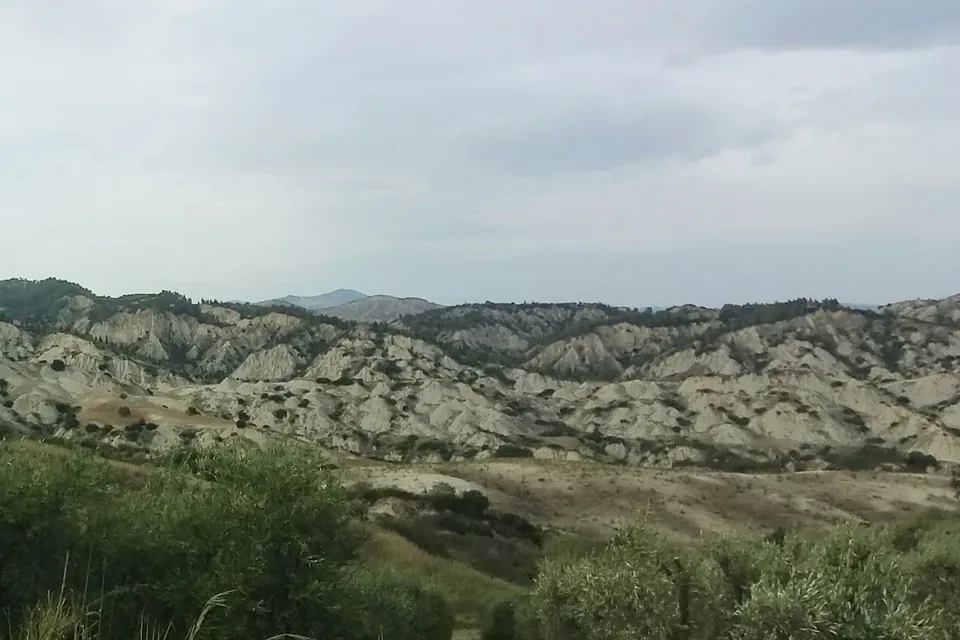
To the north-east lies Aliano, perched on a clay ridge in the heart of the Lucanian badlands, with the places of Carlo Levi: the picture gallery, the house of his internal exile and the museum of rural life. Following the Sinnica further you finally reach the Ionian coast and the Metaponto plain, which receives the lake's water.
Sources: Catalogo generale dei beni culturali (MiC) — Centro storico di Senise · Parco nazionale del Pollino — Terranova di Pollino · Parco nazionale del Pollino — Il pino loricato · Regione Basilicata, patrimonio culturale — La diga di Monte Cotugno · Italia.it — Aliano
Where to stay
In the municipality of Senise the national database of the Ministry of Tourism lists 13 accommodation businesses with a verified CIN code: 1 hotels, 5 other licensed accommodation and 7 other types such as B&Bs and private rentals.
Sources: Ministero del Turismo – Banca Dati Strutture Ricettive (dashboard pubblica), 2026-10-12
YOUR JOURNEY
How to shape a journey here
Journey idea: include Senise in a chapter of food and landscape continuing towards Northern Calabria. Peppers can provide the culinary thread; town and valley give it context, leaving time for a meal.
Talk to us about it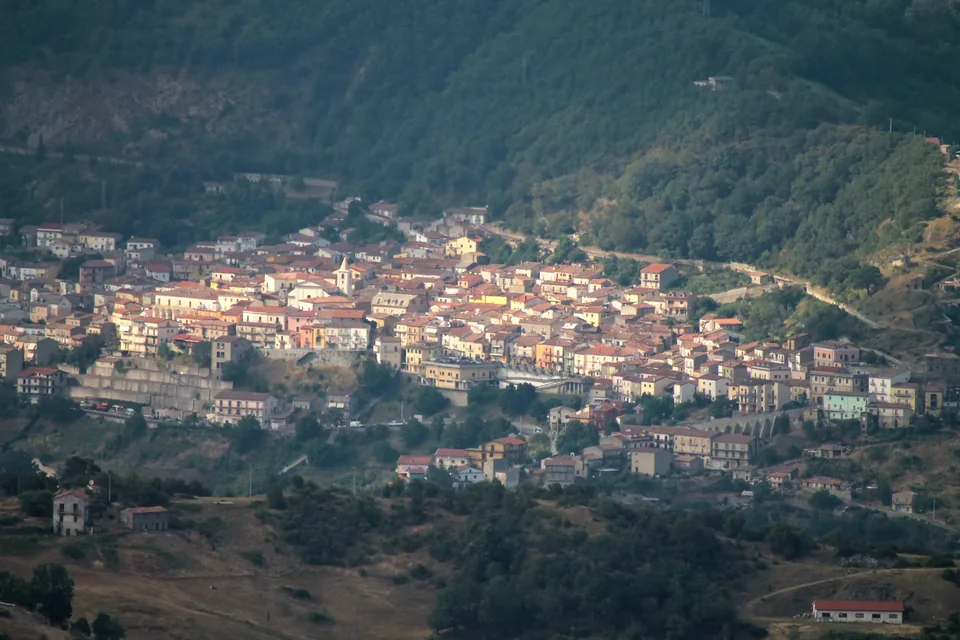

.jpg)


