
APULICA / FRUIT, VEGETABLES AND PULSES
Senise peppers
PGI · Fruit, vegetables and pulses · Basilicata
In brief
- Sweet peppers of the Appuntito, Tronco and Uncino types, sold fresh, dried or ground to powder. (Qualigeo (Fondazione Qualivita) — Peperoni di Senise IGP)
- They are grown in Senise and nearby towns in the provinces of Potenza and Matera. (Qualigeo (Fondazione Qualivita) — Peperoni di Senise IGP)
- For the dried version they are strung on twine and left to air-dry away from light. (Qualigeo (Fondazione Qualivita) — Peperoni di Senise IGP)
- They reached the area in the sixteenth and seventeenth centuries. (Qualigeo (Fondazione Qualivita) — Peperoni di Senise IGP)
History and origin
Peppers reached the Senise area between the sixteenth and seventeenth centuries and found an ideal environment there, which encouraged their cultivation and, over time, the selection of local types.
At first they were grown for home use. Their particular qualities, however, gradually turned them into a source of income for the families who grew them, and strings of red peppers hung out to dry have become a familiar image of the town.
The Protected Geographical Indication Peperoni di Senise was recognised by the European Union in 1996. It covers fresh peppers, dried peppers and pepper ground into powder, and is looked after by a consortium based in Senise.
Sources: Qualigeo (Fondazione Qualivita) — Peperoni di Senise IGP · eAmbrosia — Peperoni di Senise (PGI-IT-1532)
Area and method of production
The production area covers Senise and several nearby municipalities in the provinces of Potenza and Matera. Seed is taken from mother plants chosen in local fields; sowing is usually by hand, broadcast, between February and March, and transplanting between May and June.
The peppers ripen gradually, so they are picked by hand once they reach their typical purple-red colour. For the dried product they are spread on cloths or nets in dry, airy rooms away from light for at least two or three days. The stalks are then threaded on string so that the pods form a spiral: this is how the «serte» are made, the strings that stay in the sun until moisture falls below 18% and the colour turns wine-red.
For the powder, the dried pepper is briefly oven-dried before grinding.
Sources: Qualigeo (Fondazione Qualivita) — Peperoni di Senise IGP
How to recognise it
The designation includes three types: Appuntito and Uncino, with a slightly misshapen pod, faint ribs and a pointed tip, and Tronco, cone-shaped, with marked ribs and a blunt tip. The colour ranges from green to purple-red, and all types taste sweet.
Two traits make them unmistakable: the thin flesh, which dries well, and the stalk, which stays firmly attached to the pod even after drying.
They are sold fresh in the three types; dried, in strings up to two metres long or as single pods, whole or without stalk and seeds; or ground. Fresh peppers keep in the fridge for about ten days, while dried ones and powder last a long time in a cool, dry place.
Sources: Qualigeo (Fondazione Qualivita) — Peperoni di Senise IGP
In the kitchen
The best-known dish is peperoni cruschi: the dried pods are fried for a few moments in extra virgin olive oil and turn crisp, to be eaten on their own or crumbled over other Lucanian dishes.
The pepper powder, on the other hand, seasons soups and pasta and gives colour and aroma to traditional Lucanian cured meats. Fresh peppers, sweet and thin-fleshed, go into seasonal recipes.
Its ability to keep for a long time, hung in strings or ground, has made the Senise pepper an all-year ingredient in local homes, and today it also features in more creative kitchens that reinterpret traditional dishes.
Sources: Qualigeo (Fondazione Qualivita) — Peperoni di Senise IGP · Qualivita — Debutta il Senise Summer Festival con protagonista il Peperone di Senise IGP (2025)
Where to taste it
The heart of production is Senise, in the province of Potenza, together with the neighbouring municipalities in the provinces of Potenza and Matera included in the designation. When the pods have turned purple-red and the strings hang in the sun to dry, the town turns red.
Senise also celebrates its pepper in the square. In July 2025 the first Senise Summer Festival filled Piazza Aldo Moro with a food trail reinterpreting traditional dishes made with the PGI pepper, together with live music.
A visit to Senise, in the Sinni valley, fits well with an itinerary in the Pollino and the nearby villages, to taste peperoni cruschi where they were born.
Sources: Qualigeo (Fondazione Qualivita) — Peperoni di Senise IGP · Qualivita — Debutta il Senise Summer Festival con protagonista il Peperone di Senise IGP (2025)
Protection
- Protected geographical indication (PGI) — PGI-IT-1532 (eAmbrosia — Peperoni di Senise (PGI-IT-1532))
When
- The sources consulted give no months.
Where
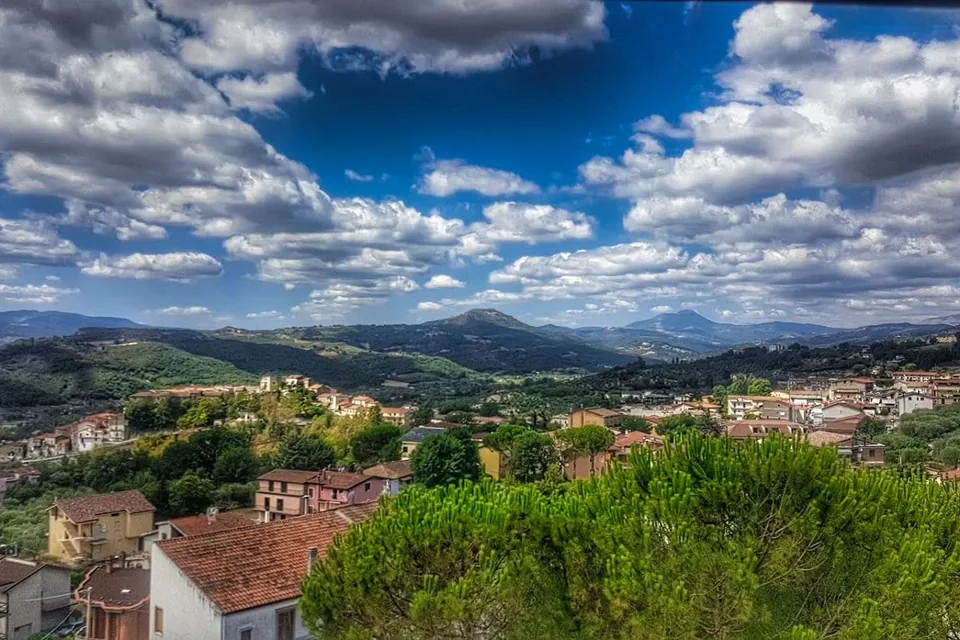
Senise
The town, Peperone di Senise IGP and the Sinni valley: understand a place through an ingredient.
Read the guide →Photo: Fabio742008 / Wikimedia Commons — CC BY-SA 4.0 · Resized and converted to WebP.
.jpg)
Read more
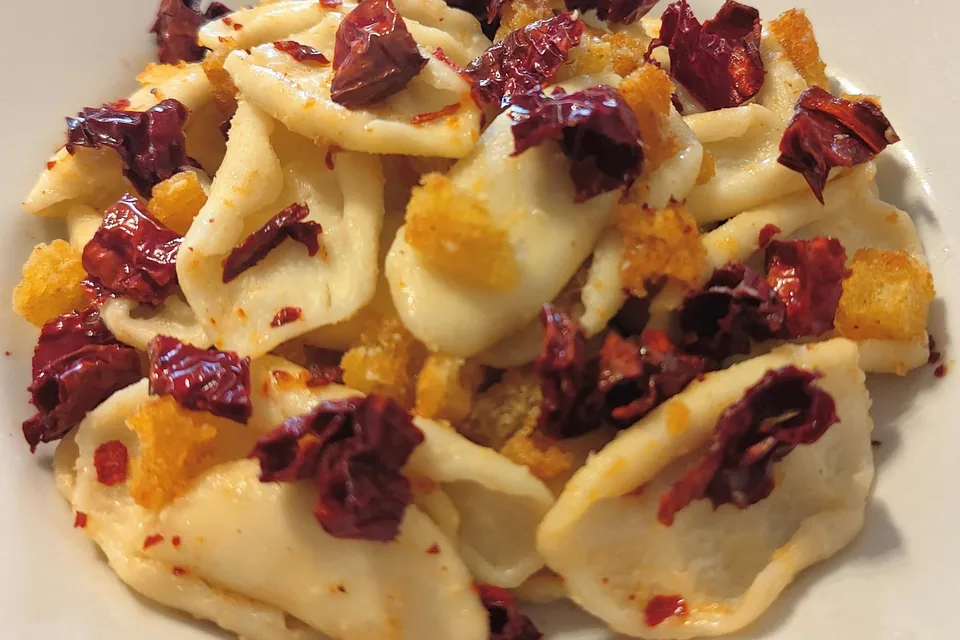
Senise crusco peppers
The PGI pepper of the Sinni valley: origins, growing, drying in strings, the powder called zafaran, fried crusco, European protection and the August festival in Senise.
Read the guide →Photo: Generale Lee / Wikimedia Commons — CC BY-SA 4.0 · Resized and converted to WebP.
