
A pepper from the Antilles
Slow Food's Ark of Taste describes a pointed, truncated or hooked pepper, about 10-15 centimetres long, with thin flesh of 1.5-2 millimetres and little liquid, which makes it easy to dry. It is grown in Senise and on the spurs overlooking the Sinni and Serrapotamo valleys, sown between February and March and harvested mainly in August.
Its origins are distant. Italia.it recalls that the pepper comes from the Antilles and gives two stories: according to one legend it was brought by the Aragonese from the Caribbean islands they ruled, according to another the ship's doctor on one of Columbus's caravels kept large quantities of it for its healing properties. Qualigeo dates its arrival in the area to the 16th-17th centuries.
At first it was grown for household use, then its qualities turned it into a source of income. In dialect it is called zafaran, because the colour of its powder recalls saffron.
Sources: Fondazione Slow Food — Arca del Gusto, Peperone di Senise · Italia.it — Peperoni cruschi di Senise IGP · Qualigeo — Peperoni di Senise IGP
Twelve municipalities between the Sinni and the Agri
The brochure by ALSIA, the Basilicata agricultural development agency, explains that the PGI area covers twelve municipalities, six in the province of Potenza and six in that of Matera, between the Sinni and Agri valleys; some, Senise included, lie within the Pollino National Park. The soils are alluvial, silty and sandy, with medium-textured hills between 250 and 340 metres, and the climate is Mediterranean, with winter rain and peak temperatures in July and August.
The specification recognises three types, pointed, hooked and truncated, from local bull's-horn ecotypes; the pointed type is the most common. Qualigeo adds that pointed and hooked peppers have faint ribs and a tip, while the truncated one is conical with marked ribs; all taste sweet.
According to ALSIA, this pepper stands out for higher soluble solids and vitamin C and lower water content. The Pollino Park lists it among the signature products of its territory.
Sources: ALSIA — I prodotti della Basilicata: Peperone di Senise IGP (opuscolo) · Qualigeo — Peperoni di Senise IGP · Parco nazionale del Pollino — Sapori
From seedbed to harvest
The calendar described by ALSIA starts early. Sowing is usually done by hand, broadcast in cold or heated seedbeds, or by machine in cell trays, between late February and mid-March. Seed must come from healthy mother plants selected in fields within the production area: this is how the local ecotypes have survived.
Transplanting takes place between mid-May and early June, in furrows or in holes made with a wooden dibber. Seedlings are set in single rows, 25-30 centimetres apart along the row and 70-80 between rows, or in wider double rows.
Hand harvesting begins in the first ten days of August, when the pods reach their typical purple red. Qualigeo notes that ripening is staggered, so the same field is picked several times. The consortium's president, interviewed by ALSIA in 2021, noted that excessive heat can scorch the pods and that late-summer rain is the greatest risk for drying.
Sources: ALSIA — I prodotti della Basilicata: Peperone di Senise IGP (opuscolo) · Qualigeo — Peperoni di Senise IGP · ALSIA Agrifoglio — Peperone di Senise IGP, la Regione rilancia il padre del crusco (2021)
The secret of the stalk: the strings
The secret of the strings, ALSIA explains, is the stalk, which does not come away from the pod even during drying. After picking the peppers rest for two or three days on cloths or nets in dry, ventilated, dark rooms; then the stalks are threaded one after another on string so that the pods form a spiral.
This produces the serte, strings one and a half to two metres long that weigh about ten kilos when fresh. They stay in the sun until water content falls to 10-12%, then are stored in airy rooms; the dried product is a wine-red colour.
Italia.it describes the effect on the villages: the nzerte, sewn with needle and thread, hang from balconies and railings and colour the lanes of the old towns until they become part of the architecture. It is the thin flesh, ALSIA's article also notes, that allows natural air drying: almost the whole crop is dried, and only a small share is eaten fresh.
Sources: ALSIA — I prodotti della Basilicata: Peperone di Senise IGP (opuscolo) · Italia.it — Peperoni cruschi di Senise IGP · ALSIA Agrifoglio — Peperone di Senise IGP, la Regione rilancia il padre del crusco (2021)
From water mill to powder
Pepper powder has a documented history. ALSIA's brochure cites a 1926 article in Terra Lucana, the monthly of the Potenza travelling agricultural school, describing a show in Senise where the powder was displayed. A book on the history of Senise by Francesco Bastanzio relates that in the early 20th century dried pepper was ground with small hand mills, hard work that limited its use, until a farmer began using water-powered grain mills and output grew enormously.
A manuscript from the same period reports that the powder was sold in the province, beyond the region and even in America. The name zafaran, ALSIA explains, arose when the ground pepper, similar to saffron, became an economic resource carried far away by emigrants and merchants.
Today the dried pepper goes into an oven before milling to remove the last moisture, and the powder must be very finely ground. Qualigeo notes that it is used to flavour soups, pasta and traditional Lucanian cured meats.
Sources: ALSIA — I prodotti della Basilicata: Peperone di Senise IGP (opuscolo) · Qualigeo — Peperoni di Senise IGP
European protection and revival
The Senise pepper was among the first Lucanian products to receive PGI status, in 1996; in 2003 the Ministry authorised the inspection body, and Qualigeo records EU approval of an amendment to the specification in 2020. The name protected today is Peperoni di Senise. Packs carry the designation's logo; ALSIA's brochure notes that the farm or place of origin may be shown, while laudatory terms are banned.
A 2021 ALSIA article describes a real revival. Thanks to growing demand and a regional call to increase certified output, the PGI area went in one year from seven to thirty-six hectares and the consortium's farms from 9 to 29, many of them run by people under forty.
The same article notes that crusco has become the dish that most identifies Basilicata, and that the visitors drawn by Matera, European Capital of Culture in 2019, made it even better known. Requests come from other regions and from abroad.
Sources: ALSIA Agrifoglio — Peperone di Senise IGP, la Regione rilancia il padre del crusco (2021) · ALSIA — I prodotti della Basilicata: Peperone di Senise IGP (opuscolo) · Qualigeo — Peperoni di Senise IGP
From the string to the plate
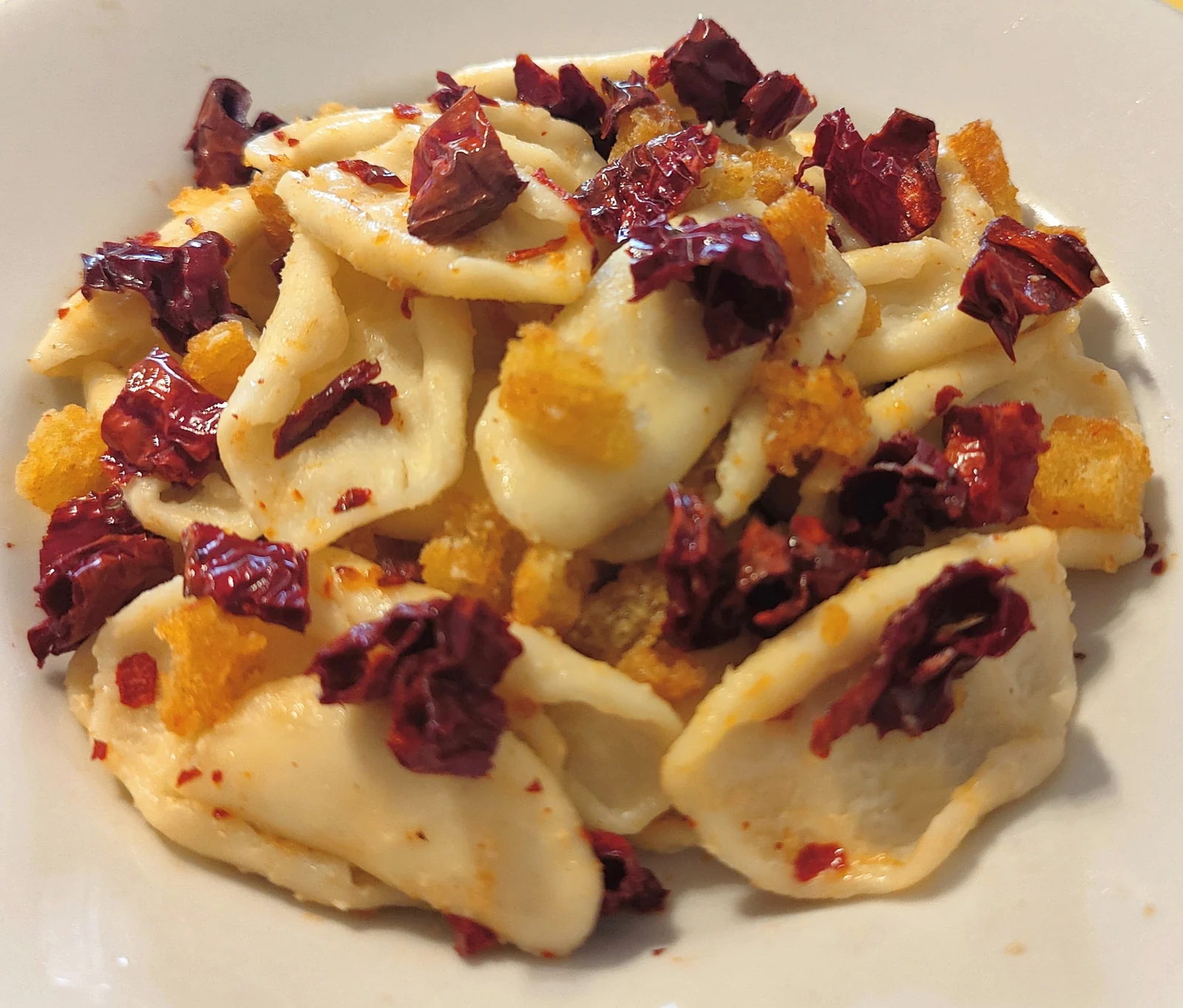
Crusco takes only seconds to make, which is exactly why it needs care. The recipe given by ALSIA calls for taking the pods off the string, wiping them with a damp cloth, removing the core and seeds and opening them out; they are then dipped in two fingers of extra virgin olive oil at about 120 degrees, turned for some fifteen seconds and left to cool on kitchen paper with a pinch of salt. The result is crisp and crumbly.
Italia.it suggests eating them as a starter with a drizzle of oil, or with strascinati, hand-made pasta, and a sprinkling of salted ricotta. They are excellent with salt cod, fried with egg and sausage, with boiled potatoes and sautéed greens, alongside cured meats and cheeses. ALSIA also lists them as a side for roasts and sausages.
ALSIA's article describes crusco as thin as a wafer, sweet and slightly bitter at once, with a delicate pepper aroma. The powder, by contrast, adds colour and fragrance without heat.
Sources: ALSIA — I prodotti della Basilicata: Peperone di Senise IGP (opuscolo) · Italia.it — Peperoni cruschi di Senise IGP · ALSIA Agrifoglio — Peperone di Senise IGP, la Regione rilancia il padre del crusco (2021)
August: U strittul ru zafaran
The festival's name means, in dialect, the pepper lane: ALSIA's brochure explains that it recalls the narrow lanes of the old town turned red by the strings hanging from balconies. It is organised by the A.S.S.A. association with the protection consortium and local bodies, and combines entertainment, sector meetings, producers' stands and tastings.
The Basilicata Region announced the 24th edition for 9 to 11 August 2026 in the old town of Senise, under the patronage of the town and the Region. The programme included visits to farms and to the Senise ethnographic museum, games between districts, a consortium conference on production, water and processing and, on the last evening, an arts and food trail with the 'nserta competition and cooking shows.
Alongside the long-standing festival, Qualivita reported the debut, at the end of July 2025, of the Senise Summer Festival, an evening of food and music devoted to the pepper. For later years it is worth checking the updated calendar.
Sources: ALSIA — I prodotti della Basilicata: Peperone di Senise IGP (opuscolo) · Regione Basilicata — A Senise la 24ª edizione de U strittul ru zafaran · Qualivita — Debutta il Senise Summer Festival
Three textures of the same ingredient
I would suggest first looking at the dried pepper hanging in its strings, then tasting a whole crusco and finally a dish that uses it as a contrast, on pasta, potatoes or salt cod. In the first bite I would look above all for the snap, the dry sound that tells you whether the frying was right; in the next, for how its flavour binds with the other ingredients.
Large portions are not needed: the point is to understand what role the pepper plays in each dish. The powder, finally, shows its third face, that of a sweet, not hot seasoning that colours and scents soups and doughs.
If the chance arises, I would compare a crusco just fried with one made a few hours earlier: the difference in crunch is the quickest way to see why in Basilicata it is fried at the last minute.
When to go and what to take home
The trip changes depending on whether you want to see the pepper in the fields or the result of preserving it. For the first you need high summer, with the harvest; for the second, late summer and autumn, when the strings are drying and crusco is on the table. Senise is also a gateway to the Pollino: after the village I would let the story change with the landscape. Farm visits are arranged with the operators.
Dried pepper is light and travels well, but it is fragile: a rigid box is better than a bag squashed in a suitcase. A whole string is a lovely souvenir to hang in the kitchen; powder, in a sealed jar, is the most practical format.
To fry crusco at home you need hot oil and a few seconds: a moment too long and it turns bitter. On the label I would look for the words Peperoni di Senise and the PGI symbol.
A thread for your journey
Journey idea: Senise's old town and Ethnographic Museum, a lunch devoted to the pepper in three textures, an afternoon towards the Pollino. In August, if the official calendar confirms it, the U strittul ru zafaran festival; farm visits arranged with operators.
Talk to us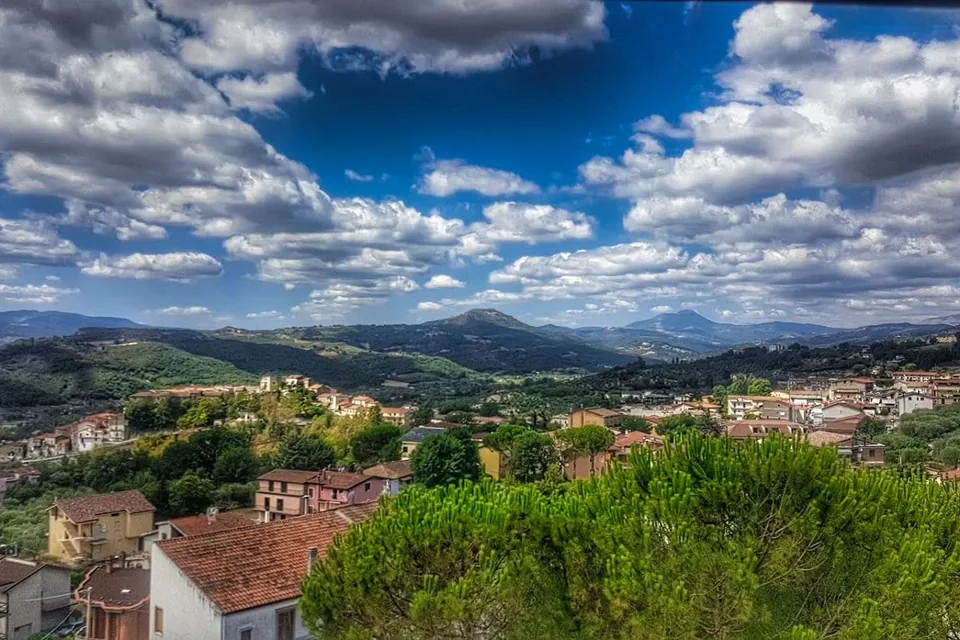


.jpg)
