
APULICA / Food guides
Sila potatoes: a highland tuber and the cooking of the Sila forests
On the Sila plateau, among Calabrian pine forests, lakes and mountain villages, the potato has always been a resource: it grows slowly thanks to strong day-night temperature swings and long sunshine, and builds up dry matter that makes it tasty and suited to many cooking methods. Since 2010 Patata della Sila has been a Protected Geographical Indication. Around it revolves a mountain cuisine of mushrooms, chestnuts, cheeses and black-pig meat. This guide explains the PGI's varieties and rules, the crop's history, Sila dishes and an autumn trip between Camigliatello, the lakes and the steam train.
Six varieties, two skin colours
According to Qualigeo, the PGI covers the Solanum tuberosum tuber of the Agria, Desirée, Ditta, Majestic, Marabel and Nicola varieties, with yellow or red skin and yellow or white flesh. Agria, Ditta, Marabel and Nicola have yellow skin and flesh; Majestic has yellow skin and white flesh; Desirée has red skin and yellow flesh. Shapes range from round to long oval, sized from 28 millimetres to over 76; skin and flesh are firm. The production area includes some towns on the Sila plateau in the provinces of Cosenza and Catanzaro. For buyers, the variety name on the label is a useful guide: Qualigeo suggests Desirée for frying and gnocchi, Ditta for roasting and boiling, Majestic for mash and Nicola for steaming and baking.
Sources: Qualigeo — Patata della Sila IGP
Highland climate and growing rules
Qualigeo describes the Sila plateau as Europe's widest, with strong daily temperature swings and long sunshine: conditions that encourage slow, steady growth and a high build-up of dry matter, the source of the tubers' quality and keeping power. The rules are precise: certified seed tubers, soils without standing water, rotation with at least two years free of nightshades, ploughing in autumn or spring. Planting normally runs from mid-April to late June; harvest, by hand or machine, from the second half of August to 30 November. Potatoes are kept in covered, ventilated stores, in the dark at room temperature for up to eight months and no later than 30 April, or in cold rooms between 5 and 10 degrees for up to ten months. Chemical sprout inhibitors are banned.
Sources: Qualigeo — Patata della Sila IGP
The PGI and the history of the Sila potato
The name Patata della Sila is a PGI registered on 8 October 2010, as the Qualigeo record states. Qualigeo recalls that cultivation has always been a major resource for the plateau's communities, which grew partly thanks to its trade. In 1955 the Sila Centre for the multiplication and selection of seed potatoes was founded, and by the 1980s the area ranked among Italy's leaders for the size of its processing plants. Its fame was fed by many dedicated events, the most important being the Sila potato festival, held every year since 1978 in Camigliatello Silano. The Sila National Park names the PGI potato as one of the main products of the Presila and a staple of local cooking.
Sources: Qualigeo — Patata della Sila IGP · Parco nazionale della Sila — Gastronomia
Sila cooking
The Sila National Park describes a cuisine born of poverty that has become the traditional menu: vegetables, pulses, potatoes, mushrooms, olives and chilli sautéed in Calabrian oil, sometimes bound with crumbled bread and pecorino, served with lamb, beef and pork. Many mushroom species grow in the forests, including vavusi, morels, silli, parasols, rositi, chanterelles and Caesar's mushrooms, kept in oil, fried, sautéed or grilled, often with potatoes. Chestnut trees shape the Presila landscape. Slaughtering the Calabrian black pig, fattened on acorns and chestnuts, remains a ritual, and Calabria's cured meats hold PDO status. Among cheeses caciocavallo silano PDO stands out; among sweets pitta 'mpigliata, mastazzuoli, turdilli and susumelle. Italia.it recommends mpanata, a soup of ricotta, warm whey and stale bread.
Sources: Parco nazionale della Sila — Gastronomia · Italia.it — Parco nazionale della Sila
The plateau: park, villages and lakes
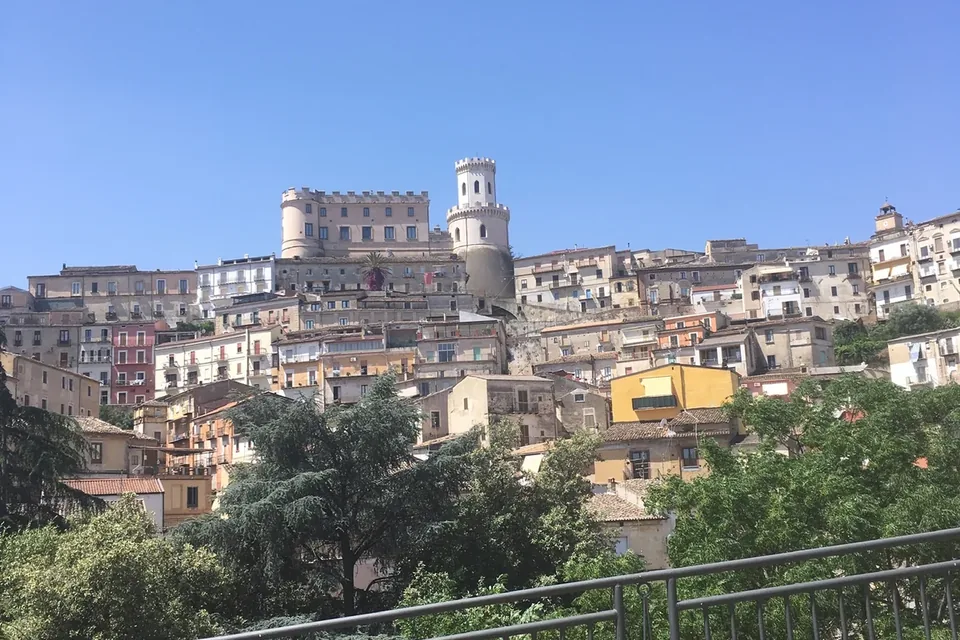
Italia.it describes the Sila as a plateau of about 150,000 hectares across the provinces of Cosenza, Crotone and Catanzaro, protected by the Sila National Park, Calabria's oldest and among the first five in Italy. Among towns to visit it lists Acri, gateway to the Sila, with its castle, historic palazzi and the basilica of Blessed Angelo; San Giovanni in Fiore, the most populous town, with the Florense Abbey; and Castelsilano, with springs and caves. On lakes Ampollino, Cecita and Arvo you can row and fish, while Lorica, Camigliatello and Ciricilla have ski facilities. Forests of Calabrian pine, beech and silver fir, including the Forest of Giants, are home to wolves, deer and raptors such as the red kite. In autumn, italia.it notes, hikers can gather mushrooms, chestnuts and berries, following the rules.
The steam train and autumn festivals
One of the best-loved experiences is the Sila Train. Italia.it explains that the narrow-gauge railway, built in the early 20th century and back in service in 2016 after a long restoration, links Moccone and San Nicola via Camigliatello Silano, with a 1926 Borsig locomotive, the 166-metre Camigliati viaduct, Lake Cecita and Italy's highest station at 1,406.5 metres. Runs take place on Sundays and, in summer, Saturdays too, with compulsory booking. In autumn Camigliatello also hosts the mushroom festival, Autunno in Sila, for which the town of Spezzano della Sila has published the programme of the 57th edition, with a mycological exhibition, cooking shows and music. The potato festival, according to Qualigeo, has been held every year since 1978. Dates should be checked each time with organisers.
Sources: Italia.it — Il Treno della Sila · Comune di Spezzano della Sila — Sagra del fungo, Autunno in Sila · Qualigeo — Patata della Sila IGP
In the kitchen: potatoes with mushrooms, potatoes with peppers
The Sila potato, rich in dry matter and firm even after cooking, is perfect for frying, and that is where to start: potatoes pan-fried with peppers, or sautéed with forest mushrooms, garlic and parsley, are simple dishes that clearly show the difference from an ordinary potato. In autumn a tray of potatoes and mushrooms baked with a drizzle of oil and grated pecorino tells the story of the Sila in one dish. Calabrian cooking also pairs potatoes with pasta, a choice that surprises outsiders. For mash or gnocchi, choose the right variety. And if you get the chance, try a mpanata in a mountain refuge: it contains no potatoes, but it completes the picture of a hearty, waste-free mountain cuisine.
When to go and what to take home
Autumn is the ideal season: from September to November potatoes, mushrooms and chestnuts are harvested, the forests change colour and festivals enliven Camigliatello. PGI potatoes are on sale from October to May, in sacks and packs of various sizes; a bag of a few kilos travels easily by car and, kept dark and cool, lasts for weeks. Look on the label for Patata della Sila IGP and the variety. Along with potatoes you can bring back dried or preserved mushrooms, chestnuts, cheeses and cured meats from the Sila, remembering that fresh products need refrigeration. Anyone wishing to gather mushrooms must check the rules and required permits. Visits to farms and processing centres must be arranged with operators.
A thread for your journey
Journey idea: two autumn days in the Sila based in Camigliatello. One day on the Sila Train to San Nicola and a walk in the Calabrian pine woods, with a dinner of potatoes and mushrooms; the second towards Lake Cecita and San Giovanni in Fiore with the Florense Abbey. Visits to farms and processing centres arranged with operators.
Talk to us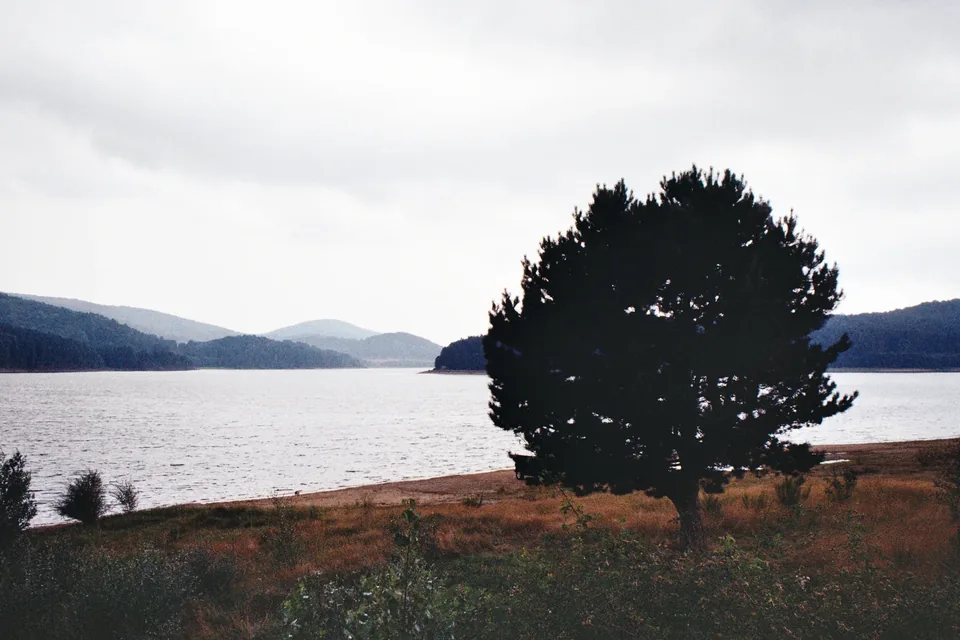

_luglio_2021_f01.jpg)