
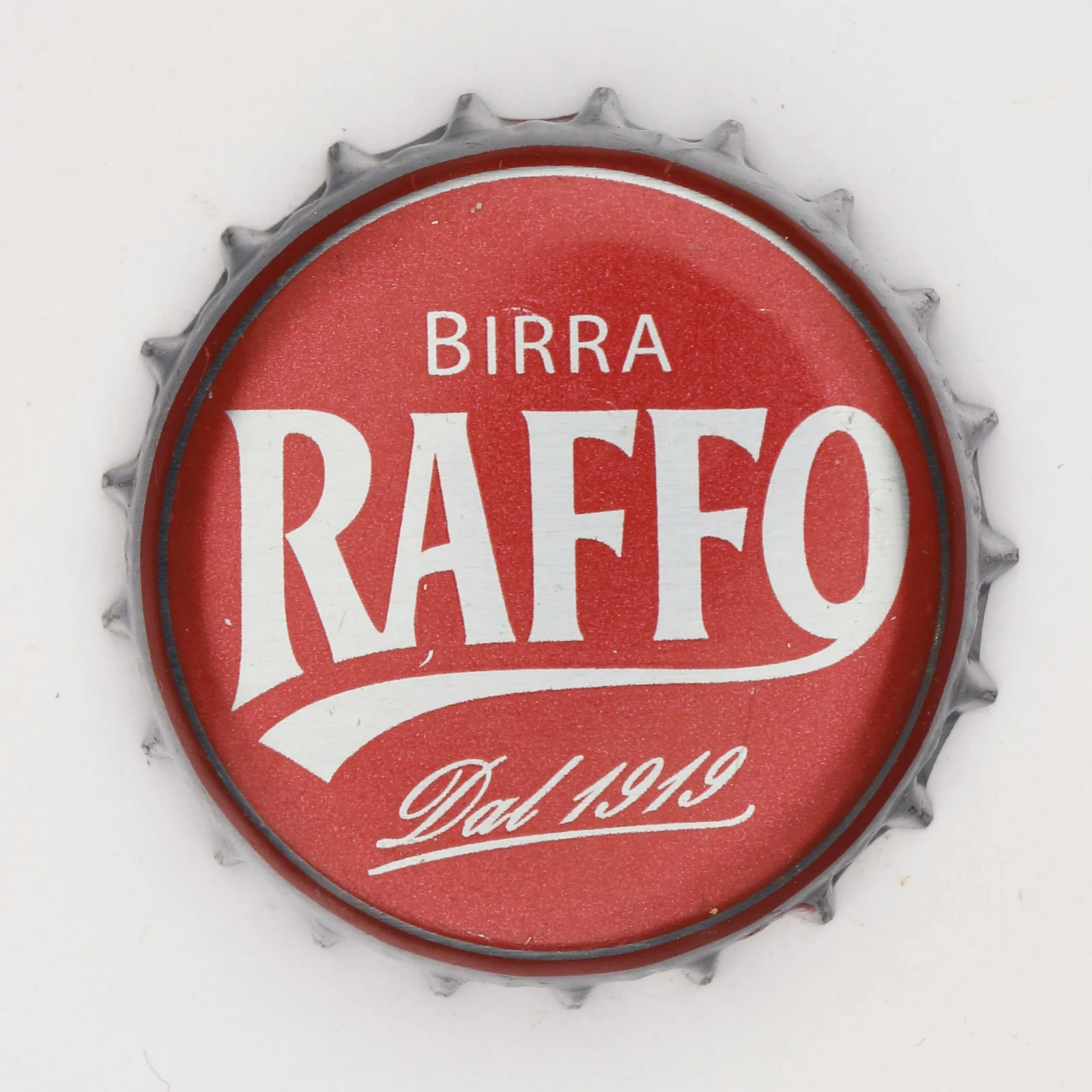
Raffo was born in Taranto
Raffo’s official history begins with a precise date: on 15 April 1919 the Raffo brothers founded their “Beer and Ice Factory” in the centre of Taranto. The first brew came in May 1921, in a thirty-hectolitre kettle, and the beer was then stored in oak barrels.
The story continues with the move to a national group. Birra Peroni bought the Raffo brand, strengthening its presence in the area, and more than twenty-six years after the acquisition moved production to its own plant in Bari. The website stresses that the brand’s link with Taranto continues through local initiatives.
The Puglian connection therefore concerns a precise production history, made of a foundation in one city and a transfer within the region, distinct from the origins of any other brand. For travellers it is a small example of how the food industry has accompanied life in the port cities, alongside fishing, trade and shipyards.
Sources: Birra Raffo — La nostra storia
Two beers, two descriptions
The Raffo website presents two products with precise descriptions, useful for knowing what you are tasting. Ricetta Originale, born in Taranto in 1919 according to the producer, is a lager enriched with Puglian barley, soft-bodied, dry and refreshing, with just a touch of bitterness at the finish; the site states it is made to the same recipe as then.
Lavorazione Grezza is described instead as enriched with unrefined Puglian cereals, round and fresh in taste, with a malty aroma and bitter hop notes at the finish. The name, the producer explains, refers to a process designed to preserve the natural composition, aromas and colours of the raw materials.
These are company descriptions, not official profiles, and should be read as such. They do, however, set up a comparison: the first promises dryness and lightness, the second more body and a more evident bitterness. While tasting, you can check whether these words match what you perceive, without any technical knowledge.
Sources: Birra Raffo — Ricetta Originale · Birra Raffo — Lavorazione Grezza
Taranto, the city of two seas
Italia.it describes Taranto on the Ionian Sea, at the innermost point of the gulf that bears its name. Founded in 706 BC by Spartan colonists, it was one of the richest and most refined cities of Magna Graecia. Today it is bathed by two seas, the Mar Grande and the Mar Piccolo, and is divided into three parts.
The old town, also called the “island”, was created when the isthmus joining it to the mainland was cut in 1480: it is a maze of narrow lanes, stairways and tightly packed buildings, where you can visit the Doric Temple, the Aragonese Castle and the cathedral of San Cataldo with its frescoed chapel. The seafront looks out over the Mar Grande and the small Cheradi islands.
From the castle, across the swing bridge, you reach the Borgo, the new town laid out on a grid after Italian unification. Here are the nineteenth-century avenues and buildings and the national archaeological museum. A walk from the island to the Borgo is the best way to place the Raffo story in the city where it began.
MArTA, the city’s memory
Among Taranto’s stops, the national archaeological museum, MArTA, deserves time. Its official website presents it as keeper of the memory of the men and women who lived in southern Italy from the Palaeolithic to the Middle Ages, through the material evidence of the peoples who inhabited it.
Among the treasures the museum highlights are the Gold of Taranto, the Tomb of the Athlete, the Venuses of Parabita and the Zeus of Ugento. Temporary exhibitions and features range from the funerary inscriptions of Roman Taranto, which tell of trades and daily life, to women’s clothing depicted in terracotta figurines.
The official site gives up-to-date days, opening times and ticket information, which should be checked before visiting. For an itinerary devoted to Taranto, the museum can fill the morning, leaving the afternoon for a walk along the seafront or through the old town and, in the evening, a stop at the table. It gives depth to a stop that would otherwise be purely gastronomic.
Sources: MArTA — Museo Archeologico Nazionale di Taranto (Ministero della Cultura)
Mussels, octopus and beer: seafood tables
The regional guide to flavours offers two ideas for accompanying a beer in these cities. In Taranto it recalls mussels, farmed since ancient times in the Mar Piccolo, where water temperature and salinity are shaped by thirty-five underwater springs called “citri”, which bring large quantities of fresh water every day. The mussels are often served with tomato sauce and tubettini pasta.
In Bari the same guide suggests one of the lesser-known street foods, the grilled octopus sandwich, dressed with extra virgin olive oil and perhaps a little lemon; according to the guide, the usual accompaniment is a jug of local craft beer. It also recalls raw seafood, with sea urchins, small cuttlefish and octopus, and the fish market on the Molo San Nicola.
These are simple, tasty dishes, well suited to comparing different beers. Rather than looking for the perfect pairing, notice how a dry beer goes with the taste of the sea and how a maltier one behaves beside a dish with tomato.
Bari between history and seafront
Italia.it presents Bari as the “gateway to the East”, thanks to its long tradition of trade. The city’s history passes through many rulers, from the Peucetians to the Byzantines, from the Normans to the Swabians; in 1087 the arrival of the relics of Saint Nicholas of Myra made it a great religious centre between East and West.
Three stops are suggested. Bari Vecchia, the medieval centre enclosed between the two harbours and dominated by the Norman-Swabian castle, where you can watch women making orecchiette by hand. The Basilica of San Nicola, one of Italy’s most important religious buildings. And the seafront, among the finest in the country, overlooking the Adriatic and the buildings of the new town laid out in the early nineteenth century.
The guide also lists flavours to look for: Bari focaccia, the rice, potato and mussel tiella, orecchiette with turnip tops, and raw seafood as an aperitif. Bari is also the city where the beer born in Taranto is produced today, and a stop at the table can round off a day of walking.
Sources: Italia.it (Ministero del Turismo) — Bari: guida, storia e curiosità
Look at the product before the brand
When comparing, note the exact name of the beer served and compare it with another specific one, avoiding vague talk of one brand against another. The same producer may offer very different beers, and two bottles with the same name on the label are not necessarily the same thing.
Observe colour, aroma, mouthfeel and how long the bitterness lasts, with small separate tastings and a clean glass for each. If a beer is described as dry, look for that dryness; if it is described as malty, look for the scent of cereal. It is a simple way of testing the producer’s words.
The outcome need not be a ranking: it can simply explain which drink you want with a certain dish or at a certain time of day. Your memory of the journey will be more precise if, beside the beer’s name, you note the place, the food that went with it and the temperature at which it was served.
Pairing as a personal test
For the tasting, choose a simple food, repeated identically with two beers, and note what changes in your perception. A baked product, such as a slice of focaccia or a few taralli, gives a first readable comparison; at another meal you can return to the same question with a richer seafood dish.
Keep the sip on its own separate from the sip after a bite: the same beer often seems more bitter alone and softer beside salty food, or vice versa. You do not need an expert vocabulary; two or three words for each tasting are enough.
Do not turn a personal habit into a regional rule: each traveller can keep a favourite pairing, together with the place where they discovered it. The calendar here depends on the city route you want, not on an agricultural season, and a visit to the plant should not be assumed, as none is documented as open to the public.
A pause on the city route
Choose Taranto for the chapter on Raffo’s origins and Bari for the chapter on present-day production. In Taranto the day can begin in the old town on the island, pass the castle and the swing bridge and reach the Borgo and MArTA; in Bari, from the Basilica of San Nicola and the lanes of Bari Vecchia to the seafront.
The stop at the table can follow a walk devoted to the city: a way of setting work, family memory and everyday habits side by side. The brand’s official history, with the factory founded in central Taranto and production later moved to Bari, offers a concrete thread between the two stops.
The two cities can fill two different days of the same trip, or form part of a wider itinerary including the Murgia or the Itria Valley. Choose the period according to the city route you want and the weather you prefer for walking: a cool beer after a day by the sea is a pleasure in any season.
Sources: Birra Raffo — La nostra storia · Italia.it (Ministero del Turismo) — Taranto · Italia.it (Ministero del Turismo) — Bari: guida, storia e curiosità
A thread for your journey
Journey idea: Taranto and Bari as two urban-memory chapters with a food pause in each. Distinguish brands’ origins, production and what is actually tasted, without promising brewery access.
Talk to us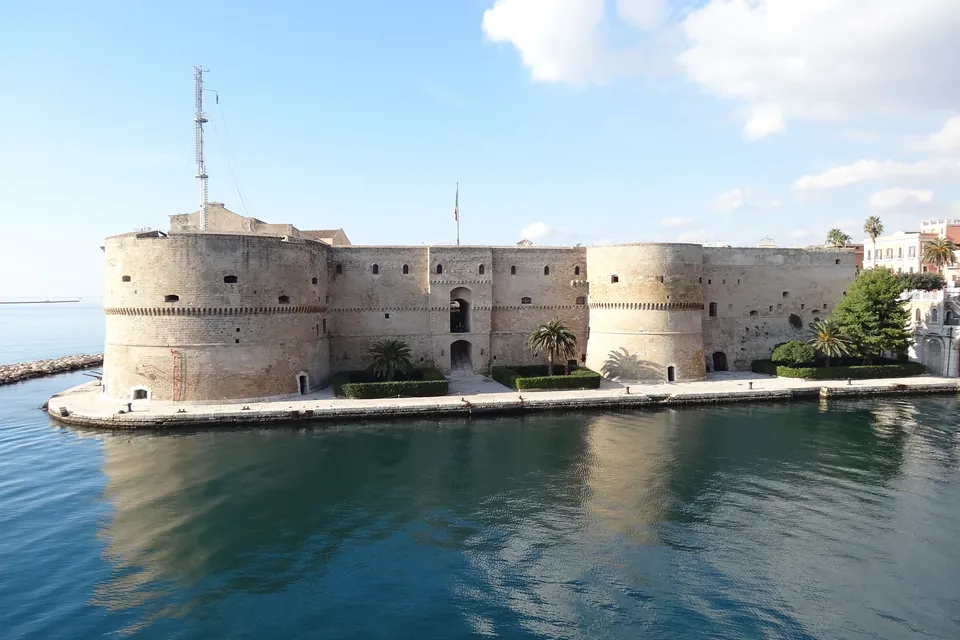


.JPG)
