
APULICA / FISH AND SEAFOOD
Common clam
PAT · Fish and seafood · Molise
In brief
- It is fished along the Molise coast by boats known as vongolari, which suck the clams up from the sandy seabed. (ARSARP Molise (già ERSA Molise) — Prodotti tradizionali: preparazione di pesci, molluschi, crostacei)
- The sieve on board keeps only the clams larger than 25 millimetres. (ARSARP Molise (già ERSA Molise) — Prodotti tradizionali: preparazione di pesci, molluschi, crostacei)
- As a rule it is not kept in purification tanks, because it is taken from production areas classified "A". (ARSARP Molise (già ERSA Molise) — Prodotti tradizionali: preparazione di pesci, molluschi, crostacei)
- At the end of August, during Termoli's fish festival, a day is dedicated to the common clam. (ARSARP Molise (già ERSA Molise) — Prodotti tradizionali: preparazione di pesci, molluschi, crostacei)
History and origin
On the Molise coast common clams are also called cocciole, and the regional profile of traditional products bases their traditional status on written records. As evidence it cites two sources: the Murat-era inquiry carried out by the Intendancy of Molise, and the report on Molise's economic situation in 1969 published by the Campobasso Chamber of Commerce.
The same profile describes a trade tied to specialised boats, the vongolari, which along the coast also serve for another of the region's traditional shellfish, the razor clam, fished with the same technique.
The bond with the seafaring community is renewed every summer: at the end of August, during Termoli's fish festival, a day is dedicated to the common clam. The common clam is also on the twenty-sixth revision (2026) of the national list of traditional food products, among the fish products of Molise.
Sources: ARSARP Molise (già ERSA Molise) — Prodotti tradizionali: preparazione di pesci, molluschi, crostacei · Masaf — Elenco nazionale dei prodotti agroalimentari tradizionali, XXVI revisione (2026)
Area and method of production
The production area is the whole Molise coastline. The clams are gathered by vongolari, boats fitted with a hydraulic dredge: the gear scrapes the sandy seabed and sucks up the molluscs. A first sorting already happens at this stage, because the mesh of the sieve lets clams under 25 millimetres fall through.
A second selection follows on board, discarding stones and clams that are open or broken. The clams are then closed into net bags by a bagging machine and go on sale.
They usually do not need to be relaid, that is kept in tanks to purify, because they are fished in areas classified "A". Boats and processing plants still have tanks supplied with seawater, where the product is handled and kept.
Sources: ARSARP Molise (già ERSA Molise) — Prodotti tradizionali: preparazione di pesci, molluschi, crostacei
How to recognise it
The common clam is a bivalve mollusc with a greyish shell, marbled with darker patches. It lives on shallow sandy seabeds, where it filters the water and feeds on microscopic algae.
The clams that reach the market are larger than 25 millimetres, the size set by the vongolari's sieve, and come closed in net bags, already cleared of stones and of open or broken shells.
It should not be confused with the razor clam, the other traditional shellfish fished on the same coast with the same boats: that one has a yellowish, long cylindrical shell reaching 10 to 12 centimetres and lives buried upright in the sand. The common clam instead is a much smaller bivalve with a mottled grey shell, which the profile simply describes as living on shallow sandy seabeds.
Sources: ARSARP Molise (già ERSA Molise) — Prodotti tradizionali: preparazione di pesci, molluschi, crostacei
Where to taste it
Common clams are fished along Molise's 35 kilometres of coastline, which runs from the mouth of the Trigno to that of the Saccione, with the beaches of Marina di Montenero, Petacciato, Campomarino and above all Termoli.
The date to note is Termoli at the end of August, when the fish festival dedicates a day to the common clam. It is a chance to climb into the old town, on its walled promontory, between the Swabian castle, the cathedral with the relics of Saint Bassus and Saint Timothy, and the Celestino trabucco, the little house on stilts from which fishermen fished when the open sea was too dangerous.
The national tourism portal suggests rounding off the trip with the coast's food trails: Termoli's fish brodetto, Biferno wine from Campomarino and the saggiciotto, a smoked pork cured meat, of Montenero di Bisaccia.
Sources: ARSARP Molise (già ERSA Molise) — Prodotti tradizionali: preparazione di pesci, molluschi, crostacei · Italia.it — Termoli · Italia.it — La costa molisana
Protection
- Traditional agri-food product (PAT) — Molise, n. 159, 26th revision (Masaf — Elenco nazionale dei prodotti agroalimentari tradizionali, XXVI revisione (2026))
When
Where
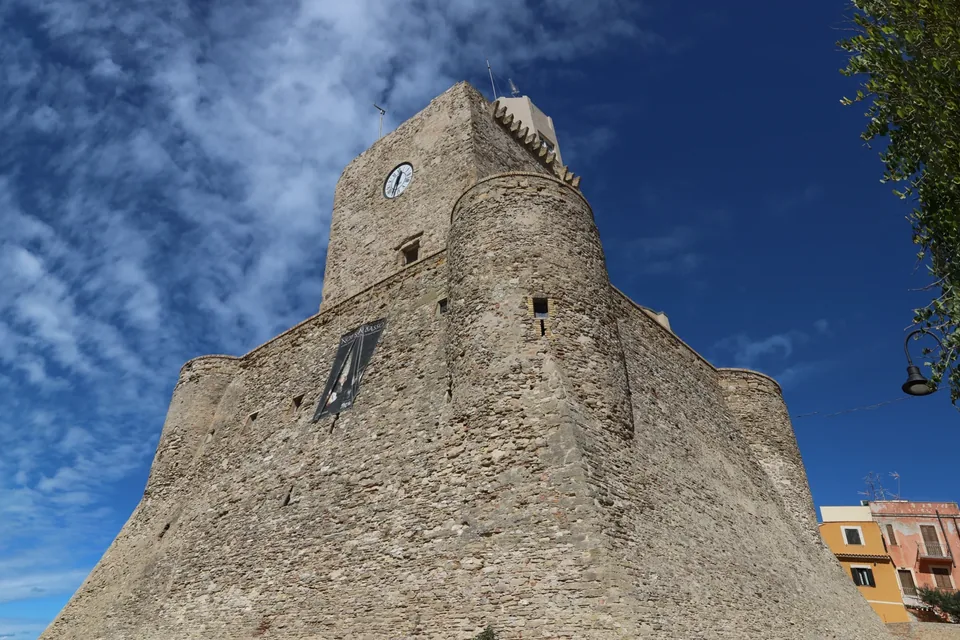
Termoli
An old town on a rocky spur over the sea, the Swabian castle, the cathedral of San Basso and the trabucchi of the Adriatic coast.
Read the guide →Photo: C.lapia / Wikimedia Commons — CC BY-SA 4.0 · Resized and converted to WebP.
