Why go
Scanzano Jonico faces the Ionian Sea on the plain between the mouths of the Cavone and the Agri, and it is first of all a seaside place: long sandy beaches, clear water and an open horizon. Italy's national tourism portal recalls that the final scene of the film «Basilicata coast to coast», which tells the region's story from mountains to sea, was shot here. The coast is also home to Basilicata's only lighthouse.
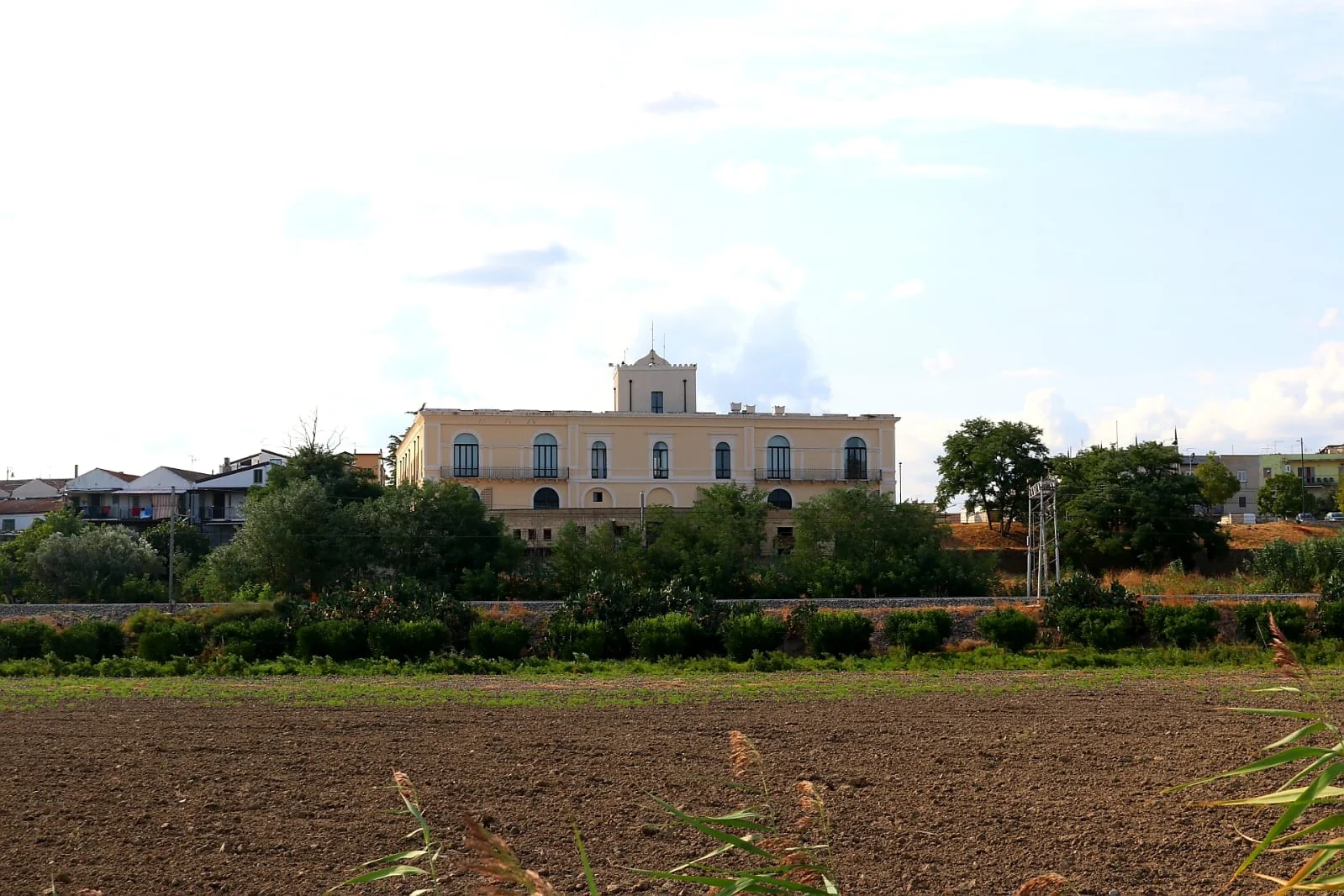
Behind the shore lies fertile farmland, born of the land reclamation and agrarian reform of the 20th century: orchards, vegetables and above all strawberries, as Scanzano is one of the towns of Fragola della Basilicata PGI. The town centre keeps the memory of the great estates in the baronial palace, the «Palazzaccio», with its crenellated tower and the labourers' cottages in a double row.
Scanzano is a handy base for a beach stay that opens onto culture: in a few minutes you reach the Magna Graecia remains of Metaponto and Policoro, and Matera is an easy day trip. The efforts of the municipality and local groups to protect the coast, with initiatives for sea turtles and dune ecosystems, add another reason to discover its natural side.
Sources: Italia.it — Scanzano Jonico · Comune di Scanzano Jonico — Storia e territorio · Qualigeo — Fragola della Basilicata IGP · Comune di Scanzano Jonico — Palazzo baronale · Museo archeologico nazionale di Metaponto — Il parco archeologico e i dintorni · Regione Basilicata — «Scanzano si tinge di blu» · Agenzia di stampa della Regione Basilicata — Festa del Mare 2026
History
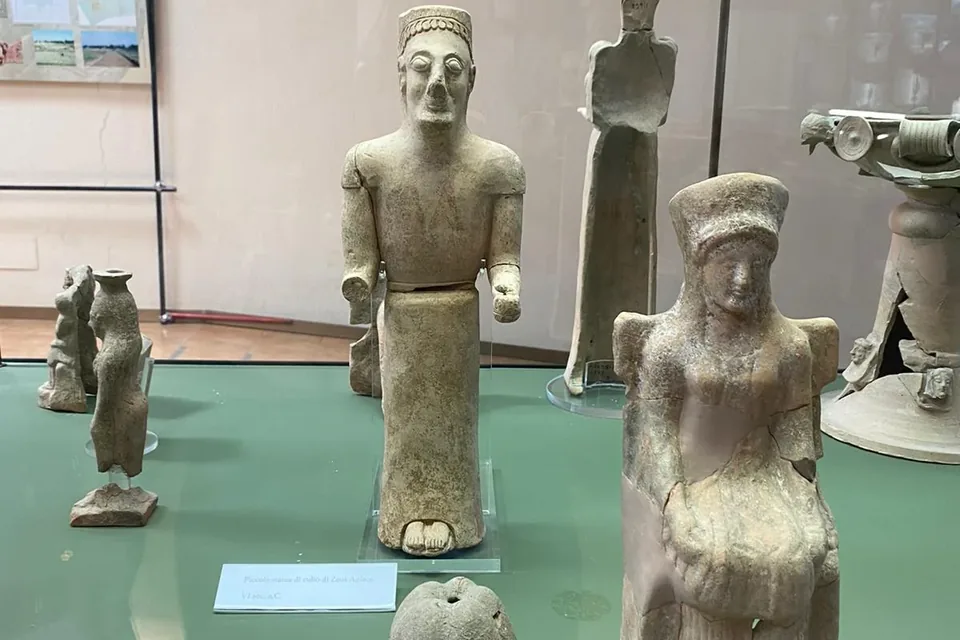
The Scanzano area has been inhabited since very early times. At Termitito stood an important Mycenaean-age settlement, later occupied by Greek settlers, and terracottas and other local finds are kept in the museums of Policoro and Metaponto. After Greeks, Romans, Lombards and Saracens, the coast went through a long abandonment, and people moved to the inland heights.
In the Middle Ages Scanzano was a hamlet tied to the monastery of Saints Elias and Anastasius of Carbone, on the Pollino. A deed of 1095 mentions the church of Santa Maria Genitrice of Scanzano; soon after, the estate of Scanzano and Policoro was given to the abbey of Carbone, confirmed by Bohemond, the Norman kings and, in 1232, Frederick II. Later the estate passed to the Sanseverino, the Mirabile d'Aragona and the Marquis Donnaperna, and in 1816 to Baron Gennaro Ferrara. The baronial palace, founded around the year 1000 and rebuilt in its present form in the 16th century, became the headquarters of farm work.
The 20th century changed everything. With the agrarian reform, the labourers who lived in the baron's cottages received land of their own; in 1949 the parish of Maria Santissima Annunziata was founded, followed in the 1950s by those of the outlying hamlets. Scanzano, long a hamlet of Montalbano Jonico, became an independent municipality in 1974.
Sources: Comune di Scanzano Jonico — Storia e territorio · Comune di Scanzano Jonico — Palazzo baronale · Comune di Scanzano Jonico — Parrocchia Maria SS. Annunziata
What to see
In the centre the baronial palace, known as the «Palazzaccio», is the landmark building: square plan, inner courtyard, crenellated tower and a façade with large arched windows. Restored in the late 1990s, it houses municipal offices and cultural activities. Inside, the small chapel of the Theotokos has been reconsecrated, with an Annunciation relief on the portal dated to around the year 1000, a wooden crucifix and an 18th-century silver crown of the Most Holy Annunciation. Around it run the cottages in a double row where wage workers and labourers lived until the reform.
Along the coast stand reminders of shoreline defence: an Aragonese-era watchtower near the beach and a cylindrical tower at Terzo Madonna. The lighthouse, the only one in Basilicata, is the town's seafaring landmark.
In the countryside, in contrada Recoleta, stands a fortified farmhouse of the 17th and 18th centuries, with a wide portal, a square tower and two towers at the corners of the façade, possibly built over an old medieval village. Tradition says the Federici family, its last owners, grew rocket here for the first time in Basilicata to fulfil a vow to the Virgin.
Sources: Comune di Scanzano Jonico — Palazzo baronale · Comune di Scanzano Jonico — Storia e territorio · Italia.it — Scanzano Jonico · Comune di Scanzano Jonico — Masseria di Recoleta
Flavours
Scanzano is known as strawberry country. Its territory is part of the production area of Fragola della Basilicata PGI, together with Bernalda, Montalbano Jonico, Montescaglioso, Nova Siri, Pisticci, Policoro, Rotondella and Tursi. The specification allows many varieties, grown in open fields or greenhouses, with conical, elongated fruit hand-picked between November and June. Italy's national tourism portal calls the strawberries of the Metaponto plain «red gold».
The same plain grows citrus such as oranges, mandarins and clementines, and vegetables that end up in traditional dishes like acquasale, with stale bread, eggs and onion, and baccalà a «ciauredda» with spring onions and chilli. The story of the Recoleta farmhouse also ties rocket to local memory.
The sea brings the local catch: at events devoted to the coast, such as «Scanzano si tinge di blu», local cooks and «grandma chefs» have presented recipes from the Ionian fishing tradition. A fish dinner after a day at the beach, with strawberries in season for dessert, sums up the flavours of Scanzano.
Sources: Qualigeo — Fragola della Basilicata IGP · Italia.it — Prodotti e piatti tipici lucani · Comune di Scanzano Jonico — Masseria di Recoleta · Regione Basilicata — «Scanzano si tinge di blu»
Things to do
The beach is the main experience: Scanzano's shoreline is long and sandy, suited to families and walks along the water's edge, with equipped areas and more natural stretches among dunes and coastal vegetation. The Lido Torre area is one of the coast's landmarks, and near the beach stands an Aragonese-era watchtower.
Nature lovers can join the environmental education activities that the municipality, the Pro Loco and local groups run along the sea. At the Sea Festival, marine biologists from the WWF Policoro-Herakleia Oasis led beach workshops on dunes and coastal ecosystems, and other initiatives focus on protecting the loggerhead turtle in the Gulf of Taranto.
The area also suits bike rides across the farmed plain, among orchards, greenhouses and farmhouses, and cultural outings: the Tavole Palatine and the archaeological park of Metaponto on one side, the archaeological park of Herakleia and the Museo della Siritide in Policoro on the other, tell of the Greek cities that once ruled this coast.
Sources: Italia.it — Scanzano Jonico · Agenzia di stampa della Regione Basilicata — Festa del Mare 2026 · Comune di Scanzano Jonico — Storia e territorio · Regione Basilicata — «Scanzano si tinge di blu» · Qualigeo — Fragola della Basilicata IGP · Ministero della Cultura — Tempio delle Tavole Palatine · Museo archeologico nazionale di Metaponto — Il parco archeologico e i dintorni
When to go
The main season runs from late spring to early autumn, when the sea and beaches are the heart of a stay. Summer also brings coastal events: in 2026 the Sea Festival, held in late July by the municipality and the Pro Loco with the local fisheries action group, combined children's workshops, science outreach and the promotion of seafood.
Spring is the best time to combine sea and countryside: the harvest of Basilicata strawberries, running from November to June, is in full swing, temperatures are mild and archaeological visits to Metaponto and Policoro can be made without summer heat. Autumn also suits cultural outings and beach walks, when the shore is quiet again.
25 March, the feast of the Annunciation, was traditionally the most important celebration of the hamlet, tied to the chapel in the baronial palace. Event dates change every year and should be checked on the municipality's channels.
Sources: Agenzia di stampa della Regione Basilicata — Festa del Mare 2026 · Qualigeo — Fragola della Basilicata IGP · Museo archeologico nazionale di Metaponto — Il parco archeologico e i dintorni · Comune di Scanzano Jonico — Parrocchia Maria SS. Annunziata
Getting there and around
Scanzano Jonico lies on Basilicata's Ionian coast, in the province of Matera. The main road is the SS106 Jonica, running along the coast between Taranto and Calabria and connecting with roads climbing inland, such as the Sinnica in the Sinni valley.
By train the reference stations on the coast are Metaponto and Policoro-Tursi, both on the RFI network; the Pollino park lists Policoro among the rail hubs linked by local buses to the interior. From the stations you continue by road to the town and the beach.
To move between the centre, the beaches, the countryside and nearby archaeological sites, a car or bicycle helps: the plain is wide and flat, and distances between Scanzano, Policoro and Metaponto are short. Matera, with its Sassi, is an easy day trip.
Sources: Parco nazionale del Pollino — Come raggiungerci · RFI — Stazione di Metaponto · RFI — Stazione di Policoro-Tursi · Italia.it — Scanzano Jonico · Italia.it — Matera
Nearby
To the north, beyond the Cavone and Basento rivers, lies Metaponto, one of the great cities of Magna Graecia: the urban archaeological park with agora, sanctuary and Roman castrum, and the Tavole Palatine, the fifteen surviving Doric columns of the temple of Hera, built in the 6th century BC on the border with Taranto's territory.
To the south, beyond the Agri, Policoro holds the archaeological park of Herakleia, the Museo della Siritide and a baronial castle; on the coast the WWF Policoro-Herakleia Oasis protects dunes and coastal habitats, and its biologists work on sea turtle conservation. Watchtowers built to defend the shore are also among this coast's sights.
Inland, Pisticci with its Dirupo and Terravecchia quarters, Bernalda with its castle and Palazzo Margherita, and Montalbano Jonico, of which Scanzano was long a hamlet, complete the picture. Matera, with its UNESCO-listed Sassi, makes a perfect counterpoint to a seaside stay.
Sources: Museo archeologico nazionale di Metaponto — Il parco archeologico e i dintorni · Ministero della Cultura — Tempio delle Tavole Palatine · Agenzia di stampa della Regione Basilicata — Festa del Mare 2026 · Regione Basilicata — «Scanzano si tinge di blu» · Comune di Scanzano Jonico — Storia e territorio · Italia.it — Matera
Where to stay
In the municipality of Scanzano Jonico the national database of the Ministry of Tourism lists 53 accommodation businesses with a verified CIN code: 5 hotels, 16 other licensed accommodation and 32 other types such as B&Bs and private rentals.
Sources: Ministero del Turismo – Banca Dati Strutture Ricettive (dashboard pubblica), 2026-10-12
YOUR JOURNEY
How to shape a journey here
A stop for understanding the agricultural Ionian coast: connect the town with its countryside and treat the sea as a pause within that story.
Talk to us about it