
APULICA / FRUIT, VEGETABLES AND PULSES
Basilicata strawberry
PGI · Fruit, vegetables and pulses · Basilicata
In brief
- Fresh strawberries of many varieties, long and conical, bright red, sold with the calyx. (Qualigeo (Fondazione Qualivita) — Fragola della Basilicata IGP)
- They are grown in nine towns on the Ionian coast near Matera, including Bernalda, Policoro, Pisticci and Scanzano Jonico. (Qualigeo (Fondazione Qualivita) — Fragola della Basilicata IGP)
- They are picked by hand between November and June. (Qualigeo (Fondazione Qualivita) — Fragola della Basilicata IGP)
- Since the 1960s the Metaponto plain, with its mild climate and fertile soils, has become the crop's main area. (Qualigeo (Fondazione Qualivita) — Fragola della Basilicata IGP)
History and origin
Strawberries have deep roots in Basilicata, going back, according to the designation's profile, to Greek and Roman times. In the seventeenth century the fruit was used both in medicine and in cooking, and in the Vulture it was grown between the rows of vines until the twentieth century.
The turning point came in the 1960s, when the Metapontino, the plain facing the Ionian Sea in the province of Matera, became the reference area for the crop thanks to its mild climate and fertile soils. It was here that the name «Fragola della Basilicata» came into common use for the local fruit, and the bond with the land shows in festivals, events and even records, such as the world's longest strawberry cake.
Since 5 November 2025 the Fragola della Basilicata has been entered in the European register of Protected Geographical Indications, after long joint work by producer organisations, institutions and researchers.
Sources: Qualigeo (Fondazione Qualivita) — Fragola della Basilicata IGP · Qualivita — La fragola della Basilicata diventa ufficialmente IGP (2025-11-06) · eAmbrosia — Fragola della Basilicata (PGI-IT-03273)
Area and method of production
The production area covers nine municipalities in the province of Matera: Bernalda, Montalbano Jonico, Montescaglioso, Nova Siri, Pisticci, Policoro, Rotondella, Scanzano Jonico and Tursi. The specification allows many varieties of the species Fragaria x ananassa, listed one by one.
Strawberries may be grown in soil or soilless, in open fields or under cover, with planting densities and maximum yields set by the specification. Water is delivered locally, through drip lines under the mulch.
Picking is by hand between November and June, choosing ripe fruit with its calyx. After harvest the strawberries may stay in cold storage for no more than three days. Mild climate, plenty of sun, pure irrigation water and fertile, well-drained soils are, according to the designation, what give the fruit its qualities.
Sources: Qualigeo (Fondazione Qualivita) — Fragola della Basilicata IGP · Qualivita — La fragola della Basilicata diventa ufficialmente IGP (2025-11-06)
How to recognise it
The Fragola della Basilicata has an elongated conical shape and a bright, even red colour. It is sold with its calyx, whole, clean and free of defects, with a minimum size of 25 millimetres.
The texture is firm and fleshy, with compact flesh that travels well. The aroma is intense, fresh and fruity; on the palate it is sweet and harmonious, with a sugar content of at least 7.5 degrees Brix and a good balance between sweetness and acidity.
It reaches the market fresh, in crates of cardboard, wood or other eco-friendly materials and in punnets of up to one kilo. Packs must show the name Fragola della Basilicata, the words Protected Geographical Indication, the EU symbol and the product logo.
Sources: Qualigeo (Fondazione Qualivita) — Fragola della Basilicata IGP
In the kitchen
The simplest way to enjoy it is fresh, just picked. It keeps in the fridge for a few days, ideally in the fruit and vegetable drawer.
In the kitchen it lends itself to many sweet preparations: tarts, crumbles and fritters, jams and chocolate bars, ice creams and cocktails. Its balanced flavour and firm flesh suit both home recipes and more creative ones, and it holds up well in processed products.
In the Metapontino the strawberry is also a reason to celebrate: the world's longest strawberry cake, recalled in the designation's history, shows how much this fruit has become part of life in the communities of the Lucanian Ionian coast.
Sources: Qualigeo (Fondazione Qualivita) — Fragola della Basilicata IGP
Where to taste it
The strawberry is found in the nine municipalities of the production area, along the Ionian belt of the province of Matera, from Bernalda and Pisticci to Policoro, Scanzano Jonico, Nova Siri, Rotondella and Tursi. The season is long: picking runs from November to June.
Policoro hosts Fragola Expo Basilicata, an event devoted to the sector which in its second edition, in April 2026, drew thousands of visitors to Piazza Segni and Piazza Aldo Moro, with talks, shows and a conference on the new PGI.
A visit to the Metapontino, between the Ionian Sea and the farmed plain, lets travellers see the fields up close and taste the strawberry where it grows.
Sources: Qualigeo (Fondazione Qualivita) — Fragola della Basilicata IGP · Qualivita — Fragola della Basilicata IGP protagonista a Fragola Expo (2026-04-28)
Protection
- Protected geographical indication (PGI) — PGI-IT-03273 (eAmbrosia — Fragola della Basilicata (PGI-IT-03273))
When
- Harvest: January–June, November–December (Qualigeo (Fondazione Qualivita) — Fragola della Basilicata IGP)
Where
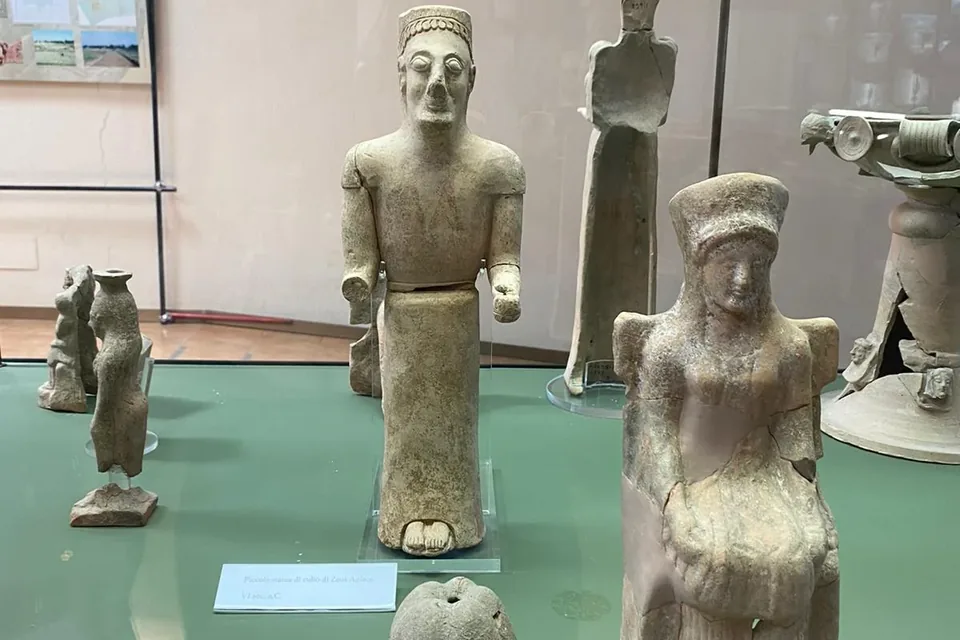
Metaponto
Metaponto: Magna Graecia on the plain.
Read the guide →Photo: Damiano157 / Wikimedia Commons — CC BY-SA 4.0 · Resized and converted to WebP.

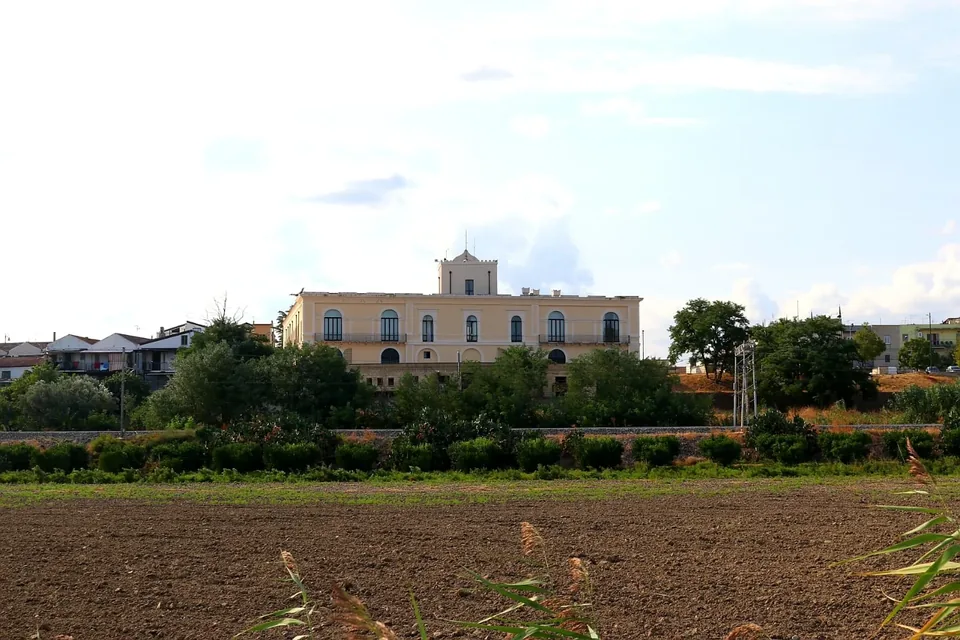
Scanzano Jonico
Scanzano Jonico: farmland and coast.
Read the guide →Photo: Mariagrazia Brunetti / Wikimedia Commons — CC BY-SA 4.0 · Resized and converted to WebP.
