Why go
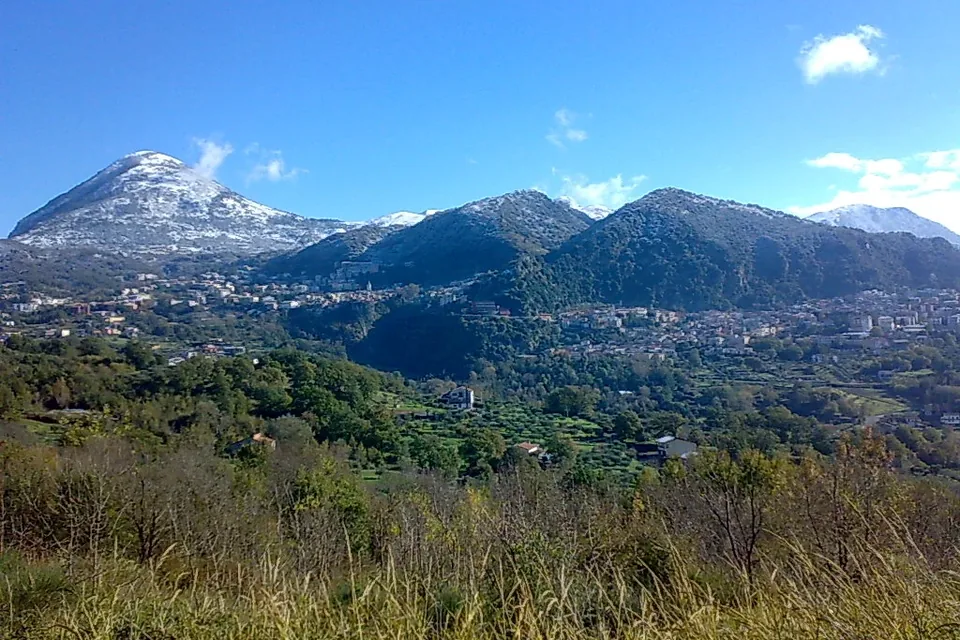
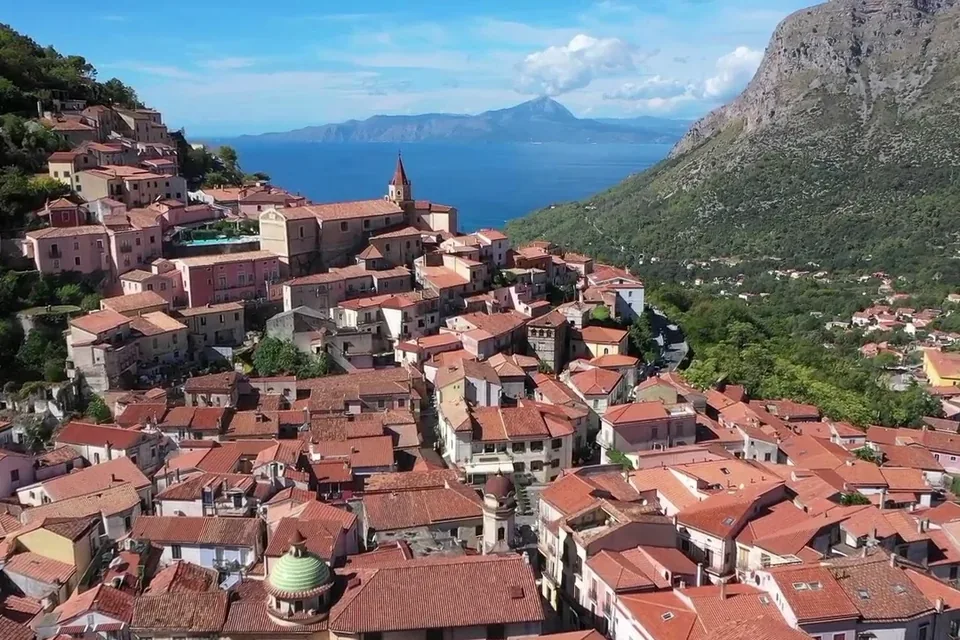
Trecchina stands at about 500 metres on the slopes of Monte Coccovello, inland from Basilicata's Tyrrhenian coast, crossed by the Noce river and bordering Calabria. It is the first mountain village you meet climbing from Maratea, combining the coolness of the hills with the nearness of the sea.
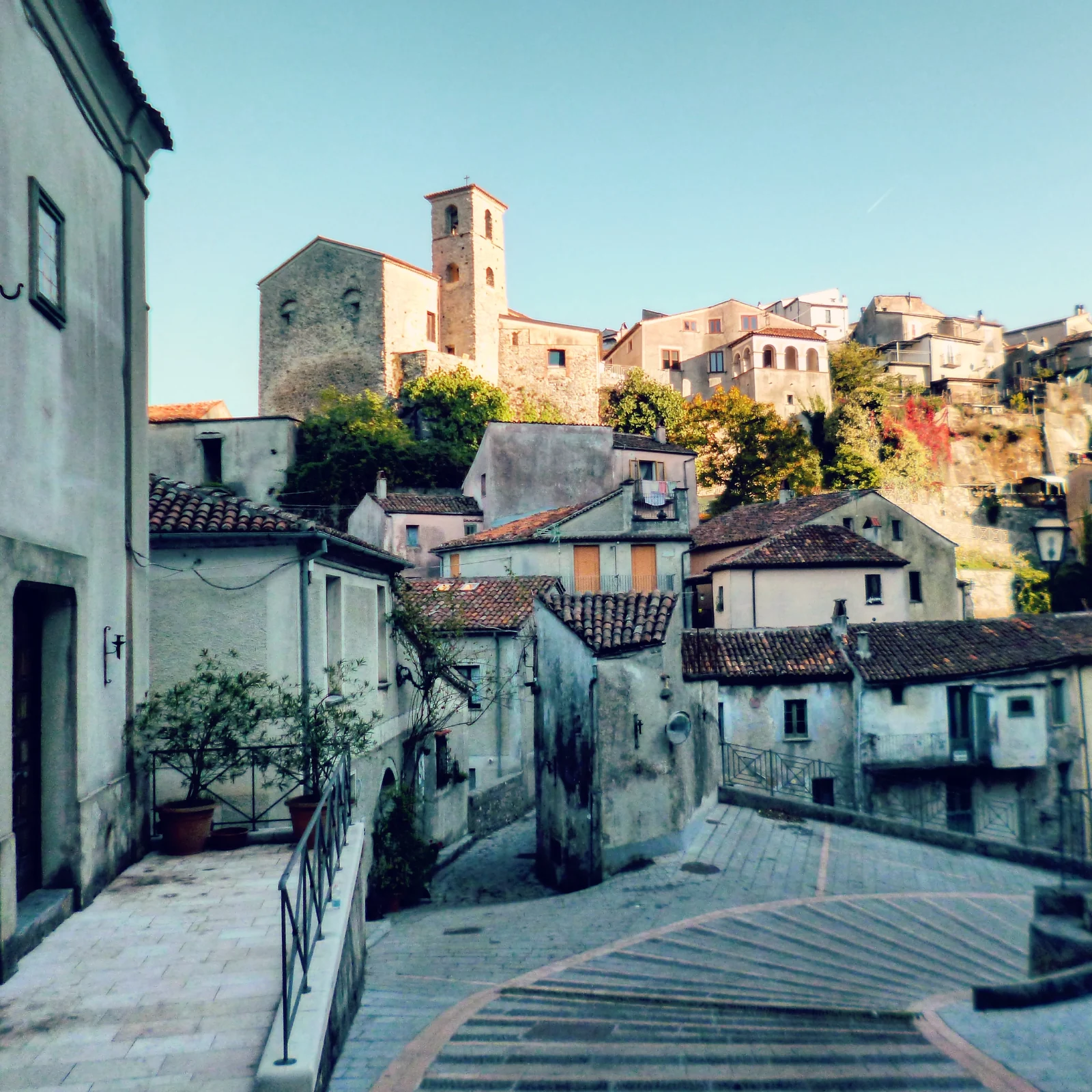
The village has two complementary urban souls. Above is the medieval quarter called the Castello, set on a rocky spur, with a maze of lanes, loggias, arches and flower-decked balconies climbing to the ruins of the 16th-century baronial castle. Below spreads the Piano, the present centre, whose heart is piazza del Popolo, with its gardens and the late-Liberty palaces built along viale Jequié by emigrants who had made their fortune in Brazil.
Trecchina is above all chestnut country. The surrounding chestnut groves yield the local variety, celebrated in autumn with a festival that draws visitors from many regions, and ingredients for traditional sweets and pasta. In summer the square comes alive with exhibitions, crafts, local produce and concerts. The village also appears among the locations of Rocco Papaleo's film «Scordato».
Sources: Catalogo generale dei beni culturali (MiC) — Centro storico di Trecchina · Regione Basilicata, patrimonio culturale — Le tradizioni del Natale a Trecchina · Regione Basilicata — Sagra della castagna a Trecchina · Regione Basilicata, patrimonio culturale — Itinerario dei sapori e delle tradizioni, Sagra della castagna · Italy for Movies — Scordato: Lauria, Maratea e Salerno nel film di Papaleo
History
The village's old name, Triclina, appears in documents of the 11th and 12th centuries. Fortified under the Lombards, Trecchina was destroyed by the Saracens at the end of the 10th century and rebuilt under Norman and Swabian rule. It belonged to the county of Lauria, sharing its fortunes, and was granted as a fief to the Sanseverino; the baronial castle, whose ruins crown the highest point, dates from the 16th century.
The Castello quarter, on a spur that cannot be reached from the valley, was defended by three towers, one of which is still well preserved. In the 19th century the village spread towards the Piano: the mother church of San Michele Arcangelo was built between 1840 and 1878 with the offerings and labour of the faithful, and its bell tower only in the early 20th century. The church of Sant'Antonio also rose in the first decades of that century.
The 20th century is tied to emigration to Brazil: it was the emigrants who commissioned the late-Liberty palaces of viale Jequié, such as the former Palazzo Scarpitta and Palazzo Mainone. The area has known earthquakes, from 1836 and 1857 to 1982, when Trecchina was among the worst-hit places in the province of Potenza. The sanctuary of the Madonna del Soccorso, of early medieval origin, was entirely rebuilt in the 1920s.
Sources: Catalogo generale dei beni culturali (MiC) — Centro storico di Trecchina · Regione Basilicata, patrimonio culturale — Le tradizioni del Natale a Trecchina
What to see
Piazza del Popolo is the natural stage of village life: adorned with colourful gardens, it is framed by the Liberty palaces facing viale Jequié, including the former Palazzo Scarpitta and Palazzo Mainone. Here farmers from the outlying districts once sold the produce they carried in large baskets on their heads. Overlooking the square is the mother church of San Michele Arcangelo, with Neapolitan-school canvases and vault medallions frescoed by Mariano Lanziani; the church of Sant'Antonio is close by.
Climbing up you enter the Castello quarter. Lanes scramble up from the ravine past windows, arched loggias and balconies decked with geraniums and mint, to the ruins of the baronial castle and one of the old towers. From the Giardino Belvedere the view sweeps over the Noce valley, the river, farmhouses and nearby villages.
Outside the centre stands the sanctuary of the Madonna del Soccorso, a place of devotion of very ancient origin. Around the village there are also several 19th-century palaces with stone doorways and, along the viale della Rimembranza the memorial to the fallen of the First World War.
Sources: Regione Basilicata, patrimonio culturale — Le tradizioni del Natale a Trecchina · Catalogo generale dei beni culturali (MiC) — Centro storico di Trecchina
Flavours
Chestnuts are the stars of the Trecchina table. The local «nzerta» variety, roasted, is listed among traditional food products, and the fruit is turned into flour, pasta, honey, liqueurs, panettone, sweets, ice cream and even beer. Chestnut flour makes fresh pasta the way grandparents did, and among sweets the Region mentions the panzerotto filled with chestnut cream.
There are also walnut sweets and a speciality the village claims as its own: the uovo di lupo, a leavened and fried dough dressed with chestnut honey. At festivals you also find local cured meats, cheeses, wines, baked goods and fruit, alongside roast chestnuts.
Christmas traditions bring back to the square markets of festive local produce, with nativity scenes, the Yule log and bagpipers coming down from the mountains. The rural districts of Bolago, Maurino, Parrutta and Piano dei Peri keep the memory of country recipes, and some events take place right there, to find the flavours where they were born.
Sources: Regione Basilicata — Sagra della castagna a Trecchina · Regione Basilicata, patrimonio culturale — Itinerario dei sapori e delle tradizioni, Sagra della castagna · Regione Basilicata, patrimonio culturale — Le tradizioni del Natale a Trecchina
When to go
Autumn is Trecchina's season. In October, harvest time, the chestnut festival runs over three weekends: in 2023 it broke records, with about a hundred coaches, fifty quintals of roast chestnuts and eighty stalls of local produce. Besides tastings you can join chestnut-gathering walks in the autumn colours of Trecchina's woods, visit the Castello quarter and go down to Maratea or up towards the Sirino. Music groups with folk songs and dances accompany the days.
In summer the village is a holiday spot thanks to its cool evenings. Between mid-July and the end of August a series of evenings traditionally combines local produce with artistic and cultural events, in the municipal gardens of piazza del Popolo and in the four rural districts, with street performers and entertainment for children.
The Christmas season brings the traditions of the nativity scene, the Yule log and the bagpipers, with markets and a lighting project that brightens the centre. Exact dates change every year and should be checked with the municipality.
Sources: Regione Basilicata, patrimonio culturale — Itinerario dei sapori e delle tradizioni, Sagra della castagna · Regione Basilicata — Sagra della castagna a Trecchina · Regione Basilicata, patrimonio culturale — Le tradizioni del Natale a Trecchina
Getting there and around
Trecchina lies inland from Basilicata's Tyrrhenian coast, about 133 kilometres from Potenza, along the Noce valley. The municipality of Lauria notes that the Noce valley road links the A2 Mediterranean motorway with the Calabrian-Lucanian Tyrrhenian coast, and Trecchina borders Lauria; the Lauria exit is among those the Pollino park lists for the Lucanian side.
By train, the reference station is Maratea, on the RFI network along the Tyrrhenian coast; the Pollino park lists it among rail hubs linked by local buses inland. The nearest airports named by the park are Naples, Bari and Lamezia Terme.
In the village, the Piano and piazza del Popolo are explored on foot, while the Castello quarter is reached up lanes and stairways. For the sanctuary of the Madonna del Soccorso, the rural districts and walks in the chestnut woods you need a car.
Sources: Catalogo generale dei beni culturali (MiC) — Centro storico di Trecchina · Comune di Lauria — Territorio e collegamenti · Parco nazionale del Pollino — Come raggiungerci · RFI — Stazione di Maratea · Regione Basilicata, patrimonio culturale — Le tradizioni del Natale a Trecchina
Nearby
Heading down to the sea you reach Maratea, Basilicata's only town on the Tyrrhenian, with 32 kilometres of coast of cliffs, coves and beaches, an old centre of 44 churches and, on top of Monte San Biagio, the patron saint's basilica and the statue of Christ the Redeemer, over twenty metres tall, by Bruno Innocenti.
Climbing inland you come to Lauria, the largest town in the Noce valley, divided into the Castello and Borgo quarters, with the churches of San Nicola and San Giacomo, the remains of the castle of Roger of Lauria and the memory of Blessed Domenico Lentini; it is the birthplace of Rocco Papaleo, who shot «Scordato» there.
Trecchina is thus a hinge between sea and mountains: in a few kilometres you pass from the coast to the chestnut woods and, further on, to the Appennino Lucano and Pollino national parks, with their trails and peaks.
Sources: Italia.it — Maratea · Catalogo generale dei beni culturali (MiC) — Basilica di San Biagio a Maratea · Italia.it — Lauria · Italy for Movies — Scordato: Lauria, Maratea e Salerno nel film di Papaleo · Parco nazionale del Pollino — Come raggiungerci
Where to stay
In the municipality of Trecchina the national database of the Ministry of Tourism lists 21 accommodation businesses with a verified CIN code: 3 hotels, 3 other licensed accommodation and 15 other types such as B&Bs and private rentals.
Sources: Ministero del Turismo – Banca Dati Strutture Ricettive (dashboard pubblica), 2026-10-12
YOUR JOURNEY
How to shape a journey here
Square and landscape connecting Lauria and Maratea; visits and any walks are arranged for the journey.
Talk to us about it