Why go
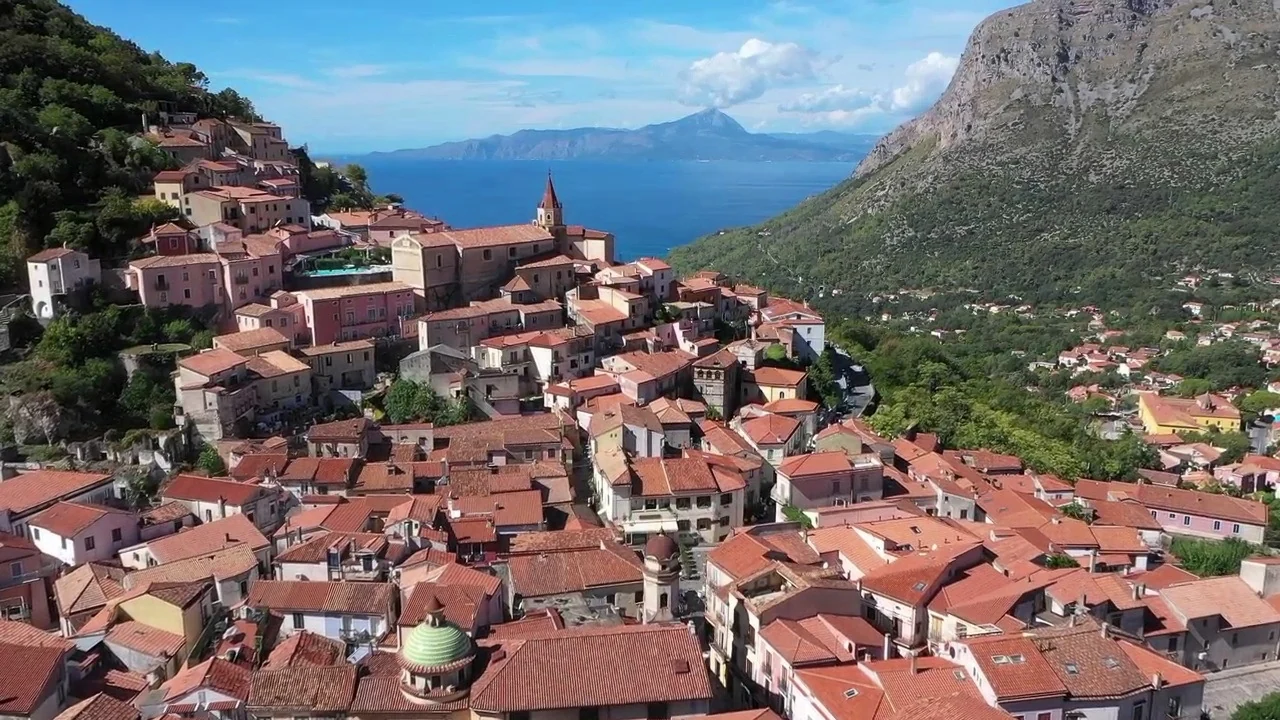
Maratea is the only stretch of Basilicata facing the Tyrrhenian Sea: about 32 kilometres of coast on the Gulf of Policastro, made of sheer rock walls, headlands, sandy and pebbly coves, caves and beaches reachable only by sea. It is called the Pearl of the Tyrrhenian, and the ancient Greeks, Italy's national tourism portal recalls, already called it «goddess of the sea».
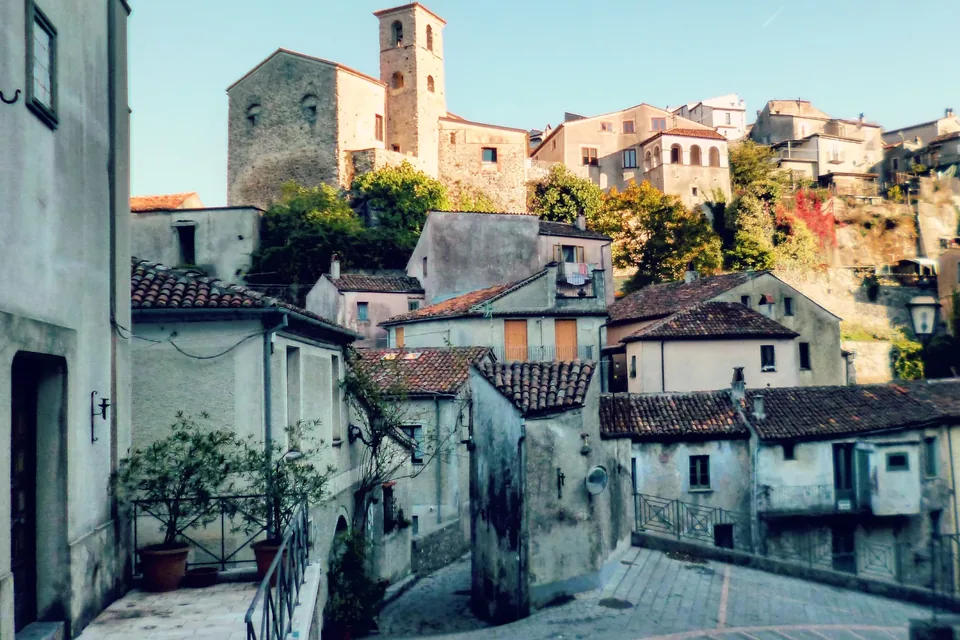
But Maratea is not just the sea. The town, perched on the side of Monte San Biagio facing the coast, has a medieval old centre of paved lanes, little stairways and small squares, and is known as the town of 44 churches, for the number of churches, chapels, monasteries and hermitages across its territory. On the mountain top, beside the basilica holding the relics of the patron saint Blaise, the great statue of Christ the Redeemer overlooks the gulf.
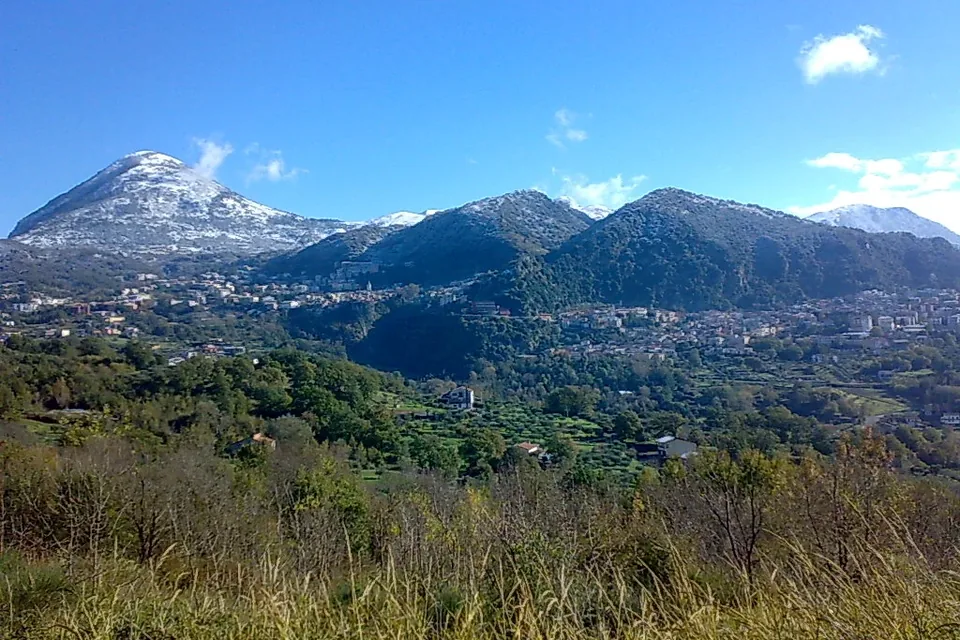
This blend of landscape, sacred art and seafaring life makes Maratea a destination for several seasons: a beach holiday, but also walks among Mediterranean scrub and broom, diving in clear waters, and a short climb towards the villages and mountains inland, from Trecchina and Lauria to the Pollino.
Sources: Italia.it — Maratea · Italia.it — Maratea, guida, storia e curiosità · Italia.it — Cosa fare a Maratea · Regione Basilicata, patrimonio culturale — Una luce dal mare · Catalogo generale dei beni culturali (MiC) — Santuario Basilica di San Biagio · Catalogo generale dei beni culturali (MiC) — Centro storico di Trecchina · Italia.it — Lauria · Parco nazionale del Pollino — Come raggiungerci
History
Maratea's history starts with Palaeolithic settlements, but it was in the Middle Ages that its position made it strategic: the citadel stood on top of Monte San Biagio, sheltered from raids that went on for centuries. In modern times the new town grew lower down, on the side of the mountain facing the sea, better suited to an economy based on maritime trade. On the mountain lie the ruins of ancient Maratea, called the Castello.
The patron saint is bound up with its religious history. According to tradition, in 732 a ship carrying the urn with the relics of Saint Blaise, bishop and martyr of Sebaste, from the East towards Rome was driven by a storm to the islet of Santo Janni, and the relics stayed in Maratea. Eastern monasticism spread through the area, leaving caves, hermitages and lauras still visible today. In 1563 a bull of Pope Pius IV spoke of the «manna» seeping from the shrine's marbles; it was made a minor basilica in 1941.
After centuries of Spanish, Austrian and Bourbon rule, in December 1806 Maratea held out for six days against French troops. It remained an important port and a producer of wine, oil and wool. In 1965 the statue of the Redeemer was placed on the mountain.
Sources: Italia.it — Maratea, guida, storia e curiosità · Regione Basilicata, patrimonio culturale — Una luce dal mare · Catalogo generale dei beni culturali (MiC) — Santuario Basilica di San Biagio
What to see
On top of Monte San Biagio you climb to see the statue of Christ the Redeemer, over twenty metres tall, by the Florentine sculptor Bruno Innocenti, who gave Jesus the face of a youth. From the viewpoint, at about 650 metres, the gaze takes in the whole coast. Opposite stands the basilica of San Biagio, perhaps the oldest place of worship in the area, built between the 6th and 7th centuries over a temple that legend attributes to Minerva: three naves, an 18th-century portico and, in the presbytery, the 17th-century marble royal chapel with the relic urn and the saint's silver statue.
In the old centre, which converges on piazza Buraglia, you find the churches of Santa Maria Maggiore, the Annunziata and the Immacolata, the latter decorated with frescoes; the church of San Vito, from the 11th century, is among the oldest. The Pietra del Sole viewpoint opens onto a wide view of the coast. On the mountain, the Angel's Grotto keeps 10th-century Byzantine frescoes and is held by tradition to be Maratea's first Christian place of worship.
Along the coast stand out Cala Jannita, the black beach of dark sand awarded the Blue Flag several times, the Sciabella and Tartaruga caves, the islet of Santo Janni and Illicini beach, closed by rocks forming a natural pool. Finds recovered from the seabed are displayed in the underwater archaeology museum in Palazzo De Lieto.
Sources: Catalogo generale dei beni culturali (MiC) — Santuario Basilica di San Biagio · Italia.it — Cosa fare a Maratea · Italia.it — Maratea · Regione Basilicata, patrimonio culturale — Una luce dal mare
Flavours
Although it is a seaside place, Italy's national tourism portal notes, Maratea is famous for its sausages, of fine quality, eaten fresh or cured or preserved in oil or lard in the old way. It shows how the town's cooking joins the coast with the mountains behind it: Maratea's history tells of a place that produced wine, oil and wool as well as trading by sea.
The sea naturally brings fish from the Gulf of Policastro, while produce arrives from nearby villages inland. A few kilometres away, Trecchina is chestnut country: the «nzerta» variety, roasted, is listed among traditional food products, and is turned into flour, pasta, honey, liqueurs, sweets and ice cream. Lauria, in the Noce valley, is known for homemade pasta, grilled meats, cheeses and cured meats.
A day in Maratea can therefore end with a seafood dinner in one of the coastal hamlets or with a spread of cured meats and country dishes in the old centre, perhaps after climbing the mountain at sunset. In autumn, Trecchina's chestnut festival gives one more reason to head inland.
Sources: Italia.it — Cosa fare a Maratea · Italia.it — Maratea, guida, storia e curiosità · Regione Basilicata — Sagra della castagna a Trecchina · Italia.it — Lauria
Things to do
The sea can be explored in many ways. Beaches range from equipped ones to isolated coves reachable only by boat; Cala Jannita is reached by a path through dense vegetation ending in a stairway, canoes can be hired at the beach clubs to explore nearby caves, and boat and kayak trips are offered on site. The seabed, rich in life, attracts divers. The tourist harbour is the starting point for those heading out by sea.
On land, the area lends itself to hiking. The Region describes the route retracing the translation of Saint Blaise's relics: from the little beach of Illicini, among holm oaks dwarfed by sea salt and waters where hundreds of Roman anchors have been found, you climb along the Marinella road to the cave of Zù Iancu, a hermits' dwelling, then along the Madonna della Pietà path to the hermitage, the church of San Vito, the Angel's Grotto and, through the ruins of ancient Maratea, to the basilica on the mountain.
Climbing Monte San Biagio among broom, cornflowers, orchids and primroses, and looking out from the Redeemer's viewpoint, is the experience that sums up Maratea: the gulf below, the town on the mountainside, the Lucanian mountains behind.
Sources: Italia.it — Cosa fare a Maratea · Italia.it — Maratea · Comune di Maratea — Porto turistico · Regione Basilicata, patrimonio culturale — Una luce dal mare
When to go
The longest season runs from spring to autumn. Summer is the time for the sea, beaches and boat trips; spring and early autumn are ideal for hikes on the mountain and along the coast, when the Mediterranean scrub is in bloom and the heat is gentler.
The religious calendar revolves around Saint Blaise, celebrated twice a year. On 3 February, during mass, the blessing of the throat is given with two crossed candles, recalling the miracle of the child saved from a fishbone. The greatest feast, for the anniversary of the relics' arrival, lasts eight days, from the first Saturday to the second Sunday of May: on Thursday the silver statue, covered by a purple mantle, is carried in procession from the basilica down to the town, where the mayor hands it the keys of the city, and on Sunday a crowd escorts it back up the mountain.
The Region has also announced the Feast of the Redeemer, with mass in the basilica and a procession to the statue, which the bishop set for the Sunday after Corpus Christi, and the re-enactment «A light from the sea» along the translation path. Dates should be checked each year.
Sources: Italia.it — Cosa fare a Maratea · Regione Basilicata, patrimonio culturale — Una luce dal mare · Catalogo generale dei beni culturali (MiC) — Santuario Basilica di San Biagio · Regione Basilicata — La Festa del Redentore a Maratea
Getting there and around
Maratea is on the railway: Maratea station is on the RFI network along the Tyrrhenian coast, and just to the north, in Campania, is Sapri station. The Pollino park lists Maratea among the rail hubs linked by local buses to the interior and notes that the park's cycle routes can also be reached from the station, such as the Lagonegro-Rotonda route along the former Calabro-Lucana railway.
By car you arrive via the A2 Mediterranean motorway. The municipality of Lauria explains that the Noce valley road links the motorway with the Calabrian-Lucanian Tyrrhenian coast. The nearest airports named by the Pollino park are Naples, Bari and Lamezia Terme.
Locally, the distances between the centre, the coastal hamlets, the harbour and the mountain call for transport: for the Redeemer statue the municipality points to the car park at Madonna degli Ulivi and a shuttle for the last stretch. The old centre is explored on foot, along lanes and stairways.
Sources: RFI — Stazione di Maratea · RFI — Stazione di Sapri · Parco nazionale del Pollino — Come raggiungerci · Comune di Lauria — Territorio e collegamenti · Comune di Maratea — Cristo di Maratea
Nearby
Climbing inland from the coast you come to Trecchina, at about 500 metres on the slopes of Monte Coccovello, with its piazza del Popolo, the Liberty-style palaces built by emigrants to Brazil, the old Castello quarter and the sanctuary of the Madonna del Soccorso, of very ancient origin and rebuilt in the 1920s. In autumn its chestnut festival draws large crowds every year.
Higher up, in the Noce valley, Lauria is the largest town in the area, divided into the Castello and Borgo quarters, with the remains of the castle of Roger of Lauria, admiral of the Aragonese fleet, and the church of San Nicola where Blessed Domenico Lentini rests. It is also the birthplace of Rocco Papaleo, director of the film «Basilicata coast to coast».
From Maratea you can reach the Pollino National Park and its inland villages in a day, or, to the north, the Cilento and Vallo di Diano National Park, a UNESCO site. To the south the Tyrrhenian coast continues into Calabria, to places such as Tropea.
Sources: Catalogo generale dei beni culturali (MiC) — Centro storico di Trecchina · Regione Basilicata — Sagra della castagna a Trecchina · Italia.it — Lauria · Italia.it — Maratea · Italia.it — Cosa fare a Maratea
Where to stay
In the municipality of Maratea the national database of the Ministry of Tourism lists 323 accommodation businesses with a verified CIN code: 13 hotels, 36 other licensed accommodation and 274 other types such as B&Bs and private rentals.
Sources: Ministero del Turismo – Banca Dati Strutture Ricettive (dashboard pubblica), 2026-10-12
YOUR JOURNEY
How to shape a journey here
Town and sea following time inland; access and transport are arranged for the journey.
Talk to us about it