APULICA / Food guides
Lauria and Latronico: boiled-then-baked figure-of-eight biscuits, bakery sweets and a village-bar gassosa
In south-western Basilicata, between the Pollino and Appennino Lucano parks, Lauria and Latronico keep a small baking tradition: the figure-of-eight biscuit, which in Latronico is boiled before baking, and in Lauria anginetti, viscuttini, pizzetti and other home sweets. Many people also associate the village-bar gassosa with them. This guide carefully separates what official sources document from what remains memory, describes the two towns and their cooking, and suggests how to look for these flavours without inventing their history.
What the national list says
The national list of traditional food products, updated by the Ministry of Agriculture with the decree of 6 February 2026, is the most solid source for knowing which sweets truly belong to these towns. In Basilicata's section for bread, biscuits and pastry it lists the figure-of-eight biscuit of Latronico and, for Lauria, four separate entries: anginetto, pizzetto, viscuttino and viscuttu a' gotto. For Latronico the list also records the red chickpea, the round tondino chickpea and chickpea flour. Inclusion is not a PDO or PGI and sets no recipes or quantities: for Lauria's sweets we give no ingredients, which are best asked of local bakeries and families, who often have different versions.
Latronico's figure-of-eight: boiled first, then baked
The Comune of Latronico describes the figure-of-eight biscuit as the town's baked product above all others. The recipe it gives is simple: soft wheat flour grown in and around Latronico, water and salt. Following local tradition the biscuit is first boiled and then baked, and the Comune credits its character to carosella flour, an old variety of soft wheat. Born as a home preparation, since the late 1970s it has also been made commercially, and through the town's emigrants it has reached other European countries and the Americas. The Comune suggests eating it with cheese, cured meats, honey and a glass of red wine: it is a savoury biscuit, closer to a tarallo than to a sweet.
Sources: Comune di Latronico — Tradizioni e folklore · Masaf — Elenco nazionale dei prodotti agroalimentari tradizionali, XXVI revisione (DM 6 febbraio 2026), tabella per Regione e categoria
The figure-of-eight tarallo in the Pollino
The figure-of-eight shape does not belong to a single town. The Pollino National Park, on its page about local flavours, lists among the products of small bakeries the tarallo with its characteristic figure-of-eight shape, usually eaten at the end of a meal with a glass of wine, alongside fresa or fresella, flat or ring-shaped, twice-baked and crisp, to be dressed with oil and tomato. The Park also mentions the Easter sweet bread piccidat, common throughout the area, and liqueurs made from wild fruit, such as strawberry, fennel, bay, blackberry, elderflower and liquorice, which it says go well with sweets and biscuits. Lauria's and Latronico's products belong to this family of simple bakes, made to keep and to be offered to guests.
Sources: Parco Nazionale del Pollino — Sapori
Gassosa: what we know and what we don't
Gassosa, the sweet fizzy drink of village bars, is often linked to Lauria in the memories of those who grew up there. In the institutional sources we consulted, however, we found no record of a gassosa di Lauria: in the national list of traditional products Basilicata registers no gassosa, while neighbouring Calabria lists coffee and lemon versions. An article in the Gazzetta del Mezzogiorno, a newspaper source, instead describes the Lucanian habit of mixing wine and gassosa at the table, three quarters and a gassosa, and a small Potenza business active since 1926. We therefore attribute no dates, recipes or producers to Lauria: ask at the bar, read the label to see who makes it, and treat it as a shared memory rather than a certified product.
Sources: Masaf — Elenco nazionale dei prodotti agroalimentari tradizionali, XXVI revisione (DM 6 febbraio 2026), tabella per Regione e categoria · La Gazzetta del Mezzogiorno (fonte secondaria) — Antichi mestieri lucani: tre quarti e una gassosa
Lauria, between Castello and Borgo
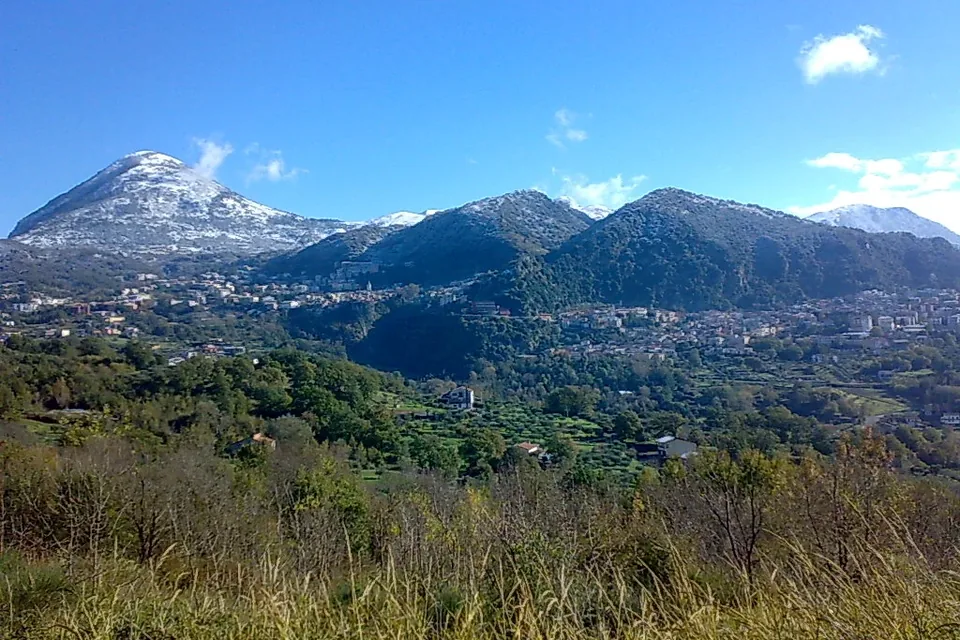
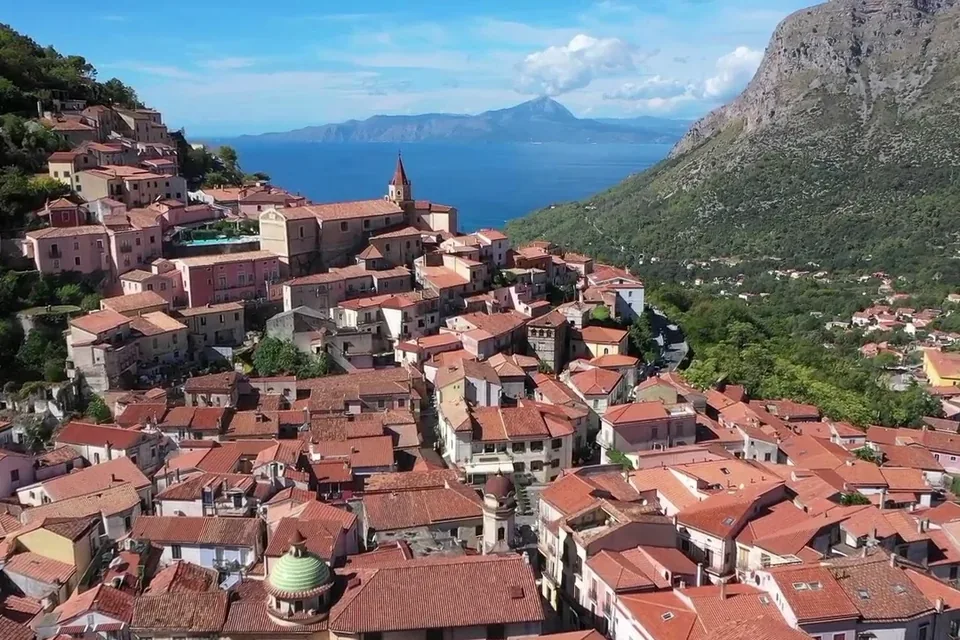
The Pollino National Park describes Lauria as a town of about 13,000 people at 450 metres, founded around 400 BC and fought over by Lombards and Saracens; according to the Park, it was named by William the Norman. Italia.it calls it the largest and most populous town in the Noce valley, divided into two districts: the Castello above and the Borgo below. The Appennino Lucano National Park, which also includes Lauria, notes that the town is the home of the Blessed Domenico Lentini, its patron, and keeps craft traditions in stone, wrought iron and wicker, especially baskets and sieves. In the old centre, Italia.it observes, visitors find wrought-iron railings, stone portals and the coats of arms of noble houses.
Sources: Parco Nazionale del Pollino — Lauria · Italia.it (Ministero del Turismo) — Lauria · Parco nazionale dell'Appennino Lucano Val d'Agri-Lagonegrese — Lauria
San Nicola, San Giacomo and the Ruggiero castle
The Comune of Lauria describes the main sites of the two districts. The mother church of San Nicola, in the Castello, holds the relics of the Blessed Domenico Lentini; little is known of its founding, because many documents burned in the 1806 fire set by Napoleonic troops, and the oldest record in its archive dates from 1522. In the Borgo, the church of San Giacomo Apostolo keeps a carved wooden choir from the Sagittario monastery, whose oldest part bears the date 1554. Saint James, patron of the lower district, is celebrated on 25 July, and on the preceding Sunday the Comune mentions a walk between places of worship called the little Way of Santiago. Higher up stand the ruins of the thirteenth-century octagonal castle known as Ruggiero.
Sources: Comune di Lauria — Chiesa madre di San Nicola · Comune di Lauria — Chiesa di San Giacomo Apostolo · Comune di Lauria — Castello Ruggiero
Latronico, Saint Giles and the rebel chickpea
Latronico, at 888 metres, is described by the Pollino Park as a town of uncertain origins, held by the Sanseverino, the Corcione and the Jesuits before passing to the Crown. Since the eighteenth century its people have been deeply devoted to Saint Giles. Worth seeing are the thirteenth-century chapel of San Cataldo, the churches of Santa Maria delle Grazie, Sant'Egidio and San Nicola, Palazzo Arcieri and Palazzo Gioia; among natural features, the Calda springs and, at Solarino di Iannazzo, the outline of a fossil fish about 30 million years old. The Comune also tells the story of the rebel chickpea, small and pale, grown between 800 and 1,000 metres: with the ALSIA seed bank in Rotonda it promoted recovery of the old seed together with farmers and families.
Sources: Parco Nazionale del Pollino — Latronico · Comune di Latronico — Tradizioni e folklore
At table in Latronico: home dishes and sweets
The Comune of Latronico's page on traditions lists a cuisine built on home-made pasta. First courses include tapparedde with porcini, fusilli with large sausage and pork rind, rascatieddi, three-finger gnocchi, lagane with chickpeas and tagliolini with beans and ground dried pepper. Main courses include kid fried in the pan, salt cod with dried peppers and lamb with potatoes and wild onions. The traditional sweets named are sanguinaccio, made with pig's blood, rice, raisins and chocolate, the Easter purciddato and cannariculi, small fried pastries of the Carnival season. Many of these dishes are seasonal or tied to feast days: it is worth asking what is being cooked during your visit.
The surroundings: Monte Alpi and Conserva
The two towns lie in mountain country between two national parks. The Pollino Park lists near Lauria Monte Alpi, the Calda mineral springs and the Malboschetto oak wood, a forest of Turkey oaks. The Appennino Lucano Val d'Agri-Lagonegrese National Park points to nearby Conserva, with ski runs and equipped areas for snow lovers. The same Calda springs also appear in Latronico's entry, a sign that the two towns share a landscape of water, woods and mountains. Among the places not to miss, the Pollino Park also lists the sanctuary of the Madonna dell'Armo.
Sources: Parco Nazionale del Pollino — Lauria · Parco nazionale dell'Appennino Lucano Val d'Agri-Lagonegrese — Lauria · Parco Nazionale del Pollino — Latronico
How to find and taste them
There is no figure-of-eight biscuit trail: the best way to taste them is to walk into bakeries and pastry shops, ask which sweets are typical and when they are made. I would try at least two kinds, for instance a Latronico figure-of-eight with a piece of cheese and a Lauria anginetto, to feel the difference between savoury and sweet, with a glass of wine or a herbal liqueur, as the Pollino tradition suggests. If the bar has a local gassosa, I would drink it cold next to a dry biscuit. Dry biscuits keep well in a tin and travel without trouble: they are one of the few food gifts you can buy on the last day. There are no partner producers in this proposal.
A thread for your journey
Journey idea: a morning in Lauria between the Castello and the Borgo, with the churches of San Nicola and San Giacomo and a bakery stop for traditional sweets; in the afternoon Latronico, the chapel of San Cataldo and the Calda waters, with a taste of figure-of-eight biscuits and local chickpeas; back towards Maratea for the evening. In late July the feast of Saint James adds a reason to stop in Lauria.
Talk to us