
APULICA / FRUIT, VEGETABLES AND PULSES
Gulf of Taranto clementines
PGI · Fruit, vegetables and pulses · Puglia
In brief
- Fresh clementines of several varieties, including Comune, Fedele and Precoce di Massafra, seedless or nearly so. (Qualigeo (Fondazione Qualivita) — Clementine del Golfo di Taranto IGP)
- They are grown in Palagiano, Massafra, Ginosa, Castellaneta, Palagianello, Taranto and Statte, around the Ionian gulf. (Qualigeo (Fondazione Qualivita) — Clementine del Golfo di Taranto IGP)
- The name comes from Father Clément Rodier, who identified the plant in Algeria in the early twentieth century. (Qualigeo (Fondazione Qualivita) — Clementine del Golfo di Taranto IGP)
History and origin
Clementines are named after a clergyman, Father Clément Rodier, who in the early twentieth century identified the plant at the Misserghin mission near Oran, in Algeria. The fruit's origin is nonetheless debated: according to the botanist Tanaka it would be a citrus similar to the Canton mandarin, of Chinese origin.
In the Gulf of Taranto, specialised cultivation is a twentieth-century story that gathered pace above all after the Second World War. Thanks to land reform, farmers gained access to adequate water resources, and citrus growing spread and specialised along the Ionian arc until it became the area's main crop.
The name Clementine del Golfo di Taranto has been registered as a Protected Geographical Indication since 2003. Today a protection consortium based in Palagiano promotes it, and the product specification was updated with amendments approved between 2024 and 2025.
Sources: Qualigeo (Fondazione Qualivita) — Clementine del Golfo di Taranto IGP · eAmbrosia — Clementine del Golfo di Taranto (PGI-IT-0247)
Area and method of production
The production area covers the entire territory of seven municipalities in the province of Taranto: Palagiano, Massafra, Ginosa, Castellaneta, Palagianello, Taranto and Statte. The climate is warm, sunny and not very humid, which favours the growth and ripening of the fruit. The soils are uniform and almost always flat, fertile, deep and well drained.
The permitted varieties belong to the species Citrus clementina: Comune, Fedele, Precoce di Massafra or Spinoso, Grosso Puglia, ISA, SRA 63 and SRA 89. The harvest period changes with the variety: Comune has the longest season, while the others are early varieties.
Irrigation is by drip, sub-irrigation or low jets, always away from the canopy to prevent rot at the base of the tree. Pruning, which may be done every other year, keeps the balance between growth and cropping, and fertilising is adjusted to soil fertility on a three-year cycle. Picking is strictly by hand, with shears, so as not to damage the fruit, which must be dry and carry no more than a few leaves.
Sources: Qualigeo (Fondazione Qualivita) — Clementine del Golfo di Taranto IGP
How to recognise it
Clementine del Golfo di Taranto PGI are sold as fresh fruit and are recognised by their spheroid shape, slightly flattened at the poles. The peel is smooth or slightly rough and orange; the specification allows green colouring on up to 30 per cent of the surface.
The fruit is seedless, with a minimal tolerance: no more than 5 per cent of fruits may contain seeds, and never more than three. The aroma is intense and lasting, the taste sweet and aromatic. They are rich in vitamin C and refreshing.
Sealed packs, of at least half a kilo, must bear the wording I.G.P. Clementine del Golfo di Taranto; in unsealed packs the logo of the designation must be applied to at least 60 per cent of the fruits. Fruit intended for processing also carries the name, with a statement that it is destined for processing.
Sources: Qualigeo (Fondazione Qualivita) — Clementine del Golfo di Taranto IGP
In the kitchen
Gulf of Taranto clementines are mostly eaten just as they are: the fruit is seedless and its sweet, aromatic taste, with an intense fragrance, needs nothing more. They are refreshing, diuretic and rich in vitamin C.
Besides fresh eating, the designation's profile mentions their use for juices, syrups, sorbets and marmalades, which keep the citrus fragrance alive beyond the season. The fruit is also used in cosmetics, in toning lotions.
To keep them at their best they should be stored in the refrigerator, where they last for several weeks. The specification also provides for fruit destined for processing, so juices, syrups and marmalades start from the same hand-picked fruit of the Ionian plain.
Sources: Qualigeo (Fondazione Qualivita) — Clementine del Golfo di Taranto IGP
Where to taste it
Clementines are to be found along the Ionian arc of Taranto, in the flat countryside of Palagiano, Massafra, Palagianello, Castellaneta, Ginosa, Statte and Taranto, where citrus groves are the main crop. The protection consortium is based in Palagiano, one of the production centres.
A trip to this part of Puglia can combine the groves with the towns. Taranto, founded by Spartan colonists in 706 BC at the innermost point of the gulf that bears its name, offers the old town on its island with the Aragonese Castle, the Doric temple and the cathedral of San Cataldo, the seafront on the Mar Grande and MArTA, the National Archaeological Museum. Castellaneta, overlooking its ravine, combines an elegant historic centre, its seaside district and the museum devoted to Rudolph Valentino, who was born here.
Between stops, the roads cross the citrus-growing plain: the harvest season, which varies with the variety, is the best time to look for fresh clementines in the production area, recognisable by the PGI wording on packs or the logo on the fruit.
Sources: Qualigeo (Fondazione Qualivita) — Clementine del Golfo di Taranto IGP · Italia.it (Ministero del Turismo) — Taranto · Italia.it (Ministero del Turismo) — Castellaneta
Protection
- Protected geographical indication (PGI) — PGI-IT-0247 (eAmbrosia — Clementine del Golfo di Taranto (PGI-IT-0247))
When
- The sources consulted give no months.
Where
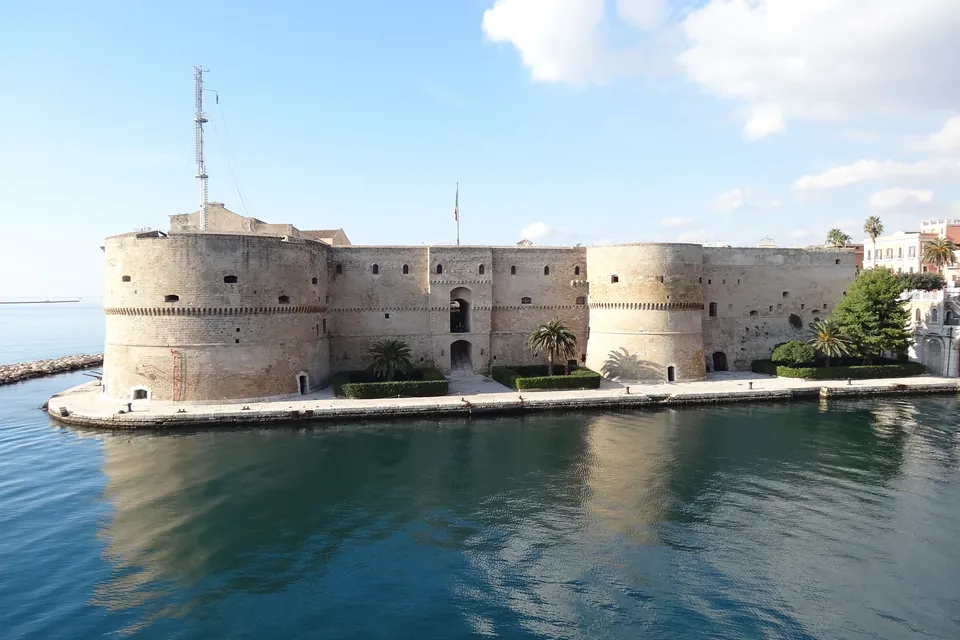
Taranto
Taranto: two seas and archaeology.
Read the guide →Photo: Livioandronico2013 / Wikimedia Commons — CC BY-SA 3.0 · Resized and converted to WebP.
.JPG)
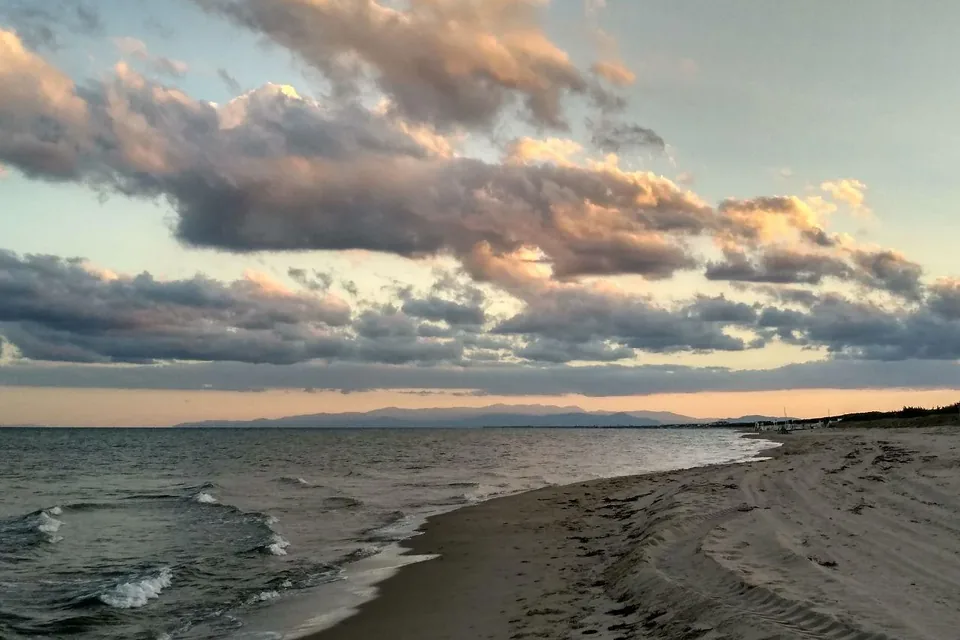
Castellaneta
The historic centre and Rudolph Valentino’s story in inland Puglia.
Read the guide →Photo: Archeolucia / Wikimedia Commons — CC BY-SA 4.0 · Resized and converted to WebP.
