APULICA / Food guides
Sulmona red garlic: wine-coloured skins, braids of 52 heads and May scapes
In the Sulmona basin, in the Valle Peligna, a garlic with wine-coloured skins is grown that is one of the symbols of Abruzzo market gardening. It has no European designation: it is listed among Abruzzo's traditional food products and in Slow Food's Ark of Taste. It has two rare features: it flowers regularly every year, and its flower stalk, which must be removed by hand, is eaten like a small asparagus under the local name zolla. This guide explains how to recognise it, when to go and how to use it in the kitchen.
A traditional product, not PDO or PGI
Sulmona red garlic appears in the Abruzzo Region's list of traditional food products and in the 2026 revision of the national list published by the Ministry of Agriculture; Italia.it mentions this listing. It does not, however, hold a European PDO or PGI designation, and attributing one to it is a common mistake. A 2025 study by the University of L'Aquila, co-authored with researchers from the Majella National Park seed bank, describes it as a typical ecotype of the Valle Peligna, named for the reddish colour of its skin, and notes that the Slow Food Foundation has included it among productions worth protecting. The Ark of Taste entry places its historic area in thirteen municipalities, including Sulmona, Pratola Peligna, Pacentro, Popoli, Raiano and Anversa degli Abruzzi.
Sources: Regione Abruzzo — Elenco dei prodotti agroalimentari tradizionali, sezione Abruzzo · Masaf — Elenco nazionale dei prodotti agroalimentari tradizionali, XXVI revisione (DM 6 febbraio 2026), tabella per Regione e categoria · Italia.it (Ministero del Turismo) — Aglio rosso di Sulmona · Università dell'Aquila e Banca del germoplasma del Parco nazionale della Majella — Profilo aromatico dello scapo fiorale dell'Aglio rosso di Sulmona (Chemosensors, 2025) · Fondazione Slow Food, Arca del Gusto — Aglio rosso di Sulmona
From Ovid to the exports of 1917
Italia.it ties red garlic to the history of the Valle Peligna with a few references: it names the poet Ovid, born in Sulmona, among the earliest literary mentions of its cultivation, Panfilo Serafini, who documented its trade in the first half of the nineteenth century, and archives from 1917, in the middle of the war, recording its export. The Ark of Taste adds that garlic long played a key part in the valley's thriving market-garden sector. The Majella National Park, in its page on Sulmona, confirms that red garlic is still grown in the municipality alongside local legume varieties such as tondino, aquilano, tabacchino and gentile. It is therefore a product living inside a broader farming system, not an isolated curiosity.
Sources: Italia.it (Ministero del Turismo) — Aglio rosso di Sulmona · Fondazione Slow Food, Arca del Gusto — Aglio rosso di Sulmona · Parco Nazionale della Majella — Sulmona
What it looks like: wine-red skins and tight cloves
According to the Ark of Taste, Sulmona red garlic has bulbs wrapped in wine-coloured skins and tight heads, with no cloves outside the skins. The outer ring holds eight to ten large cloves; inside are three or four small ones, called animelle. The aroma is intense, attributed to a high allicin content, and essential-oil levels are high. On size the sources disagree: the Ark gives a calibre of 55 to 70 millimetres for the extra grade, above common commercial standards, while Italia.it describes it as smaller than other garlics. It keeps up to a year in a dry place and rarely sprouts. The University of L'Aquila study cites research showing that its composition sets it apart from other red garlics grown in neighbouring regions.
Sources: Fondazione Slow Food, Arca del Gusto — Aglio rosso di Sulmona · Italia.it (Ministero del Turismo) — Aglio rosso di Sulmona · Università dell'Aquila e Banca del germoplasma del Parco nazionale della Majella — Profilo aromatico dello scapo fiorale dell'Aglio rosso di Sulmona (Chemosensors, 2025)
The calendar: autumn planting, May scapes, July harvest
Italia.it gives autumn planting, between November and December, and a summer harvest, between June and July; the Ark of Taste specifies late June to early July, fifteen to twenty days ahead of other Italian long-keeping ecotypes. According to the same entry it is the only Italian ecotype that flowers regularly every year: for the bulb to grow, the flower stalk must be removed by hand between mid and late May. The University of L'Aquila study confirms that scapes are removed by hand while still tender, well before flowering, and notes that the samples it analysed were collected in May. After harvest, tradition braided the garlic into plaits of 52 heads, one for each week of the year, as proof of how well it keeps.
Sources: Italia.it (Ministero del Turismo) — Aglio rosso di Sulmona · Fondazione Slow Food, Arca del Gusto — Aglio rosso di Sulmona · Università dell'Aquila e Banca del germoplasma del Parco nazionale della Majella — Profilo aromatico dello scapo fiorale dell'Aglio rosso di Sulmona (Chemosensors, 2025)
Scapes, a vegetable in their own right
The flower stalk has several local names: Italia.it mentions tolle, zolle and crastetelli, and their use in sweet-and-sour dishes. The Ark of Taste explains that it is sold fresh, looks like a small asparagus and has a delicate garlic flavour, and that it gives growers a significant extra income; garlic is also preserved in oil, whole or as a paste. The University of L'Aquila study analysed the scapes' aroma profile: they contain almost all the sulphur compounds of the clove, but in more balanced proportions and with more terpenes and aldehydes, so the clove's typical pungency is softened. That is why scapes appeal even to people who dislike raw garlic: in the kitchen they behave more like a vegetable than a seasoning.
Sources: Italia.it (Ministero del Turismo) — Aglio rosso di Sulmona · Fondazione Slow Food, Arca del Gusto — Aglio rosso di Sulmona · Università dell'Aquila e Banca del germoplasma del Parco nazionale della Majella — Profilo aromatico dello scapo fiorale dell'Aglio rosso di Sulmona (Chemosensors, 2025)
Local seed, fraud and soils
The Ark of Taste flags two risks for this ecotype: fraud with imported garlic, larger and more productive but less fragrant, and soil nematodes that spread viruses and make fields less suitable for growing it. The University of L'Aquila study approaches the issue from another angle. It compared scapes collected in Sulmona, Prezza, Campo di Fano, Pacentro and Raiano, grown both from local seed cloves and from commercial Spanish and French cloves planted in the same fields. The authors find that seed origin and growing area jointly affect the aroma, but also write that reliably telling apart plants grown from local seed has not yet been fully demonstrated. For buyers, the practical advice remains to know the grower.
Sources: Fondazione Slow Food, Arca del Gusto — Aglio rosso di Sulmona · Università dell'Aquila e Banca del germoplasma del Parco nazionale della Majella — Profilo aromatico dello scapo fiorale dell'Aglio rosso di Sulmona (Chemosensors, 2025)
July: the festival at Campo di Fano
Italia.it reports that the red garlic festival is held every year on the second weekend of July at Campo di Fano, a hamlet of about three hundred people in the Valle Peligna. It therefore falls just after the harvest, when the braids are fresh. We did not find the 2026 programme on an official municipal or pro loco site: we therefore give only the recurring date and suggest checking with the Comune of Prezza, whose website links to the Campo di Fano pro loco, before planning the trip. In the kitchen the same source recommends fresh garlic rubbed on bruschetta with oil, in sauces, with meat and fish and in spaghetti with garlic, oil and chilli: simple dishes that let the aroma come through without masking it.
Sources: Italia.it (Ministero del Turismo) — Aglio rosso di Sulmona · Comune di Prezza — sito istituzionale
Sulmona in July: the Giostra cavalleresca
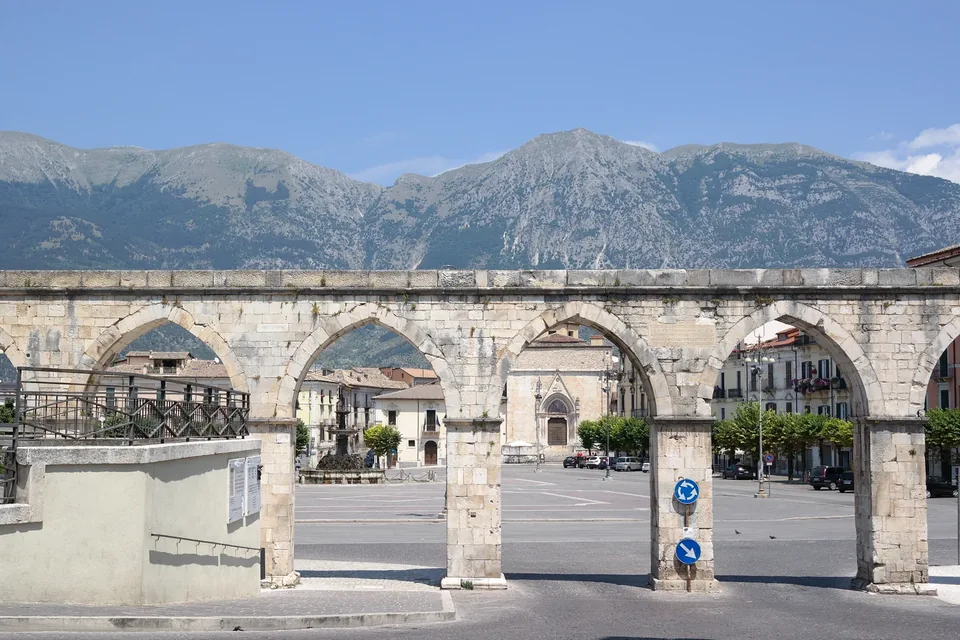
Visitors who come to the basin for the harvest can stop in Sulmona, which the Majella National Park describes as the largest town in the Park, at 405 metres between the Vella stream and the Gizio river, known for its sugared almonds and as Ovid's birthplace. The Comune of Sulmona gives the last weekend of July for the Giostra cavalleresca: a historical parade in the afternoon followed by the contest in Piazza Garibaldi. According to the Comune the earliest record of the joust dates from 1484; it was once run for the feasts of the Annunciation and the Assumption, and today it is revived as a contest of speed and skill at the rings between riders representing the town's districts. The Park also points to the Badia morronese, today its operational seat, and the abbey of Santo Spirito al Morrone.
Sources: Parco Nazionale della Majella — Sulmona · Comune di Sulmona — Giostra cavalleresca
Red garlic is a name, not an origin
The national list of traditional products updated in 2026 helps explain why colour alone is not enough at a market stall. Besides Sulmona red garlic, listed for Abruzzo, the list records in other regions the red garlic of Castelliri and of Proceno in Lazio, Maremma red garlic in Tuscany and, in Campania, Ufita garlic. These are different territories with different histories, and none of these names is a European designation guaranteeing origin through a system of checks. For travellers the consequence is simple: red garlic on a label describes an appearance, not a place. What matters is knowing who grew it and where, and the Sulmona basin is the right place to ask directly.
Buying it well and taking it home
Given the fraud risk flagged by the Ark of Taste, I would buy red garlic directly from growers in the Sulmona basin, or from shops able to name the farm; a whole braid is the most traditional and also the most practical way to store it. In May I would look for fresh scapes, available for only a few weeks, and try them pan-fried or sweet-and-sour. In July the festival lets you taste many preparations at once, and Sulmona's Giostra can round off the same trip. In a suitcase braids travel well if they stay aired; at home they should hang somewhere cool and dry. A visit to the fields is arranged with local operators, ideally between May and July.
A thread for your journey
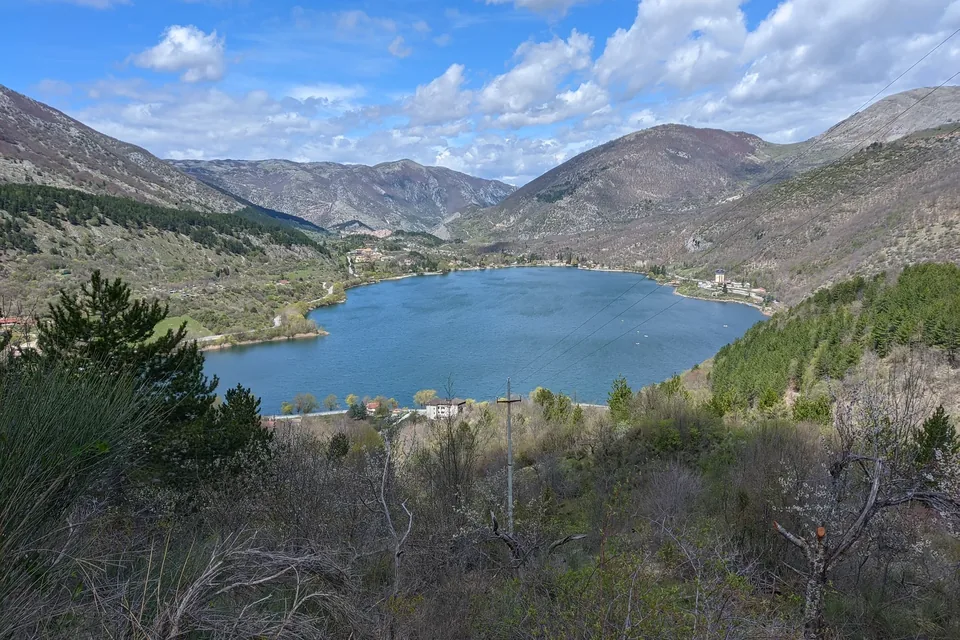
Journey idea: two moments in the Valle Peligna. In mid-May, Sulmona and the basin's fields for fresh scapes, with a visit arranged with local operators; in July, the Campo di Fano festival on the second weekend and Sulmona's Giostra cavalleresca on the last, checking the year's dates first, then the road towards Anversa degli Abruzzi and the Sagittario gorges to Scanno.
Talk to us