
APULICA / FRUIT, VEGETABLES AND PULSES
Sulmona red garlic
PAT · Fruit, vegetables and pulses · Abruzzo
In brief
- A garlic ecotype from the Valle Peligna, grown in the Sulmona basin in the province of L'Aquila. (Italia.it — Aglio Rosso di Sulmona)
- The cloves have wine-coloured skins and the bulb is small; kept dry it lasts up to a year. (Italia.it — Aglio Rosso di Sulmona · Fondazione Slow Food — Arca del Gusto, Aglio rosso di Sulmona)
- It is the only garlic of its kind that sends up a flower stalk, which must be removed by hand to protect the yield. (Fondazione Slow Food — Arca del Gusto, Aglio rosso di Sulmona)
- It is planted in November and December and lifted in June and July; its festival is held in Campo di Fano on the second weekend of July. (Italia.it — Aglio Rosso di Sulmona)
History and origin
Red garlic has long been a mainstay of market gardening in the Valle Peligna, the basin around Sulmona in the province of L'Aquila. The evidence is old: among the first literary references to its cultivation is Ovid, the Latin poet of the Augustan age. In the first half of the nineteenth century Panfilo Serafini documented its trade, and records from 1917, in the middle of the world war, show it being exported.
Folk beliefs grew up around it too. A garlic necklace was said to help children against intestinal worms, and garlic wreaths hung on house doors were meant to keep witches away.
Today it is a traditional food product of Abruzzo and an entry in Slow Food's Ark of Taste, which considers it at risk from fraud with larger but less fragrant imported garlic and from certain soil diseases.
Sources: Italia.it — Aglio Rosso di Sulmona · Fondazione Slow Food — Arca del Gusto, Aglio rosso di Sulmona · Masaf — Elenco nazionale dei prodotti agroalimentari tradizionali, XXVI revisione (2026)
Area and method of production
It is grown in the Sulmona basin, in the Valle Peligna. The historic area includes Anversa degli Abruzzi, Bugnara, Corfinio, Introdacqua, Pacentro, Pettorano sul Gizio, Popoli, Pratola Peligna, Prezza, Raiano, Roccacasale, Sulmona and Vittorito.
It is planted in autumn, between November and December, and harvested between June and July; among long-keeping garlics it ripens a couple of weeks early. Its key botanical trait is flowering: it is the only Italian ecotype that sends up a flower stalk every year. In mid to late May the stalk is removed by hand so that the bulb can swell.
The stalk has value too: it is sold fresh, looking like a small asparagus with a delicate garlic flavour, or preserved in oil, whole or as a paste, and it adds to growers' income.
Sources: Italia.it — Aglio Rosso di Sulmona · Fondazione Slow Food — Arca del Gusto, Aglio rosso di Sulmona
How to recognise it
It is recognised by cloves wrapped in purple, wine-coloured skins, enclosed in a bulb that is white outside. The head is tightly closed and has no cloves outside the skins: there are 8-10 large outer cloves and 3-4 smaller inner ones, called animelle.
The aroma is intense and slightly hot, thanks to a high concentration of allicin and essential oils. For the market, the extra grade has a diameter between 55 and 70 millimetres.
It keeps very well: even without refrigeration it stays firm and compact until March or April, and in a cool, dry place it can last up to a year, with little tendency to sprout. It is traditionally stored in braids, originally of 52 heads, one for each week of the year.
Sources: Italia.it — Aglio Rosso di Sulmona · Fondazione Slow Food — Arca del Gusto, Aglio rosso di Sulmona
In the kitchen
The simplest way to taste it is raw, rubbed on bruschetta with a drizzle of oil. It flavours sauces and meat and fish dishes without overwhelming them, and it is the key ingredient of spaghetti with garlic, oil and chilli.
It also goes into several dishes of the local cuisine. The flower stalks, called tolle, zolle or crastetelli, are prepared sweet-and-sour or preserved in oil, whole or as a paste.
Garlic braids, which keep for a long time, mean it can be in the kitchen for much of the year after the summer harvest.
Thanks to its high allicin content, which gives it an intense aroma and a slight heat, a little is enough to give a dish character.
Sources: Italia.it — Aglio Rosso di Sulmona · Fondazione Slow Food — Arca del Gusto, Aglio rosso di Sulmona
Where to taste it
The area is the Valle Peligna, with Sulmona at its centre and the villages of the historic growing area, from Pratola Peligna to Pacentro, from Introdacqua to Popoli.
The dedicated event is the red garlic festival held every second weekend of July in Campo di Fano, a small village in the Valle Peligna: an occasion for producers, experts and visitors arriving from all over the region.
Sulmona, with its basin ringed by mountains, is the ideal starting point to discover the garlic in its landscape, at harvest time between June and July or during the rest of the year.
They are villages gathered around the same basin, from Bugnara to Raiano, from Prezza to Vittorito.
Sources: Italia.it — Aglio Rosso di Sulmona · Fondazione Slow Food — Arca del Gusto, Aglio rosso di Sulmona
Protection
- Traditional agri-food product (PAT) — Abruzzo, n. 49, 26th revision (Masaf — Elenco nazionale dei prodotti agroalimentari tradizionali, XXVI revisione (2026) · Italia.it — Aglio Rosso di Sulmona)
When
- Harvest: June–July (Italia.it — Aglio Rosso di Sulmona)
- Event: July (Italia.it — Aglio Rosso di Sulmona)
- Summer
Where
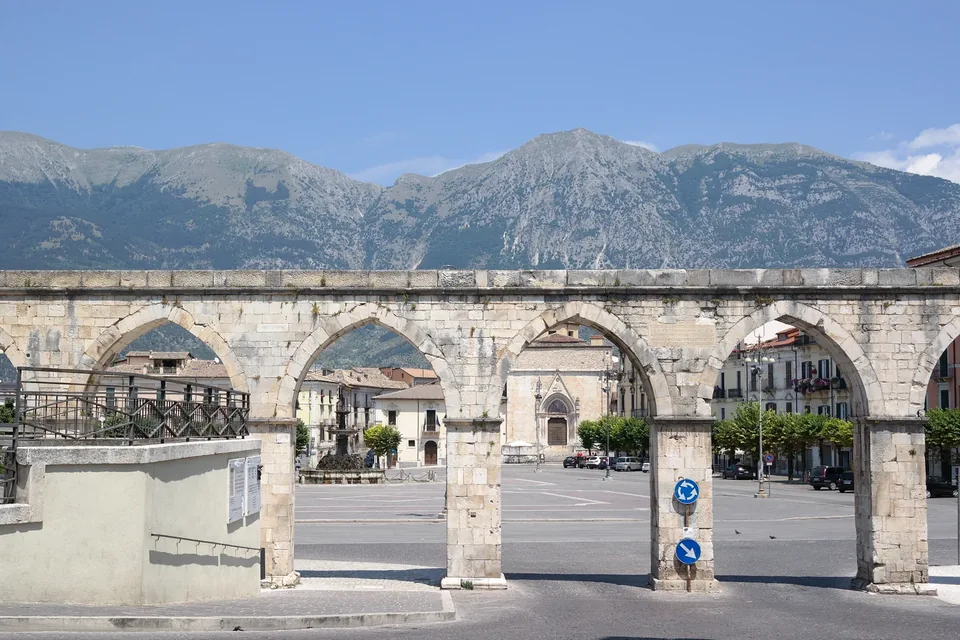
Sulmona and the Majella
A historic centre in the Peligna basin, surrounded by the Majella park and the starting point of the Way of Celestine.
Read the guide →Photo: Luca Aless / Wikimedia Commons — CC BY-SA 4.0 · Resized and converted to WebP.

Read more
Sulmona red garlic
Neither PDO nor PGI: it is a traditional Abruzzo product, confirmed in the 2026 national list, and an Ark of Taste entry. A Valle Peligna ecotype that flowers every year, is harvested in early summer and keeps for a long time; the July festival at Campo di Fano and Sulmona's Giostra.
Read the guide →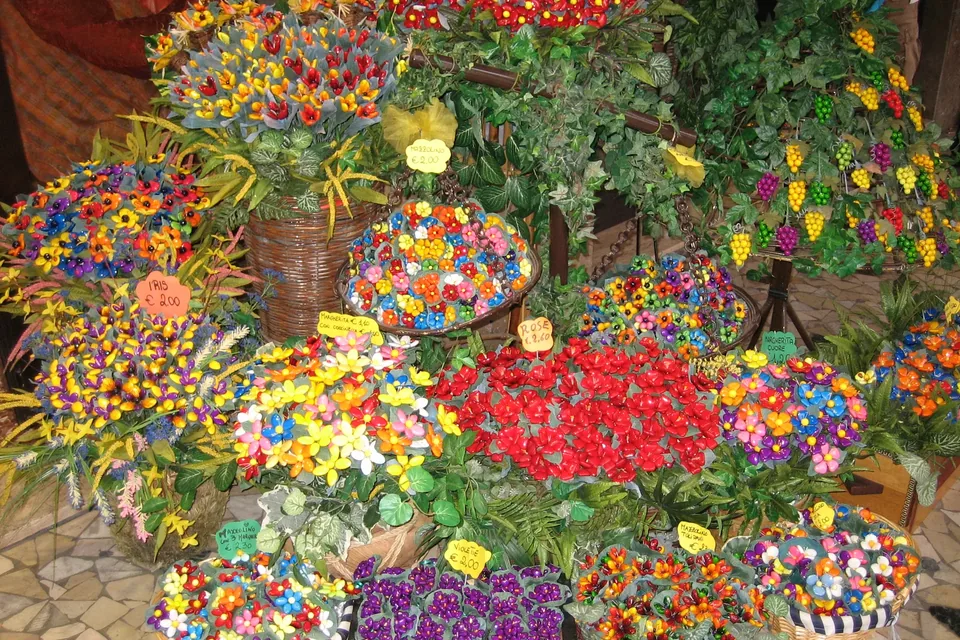
Sulmona sugared almonds
Sulmona, town of Ovid and confetti: the history of the craft, copper pans, the museum of confectionery technology, Piazza Garibaldi and the Peligna valley.
Read the guide →Photo: Claro48 at Italian Wikipedia / Wikimedia Commons — Public domain · Resized and converted to WebP.
