Why go
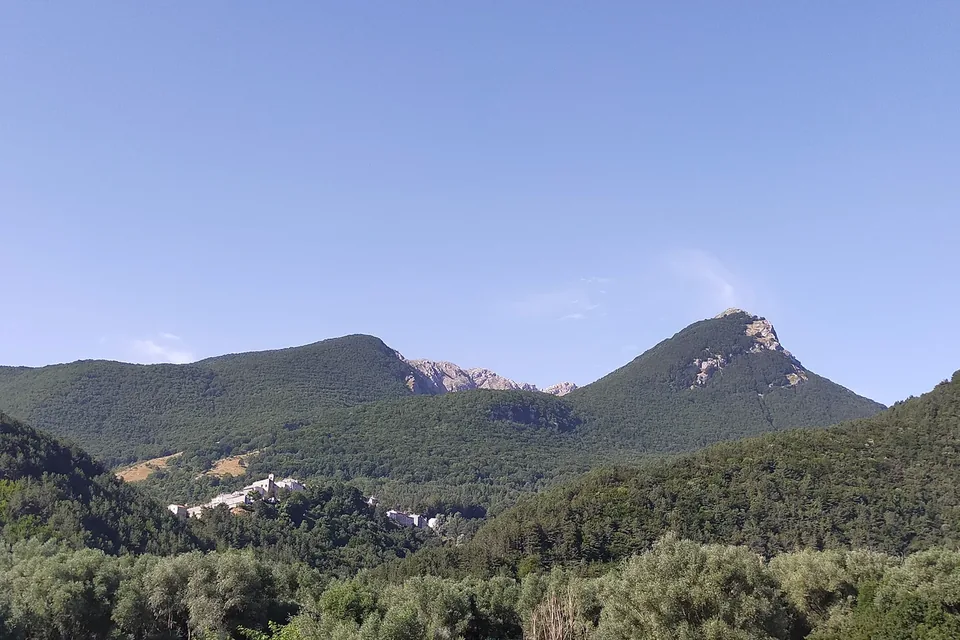
Sulmona stands on a plateau in the middle of the Peligna basin, with the Morrone and the Majella closing its horizon. The Majella National Park surrounds it almost entirely, which explains its double character: a compact art town full of churches, palaces and fountains, and at the same time a gateway to the mountains and their hermitages.
It is the birthplace of Ovid, who remembered its cool waters, and for centuries its name has been tied to sugared almonds and to the red garlic grown in the valley. Very different stories meet here: the Swabian and Aragonese Sulmona of fairs and royal justiciars, the Baroque rebuilding after the 1706 earthquake, and the life of Pietro da Morrone, the hermit who in 1294 became Pope Celestine V, setting out from the slopes of the mountain above the town.
For slow travellers it is an ideal base. The town can be seen on foot in a day, but it is also the starting point for the Way of Celestine, the hermitage of Sant’Onofrio, the heritage train of the Ferrovia dei Parchi and the Majella villages such as Pacentro and Campo di Giove. A town to stay in for a few days, not just to pass through.
Sources: Italia.it — Centro storico di Sulmona · Parco Nazionale della Maiella — Eremi e luoghi di culto rupestre · Comune di Sulmona, portale turistico — Acquedotto medioevale · Touring Club Italiano — Il Cammino di Celestino
History
The bond with water is ancient: in Roman times the town already had channels and aqueducts, and the medieval aqueduct in Piazza Garibaldi, built in 1256 under Manfred of Swabia, probably follows an earlier line. Under Frederick II Sulmona played a leading role: it was the seat of a royal justiciar, of a chair of canon law and of one of the seven annual fairs of the Kingdom of Sicily. In 1320 the lay confraternity of the Compenitenti founded the church and hospital of the Santissima Annunziata, which became one of the most important in the Kingdom of Naples.
In the mid-thirteenth century Pietro da Morrone founded the abbey of Santo Spirito on the slopes of the mountain, which from 1293 was the seat of the abbot general of the Celestines; the following year the hermit was elected pope. The complex, enlarged over the centuries, later had a long life as a college, a poorhouse and, from 1868 to 1993, a prison, before passing to the Ministry of Culture and housing the park headquarters.
The earthquakes of 1349, 1456 and above all 1706 reshaped the town: eighteenth-century rebuilding gave many churches and palaces the Baroque forms seen today. The tournament on horseback, documented from 1484 and once run for the feasts of the Annunciation and the Assumption, was dropped in the mid-seventeenth century and revived in recent times. During the Second World War, with the Gustav Line close by, the surrounding mountains became an escape route for Allied prisoners and young Italians: the Sentiero della Libertà commemorates it today.
Sources: Comune di Sulmona, portale turistico — Acquedotto medioevale · Comune di Sulmona, portale turistico — Complesso della Santissima Annunziata · Comune di Sulmona, portale turistico — Abbazia celestiniana di Santo Spirito a Morrone · Comune di Sulmona, portale turistico — Giostra Cavalleresca di Sulmona · Comune di Sulmona, portale turistico — Il Sentiero della Libertà
What to see
The most representative monument is the Santissima Annunziata complex, church and palace side by side. The church façade, rebuilt after 1706, is the work of Norberto Cicco of Pescocostanzo; inside are eighteenth-century stucco and frescoes, inlaid marble altars and two facing organs from 1749 and 1753, among the oldest of their kind in Italy. The bell tower, over 65 metres high, was built between 1565 and 1590. The palace houses the Civic Museum, with archaeological, medieval and modern sections and the Museum of Abruzzo and Molise Folk Costume and Transhumance, which displays prints, traditional dress and shepherds’ objects.
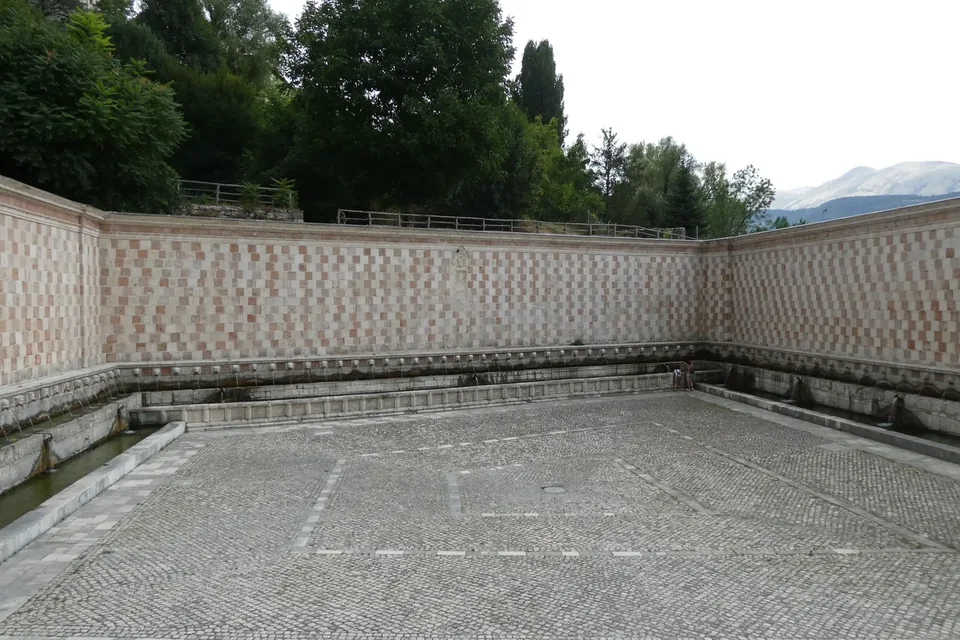
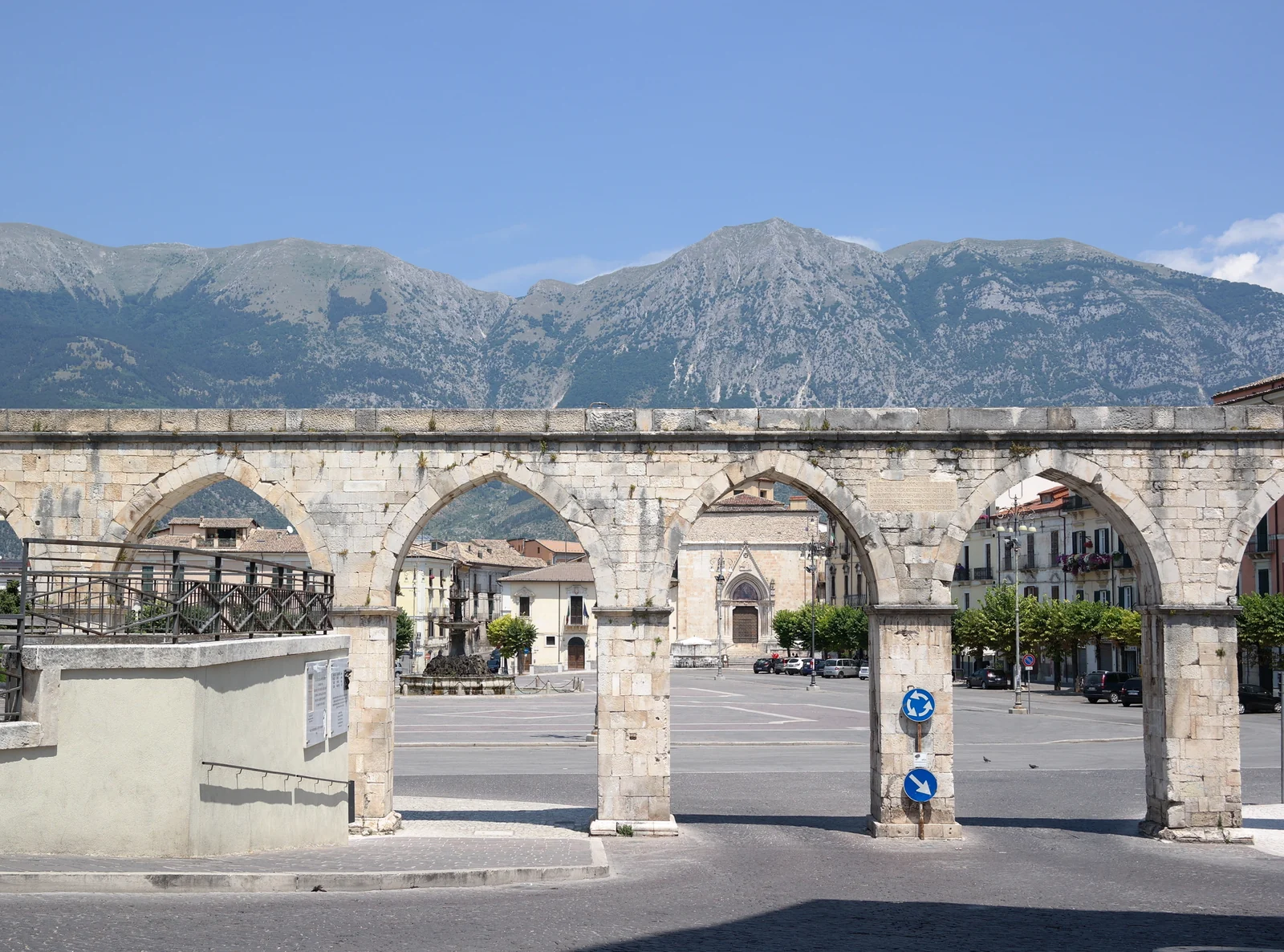
Piazza Garibaldi, one of the largest squares in central and southern Italy at about 100 by 50 metres, is closed on its western side by the pointed arches of the Swabian aqueduct; next to it the Fontana del Vecchio, rebuilt in Renaissance style in 1474, takes its name from the bearded head on top. The church of San Filippo Neri overlooks the square.
The visit continues with the cathedral of San Panfilo, which keeps the patron saint’s relics in its crypt, Palazzo Sanità and Palazzo Tabassi, the Maria Caniglia municipal theatre, the statue of Ovid and the gates of the fourteenth-century walls: Romana, Pacentrana, Napoli and Sant’Antonio. To understand confetti there is the Museo Pelino dell’Arte e della Tecnologia Confettiera, opened in 1988 in an Art Nouveau building, with a reconstructed eighteenth-century workshop.
Sources: Italia.it — Centro storico di Sulmona · Comune di Sulmona, portale turistico — Complesso della Santissima Annunziata · Comune di Sulmona, portale turistico — Acquedotto medioevale · Comune di Sulmona, portale turistico — Fontana del Vecchio · Comune di Sulmona, portale turistico — Museo del Costume Popolare Abruzzese e Molisano e della Transumanza · Comune di Sulmona, portale turistico — Museo Pelino dell’Arte e della Tecnologia Confettiera
Food and wine
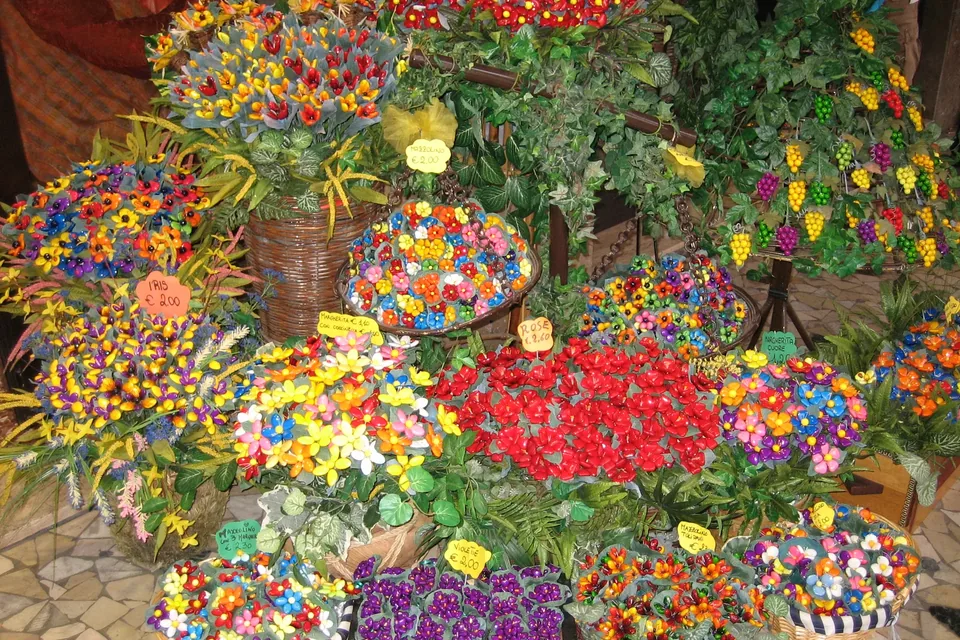
Confetti di Sulmona, the sugared almonds, are the product that made the town famous. The craft of the master confectioners goes back to the late Middle Ages, and the confectionery museum shows its tools: copper pans, roasters, polishing machines and mortars, along with the frames used to make rosaries of confetti. Here the sugared almond is not just a wedding favour but a small craft, often shaped into flower-like compositions.
The other emblem is Aglio rosso di Sulmona, a red garlic ecotype of the Valle Peligna listed among Abruzzo’s traditional products. It has a white bulb, cloves with purple skins, a small size and an intense aroma; kept dry it lasts up to a year. It is planted in November and December and harvested in June and July. It is at its best raw on bruschetta or in spaghetti with garlic, oil and chilli, while the flower stalks, called tolle or crastetelli, are prepared sweet and sour. Ovid provides one of the earliest literary references to it, and records from 1917 already attest to its export.
The surrounding mountains bring pasture cheeses to the table. The Majella park has revived Cacio Morra, born from the morra system, the shared flock formed by the sheep and goats that did not leave on transhumance: raw sheep and goat milk, kid rennet and small wheels, the everyday cheese of Majella families.
Sources: Italia.it — L’Aglio Rosso di Sulmona · Comune di Sulmona, portale turistico — Museo Pelino dell’Arte e della Tecnologia Confettiera · Italia.it — Centro storico di Sulmona · Parco Nazionale della Maiella — Il Cacio Morra
Things to do
The Way of Celestine, launched in 2018 by the Majella National Park and certified by the Touring Club Italiano in its classic version, starts from the Celestinian Abbey at Sulmona and ends at the abbey of San Liberatore a Majella in Serramonacesca: about 97 kilometres across the Morrone and the Majella, with stages at Pacentro, Caramanico Terme and Roccamorice and the hermitage of Santo Spirito. It is well waymarked but suited to fit walkers because of the significant climbs; it has its own pilgrim credential, and the testimonium is collected at Serramonacesca. Since 2022 there has also been a Great Way, arriving from L’Aquila along the Aterno valley.
Without committing to a multi-day walk you can climb to the hermitage of Sant’Onofrio al Morrone, at 600 metres on a rock face above the basin, in about twenty minutes along a path. Founded by Pietro da Morrone after 1290, it keeps a frescoed oratory, a fifteenth-century wooden ceiling and the hermit’s cells; from its terrace the faithful throw stones as a sign of casting off evil.
For a different kind of day there is the Ferrovia dei Parchi, the Sulmona–Isernia line of 1897 known as the Trans-Siberian of Italy, reopened for tourist trains in 2014: vintage carriages climb to almost 1,300 metres across viaducts and through tunnels. Those seeking a walk of remembrance can follow the Sentiero della Libertà, about 60 kilometres in three stages over the Majella.
Sources: Touring Club Italiano — Il Cammino di Celestino · Comune di Sulmona, portale turistico — Eremo di Sant’Onofrio · Italia.it — Eremo di Sant’Onofrio al Morrone · Comune di Sulmona, portale turistico — Ferrovia dei Parchi · Italia.it — Transiberiana d’Italia · Comune di Sulmona, portale turistico — Il Sentiero della Libertà
When to go
Spring, summer and autumn are the best seasons for a trip combining town and mountains. The Touring Club recommends the Way of Celestine all year except winter, when snow and ice make high trails risky; the same caution applies to walks up to the hermitages.
The town calendar offers several occasions. The patron saint San Panfilo is celebrated at the end of April with the procession of his fifteenth-century reliquary bust in gilded copper and silver. On the last weekend of July the Giostra Cavalleresca takes place: a historical procession through the centre and a contest of speed and skill at the rings in Piazza Garibaldi, with riders representing the town’s districts; in early summer the Cordesca is the children’s tournament. Sulmona also keeps the rite of the Madonna che scappa, one of the most heartfelt in its tradition.
For food lovers, red garlic is harvested in June and July, and its festival is held on the second weekend of July at Campo di Fano, a hamlet in the Valle Peligna. In autumn the Majella woods change colour and the park organises dedicated walks. The heritage train of the Ferrovia dei Parchi leaves Sulmona at weekends for day return trips; check the calendar on the railway’s website.
Sources: Ente Parco Nazionale della Maiella · Comune di Sulmona, portale turistico — Giostra Cavalleresca di Sulmona · Comune di Sulmona, portale turistico — Festa del Santo Patrono San Panfilo · Italia.it — L’Aglio Rosso di Sulmona · Touring Club Italiano — Il Cammino di Celestino · Comune di Sulmona, portale turistico — Ferrovia dei Parchi · Italia.it — Centro storico di Sulmona
Getting there and around
For those heading to the start of the Way of Celestine, the Touring Club gives the stations of Pescara and L’Aquila, reached by train, as reference points, from which you continue to Sulmona; Sulmona station is where the tourist trains of the Ferrovia dei Parchi leave for the upper Sangro valley and Molise. Timetables and connections should be checked on the railways’ official channels when planning the trip.
By road, the regional company TUA, Trasporto Unico Abruzzese, runs the Sulmona–Avezzano–Rome coach line, useful for travellers from the capital, and services between Sulmona and L’Aquila that pass through the valley villages. Up-to-date services and timetables are on the TUA website.
In town you get around on foot: the historic centre is compact and the distances between the cathedral, the Santissima Annunziata and Piazza Garibaldi are short. For the abbey of Santo Spirito in the hamlet of Badia, the hermitage of Sant’Onofrio and Majella villages such as Pacentro and Campo di Giove you need your own transport, a local bus or an organised service.
Sources: Touring Club Italiano — Il Cammino di Celestino · TUA — Linee da e per Roma · TUA — Corsa Sulmona–L’Aquila · Comune di Sulmona, portale turistico — Ferrovia dei Parchi
Where to stay
The tourism portal of the municipality of Sulmona groups the town’s accommodation by category: hotels, bed and breakfasts, guest rooms, holiday homes and, in the mountains, refuges. Staying in the historic centre lets you see everything on foot, from the cathedral to the Santissima Annunziata, and leave early in the morning for the mountains.
Walkers on the Way of Celestine find their official starting point in Sulmona: the pilgrim credential can be collected at the starting places of the route, and along the way passage through each village can also be certified with the stamp of the place where you sleep. In the hamlet of Badia, next to the abbey, the park information centre hosts the Reception and Documentation Centre for the Ways of Abruzzo, a reference point for planning stages.
For those who prefer quiet, the villages of the Majella park around the basin offer more intimate hospitality, suited to stays built around walking. Apulica chooses accommodation to suit the pace of the trip, without naming individual properties here and without availability guaranteed in advance.
Sources: Comune di Sulmona — Portale turistico · Touring Club Italiano — Il Cammino di Celestino · Parco Nazionale della Maiella — I Centri Informazioni del Parco
Nearby
A few kilometres from the centre, in the hamlet of Badia, the abbey of Santo Spirito al Morrone is one of the great monastic buildings of Abruzzo: five courtyards, a refectory with monochrome paintings from the early eighteenth century, and the grand staircase leading to the former library. Today it houses the headquarters of the Majella National Park, its information centre and the exhibition Majella: Domus Christi, Domus Naturae, dedicated to Celestine V.
The municipality suggests a route through the park villages that starts at Pacentro, dominated by its medieval castle, and continues to Campo di Giove at the foot of the Majella, with the option of walking up to the small church of the Madonna di Coccia for a view of the southern slopes towards the Aventino valley. Pacentro is also a stage of the Way of Celestine, appreciated for its historic centre.
The park authority, with its operational seat in Sulmona, works on coexistence with bears and wolves and on protecting the Apennine chamois: its wildlife areas and the visitor centres in the villages are the best way to get to know the mountains. Those wishing to extend the trip can head up to L’Aquila and Santo Stefano di Sessanio, or reach Scanno and the Abruzzo, Lazio and Molise National Park.
Sources: Comune di Sulmona, portale turistico — Abbazia celestiniana di Santo Spirito a Morrone · Comune di Sulmona, portale turistico — Majella madre · Parco Nazionale della Maiella — I Centri Informazioni del Parco · Ente Parco Nazionale della Maiella · Touring Club Italiano — Il Cammino di Celestino
Local tourist information
Local tourist offices help with opening times, events and transport on the day.
- Centro Informazioni del Parco Nazionale della Maiella — Badia di Sulmona · Badia di Santo Spirito al Morrone, frazione Badia, Sulmona (AQ) · Official website
Source: Parco Nazionale della Maiella — I Centri Informazioni del Parco · checked on
Where to stay
In the municipality of Sulmona the national database of the Ministry of Tourism lists 204 accommodation businesses with a verified CIN code: 6 hotels, 11 other licensed accommodation and 187 other types such as B&Bs and private rentals.
Sources: Ministero del Turismo – Banca Dati Strutture Ricettive (dashboard pubblica), 2026-10-12
YOUR JOURNEY
How to shape a journey here
Two days: Sulmona’s centre and its confetti, then one stage of the Way of Celestine to a hermitage. Guides and experiences to be arranged with local operators.
Talk to us about it