
Why go
L’Aquila is the capital of Abruzzo and sits in a basin between the mountains of the Gran Sasso and the Monti della Laga. High ground is close at hand: beyond the last houses begin the pastures, woods and rock faces of the Gran Sasso and Monti della Laga National Park, one of the great parks of the Apennines.
The strongest reason to come is the city itself, whose heritage brings together Romanesque churches, a sixteenth-century fortress, national museums and venues for contemporary art. Add to this the Celestinian Forgiveness, the celebration born of a bull issued by Pope Celestine V and recognised by UNESCO as intangible cultural heritage of humanity: a rite of reconciliation that the community has renewed every summer since 1294.
There is also a less usual reason. Since the 2009 earthquake L’Aquila has been rebuilding its centre, and a visit brings you face to face with monuments already restored and with work sites still open. It is a journey that asks for attention and respect towards the people who live here, and it repays you with a lively university city, full of music and culture, surrounded by some of the finest villages and plateaus of the Apennines.
Sources: Italia.it — L’Aquila · UNESCO — Celestinian forgiveness celebration · Italia.it — Parco Nazionale del Gran Sasso e Monti della Laga
History
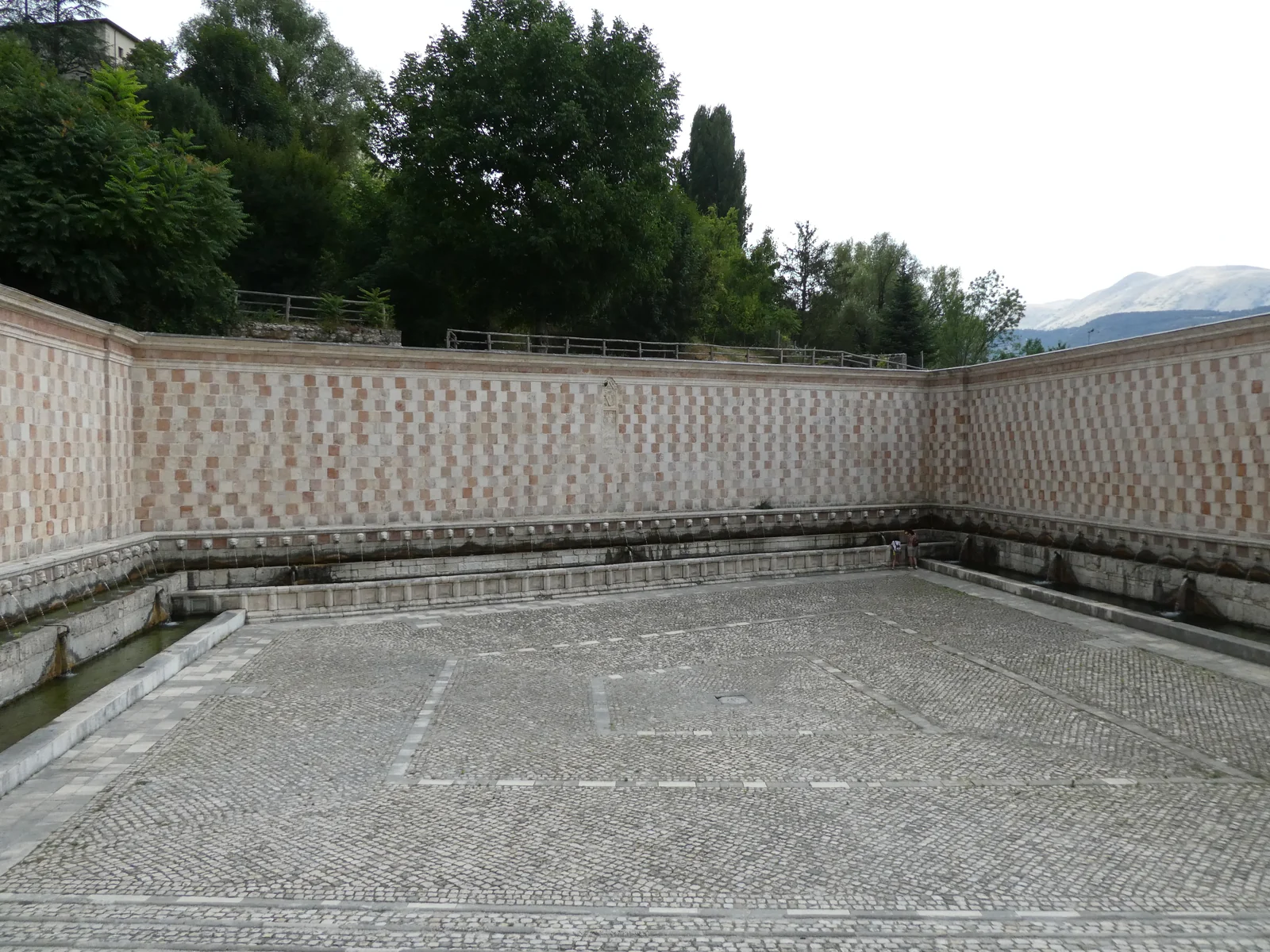
The city was founded in 1254. Tradition ties its birth to the castles of the surrounding territory: ninety-nine of them, according to the story that the Fountain of the 99 Spouts sets in stone, helped to form the new town. Ever since, the number 99 has been a civic symbol.
At the end of the thirteenth century L’Aquila entered the wider history of the Church through Celestine V. His bull, conceived as an act of peace among communities, gave rise to the Perdonanza, handed down without interruption since 1294 and inscribed by UNESCO in 2019. The focus of the devotion is the basilica of Santa Maria di Collemaggio, whose Holy Door opens every year for the celebration. In the sixteenth century the city acquired the Forte Spagnolo, a large military fortress that now houses the National Museum of Abruzzo; Palazzo Ardinghelli, built between 1732 and 1743, belongs to the eighteenth century.
The 2009 earthquake struck this heritage hard. Many buildings have been restored, including Palazzo Ardinghelli itself, reopened in 2021 as the L’Aquila home of MAXXI; others, such as the cathedral of Saints George and Maximus, are still unusable. The city’s recent history is therefore also the history of a reconstruction still under way.
Sources: Italia.it — L’Aquila · UNESCO — Celestinian forgiveness celebration · Italia.it — MAXXI L’Aquila
What to see
The first place to see is the basilica of Santa Maria di Collemaggio, recognisable by its Romanesque façade and by the Holy Door linked to the Perdonanza. The basilica of San Bernardino is another church not to miss. The Forte Spagnolo, a sixteenth-century fortress with massive walls, houses MuNDA, the National Museum of Abruzzo, and deserves time both for its collections and for its military architecture.
Then there is the Fountain of the 99 Spouts, also called the Rivera fountain: a long row of stone masks recalling the founding castles. It is one of L’Aquila’s most photographed symbols and a good place to grasp the bond between the city and its territory.
L’Aquila also has a contemporary face. MAXXI L’Aquila, the branch of Rome’s national museum of twenty-first-century arts, occupies Palazzo Ardinghelli and pairs its collection with temporary exhibitions; works by Michelangelo Pistoletto and Luca Vitone are among those on display. The Auditorium del Parco, designed by Renzo Piano, hosts concerts, talks and theatre, while MU.SP.A.C. is devoted to promoting contemporary art. It is worth alternating the great monuments with these newer stops, which show how the city chose to start again.
Sources: Italia.it — L’Aquila · Italia.it — Lo zafferano abruzzese · Italia.it — MAXXI L’Aquila
Food and wine
The territory’s most precious product is Zafferano dell’Aquila, protected as a PDO. It is grown above all on the Navelli plateau and in other parts of the province; in autumn the fields turn violet and the flowers are picked by hand in the hours before dawn, before they open. About two hundred thousand flowers are needed for one kilo of dried spice, and the stigmas are separated and dried on the same day as the harvest.
In the outlying villages of the city, long-standing pulses and vegetables survive. Fagioli di Paganica grow in the basin of the river Vera, fed by springs from the Gran Sasso: there are two types, one hazel-coloured with an eye and a white one that is rounder and creamier, and they cook in about half an hour, often in a soup with guanciale. Cipolla di Bagno, grown in Bagno, Civita di Bagno, Monticchio and partly in Ocre, is flattened, golden and sweet.
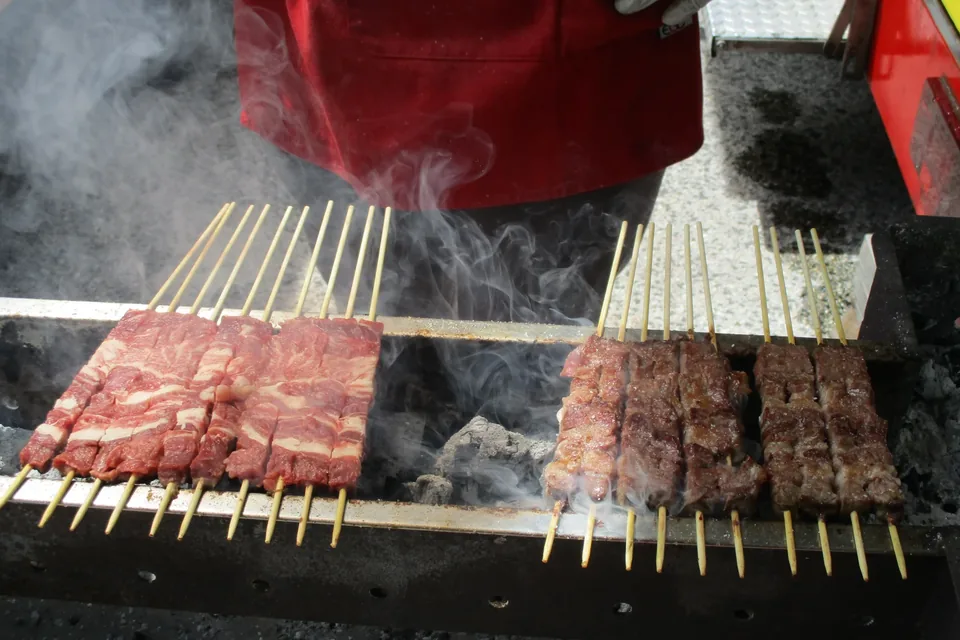
The cooking of the L’Aquila mountains is built on mutton and lamb, soups and cheeses: arrosticini, mutton slowly simmered in the local cottora style, and Canestrato di Castel del Monte. To drink there is Montepulciano d’Abruzzo and Cerasuolo d’Abruzzo, made from the same grape with brief contact between must and skins.
Sources: Italia.it — Abruzzo, prodotti e piatti tipici · Italia.it — Lo zafferano abruzzese · Fondazione Slow Food — Presidio Fagioli di Paganica · Fondazione Slow Food — Presidio Cipolla di Bagno
Things to do
In the city the richest experience is walking the centre slowly, stepping into the churches, the Forte Spagnolo and the museums, and looking out for a concert: L’Aquila is a university city and home to the Orchestra Sinfonica Abruzzese, and the Auditorium del Parco hosts a programme of music and talks.
Outside the city the Gran Sasso and Monti della Laga National Park begins. Its routes suit every level: from easy paths through woods and villages to climbs for experienced hikers, up to natural climbing crags and routes on the Gran Sasso walls. There are mountain-bike trails and the Ippovia del Gran Sasso, almost five hundred kilometres of riding routes, some of which may only be tackled with a guide.
Campo Imperatore, the plateau stretching about twenty-seven kilometres between 1,600 and 2,100 metres, is the most spectacular destination. In summer you walk towards Corno Grande, the glacial lake of Pietranzoni or the church of the Madonna della Neve; in winter there is skiing and snowshoeing. Up there you also find a botanical garden and the Abruzzo Astronomical Observatory. The park also offers guided visits and courses, birdwatching among them: it is worth asking at its information points before setting out.
Sources: Italia.it — L’Aquila · Italia.it — Parco Nazionale del Gran Sasso e Monti della Laga · Italia.it — Campo Imperatore
When to go
The most intense moment of the year is late August, with the Celestinian Forgiveness. The rite begins with the lighting of the Fire of Morrone, which is carried down the valley in a candlelit procession and passes through twenty-three villages: in each one a tripod is lit and the mayor signs a parchment recalling the values of the bull. On 23 August, in L’Aquila, the last tripod is lit and a parade of about a thousand people in costume moves through the city with drums, clarions and flag-wavers, around three figures that stand for hospitality, solidarity and peace. During the celebration the Holy Door of Collemaggio is opened.
Autumn is saffron season: the fields of the Navelli plateau turn violet and the harvest, usually at the end of October, happens early in the morning, before the sun opens the flowers.
Winter brings snow to the Gran Sasso and skiing at Campo Imperatore; spring and summer are ideal for walking on the plateaus, when the meadows of Campo Imperatore fill with flowers and with grazing flocks and herds. At altitude the weather changes quickly in every season, and this needs to be considered when planning hikes.
Sources: UNESCO — Celestinian forgiveness celebration · Italia.it — L’Aquila · Italia.it — Lo zafferano abruzzese · Italia.it — Campo Imperatore
Getting there and around
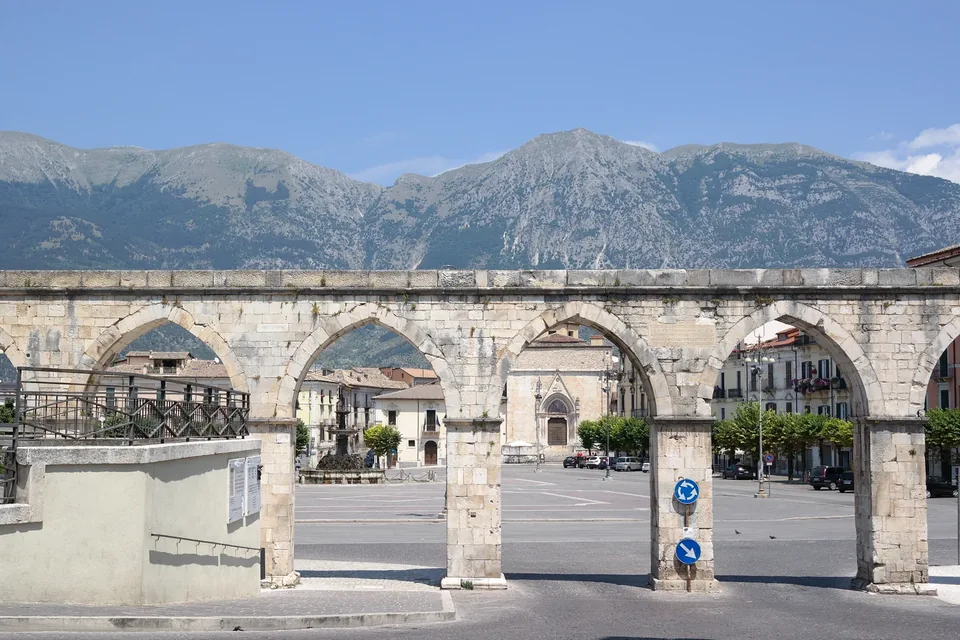
L’Aquila has a railway station on the RFI network, with four tracks for passenger trains, a ticket office and waiting facilities. The station offers assistance for people with disabilities and reduced mobility, to be booked in advance through RFI’s Sale Blu (the reference office is Ancona). For journey options it is best to check the official Trenitalia and RFI channels.
By road, TUA, the regional transport company of Abruzzo, runs commercial coach services between L’Aquila and Rome, as well as the network of intercity lines linking the capital to the villages of the province. Timetables change between the school season and summer and should be checked on the company’s website.
To go up to the Gran Sasso the reference point is Fonte Cerreto, part of Assergi, about three kilometres from the Assergi exit of the A24 motorway. The cable car to Campo Imperatore starts here, and here the park has opened a visitor centre with a welcome desk. To explore mountain villages such as Santo Stefano di Sessanio or Castel del Monte a car remains the most practical option, not least for the freedom to stop along the way.
Sources: RFI — Stazione di L’Aquila · TUA Abruzzo — Linee da e per Roma · Parco Nazionale del Gran Sasso e Monti della Laga — Centro Visita di Fonte Cerreto di Assergi · Italia.it — Campo Imperatore
Where to stay
Travellers who want to live the city stay in L’Aquila itself: it is the most convenient base for museums, concerts and the days of the Perdonanza, when it pays to book well in advance.
Those who prefer the mountains will find a very varied offer within the Gran Sasso park. The Park Authority describes accommodation ranging from hotels to agriturismi, from bed and breakfasts to rooms in private homes, up to scattered hotels and flats in the historic centres of the villages. There are also hostels, mountain huts and campsites; some facilities were built by the Park Authority itself and are run under concession, such as the guesthouse in the convent of San Colombo at Barisciano, which houses the Apennine Floristic Research Centre and the Botanical Garden.
A formula that works well is to split the stay: a few nights in the city and a few in a village on the plateau, where evenings are quiet and the trails start at the door. Apulica selects accommodation case by case and does not promise availability in advance.
Sources: Parco Nazionale del Gran Sasso e Monti della Laga — Ricettività e strutture di visita · Italia.it — Parco Nazionale del Gran Sasso e Monti della Laga · Italia.it — L’Aquila
Nearby
South-east of the city opens the L’Aquila side of the Gran Sasso, with the villages of the old Barony of Carapelle: Santo Stefano di Sessanio, marked by the Medici and by its lentil, Rocca Calascio, the highest fortification in Abruzzo, Castelvecchio Calvisio and Castel del Monte, home of Canestrato cheese. These places are tied to transhumance and to the wool route that linked Florence with Naples.
To the south, the Navelli plateau is saffron country. Along the way, at San Pio delle Camere and Camere, you can still see the pajare, stone shelters resembling small trulli where shepherds took cover. Further on lie Capestrano, where the famous Warrior was found, and the Tirino valley, one of the rivers with the clearest water in Europe, also good for canoeing.
To the north, in the upper Aterno valley, Lake Campotosto is the largest artificial lake in Abruzzo: it lies above 1,300 metres, is protected by a State nature reserve and lends itself to fishing, canoeing and cycle touring. Within the park, the Abetina di Cortino, with the red deer wildlife area at its edge, rounds off a programme of several days.
Sources: Italia.it — Il Gran Sasso e la Baronia di Carapelle · Italia.it — Lo zafferano abruzzese · Italia.it — Riserva Naturale Lago di Campotosto · Italia.it — Parco Nazionale del Gran Sasso e Monti della Laga
Local tourist information
Local tourist offices help with opening times, events and transport on the day.
- Centro Visita e Show Room dei Prodotti Tipici di Fonte Cerreto di Assergi (Parco Nazionale del Gran Sasso e Monti della Laga) · S.S. 17 bis, km 21+570, ex Casa Cantoniera, Fonte Cerreto di Assergi, 67100 L’Aquila (AQ) · Official website
Source: Parco Nazionale del Gran Sasso e Monti della Laga — Centro Visita di Fonte Cerreto di Assergi · checked on
Where to stay
In the municipality of L'Aquila the national database of the Ministry of Tourism lists 545 accommodation businesses with a verified CIN code: 23 hotels, 84 other licensed accommodation and 438 other types such as B&Bs and private rentals.
Sources: Ministero del Turismo – Banca Dati Strutture Ricettive (dashboard pubblica), 2026-10-12
YOUR JOURNEY
How to shape a journey here
A day in the city, ideally in late August for the Perdonanza, and a second towards Santo Stefano di Sessanio and the Gran Sasso. Visits to be arranged with local operators.
Talk to us about it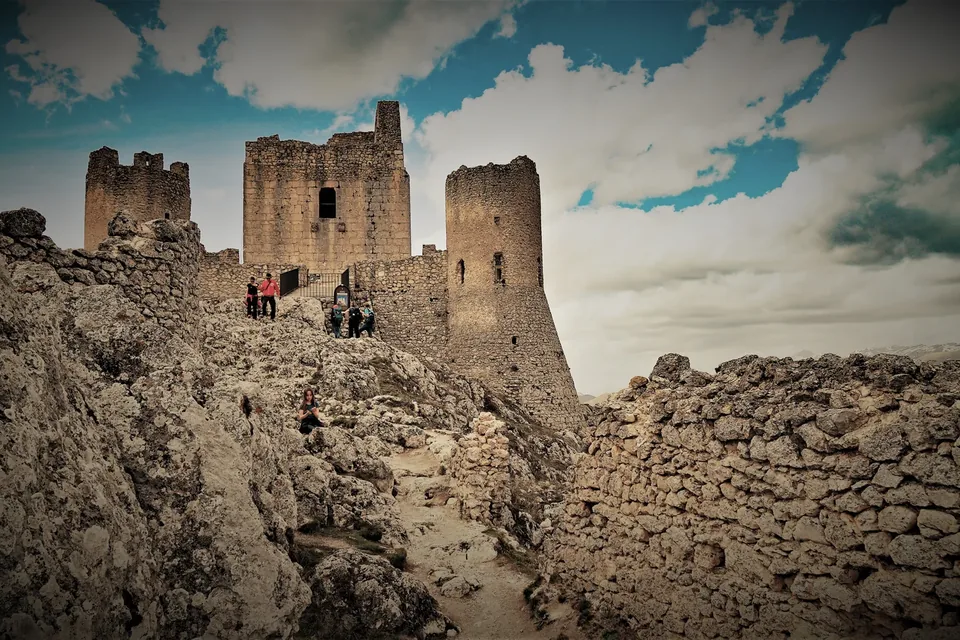

.jpg)

