
What they are
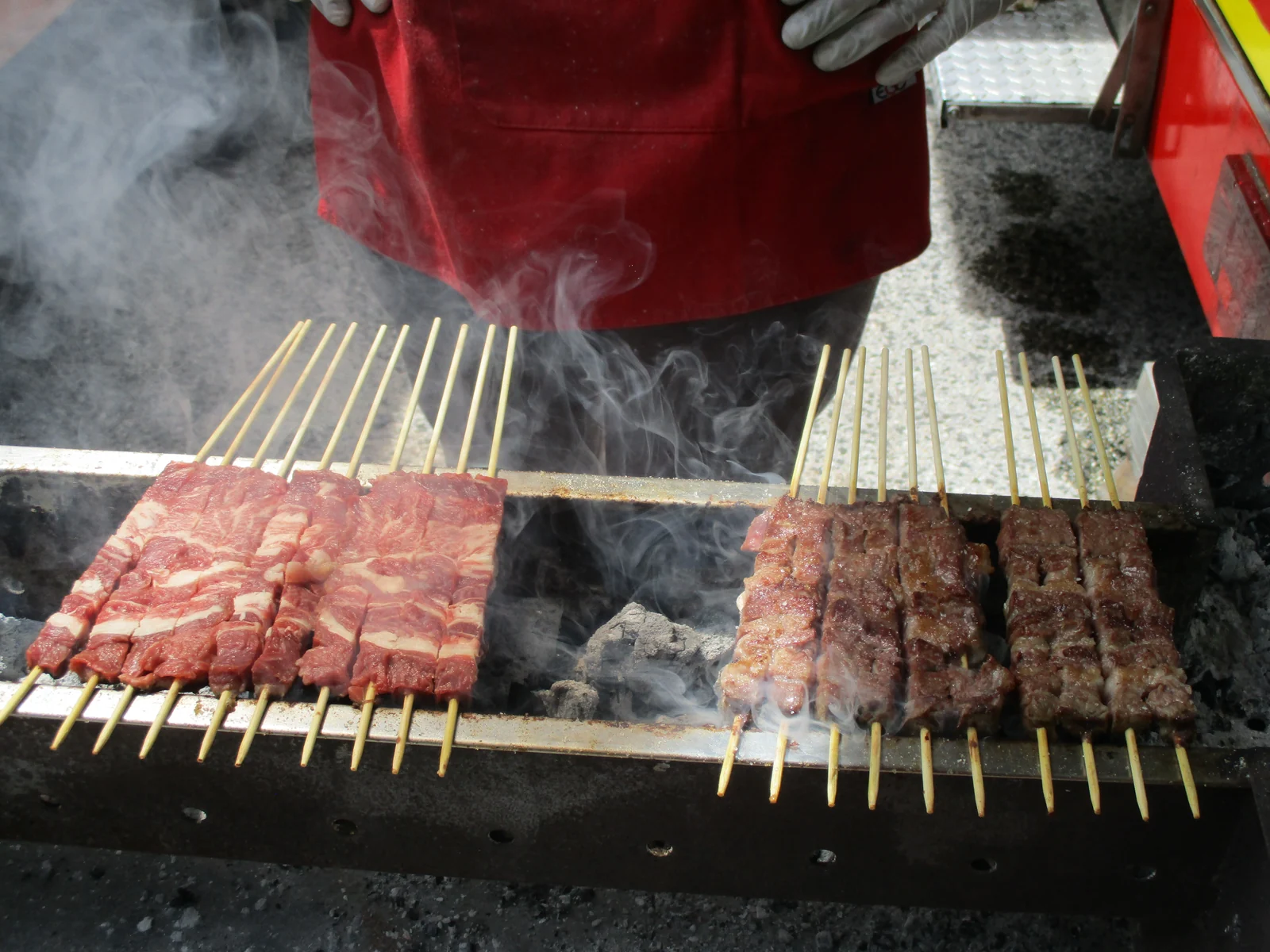
Italia.it explains that arrosticini were originally called rustell', rustelle or arrustelle. They are small cubes of meat, about one centimetre per side, threaded onto a wooden skewer called li cippe or li cippitill, at most 20 centimetres long. They began with mutton or wether meat, about a quarter of it fat: fat, the same source stresses, is the constant that gives tenderness and flavour in every variant. Each skewer weighs 20 or 30 grams and the meat ranges from light to deep red depending on the animal's age. Today, alongside the sheep version, there are turkey, chicken and pork arrosticini, and liver ones, called di fect, where each piece alternates with a bay leaf or a slice of onion to soften the taste.
Sources: Italia.it — Arrosticini abruzzesi
From ageing to the canala
Preparation starts right after slaughter: the meat is aged and left to acidify in a cold room, or in winter in cold spaces, for a period italia.it gives as 3 to 7 days. Then it is cut and threaded. It may be flavoured with natural aromatics such as onion, chilli or sage. The best cooking is still over wood embers, on a long, narrow grill that in many areas is called canala, because it recalls the shape of a gutter. While cooking, the meat is basted with oil mixed with vinegar and salt, brushed on with sprigs of rosemary. Arrosticini are eaten hot, with lu pane 'onde, toasted bread dressed with extra virgin olive oil and salt. The Gran Sasso National Park also describes cooking on canalette, grills designed for these small morsels.
Sources: Italia.it — Arrosticini abruzzesi · Parco nazionale del Gran Sasso e Monti della Laga — I trappeti delle Abbazie
Origins disputed between Teramo and Pescara
There are several, often conflicting accounts of the origin, and italia.it says so openly: the provinces of Teramo and Pescara both claim it. What seems certain is the link to the eating habits of shepherds living among the valleys and peaks of the Gran Sasso, especially in the area stretching from the Voltigno plain, at Villa Celiera, to the border between the provinces of L'Aquila, Teramo and Pescara. A popular story, reported as such, says that in 1830 two Voltigno shepherds cut up the meat of an old ewe, threaded it onto sticks and cooked it over embers improvised with pieces of a gutter. Italia.it also recalls a 1930 photograph taken in Civitaquana by two Swiss anthropologists, showing mutton cooked on olive or dogwood twigs between two rows of bricks.
Sources: Italia.it — Arrosticini abruzzesi
Traditional product and the road to protection
Arrosticini are entered in the national list of traditional food products: in the list published by the Abruzzo Region they appear among fresh meats and their preparations, alongside pecora alla callara. As of today, however, they have no designation of origin. In October 2024 the Regional Council's agriculture committee unanimously approved a resolution committing the President and the regional government to support PDO and PGI certification for the Arrosticino d'Abruzzo. The text notes that the product is made almost everywhere in the region, that imitations made with imported meat are on the market and that EU protection could give new strength to sheep farming and mountain pastures. It also calls for more resources for sheep farming. This is a political commitment, not a recognition already granted.
Sources: Regione Abruzzo — Elenco dei prodotti agroalimentari tradizionali dell'Abruzzo · Consiglio regionale dell'Abruzzo — Risoluzione n. 2/2024, Riconoscimento DOP e IGP Arrosticino abruzzese (BURA 30/10/2024)
The landscape that explains the dish
To understand arrosticini, head up to where flocks still graze. The Gran Sasso National Park, in its Abbeys' oil mills itinerary, starts at Castiglione a Casauria and the abbey of San Clemente, crosses the olive hills of Pescosansonesco and Corvara, climbs to Brittoli, gateway to the Voltigno and Val d'Angri plains where sheep and cattle graze, and reaches Carpineto della Nora, which the Park calls the home of mutton arrosticini. The same route continues to Farindola and its pecorino. On the L'Aquila side, italia.it describes Campo Imperatore, the little Tibet: a 27-kilometre plateau between 1,600 and 2,100 metres, with Lake Pietranzoni, the botanical garden, the astronomical observatory and, in the Fonte Vetica area, the monument to the shepherd. This is where the dish finds its context.
Sources: Parco nazionale del Gran Sasso e Monti della Laga — I trappeti delle Abbazie · Italia.it — Campo Imperatore
Festivals and gatherings
Italia.it notes that arrosticini star in many festivals across the region, mostly in summer, in July and August. It mentions the travelling Arrostiland event and the Arrosticinitreffen motorcycle rally at Fonte Vetica, with a night under canvas at about two thousand metres. In autumn Civitaquana hosts Arrosticciere in piazza, a re-enactment of the dish's origins with period crafts, folk shows and primitive cooking; the name comes from the 1930 photograph that became the cover of the book Gli Abruzzi dei contadini. The same source mentions the Degustando nel borgo event, where a ten-metre arrosticino was once made. Dates change every year and the source does not give them: check with the towns and organisers before travelling.
Sources: Italia.it — Arrosticini abruzzesi
From mountain to sea in one day
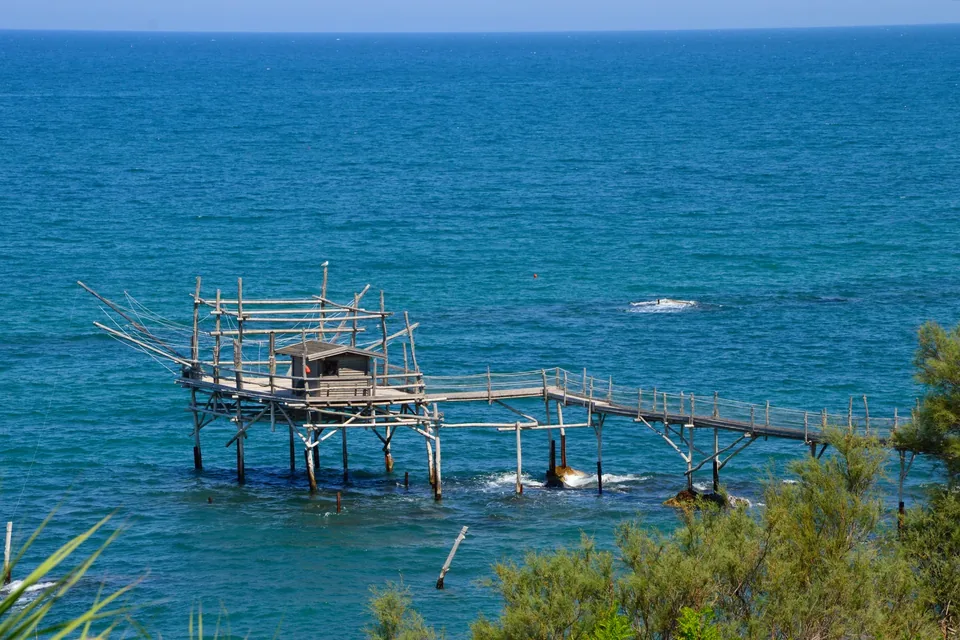
Italia.it uses arrosticini to describe the twin soul of Abruzzo cooking: in the morning you can be near the Gran Sasso eating arrosticini or pecora alla callara, called pecora alla cottora around L'Aquila, and in under two hours reach the coast for a fish brodetto, called vrudott in Giulianova, vrudett around Pescara and vrudàtte in Vasto. The same page recalls that the region combines mutton, soups, cheeses and mountain herbs with 130 kilometres of coastline. For pairing, the arrosticini page suggests a Montepulciano d'Abruzzo, the region's most widespread red. It is also a useful way to build a trip: one day up high among pastures and embers, the next by the sea.
Sources: Italia.it — Prodotti e piatti tipici abruzzesi · Italia.it — Arrosticini abruzzesi
How to order and taste them
Arrosticini are ordered by the dozen and often arrive in a container that keeps them warm: ask for a few at a time, because they are at their best only while the fat is still soft. Taste the first one plain, to feel the meat and the smoke of the embers; then with the dressed bread, which soaks up oil and juices. If the menu allows, compare mutton with lamb or wether, and leave the liver ones, stronger in flavour, for last. A simple salad or seasonal vegetables balance the meal. Ask where the meat comes from: it is the very question the Region raises when it talks about imitations, and the answer says a lot about the place. Cooked outdoors and shared, they are at their best.
Taking them home
Arrosticini are a dish to eat on the spot rather than a souvenir: fresh meat needs a cold chain and must be cooked straight away. If you want to make them at home, bring back the experience rather than the product: note the size of the cubes, the balance of lean and fat and how the embers are managed, and ask a trusted butcher for well-sourced sheep meat. A narrow grill, well-lit wood or charcoal and a few minutes' cooking are enough. From the trip you can instead bring back what goes with them: a Montepulciano d'Abruzzo, a local oil for the bread, a mountain pecorino. They keep well and, at the table, recall the same day up in the mountains.
A thread for your journey
Journey idea: a day at Campo Imperatore among pastures, Lake Pietranzoni and Fonte Vetica, with arrosticini cooked on the canala after the walk; the next day down to the coast for a brodetto, following italia.it's idea of an Abruzzo of mountains and sea. Visits to farms and workshops arranged with operators.
Talk to us


.jpg)
