APULICA / Food guides
Montepulciano d'Abruzzo: the red of the hills, from the Gran Sasso to the Adriatic
Montepulciano d'Abruzzo is the wine that, more than any other, stands for the region: a deeply coloured red made from a grape of the same name that covers much of Abruzzo's vineyards, from the hills near the sea to the inland plateaus. Not to be confused with Tuscany's Vino Nobile di Montepulciano, which is something else entirely, it is named after the grape rather than a town. The same grape also gives Cerasuolo d'Abruzzo, a cherry-coloured rosé, and the Colline Teramane DOCG. This guide explains the rules of the designations, the history of Abruzzo winegrowing, the landscapes to travel through and how to pair it with mountain and coastal cooking.
A grape that is the region
The Abruzzo Wine Protection Consortium describes Montepulciano as one of Italy's great red grapes and the most widespread in the region: it makes up more than half of Abruzzo's vine base and is grown on about 17,000 hectares. According to the same source its presence in Abruzzo is documented from the mid-18th century, but local winegrowing is far older: Ovid and Polybius are among those who attest to vines in the region in antiquity. Until the Renaissance cultivation was concentrated mainly in the Peligna valley, in the province of L'Aquila; later, especially in recent decades, it shifted towards the more suitable coastal hills. Today the productive heart is the province of Chieti. The most common training system is still the Abruzzo pergola, while new plantings mostly use rows.
The rules of the designation
The Qualigeo profile states that the Montepulciano d'Abruzzo designation covers only the Red type, made in many towns in the provinces of Chieti, L'Aquila, Pescara and Teramo. At least 85 per cent of the grapes must be Montepulciano; the rest may come from other non-aromatic red varieties approved in Abruzzo. The Consortium adds that vineyards must be on hill or plateau land and that this designation alone accounts for over 80 per cent of the region's designated wines. The wine is deep ruby with violet glints, turning garnet with age; the nose is floral and fruity, with red fruit and spicy notes; the palate is full and slightly tannic. It cannot be released before 1 February of the year after the harvest.
Sources: Qualigeo — Montepulciano d'Abruzzo DOP · Consorzio Tutela Vini d'Abruzzo — Il Consorzio
Nine subzones, nine landscapes
Qualigeo lists nine geographical sub-designations that may accompany the name, each with its own rules. Some concern the inland L'Aquila area: Terre dei Peligni, with at least 95 per cent Montepulciano and a minimum of 24 months' ageing, at least nine in wood; Alto Tirino, also 95 per cent, with at least 12 months; and Terre Aquilane or Terre de L'Aquila. Around Pescara there are Casauria or Terre di Casauria, made from Montepulciano alone with at least 18 months' ageing, Terre dei Vestini and Colline Pescaresi. Around Chieti are Teate, Terre di Chieti and San Martino sulla Marruccina. Note the updates, though: the ministry's list of PDO wines now records Casauria as a separate DOCG designation, alongside Colline Teramane Montepulciano d'Abruzzo DOCG. For travellers the subzones are a handy map: reading them on the label links the glass to a specific valley, from the Sulmona basin to the hills near the sea.
Sources: Qualigeo — Montepulciano d'Abruzzo DOP · Masaf — Elenco alfabetico dei vini DOP italiani
Cerasuolo d'Abruzzo, the rosé
The same grape gives Cerasuolo d'Abruzzo, now a designation in its own right. According to Qualigeo, Montepulciano must make up at least 85 per cent; the wine is a more or less deep cherry pink, with a vinous, fruity nose and a dry, soft palate, sometimes with an almond finish. The colour comes from white-style vinification or brief contact between must and skins: the Consortium speaks of a few hours of fermentation on the skins. Cerasuolo cannot be released before 1 December of the harvest year; the Superiore version, tied to a subzone, needs at least five months' maturation and is not released before 1 April of the following year. Italia.it presents it as the wine for both land and sea dishes, citing mussels with saffron.
Sources: Qualigeo — Cerasuolo d'Abruzzo DOP · Consorzio Tutela Vini d'Abruzzo — Il Consorzio · Italia.it — Prodotti e piatti tipici abruzzesi
The Colline Teramane DOCG
In the province of Teramo, Montepulciano also has a controlled and guaranteed designation. The Consortium explains that Montepulciano d'Abruzzo Colline Teramane DOCG is reserved for still reds from at least 90 per cent Montepulciano and at most 10 per cent Sangiovese, grown on a band of coastal and inland hills that, in the centre-north, reaches the foot of the Gran Sasso and the Monti della Laga. The wine must age at least one year, including two months in bottle; the Riserva at least three years, one in wooden casks. It is deep ruby, turning garnet over time, with red fruit aromas and a dry, velvety palate. According to the same source the DOCG applies from the 2003 vintage. Also in the Teramo area, five towns of the upper Teramano make up the Controguerra DOC.
Sources: Consorzio Tutela Vini d'Abruzzo — Il Consorzio · Consorzio Tutela Vini d'Abruzzo — Territorio
A wine route in the Tirino valley
The Gran Sasso National Park suggests a food and wine route that shows Montepulciano in a mountain landscape. It starts in Bussi sul Tirino, where trout and freshwater crayfish farming is still active, and climbs to Capestrano, with its castle, the church of San Giovanni and, by the river, the church of San Pietro ad Oratorium. The slopes of Capestrano and the facing hills are planted with vines, mainly Montepulciano, Trebbiano, Pecorino and Passerina. Along the way you also meet Solina soft wheat, spelt and the pulses of the Abruzzo mountains. The route continues through the countryside of Ofena, which the Park calls the Forno d'Abruzzo, among vineyards and wineries, then towards Forca di Penne. The area matches the Alto Tirino subzone.
Sources: Parco nazionale del Gran Sasso e Monti della Laga — Acque cristalline e vini di montagna · Qualigeo — Montepulciano d'Abruzzo DOP
At the table: Abruzzo pairings
Young, fruity Montepulciano d'Abruzzo is the natural partner for arrosticini, mixed-meat sauces and maccheroni alla chitarra; the long-aged versions and Riservas make more sense with pecora alla callara, stews and aged mountain cheeses. Cerasuolo is the most versatile: with a fish brodetto, mussels with saffron or cured meats, served cool but not ice-cold. A practical tip: at a single dinner you can make a small comparison, opening first a Cerasuolo, then a young Montepulciano and finally one with a subzone or a DOCG. You immediately see how the same grape changes with time, wood and place. When buying, reading the designation and subzone on the label helps more than any tasting note.
When to go and how to visit wineries
The Montepulciano harvest is late and usually falls in autumn: September and October are when the hills show the work in the vineyards, but also the busiest months for growers. Spring, with budding vines and long days, is often the best time for a calm visit. Wineries should always be contacted in advance: visits and tastings must be arranged with operators, and small mountain estates keep no fixed hours. Alternate a day inland, between the Tirino and Peligna valleys, with one in the hills near the sea, to feel the difference in altitude and climate. Do not drive after tastings: distances in Abruzzo are short but hill roads need care.
The consortium and controls
The Abruzzo Wine Protection Consortium is a non-profit association made up of those in the control system: growers, winemakers and bottlers. Its statute was approved by ministerial decree on 4 June 2012. Besides Montepulciano d'Abruzzo it protects the Abruzzo DOC, created to promote native grapes such as Pecorino and Passerina, Trebbiano d'Abruzzo, Cerasuolo d'Abruzzo and the Villamagna DOC, as well as several typical geographical indications. The Consortium chose the eagle as its symbol and notes that more than 30 per cent of the region is protected by three national parks, a regional park and around ten reserves. It carries out surveillance mainly at the trade stage, defending the designations against imitation and misuse, while compliance with the specifications is checked by bodies recognised by the Ministry.
Sources: Consorzio Tutela Vini d'Abruzzo — Il Consorzio · Consorzio Tutela Vini d'Abruzzo — Vini tutelati
A thread for your journey
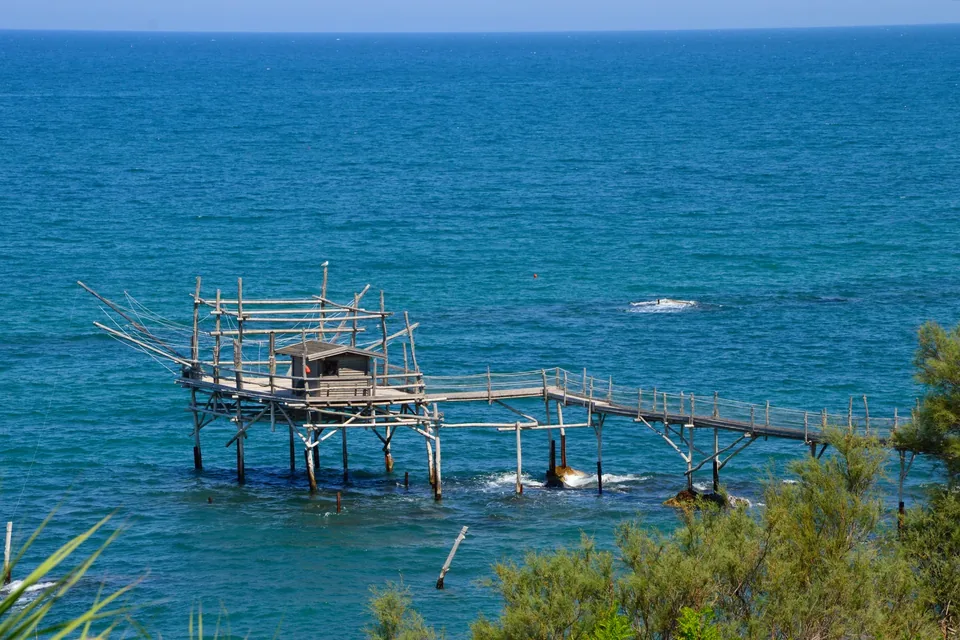
Journey idea: one day in the Tirino valley, from Bussi to Capestrano and Ofena among mountain vineyards and San Pietro ad Oratorium; a second day in Sulmona, in the Peligna valley where Abruzzo winegrowing has ancient roots; a third in the Chieti hills towards the Trabocchi Coast, with a Cerasuolo beside a seafood dish. Winery visits and tastings arranged with operators.
Talk to us