APULICA / WINES
Montepulciano d'Abruzzo
DOC · DOCG · Wines · Abruzzo
In brief
- A red wine made in many municipalities across Abruzzo's four provinces: Chieti, L'Aquila, Pescara and Teramo. (Qualigeo (Fondazione Qualivita) — Montepulciano d'Abruzzo DOP)
- At least 85% of the grapes are Montepulciano; the rest may be other non-aromatic red varieties approved in Abruzzo. (Qualigeo (Fondazione Qualivita) — Montepulciano d'Abruzzo DOP)
- It may not be sold before 1 February of the year after the harvest, and may carry one of the eight geographical sub-zones listed in article 1 of the specification consolidated by the ministerial decree of 15 September 2026. (Qualigeo (Fondazione Qualivita) — Montepulciano d'Abruzzo DOP · Masaf — Disciplinare Montepulciano d'Abruzzo DOC consolidato, decreto 15 settembre 2026 · Gazzetta Ufficiale n. 221 del 23 settembre 2026 — Decreto 15 settembre 2026, modifica del disciplinare Montepulciano d'Abruzzo)
- In the Teramo area Montepulciano also has a separate DOCG, Colline Teramane Montepulciano d'Abruzzo, entered separately in the EU register. (eAmbrosia — Colline Teramane Montepulciano d’Abruzzo (PDO-IT-A0876))
History and origin
Wine in Abruzzo has a long history: the Abruzzo wine consortium recalls references by ancient authors, from Polybius to Ovid. Until the Renaissance the vineyards were concentrated mainly in the Valle Peligna, in the L'Aquila area; after the unification of Italy winegrowing changed quickly, and in recent decades it has specialised and shifted to the best-suited hills, those near the sea.
Montepulciano has been firmly documented in Abruzzo since the mid-eighteenth century. Today it is the region's most widely grown grape: it accounts for more than half of the planted varieties, covers about seventeen thousand hectares and has made up most new plantings in recent years.
Montepulciano d'Abruzzo is a designation of origin entered in the European register and protected by the consortium together with the region's other DOC wines. In the Teramo hills the grape also has a separate designation, Colline Teramane Montepulciano d'Abruzzo, entitled to DOCG status since the 2003 vintage.
Sources: Consorzio Tutela Vini d'Abruzzo — Il territorio · Consorzio Tutela Vini d'Abruzzo — Vini tutelati · eAmbrosia — Montepulciano d'Abruzzo (PDO-IT-A0723) · eAmbrosia — Colline Teramane Montepulciano d’Abruzzo (PDO-IT-A0876)
Area and method of production
Montepulciano d'Abruzzo is red only and is made in many municipalities in the provinces of Chieti, L'Aquila, Pescara and Teramo. At least 85% of the grapes are Montepulciano; the rest may come from other non-aromatic red varieties allowed in Abruzzo. The wine may not be sold before 1 February of the year after the harvest.
Since 2026 the designation has eight sub-zones, each with its own annex and its own rules: Terre dei Vestini, Alto Tirino, Terre dei Peligni, Teate, Terre di Chieti, Terre Aquilane or Terre de L'Aquila, Colline Pescaresi and San Martino sulla Marrucina. In these versions the share of Montepulciano rises to 90-95% and ageing is longer: Terre dei Vestini, for example, needs at least eighteen months, nine of them in wood, plus three months in bottle, which for the Riserva become at least twenty-four months, still with nine in wood, and six months in bottle. Casauria or Terre di Casauria, a sub-zone since 2006, is no longer one of them: in November 2025 Implementing Regulation (EU) 2025/2261 entered Casauria in the EU register as a designation in its own right, the ministry's list of PDO wines records it as a DOCG, and the ministerial decree of 15 September 2026, published in the Italian Official Gazette on 23 September, removed it from the list of sub-zones.
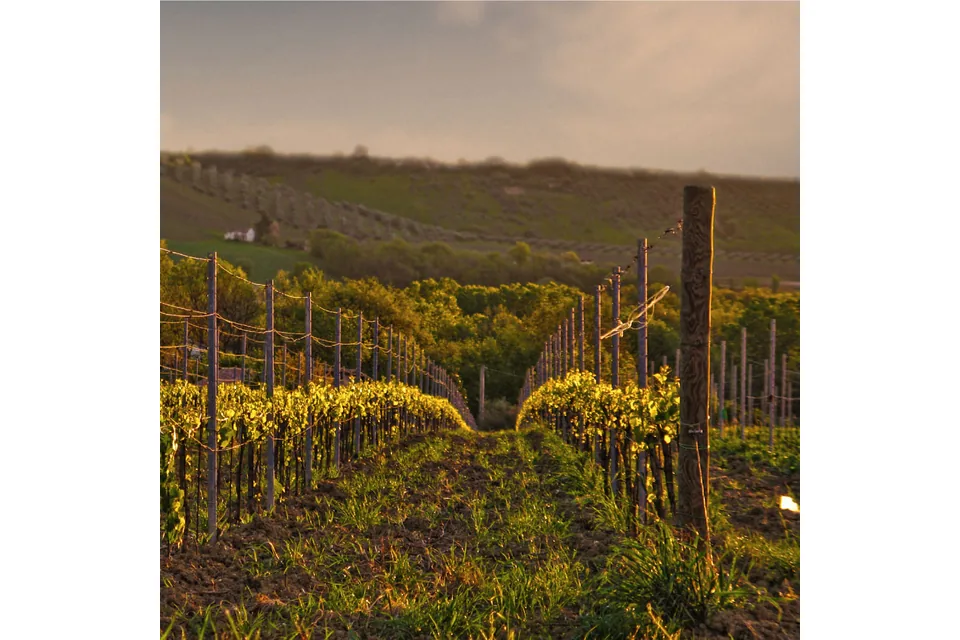
Most vineyards use the pergola abruzzese training system, while new plantings mostly use rows.
Sources: Qualigeo (Fondazione Qualivita) — Montepulciano d'Abruzzo DOP · Consorzio Tutela Vini d'Abruzzo — Il territorio · Masaf — Disciplinare Montepulciano d'Abruzzo DOC consolidato, decreto 15 settembre 2026 · Gazzetta Ufficiale n. 221 del 23 settembre 2026 — Decreto 15 settembre 2026, modifica del disciplinare Montepulciano d'Abruzzo · Masaf — Elenco alfabetico dei vini DOP italiani
How to recognise it
In the glass Montepulciano d'Abruzzo is a deep ruby red, with light violet tints when young, turning towards garnet with age.
The nose is intense, ethereal, floral and fruity, with hints of red berries and spice. On the palate it is full, balanced and slightly tannic.
The basic version is ready from 1 February after the harvest. The sub-zones add the place of origin to the name and often a longer maturation: the Riserva versions of Terre dei Vestini, Teate or Terre dei Peligni spend at least nine months in wooden vessels and stay in the cellar for two years or more before reaching the table. Casauria, once a sub-zone, is now a DOCG in its own right, with its own specification.
Sources: Qualigeo (Fondazione Qualivita) — Montepulciano d'Abruzzo DOP · Masaf — Disciplinare Montepulciano d'Abruzzo DOC consolidato, decreto 15 settembre 2026 · Masaf — Elenco alfabetico dei vini DOP italiani
Where to taste it
Montepulciano is grown throughout the region, but most of Abruzzo's vineyards are on the hills of the province of Chieti, about three quarters of the total; Pescara and Teramo follow, then L'Aquila. Many grapes go to co-operative wineries, alongside numerous private estates that bottle under their own name.
The consortium gathers visiting options in Abruzzo Wine Experience: itineraries, cellar experiences and tastings, and more than two hundred places of taste and sites of historical, artistic, cultural and natural interest.
The names of the sub-zones are already an itinerary: from Teate around Chieti to the Terre dei Peligni in the Sulmona valley, from the Colline Pescaresi to the Terre dei Vestini in the Pescara area, where Casauria is now a DOCG in its own right. In the Teramo area the hills of the Colline Teramane DOCG complete the journey through the region's red wines.
Sources: Consorzio Tutela Vini d'Abruzzo — Il territorio · Consorzio Tutela Vini d'Abruzzo — Enoturismo, Abruzzo Wine Experience · eAmbrosia — Colline Teramane Montepulciano d’Abruzzo (PDO-IT-A0876) · Masaf — Disciplinare Montepulciano d'Abruzzo DOC consolidato, decreto 15 settembre 2026 · Masaf — Elenco alfabetico dei vini DOP italiani
Protection
- DOC, PDO wine — PDO-IT-A0723 (eAmbrosia — Montepulciano d'Abruzzo (PDO-IT-A0723))
- DOCG, PDO wine — PDO-IT-A0876 (eAmbrosia — Colline Teramane Montepulciano d’Abruzzo (PDO-IT-A0876))
When
- The sources consulted give no months.
Where
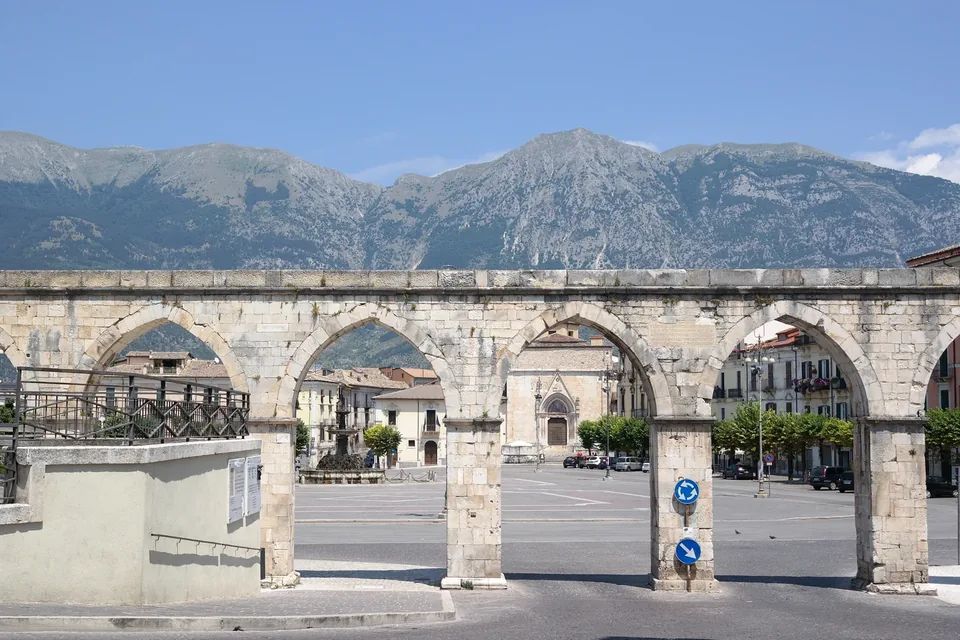
Sulmona and the Majella
A historic centre in the Peligna basin, surrounded by the Majella park and the starting point of the Way of Celestine.
Read the guide →Photo: Luca Aless / Wikimedia Commons — CC BY-SA 4.0 · Resized and converted to WebP.
In Bottega
Montepulciano d'Abruzzo has its own page in Bottega Apulica, the space on apulica.eu for typical products: there you find its story, its protection, the production areas and the producers where they are already listed. Purchases are not open yet: the page shows what will be on sale at opening.
Read more
Montepulciano d'Abruzzo
The grape that dominates Abruzzo's vineyards, its subzones, the Cerasuolo rosé and the Colline Teramane DOCG: rules, history and a wine route between the Tirino and Peligna valleys.
Read the guide →