The town of Ovid and confetti
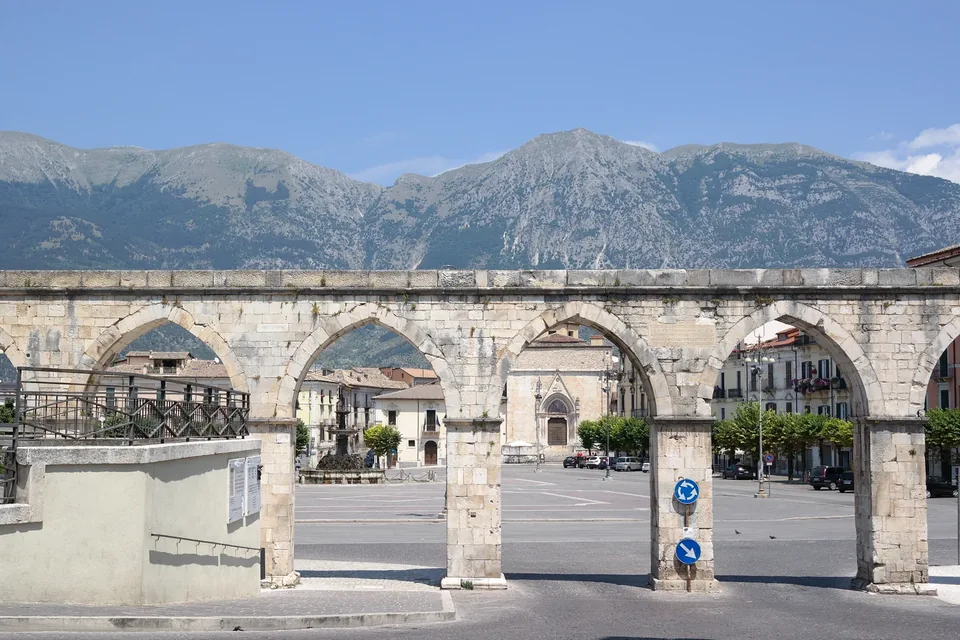
Italia.it presents Sulmona as the birthplace of the poet Ovid and as a place whose name is now inseparable from confetti, from recipes with red garlic and from rites such as the Madonna che scappa. The historic centre stands on a plateau in the heart of the Peligna basin, surrounded by the Majella National Park. Highlights include the church of San Filippo Neri on Piazza Garibaldi with the arches of the Swabian aqueduct, the cathedral of San Panfilo, the Sanità and Tabassi palaces, the Santissima Annunziata complex, the Maria Caniglia theatre, the Fontana del Vecchio and the statue of Ovid. You enter through gates such as Porta Romana, Porta Pacentrana, Porta Napoli and Porta Sant'Antonio. It is a town to explore on foot, slowly, window displays included.
Origins: from the late Middle Ages to the factory
The origins of Sulmona's confetti are old, and they are best told in the words of institutional sources. The Museo Pelino page on the Municipality's tourism portal pays tribute to the master confectioners who, from the late Middle Ages onwards, made Sulmona known internationally. The museum itself bears witness to this continuity: its last room recreates an 18th-century workshop with original machinery, a sign that the craft was already an organised trade.
The next leap was technical. The exhibition shows how steam power and then electricity transformed production: the first hot-air convectors and electric motors sharply reduced the long working times. The museum, founded in 1988 and declared a national monument in 1992, is housed in the Art Nouveau building of one of the town's historic factories.
The story of confetti is interwoven with that of the centre. According to the Municipality, the convent building of Santa Chiara now houses the Polo culturale civico diocesano: a stop to pair with the museum to read the religious and civic Sulmona where confectioners have worked for centuries.
Sources: Comune di Sulmona, portale turistico — Museo dell'arte e della tecnologia confettiera · Comune di Sulmona — Polo culturale civico diocesano Santa Chiara
How a confetto is made
A confetto has two parts: a centre and a sugar coating. The tools kept in the Museo Pelino let you follow how it is made. The recreated workshop holds the roaster, the peeler and the slicer, used to prepare the centre, then mills and mortars, the multiple strainers for sugar syrup and the copper bassine, the pans in which the centre receives its coating. The last machine in the series is the polisher, which gives the confetto its smooth, shiny surface.
In glass jars the museum displays the old ingredients used for the centre or the coating: a concrete way to see that confetti have always been a matter of choices and raw materials, not only technique. Over time hot air from the convectors made faster and more even the steps that once required days of manual work.
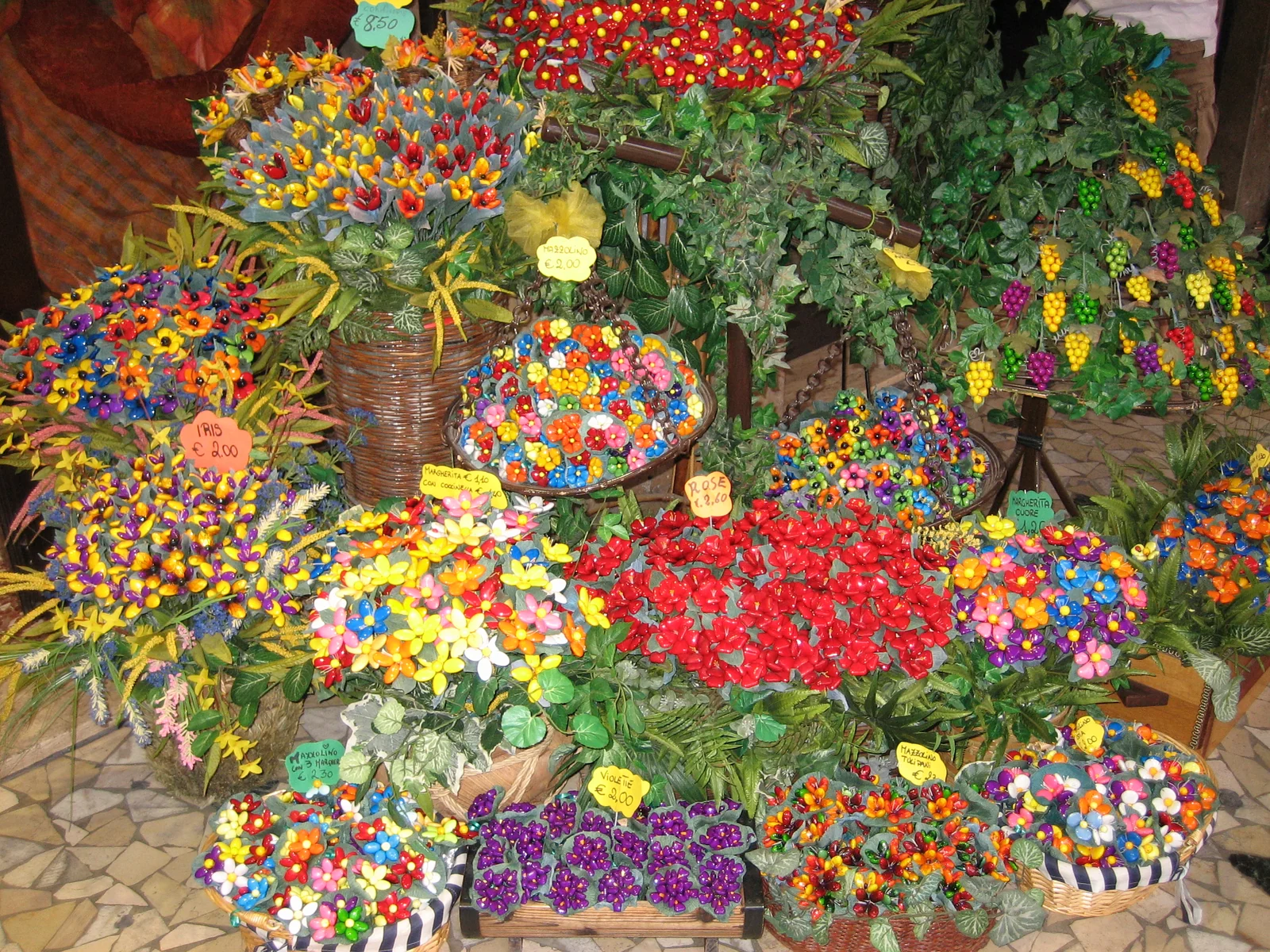
The craft also produced decorative objects: the museum shows a loom for confetti rosaries and artistic compositions made of confetti, alongside a collection of 19th and 20th-century wedding favours. The regional list of traditional products places Confetto di Sulmona among pastry and confectionery products.
Sources: Comune di Sulmona, portale turistico — Museo dell'arte e della tecnologia confettiera · Regione Abruzzo — Elenco dei prodotti agroalimentari tradizionali dell'Abruzzo
A recognised traditional product
Confetto di Sulmona has no EU designation of origin, but it is entered in the national list of traditional food products. In the list published by the Abruzzo Region it appears among fresh pasta, bread, biscuits, pastries and confectionery, alongside other Abruzzo sweets such as cicerchiata. The same list also includes, for the Peligna valley, Sulmona red garlic. Listing as a traditional product recognises long-established methods, but it does not set a binding specification with an area and rules, as PDO and PGI do. For buyers, then, the most useful reference remains the shop: asking which almond is used, how the coating is made and whether the work is done in town helps tell a craft product from a generic one.
Sources: Regione Abruzzo — Elenco dei prodotti agroalimentari tradizionali dell'Abruzzo
The museum of confectionery technology
The Sulmona town council's tourism portal describes the Museum of the Art and Technology of Confectionery, founded in 1988 and declared a national monument in 1992 by the Ministry of Cultural Heritage. It occupies an Art Nouveau building of a historic local factory, over two floors and three rooms. On show are patents, diplomas, a collection of 19th and 20th-century favour boxes, artistic confetti compositions and the frame used to make confetti rosaries. The last room recreates an 18th-century workshop with copper pans, roaster, slicer, peeler, polisher, mills, mortars and strainers for the syrup. The route also shows how steam and later electricity shortened the long processing times. Check opening times and visiting arrangements before going.
Sources: Comune di Sulmona, portale turistico — Museo dell'arte e della tecnologia confettiera
Festivals and events in town
The Sulmona town council documents several events that give a trip a precise date. The Giostra cavalleresca, first recorded in 1484, was once run in the main square, now Piazza Garibaldi; revived in modern form, with riders representing districts in a contest of speed and skill at the rings, it takes place on the last weekend of July, with a historical parade and the race in the square. For the feast of the patron San Panfilo, bishop of Sulmona in the 7th century, the procession carries through the streets the gilded copper and silver reliquary bust made in 1458-1459 by the Sulmona goldsmith Giovanni di Marino di Cicco. Piazza Garibaldi also hosts the Easter procession. We found no official source for a confetti festival with confirmed dates.
Sources: Comune di Sulmona — Giostra cavalleresca · Comune di Sulmona — Festa del santo patrono San Panfilo · Comune di Sulmona — Piazza Garibaldi
Beyond confetti: the red garlic of the Peligna valley
The Sulmona basin also has a very recognisable crop. Italia.it describes Sulmona red garlic as small, slightly spicy and aromatic, with white bulbs and cloves in purple skins; it is listed among Abruzzo's traditional products. It is planted between November and December and harvested between June and July. Kept somewhere cool and dry it lasts a long time, even a year. It is used fresh on bruschetta, in sauces and in spaghetti with garlic, oil and chilli; the flower stalks, called tolle, zolle or crastetelli, are prepared sweet and sour. The same source mentions a dedicated festival on the second weekend of July at Campo di Fano, in the Peligna valley. Combining confetti and red garlic in one trip captures the basin's twin soul, craft and farming.
Sources: Italia.it — L'aglio rosso di Sulmona · Regione Abruzzo — Elenco dei prodotti agroalimentari tradizionali dell'Abruzzo
How to choose and take them home
Confetti are the ideal souvenir: light, sturdy, easy to give. To understand them, taste a classic almond one before any variant: the coating should break cleanly without being rock-hard, and the almond should come through clearly, crunchy and never rancid. Flower compositions are lovely to look at but more fragile to carry: if you like them, ask the shop for travel-proof packaging. For a family or an office, a mixed bag of flavours goes down better than a box of identical ones; for a wedding or anniversary, the colour of the confetti carries a meaning and shops can advise. Avoid strong heat in the car, which can spoil the polish, and keep them somewhere dry.
A thread for your journey
Journey idea: a day in Sulmona entering through Porta Napoli, with Piazza Garibaldi and the Swabian aqueduct, the Santissima Annunziata complex and the museum of confectionery technology; lunch with a red-garlic dish and a confetti tasting in a shop in the afternoon. Travellers in late July can match the visit with the Giostra cavalleresca. Workshop visits arranged with operators.
Talk to us