Why go
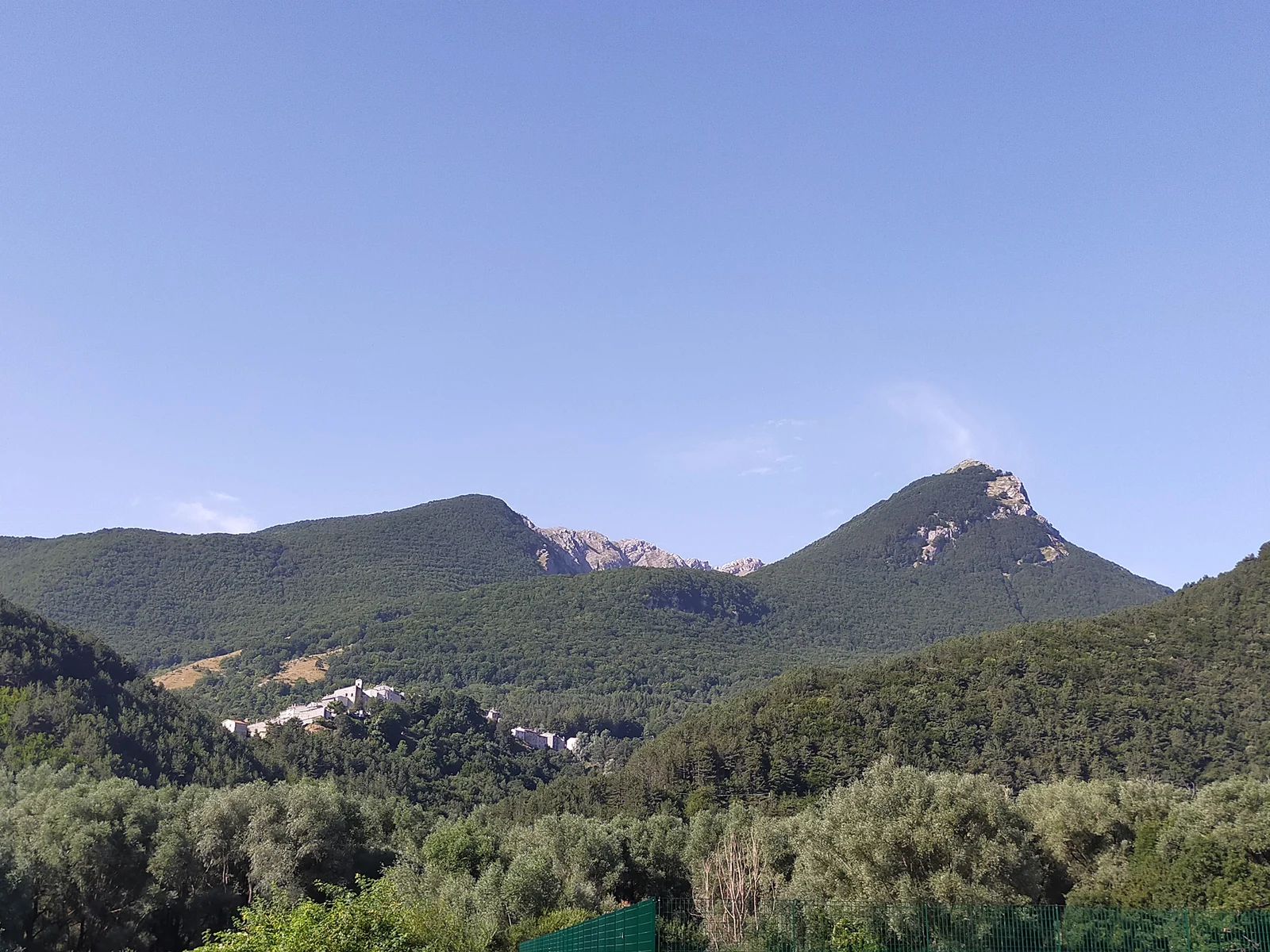
The Abruzzo, Lazio and Molise National Park covers some 50,000 hectares in the heart of the central Apennines, straddling three regions and including 25 municipalities. It is a landscape of mountain ranges between 900 and 2,200 metres, crossed in its central part by the river Sangro, with karst features, streams, beech forests and small stone villages perched above the valleys.
People come here above all for the wildlife. The park is the refuge of the Marsican brown bear, a subspecies found only in central Italy, which genetic monitoring puts at around fifty animals in the park and the surrounding areas. Alongside the bear live the Apennine wolf, the chamois, the red deer, the otter and the golden eagle.
A trip here is built slowly: one village as a base, one valley or museum a day, trails walked on foot and in silence. It is a place where nature is watched patiently and within the park’s rules, and where the villages too tell of the long relationship between mountain communities, pastures and woods.
Sources: Italia.it — Parco Nazionale d’Abruzzo, Lazio e Molise · Parco Nazionale d’Abruzzo, Lazio e Molise — Il Territorio · Parco Nazionale d’Abruzzo, Lazio e Molise — Orso bruno marsicano in breve
History
The first proposal for a national park in Abruzzo dates back to 1917. On 2 October 1921, in Opi, the Pro Montibus et Silvis Federation leased from the municipality 500 hectares of the Costa Camosciara in the upper Val Fondillo: this was the original core of Italy’s first protected area. On 9 September 1922, by the San Rocco fountain in Pescasseroli, an area of 12,000 hectares spread across seven municipalities was inaugurated as a national park, and official state recognition came with the decree of 11 January 1923.
The drive came from a clear need: bear, wolf and chamois, once spread over much of the Apennines, had been pushed into the most remote places by deforestation and hunting. Even earlier, a royal hunting reserve had tried to slow their extinction. Among the founders the park remembers Erminio Sipari, a local member of parliament.
A century later, this conservation work has also won international recognition: in 2017 five beech-forest cores in the park, totalling 937 hectares, joined the UNESCO World Heritage List together with the ancient beech forests of other European countries.
Sources: Parco Nazionale d’Abruzzo, Lazio e Molise — La storia del Parco · Italia.it — Parco Nazionale d’Abruzzo, Lazio e Molise · Parco Nazionale d’Abruzzo, Lazio e Molise — Le faggete vetuste patrimonio mondiale UNESCO
What to see
Pescasseroli is the best-known village and the historic capital of the park. Its Visitor Centre brings together a natural history museum, an information office, the wildlife park, home to animals found injured or no longer able to live in the wild, and the Apennine garden with plants from the park’s different habitats. In 2026 the park reported energy-efficiency works on the museum building, while the garden and the wildlife area remain open to visitors. In the village, the parish church of Saints Peter and Paul, of medieval origin, deserves a stop.
Opi, on a spur at 1,250 metres above the Sangro valley, hosts the Chamois Visitor Centre, with a viewpoint over the nearby wildlife enclosure; at the mouth of Val Fondillo another centre tells the story of the forest and of those who worked in it. Civitella Alfedena is home to the Apennine Wolf Museum and its wildlife area, where wolves can be watched in semi-freedom: the museum has been closed for works and part of the exhibition has moved to the old centre.
Barrea, a medieval village on a spur above the Sangro gorges, keeps its castle, gates and wall-houses and overlooks the lake. The park’s wildlife areas also include the red deer enclosures of Scanno and Lecce nei Marsi.
Sources: Italia.it — Parco Nazionale d’Abruzzo, Lazio e Molise · Parco Nazionale d’Abruzzo, Lazio e Molise — Centri visita e musei del Parco · Parco Nazionale d’Abruzzo, Lazio e Molise — Centro Visita di Pescasseroli · Parco Nazionale d’Abruzzo, Lazio e Molise — Centro Visita di Civitella Alfedena · Parco Nazionale d’Abruzzo, Lazio e Molise — Centro Visita del Camoscio di Opi · Parco Nazionale d’Abruzzo, Lazio e Molise — Le aree faunistiche · Italia.it — Opi · Italia.it — Barrea · Italia.it — Pescasseroli
Food and wine
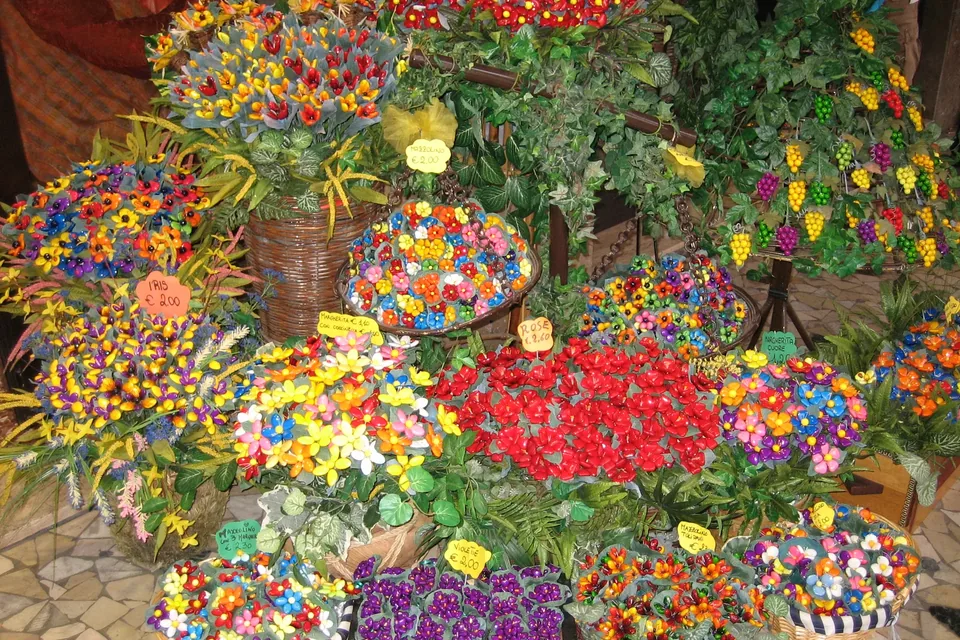
The park’s cooking comes from sheep farming and transhumance. The park lists among its typical products pecorino, sheep’s ricotta, cow’s-milk caciocavallo and a rare goat’s cheese, Marzolina, recorded among Italy’s traditional food products. The larder is completed by pulses, vegetables, honey and preserves, almond sweets and nougat, and liqueurs such as ratafià and centerbe.
Among the dishes most often mentioned are maccheroni alla chitarra, cut on a frame strung with metal wires, a soup of orapi and beans, orapi being wild mountain spinach, small flour-and-water gnocchi with the same greens, and grilled meats. In Civitella Alfedena egg pasta becomes chitarre alla pecoraia; in Barrea the reference products are goat’s cheeses and lamb, mutton and beef, and in Opi honey and sheep’s cheeses.
Each village keeps some recipes of its own: in Pescasseroli the park recalls lamb al cotturo and patate maritate. It is a simple cuisine, best enjoyed by looking for the products of the pastures around the village where you stay.
Sources: Parco Nazionale d’Abruzzo, Lazio e Molise — I prodotti tipici del Parco · Italia.it — Civitella Alfedena · Italia.it — Barrea · Italia.it — Opi · Parco Nazionale d’Abruzzo, Lazio e Molise — Pescasseroli
Things to do
The park is discovered on foot. The official tourist map shows about 150 routes covering more than 250 kilometres, waymarked in red and white and identified by a letter and a number. Most roads leading into natural areas are closed to cars: the car is for reaching the park and moving between villages, while hikes and visits are done on foot and, on authorised tracks, on horseback, by bike or on cross-country skis.
One of the classic goals is the Camosciara, an amphitheatre of dolomite rock with waterfalls and pools, now reached on foot from the parking area along the Marsicana road since the old road was closed to traffic. From Villetta Barrea cycle and footpaths follow the lake shores, and a walk along the Sangro crosses the village, where deer can sometimes be seen grazing.
The park asks visitors to walk quietly and in small groups, to keep to the trails in the most protected zones, not to chase animals for photographs and never to feed the bears. Guided hikes and the activities of the visitor centres are the safest way to watch wildlife.
Sources: Parco Nazionale d’Abruzzo, Lazio e Molise — Escursioni nel Parco · Parco Nazionale d’Abruzzo, Lazio e Molise — Il decalogo del visitatore · Parco Nazionale d’Abruzzo, Lazio e Molise — Il Territorio · Italia.it — Villetta Barrea · Parco Nazionale d’Abruzzo, Lazio e Molise — Orso bruno marsicano in breve
When to go
The park can be visited in every season, but the park authority advises avoiding holiday periods, the busiest, and choosing spring and early summer or autumn. In spring migratory birds return, the meadows flower and the young of wolves, deer, roe deer and chamois are born; bear cubs, born between January and February, stay in the den for a while longer.
Summer brings rich high-altitude flowering and starry nights. Autumn is perhaps the quietest season: the beech woods turn from yellow to red, the forest offers fruits and mushrooms and animal tracks stay printed on the damp ground. In winter the snowy landscape is explored on snowshoes and cross-country skis, with mountain equipment and caution.
The villages’ calendar adds further reasons. Barrea holds a living Passion play on Holy Saturday and the Orapi festival on 13 August. Pescasseroli celebrates Saints Peter and Paul at the end of June, the Madonna of Monte Tranquillo on the last Sunday of July and the Madonna Incoronata in September.
Sources: Parco Nazionale d’Abruzzo, Lazio e Molise — Escursioni nel Parco · Parco Nazionale d’Abruzzo, Lazio e Molise — Primavera nel Parco · Parco Nazionale d’Abruzzo, Lazio e Molise — Autunno nel Parco · Parco Nazionale d’Abruzzo, Lazio e Molise — Orso bruno marsicano in breve · Italia.it — Barrea · Parco Nazionale d’Abruzzo, Lazio e Molise — Pescasseroli
Getting there and around
The park indicates two rail gateways. On the Rome–Pescara line you get off at Avezzano, where the regional company TUA runs bus connections to the park villages; on the other side you reach Castel di Sangro, also linked by TUA buses. Coach lines also connect Castel di Sangro with Pescara and Naples and the park with Rome, with daily summer services from the capital.
By car from Rome, take the A24/A25 motorway and exit at Celano or Pescina towards Bisegna or Gioia dei Marsi, or the A1 to Ferentino and then cross the Lazio side towards Forca d’Acero. From Naples, follow the A1 to Caianello and continue via Venafro and Alfedena, entering from the Molise side.
Once there, the car is only for moving between villages, since many roads into natural areas are closed to traffic. For a slower arrival, the Transiberiana d’Italia, a historic tourist railway from Sulmona, reaches Castel di Sangro and Roccaraso on the edge of the park. Timetables and services should be checked on the operators’ websites.
Sources: Parco Nazionale d’Abruzzo, Lazio e Molise — Come arrivare · Parco Nazionale d’Abruzzo, Lazio e Molise — Escursioni nel Parco · Italia.it — Transiberiana d’Italia
Where to stay
The park describes a broad and varied range of accommodation: hotels of different categories, many bed and breakfasts and guest rooms, hostels, agriturismi, campsites and, higher up, mountain huts. The park authority gives special prominence to places that have joined the European Charter for Sustainable Tourism or carry the park’s quality mark, chosen for their hospitality and their ties to the area.
For a slow journey it pays to choose a single village as a base. Pescasseroli offers the widest range of services; Opi, Civitella Alfedena, Villetta Barrea and Barrea are smaller and close to the Sangro valleys, the Camosciara and the lake; Scanno and the Marsica villages make it easier to explore the outer slopes.
Before setting out it is worth stopping at one of the park’s InfoPoints: around forty are active, run directly by the park in the visitor centres of Pescasseroli and Civitella Alfedena and in the Villetta Barrea service centre, or by municipalities, Pro Loco associations and other groups. They provide information on open trails, events and village museums.
Sources: Parco Nazionale d’Abruzzo, Lazio e Molise — Dove dormire · Parco Nazionale d’Abruzzo, Lazio e Molise — InfoPoint del Parco · Parco Nazionale d’Abruzzo, Lazio e Molise — InfoPoint istituzionale Centro Visita di Pescasseroli · Parco Nazionale d’Abruzzo, Lazio e Molise — InfoPoint istituzionale Centro Visita di Civitella Alfedena · Parco Nazionale d’Abruzzo, Lazio e Molise — InfoPoint istituzionale Centro Servizi Villetta Barrea
Nearby
Lake Barrea, created in 1952 by damming the Sangro, has been a wetland of international importance under the Ramsar Convention since 1977. Its shores are a stopover for grebes, mallards and coots, while grey herons and moorhens nest there; bear, deer and wolf also pass along the banks. In Villetta Barrea the Transhumance Museum tells of the world of shepherds, shearers, carders and cheesemakers that shaped these villages for centuries.
The park’s UNESCO beech forests are five strictly protected cores: Valle Cervara in Villavallelonga, Moricento in Lecce nei Marsi, Coppo del Principe and Coppo del Morto between Pescasseroli and Scanno, and Cacciagrande between Opi and Civitella Alfedena. They hold some of the oldest beeches in the northern hemisphere, and Val Cervara is described as the only known example of primary forest in Italy.
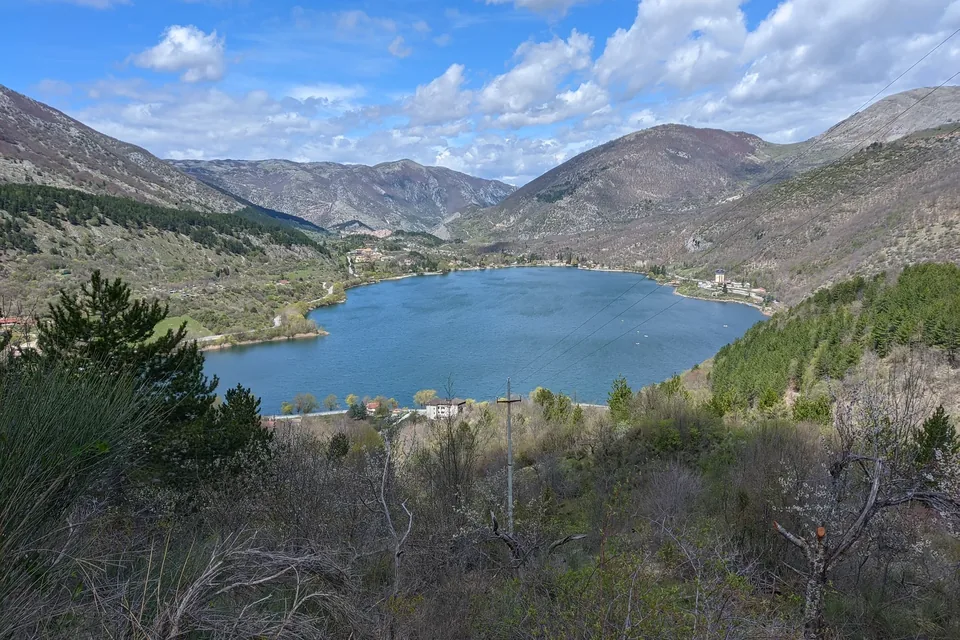
Beyond the park, the Sagittario valley runs down towards the Sulmona basin and leads to Scanno, a stone village with the largest natural lake in Abruzzo; to the north-west opens the Fucino plateau.
Sources: Parco Nazionale d’Abruzzo, Lazio e Molise — Area Ramsar Lago di Barrea · Parco Nazionale d’Abruzzo, Lazio e Molise — Le faggete vetuste patrimonio mondiale UNESCO · Parco Nazionale d’Abruzzo, Lazio e Molise — Museo della Transumanza di Villetta Barrea · Parco Nazionale d’Abruzzo, Lazio e Molise — Il Territorio · Italia.it — Scanno, borgo in Abruzzo · Parco Nazionale d’Abruzzo, Lazio e Molise — Arte, cultura e tradizioni: i mestieri del Parco
Local tourist information
Local tourist offices help with opening times, events and transport on the day.
- InfoPoint istituzionale Centro Visita di Pescasseroli (Parco Nazionale d’Abruzzo, Lazio e Molise) · Viale Colli dell’Oro, 67032 Pescasseroli (AQ) · +39 0863 9113221 · centronatura.pescasseroli@parcoabruzzo.it · Official website
Source: Parco Nazionale d’Abruzzo, Lazio e Molise — InfoPoint istituzionale Centro Visita di Pescasseroli · Parco Nazionale d’Abruzzo, Lazio e Molise — Centro Visita di Pescasseroli · checked on - InfoPoint istituzionale Centro Visita di Civitella Alfedena (Parco Nazionale d’Abruzzo, Lazio e Molise) · Via Santa Lucia, 67030 Civitella Alfedena (AQ) · +39 0864 890141 · lupo.civitella@parcoabruzzo.it · Official website
Source: Parco Nazionale d’Abruzzo, Lazio e Molise — InfoPoint istituzionale Centro Visita di Civitella Alfedena · checked on - InfoPoint istituzionale Centro Servizi Villetta Barrea (Parco Nazionale d’Abruzzo, Lazio e Molise) · Via Roma, 67030 Villetta Barrea (AQ) · +39 0864 89102 · centroservizi.villetta@parcoabruzzo.it · Official website
Source: Parco Nazionale d’Abruzzo, Lazio e Molise — InfoPoint istituzionale Centro Servizi Villetta Barrea · checked on
Where to stay
In the municipality of Pescasseroli the national database of the Ministry of Tourism lists 168 accommodation businesses with a verified CIN code: 28 hotels, 16 other licensed accommodation and 124 other types such as B&Bs and private rentals.
Sources: Ministero del Turismo – Banca Dati Strutture Ricettive (dashboard pubblica), 2026-10-12
YOUR JOURNEY
How to shape a journey here
Three days in a park village: wildlife museums, a valley trail and Lake Barrea. Guides and accommodation to be arranged with local operators.
Talk to us about it