APULICA / Food guides
Venafro: the oil praised by Latin writers and the first olive park
Venafro, in the province of Isernia, is Molise's western gateway and one of the oil towns most often cited by ancient authors. There is no designation called olio di Venafro: what makes the place unique is a landscape of centuries-old olive groves and terraces, protected by the Regional Historic Agricultural Olive Park, which presents itself as the first protected area in the Mediterranean devoted to the tree, and a local variety, the aurina, identified with the ancient Licinia. This guide lines up the ancient sources, the park and the best way to visit.
The most praised oil of the ancient world
The short guide published by the Municipality of Venafro lists the ancient authors who wrote about Venafro oil: Marcus Porcius Cato, who owned an olive grove here; Horace, for whom the olive of Taranto vied with that of Venafro; and then Columella, Varro, Ovid, Martial, Pliny the Elder, Juvenal, Strabo, Palladius and Macrobius.
Some quotations have become famous. Pliny wrote that Italy had won world primacy in oil above all thanks to the territory of Venafro and its Licinian oil; Strabo named Venafro as the place where the best oil came from; Juvenal recalled the lord who dressed his fish with Venafro oil. Qualigeo adds that Horace, in his Satires, recommended Venafro oil for making two sauces of his day.
The Città dell'Olio association's page also mentions Varro, Pliny, Strabo, Horace, Martial and Juvenal, and stresses that the quality of the oil produced around the town today is still recognised. No other olive-growing place, the Municipality writes, can claim such an old literary seal of quality.
Sources: Comune di Venafro — Venafro, breve guida alla città (2014) · Associazione nazionale Città dell'Olio — Venafro · Qualigeo — Molise DOP olio extravergine di oliva
Aurina, the ancient Licinia
According to the Città dell'Olio page on the Park, aurina is a native variety exclusive to Venafro, identified with the Romans' Licinia; the Municipality's guide calls it the Licinian olive praised by Latin writers. Qualigeo recalls that Pliny described the olive trees brought to the area by Licinius and the excellent quality of their oil, and that over time aurina was joined in Molise by Gentile di Larino, Rosciola and Oliva Nera di Colletorto.
Alongside aurina the Park keeps other old varieties: Pallante, Olivastro breve, Olivastro dritto, Rotondella, Rossuola, Olivastrello, Olivo maschio, Gragnaro and Lagrimella. It is a small living archive of olive biodiversity.
The town guide also quotes Cosmo de Utris, for whom Venafro was famous for its abundance of oil and grain two hundred years before Christ, and notes that the Municipality was among the founders of the Città dell'Olio association in 1994. The centuries-old olive groves are regarded as a monument of the territory, on a par with its historic buildings.
Sources: Associazione nazionale Città dell'Olio — Parco regionale storico agricolo dell'olivo di Venafro · Comune di Venafro — Venafro, breve guida alla città (2014) · Qualigeo — Molise DOP olio extravergine di oliva
The regional historic agricultural olive park
The Città dell'Olio page presents the Park as the first protected area devoted to the olive tree in the Mediterranean, created to preserve traditional olive growing and to give a new chance to a territory marked in recent decades by neglect and abandonment. The Municipality's guide repeats the same words and recalls that to the Romans the oil from here was the finest of the ancient world.
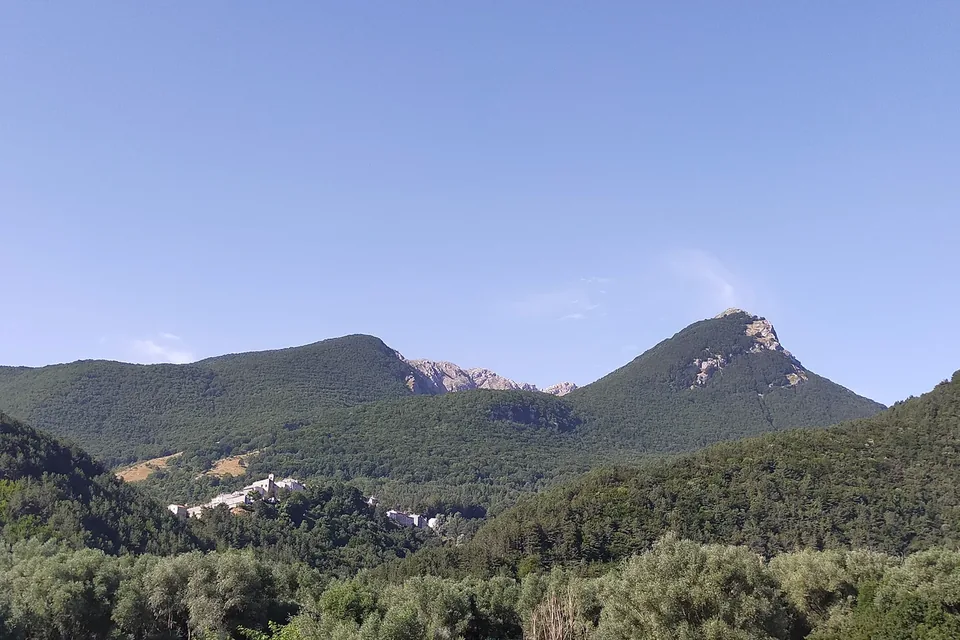
The Park covers the slopes of Monte Santa Croce, also called Monte Cerino, a name thought to refer to the Samnite cult of Hercules Curinus. The olive groves climb to about 400 metres along the Madonna della Libera ravine, then give way to mixed woods with large downy oaks.
The area keeps old terraces, Roman farm structures with cisterns, Samnite polygonal walls near the summit and the path of the 'split mountain', which preserves the memory of the Second World War. Cliffs, limestone outcrops and crags complete a landscape that the Park also protects as a site of Community importance.
Sources: Associazione nazionale Città dell'Olio — Parco regionale storico agricolo dell'olivo di Venafro · Comune di Venafro — Venafro, breve guida alla città (2014)
Visiting the park: paths and mule tracks
The Municipality's guide describes walks in the Park along panoramic paths and old mule tracks that have been restored and are easy to follow. You start from the centuries-old olive groves of the Campaglione, climb the side of Monte Santa Croce above the Venafro plain and head towards Conca Casale, passing the Torricella, a medieval watchtower wrapped in legend, now restored and open to visitors.
Beyond the tower the landscape changes: cliffs, ancient woods and rock spurs, with wide views over the Volturno valley. The Città dell'Olio page notes birds of prey such as short-toed eagle, lanner, peregrine and buzzard, and the occasional presence of the wolf on the edges of the Park.
The Italian Institute for Environmental Protection and Research lists the Park among Molise's museums and visitor centres: it lies on the Campaglione municipal road, is an open-air area and guided visits are by booking. It is best to arrange them before setting off, especially during the harvest.
Sources: Comune di Venafro — Venafro, breve guida alla città (2014) · ISPRA — Parco regionale agricolo storico dell'olivo di Venafro · Associazione nazionale Città dell'Olio — Parco regionale storico agricolo dell'olivo di Venafro
Roman Venafro: aqueducts, theatres and villas
Venafro oil was famous because in Roman times the town was a wealthy farming centre. The Municipality's guide relates that after the Samnite wars Venafro became a municipium and then a colony, and that for about four centuries it enjoyed great splendour: Roman aristocrats stayed here and the best oil of the age was produced.
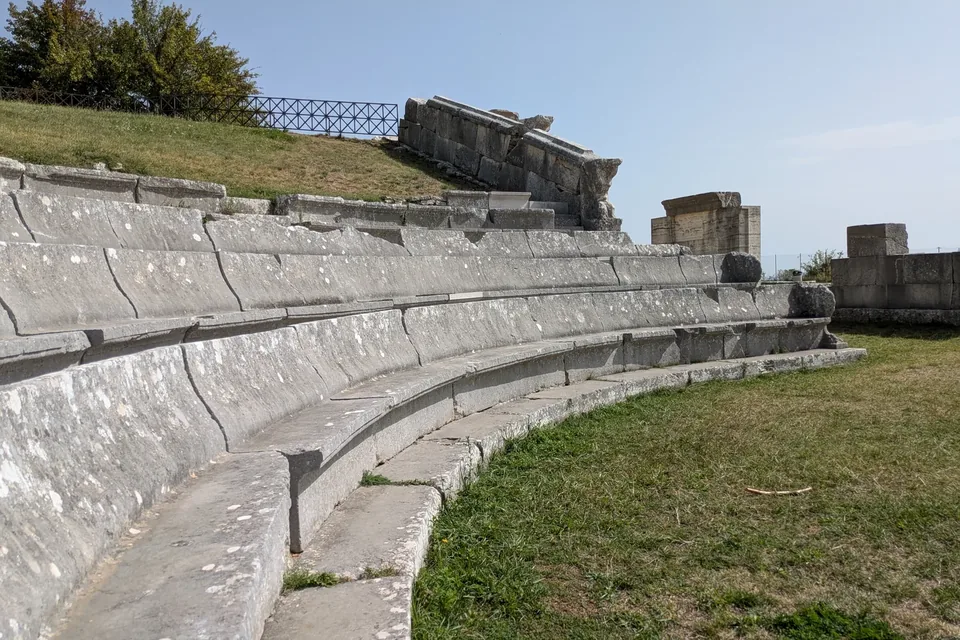
Important traces of that era remain. Augustus had an aqueduct of about 30 kilometres built to bring water from the Volturno springs into town, and the 'Tavola acquaria' bearing the rules of his edict is kept in the Santa Chiara archaeological museum. The Verlasce amphitheatre could hold up to 15,000 spectators; the Sant'Aniello theatre, set against the mountain, about 3,500.
Qualigeo notes that in Molise almost every Roman villa found had cellars with large oil jars, a sign of abundant production even in antiquity. Looking at the Park's olive groves with this history in mind changes the way you see them.
Sources: Comune di Venafro — Venafro, breve guida alla città (2014) · Qualigeo — Molise DOP olio extravergine di oliva
Venolea and the monumental town
The Città dell'Olio page records the 2019 edition of Venolea, from 21 to 24 November, with an award named after Pliny; it gives no later editions, so it is worth checking with the Municipality whether and when the event is held again. The town guide opens with the words of Vincenzo Lomonaco, for whom anyone arriving in Venafro treads a monumental land.
There is plenty to see. Castello Pandone, now a national museum, keeps the life-size frescoes of twenty-six stallions from Enrico Pandone's stud; the Santa Chiara archaeological museum holds the Venus of Venafro and chess pieces dated to the 10th century, among the oldest in Europe; the Winterline museum tells the story of the war along the line that crossed the area, and on the Volturno lies the Le Mortine nature reserve.
According to the same guide, Venafro's history spans at least twenty-six centuries. It is a town that lends itself to combining a walk among the olives with a day of museums and churches.
Sources: Associazione nazionale Città dell'Olio — Parco regionale storico agricolo dell'olivo di Venafro · Comune di Venafro — Venafro, breve guida alla città (2014) · Comune di Venafro — Informazioni sulla città di Venafro
The Molise PDO: rules and label
One misunderstanding should be cleared up: Venafro oil is not a protected name. Oil from the area can, however, be certified as Molise PDO, the regional designation which, according to Qualigeo, covers almost all of the provinces of Isernia and Campobasso. The specification requires at least 80% aurina, Gentile di Larino, Oliva Nera di Colletorto and Leccino, alone or together, with other regional varieties up to 20%.
The mill rules are precise: olives picked from the tree, never fallen ones, carried in rigid, perforated crates and milled within two days; malaxation lasts no more than 50 minutes and the water stays below 25 degrees. The oil is yellow-green, light to medium fruity, with a delicate pungency or bitterness.
The label must show the name Molise with the PDO wording, the European symbol and the vintage, and the bottle carries a seal with a unique code for traceability. Qualigeo advises keeping it cool and dark and using it within four to six months of pressing.
Oil at the table and the products of Molise
The Municipality's guide notes that extra virgin oil is very present in Venafro cooking, with several typical dishes in which it takes centre stage. Qualigeo suggests using Molise PDO oil on pasta dishes and to dress soups and pulse dishes: a good reason to taste it raw, at the end of cooking.
On the national list of traditional food products Molise also records olive curate, olives in brine, one of the most common home preparations in olive-growing areas. The Italia.it guide to Molise's products opens with the bread of Venafro and mentions, a short distance away, the Signora di Conca Casale, an irregularly shaped pork sausage, and the flat, sweet onion of Isernia, star of the cipollata omelette.
The same guide lists Molise's four DOC wines, Tintilia, Biferno, Molise and Pentro, and the cheeses of Alto Molise: from Venafro you can build an itinerary heading up to Isernia, Pietrabbondante and Agnone.
Sources: Comune di Venafro — Venafro, breve guida alla città (2014) · Qualigeo — Molise DOP olio extravergine di oliva · Masaf — Elenco nazionale dei prodotti agroalimentari tradizionali 2022, allegato I (copia pubblicata dal progetto regionale Biodiversità Puglia) · Italia.it — Prodotti e piatti tipici del Molise
When to go and how to choose the oil
I would go to Venafro in autumn, when the olives are being harvested and the new oil reaches the mills, and walk in the Park in the morning, with suitable shoes and a booked guided visit. The afternoon is the right time for the castle and the old town.
When buying I would always ask about the variety, the vintage and whether the oil is certified with a designation: a single-variety aurina tells the story of the place better than a generic blend, and Molise PDO on the label guarantees inspected rules. I would taste the oil on bread and pulses, without masking it with other seasonings, and compare two or three oils to understand the differences.
In a suitcase, bottles travel best if dark, small and protected from light; at home they should be kept cool and used soon, while the aroma is still full. Visits to mills or farms should be arranged with the operators: at harvest time work comes first.
A thread for your journey
Journey idea: an autumn day in Venafro, with the morning in the Olive Park along the mule tracks to the Torricella, with a booked guided visit, the afternoon at Castello Pandone and a stop at an oil mill to be arranged with the operators; the trip can continue towards the Mainarde and the Abruzzo, Lazio and Molise National Park, or into Samnite Molise.
Talk to us