APULICA / Food guides
Mormanno: the rediscovered lentil and the Pollino bocconotto
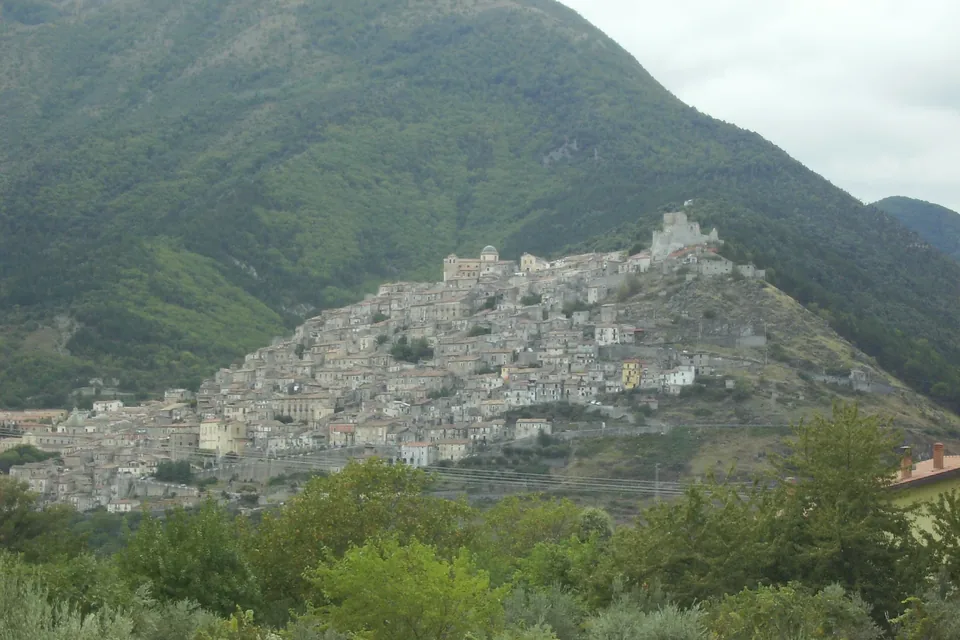
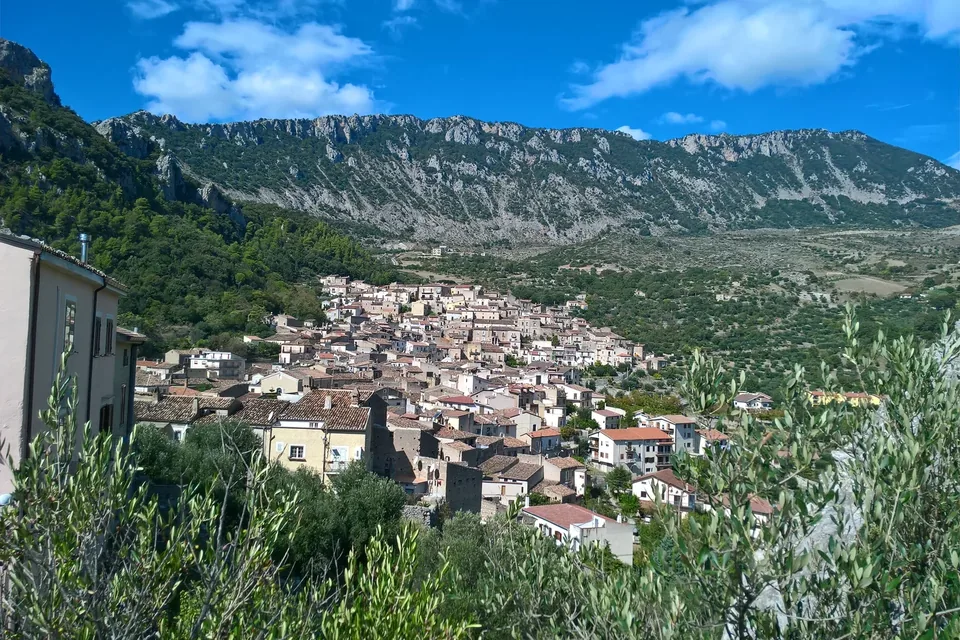
Mormanno is a mountain village in the Pollino, at about 900 metres, on the border between Calabria and Basilicata. Two products capture its cooking well: a small, multicoloured lentil once thought lost and recovered thanks to farmers who had kept it for their own use, and the bocconotto, an oval shortcrust sweet filled with jam, listed among Calabria's traditional food products. This guide covers the lentil's cultivation and cooking, the official bocconotto record, the village and an itinerary through the villages on the Calabrian side of the Pollino.
A small, multicoloured lentil
Slow Food, which has included the Mormanno lentil in its Ark of Taste, describes Mormanno as a small farming village between Lucania and Calabria, at about 900 metres in the heart of the Pollino National Park. Here, over the centuries, a small lentil variety with mottled colours ranging from pink to green to beige has adapted to the land.
It belongs to the microsperma type, meaning small-seeded, of Middle Eastern and Asian origin, while larger lentils derive from the Mediterranean basin. This detail explains the tiny size of the seeds and their range of colours within the same bag.
Its recent history is one of recovery. It was thought lost; then, a few years ago, technicians from Calabria's regional agency for agricultural development found small quantities with farmers who had kept it for family use, and it was decided to promote its cultivation again. The production area given by Slow Food is the municipality of Mormanno.
Sources: Fondazione Slow Food — Arca del Gusto: Lenticchia di Mormanno
From marginal land to the threshing floor
In the past, Slow Food explains, lentils occupied the most marginal land, less fertile and shallow, not needed for more profitable crops such as wheat, barley, oats, maize and potatoes. They were broadcast-sown without particular care, apart from clearing the young plants of weeds now and then.
Today they are sown in rows, to organise the harvest better, but as before no chemical treatments, fertilisers or herbicides are used. Sowing takes place in April, while in the past there was also an autumn sowing; the harvest comes in August, when the plants have already dried in the field.
The harvested plants are separated from the remaining weeds, taken to the threshing floor, gathered into sheaves and beaten to free the seeds from the pods, a task once called pesatura. The lentils are then sieved to remove foreign matter and cleaned once more by hand. In the past each Mormanno family produced about twenty kilos, part of which was kept for the next year's sowing.
Sources: Fondazione Slow Food — Arca del Gusto: Lenticchia di Mormanno
In the kitchen: soup and purée
Local cooking, according to Slow Food, has a few simple recipes: first of all soup with chilli, or lentil purée. The same source recalls a curious old custom: lentil soups were eaten without a spoon, using the cups of onion layers instead.
The Pollino National Park, on its page about local flavours, mentions products that can accompany a mountain legume soup: the Senise pepper, a PGI since 1996, with thin flesh that dries in the sun threaded by hand into garlands and is eaten fresh or fried in olive oil, and soppressata, among the area's typical cured meats.
Such a small lentil cooks quickly and keeps its shape. To taste it properly, dress it simply: a drizzle of oil, a clove of garlic, a chilli, and serve it with toasted bread. A piece of crumbled crusco pepper added at the last moment brings a crunchy note that links the soup to the rest of the Pollino.
Sources: Fondazione Slow Food — Arca del Gusto: Lenticchia di Mormanno · Parco nazionale del Pollino — Sapori
Pollino flavours around the lentil
The Pollino National Park describes a territory shaped by centuries of farming, sowing, grazing and processing of milk, meat and plant products. Thanks to the Park Authority's projects, four main supply chains are recognised today: dairy, fruit and vegetables, cured meats and bakery products.
Among the cheeses the Park mentions hard pecorino, paddaccio, an unaged and unsalted sheep and goat cheese from the foothills of the Pollino, and ricotta infornata, which in a few small dairies on the Calabrian side is baked in ceramic or terracotta dishes after dry salting. Among vegetables, Rotonda's white beans, red aubergine and the Senise pepper stand out.
Among baked goods the best known is the bread of Cerchiara di Calabria; among traditional pastas there is mischiglio, made from a flour of chickpeas, barley, semolina, broad beans and oats. The Park also mentions honey, jams, wild-fruit liqueurs and Saracena's moscato: a basket that frames Mormanno's small legumes.
Sources: Parco nazionale del Pollino — Sapori
The bocconotto, a traditional product
The Mormanno bocconotto, bucchinotto in dialect, is described in the Calabria Region's identification sheet for traditional food products, compiled under regional decree 15654 of 2004 and the 1999 ministerial circular. It belongs to the category of fresh pasta, bread, biscuits, pastry and confectionery, and the area given is the municipality of Mormanno.
It is a small oval sweet made of a shortcrust base and a jam filling. The sheet describes how it is made: the shortcrust ingredients are mixed, oval metal moulds give the typical shape, the filling is added with a spoon and the sweets are baked; for sale, heat-sealed single-portion bags are also used.
As evidence of tradition, a requirement of at least twenty-five years of practice, the sheet cites the July 1955 issue of the magazine Mormanno. Italia.it, in its guide to the Pollino villages, lists the bocconotto among the specialities to try in nearby Morano Calabro too, along with local pecorino and spicy cured meats.
Sources: Regione Calabria — Scheda identificativa PAT: Bocconotto di Mormanno · Italia.it — Morano Calabro, Laino Borgo e Papasidero
The village: Santa Maria del Colle and the Votive Lighthouse
The municipality of Mormanno points out two places to see. The church of Santa Maria del Colle stands on the main square, piazza Umberto I, at the foot of the hill that holds the oldest part of the village.
Over its long history three religious buildings have been layered: the oldest is thought to date from the 14th century, the second was built from the mid-15th century and the third during the 18th century, on the foundations of the previous one. Traces of the first and second can still be seen in the crypts, which the municipality describes as worth a look.
At Torretta, in a panoramic spot visible from every corner of the village, rises the Votive Lighthouse, a rare structure in Italy for a mountain village. It is a monument built in honour of about twenty thousand Calabrian soldiers who fell in the Great War of 1915-1918, and it keeps relics and memories, including those of the eleven gold medals for military valour. Visiting arrangements should be checked with the municipality; from the lighthouse the view sweeps over the surrounding mountains.
Sources: Comune di Mormanno — Chiesa di Santa Maria del Colle · Comune di Mormanno — Faro votivo
The Pollino National Park
Mormanno is a good base for exploring the Calabrian side of the Pollino. Italia.it notes that the National Park, established in 1993, covers the Pollino and Orsomarso massifs between Basilicata and Calabria and is the largest protected area in Italy. The highest peak is Serra Dolcedorme, at 2,267 metres, and its emblem is the Bosnian pine.
Since 2015 the Park has been a UNESCO Global Geopark. Italia.it reports that it is home to the tree considered the oldest in Europe, a Heldreich pine, or loricato, estimated to be more than 1,200 years old; some short, easy walks let you see these trees without being an expert.
For walkers, the guide suggests a four-stage route along the Calabrian side, on CAI trails, from Sant'Agata d'Esaro to Morano Calabro, with climbs and descents. The landscape alternates mountains, woods and streams, and heading down into the valleys you enter old towns where, the Park writes, among workshops and old taverns time seems to have stood still.
Sources: Italia.it — Parco nazionale del Pollino tra storia, luoghi mistici e borghi · Italia.it — Morano Calabro, Laino Borgo e Papasidero · Parco nazionale del Pollino — Sapori
Morano, Laino and Papasidero
A few kilometres from Mormanno, Morano Calabro stands on a cone-shaped hill at 694 metres and is one of the Most Beautiful Villages of Italy, with the Touring Club's Orange Flag. Italia.it recalls its peak in the Middle Ages and Renaissance, when the Sanseverino of Bisignano commissioned works such as the polyptych painted in 1477 by Bartolomeo Vivarini; the Rococo church of Santi Pietro e Paolo and the collegiate church of Santa Maria Maddalena, with its dome clad in green and ochre majolica, stand out.
Towards the Tyrrhenian, Laino Borgo, at just 271 metres, is surrounded by vegetation so dense it feels like the mountains: in the lower village murals depict life in the past, and the Lao river draws rafters through gorges and canyons. Above the village, on a spur, stands Laino Castello, now uninhabited.
Papasidero, with about 650 inhabitants, is known for the Grotta del Romito, discovered in 1961, one of the oldest prehistoric sites in Europe: it holds a Bos primigenius engraved in stone and burials from a period between 23,000 and 10,000 years ago.
Sources: Italia.it — Morano Calabro, Laino Borgo e Papasidero
When to go and what to buy
To see the lentil fields, summer is best, when in August the crop is harvested and threshed; production is small and family-based, so visits must always be arranged with the operators and are never guaranteed. Spring and early autumn are the most pleasant times to walk in the Pollino, with mild temperatures and colourful woods.
Dried lentils keep for a long time and make a light gift: I would buy them in the village, asking who grew them, because quantities are limited and not always available. A bag of a few hundred grams is enough for two soups and shows off the range of seed colours.
Bocconotti are found in the village bakeries and pastry shops; they travel well when packed, but are best fresh, perhaps after lunch with a coffee. We found no event devoted to the lentil or the bocconotto with dates confirmed for 2026 on the municipality's official sources, so it is worth asking locally. A day can combine Mormanno in the morning with Morano Calabro in the afternoon.
A thread for your journey
Journey idea: an August day between Mormanno and Morano Calabro. Morning in the village between Santa Maria del Colle and the Votive Lighthouse, lunch with chilli lentil soup and bocconotti to finish, afternoon in Morano between the collegiate church and Vivarini's polyptych. Field visits arranged with operators.
Talk to us