Why go
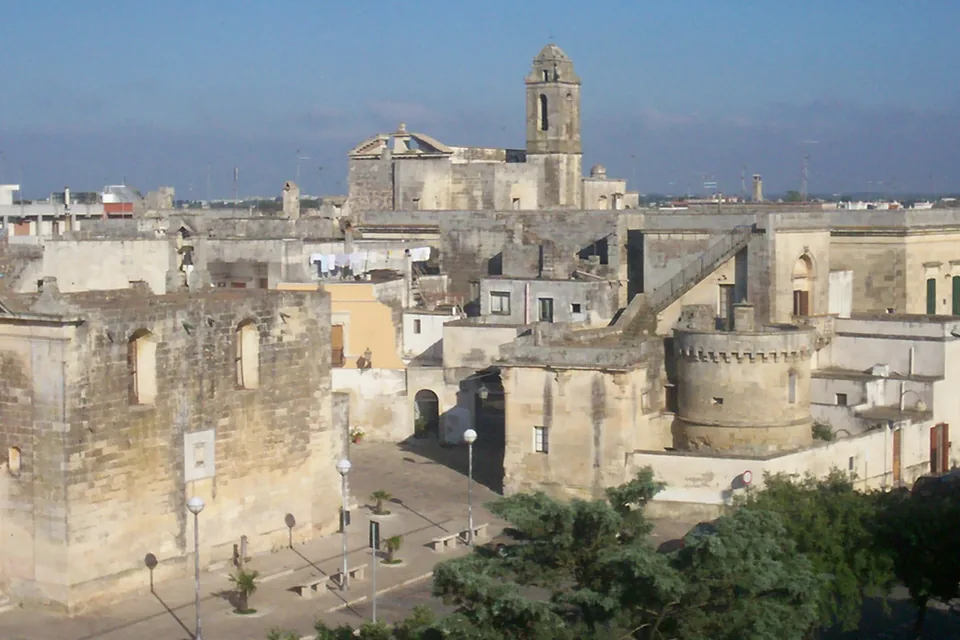
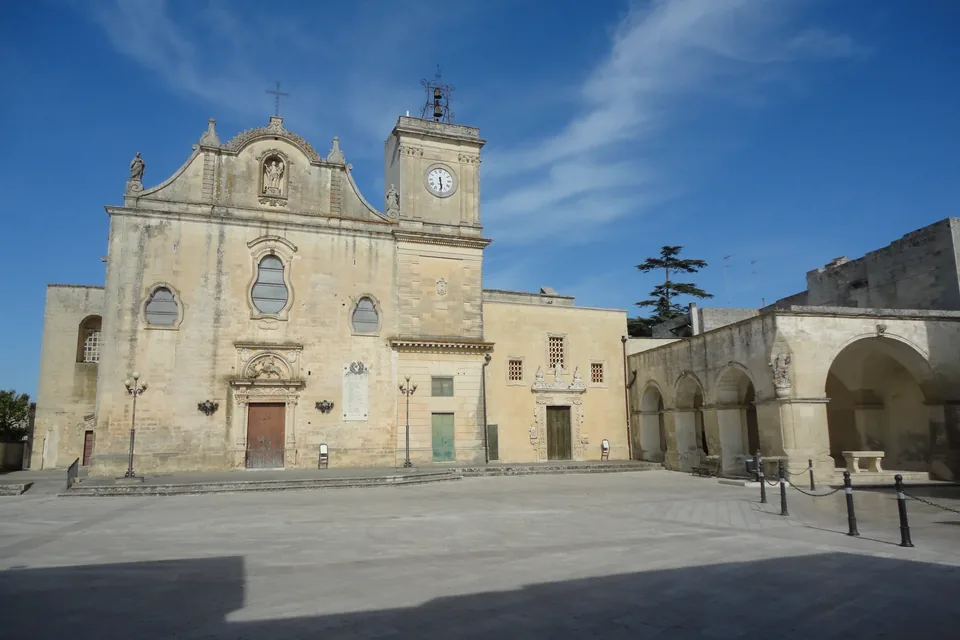
For many people Melpignano is the village of the Notte della Taranta's final concert, but its tourism portal, run by the municipality, invites you to see it as a place worth more than a stop: a small Grecìa Salentina village with a special light, deep silences and a strong love of culture. Its main square, dedicated to Saint George and enclosed by sixteenth-century arcades, is considered among the most charming in Italy.
The village holds three places that alone justify a visit. The Castriota Marquis's Palace, built in 1636 around the fifteenth-century castle, with frescoes rediscovered in its ground-floor rooms; the Marquis's Garden, with its pergola of one hundred and sixty columns and old varieties of fruit trees; and the former Augustinian convent with the church of the Carmine, a Baroque ruin in the countryside made famous by cinema.
Then there is music: Melpignano has made culture, and folk music in particular, part of its identity, and in summer it becomes a stage spread across the square, the garden and the lawn of the Palace.
Sources: Discover Melpignano — portale turistico del Comune · Fondazione La Notte della Taranta — Festival itinerante · Comune Melpignano — Portici San Giorgio · Discover Melpignano — Palazzo Marchesale Castriota · Discover Melpignano — Giardino Marchesale · Discover Melpignano — Chiesa del Carmine ed ex Convento degli Agostiniani · Discover Melpignano — Musica e identità
History
Melpignano is part of the Grecìa Salentina, the area where Greek clergy arriving in the Byzantine period spread the Greek language and rite, later slowly abandoned after that rule ended. The municipality's portal explains how, in the sixteenth century, the Church of Rome sought to take root in these lands strongly shaped by the Greek rite: partly for this reason, from 1573 the church of the Carmine was entrusted to the Augustinians and a convent rose beside it.
Between 1638 and 1662 the complex was rebuilt at the initiative of the Augustinian friar Raffaele Monosi, who entrusted the work to Giuseppe Zimbalo, architect of Lecce Cathedral, and to the master builder Francesco Manuli of Corigliano d'Otranto. Manuli also directed the building of the Marquis's Palace, commissioned in 1636 by Giorgio Castriota, Marquis of Botrugno, who turned the feudal castle with its crenellated towers and moat into a residence on the model of Neapolitan palaces.
The square has a history of trade: the arcades, built at the end of the sixteenth century at the wish of Monsignor Nicola Maiorano, hosted every Saturday one of the busiest markets in Salento. The convent was suppressed in 1809 and then abandoned. In the twentieth century music became the village's hallmark.
Sources: Unione dei Comuni della Grecìa Salentina — Cenni storici · Discover Melpignano — Chiesa del Carmine ed ex Convento degli Agostiniani · Discover Melpignano — Palazzo Marchesale Castriota · Comune Melpignano — Portici San Giorgio · Discover Melpignano — Musica e identità
What to see
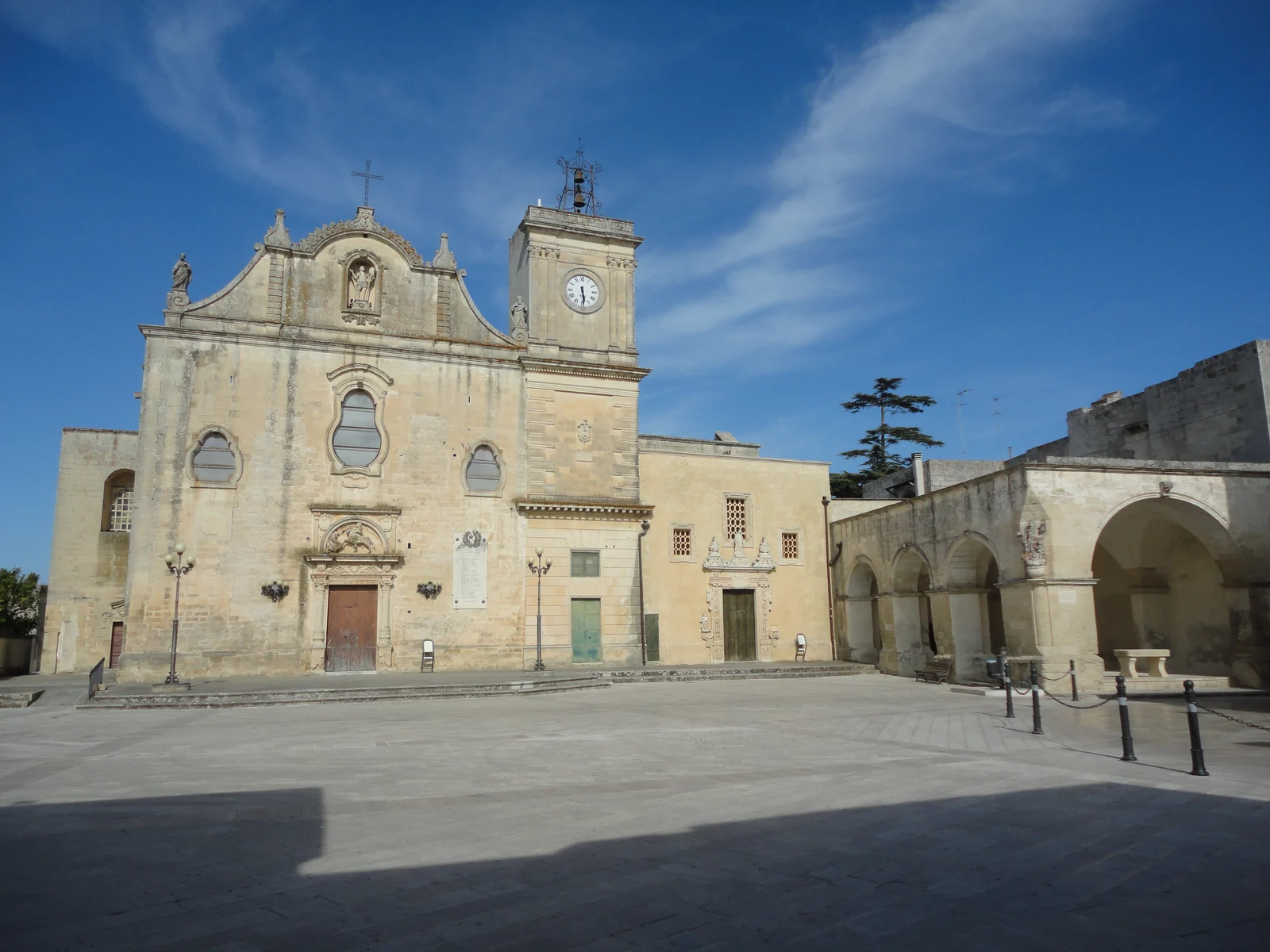
Piazza San Giorgio is the centre of everything: enclosed by the arcades, once called sedili, where some original market counters can still be seen, it is dominated by the mother church of San Giorgio, the chapel of the Assumption and the bell tower. The portal suggests viewing it from Via Roma at sunset, when the Lecce stone glows.
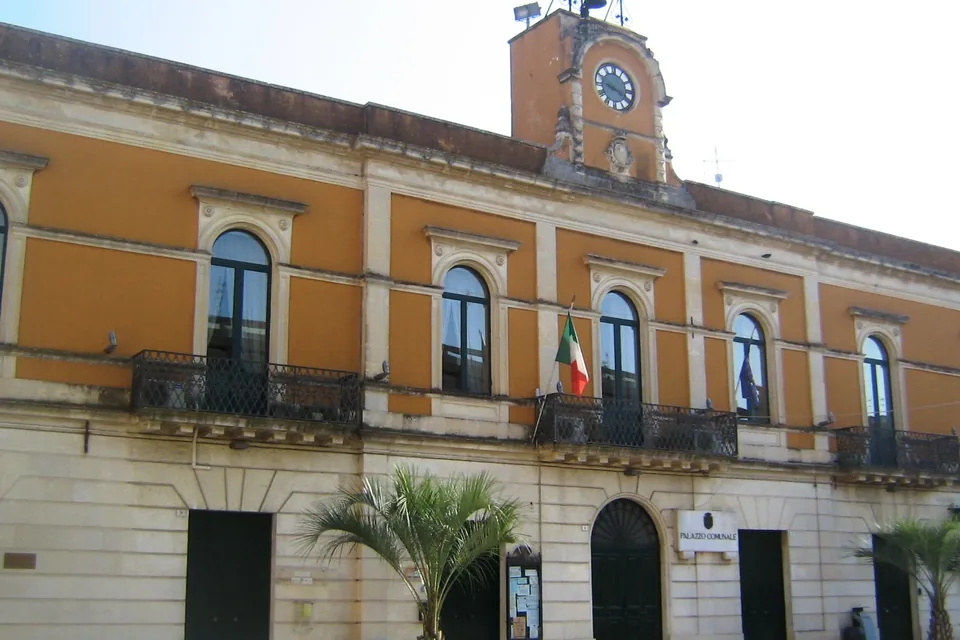
The Castriota Marquis's Palace has a symmetrical façade with a doorway between two Doric columns and a balustraded balcony. On the ground floor were the baronial court, the storerooms and the prison cell, where images of Saint George are carved; in two vaulted rooms restoration revealed frescoes with the myth of Lucretia, the cardinal virtues and the labours of Hercules. Opposite stand two of the three feudal underground olive presses. The Marquis's Garden has right-angled paths, a late sixteenth-century fountain, a pergola of one hundred and sixty columns with stone seats, a citrus grove, a rose garden and old varieties such as the San Giovanni pear.
The former Augustinian convent, with the church of the Carmine, shows a portal with two pairs of columns and a statue of Our Lady of Mount Carmel, a single-nave interior with the sixteenth-century choir and, in the cloister, the well among the remains of the colonnade. The portal also lists underground olive presses, a menhir, the Pineta Longa, the Little Drum Museum and many chapels.
Sources: Comune Melpignano — Portici San Giorgio · Discover Melpignano — Palazzo Marchesale Castriota · Discover Melpignano — Giardino Marchesale · Discover Melpignano — Chiesa del Carmine ed ex Convento degli Agostiniani · Discover Melpignano — Dove andare · Comune di Melpignano — Luoghi e patrimonio
Food and wine
Melpignano has put food at the heart of a public project. The municipality created the Mercato del Giusto, held under the arches of Piazza San Giorgio in two editions, one in autumn and one in spring-summer: a small organic farmers' market with talks and debates on food, sustainability and the area's agricultural future after the end of olive monoculture. The portal also mentions the ethical canteen and a master's course on sustainable territorial gastronomy.
The table remains that of Salento: according to the portal, the village's restaurants and trattorias serve Apulian dishes with fresh local ingredients, olive oil, cheeses and meat and fish dishes. The oil is that of the Terra d'Otranto PDO, produced throughout the province of Lecce, and the village's underground presses tell its story. Among the routes offered by the municipality are tastings devoted to oil and presses, to bread ovens and ritual foods.
In the Grecìa Salentina the dwarf pea of Zollino is grown, a Slow Food Presidium eaten only dried. In summer, on 21 July, the Watermelon Festival opens the celebrations for Saint Mary Magdalene.
Sources: Discover Melpignano — Il Mercato del Giusto · Discover Melpignano — Dormire e mangiare · Qualigeo — Terra d'Otranto DOP · Discover Melpignano — Dove andare · Discover Melpignano — Cosa fare · Fondazione Slow Food — Piselli tradizionali salentini · Discover Melpignano — Feste e tradizioni
Things to do
The Notte della Taranta was born here: the Foundation recalls that on 24 August 1998 the squares of the Grecìa Salentina villages played pizzica and that at the end everyone rushed to Melpignano, to Piazza San Giorgio, for the final concert. Since 2000 the festival has travelled over several dates, always ending with the big concert in Melpignano, which by its third edition could no longer fit in the square alone.
But music in Melpignano is not limited to one night. The municipality's portal recalls the 1988 exchange with the Soviet Union, when Soviet punk bands played at the village sports ground, and the summer season that between July and August turns the square, garden and palace lawn into an open-air theatre. The village has a Documentation Centre for Folk Music and a Little Drum Museum.
The municipality also offers guided tours of the historic centre and the Marquis's Palace and themed routes: eighteenth-century chapels and Passion songs, the herbs of the Pineta Longa and the Marquis's Garden, prehistoric remains and quarry landscapes. Nearby, the portal suggests Soleto, Martano, Cutrofiano, Cursi and Corigliano d'Otranto.
Sources: Fondazione La Notte della Taranta — Festival itinerante · Discover Melpignano — Musica e identità · Discover Melpignano — Dove andare · Discover Melpignano — Cosa fare
When to go
The municipal portal's calendar marks the year. On the first Tuesday of March the Madonna di Costantinopoli is celebrated in the small square of the eighteenth-century chapel, with a bonfire and a greasy pole. On 23 April the procession of Saint George, the patron, winds through the streets. On 21 July the Watermelon Festival precedes the feast of Saint Mary Magdalene on 22 July, in Piazza San Giorgio lit by festive illuminations.
Between July and August the village hosts a season of concerts and shows in its emblematic places, and in August the Notte della Taranta brings the final concert of the travelling festival, preceded by stages in the squares of the Grecìa and Salento. These are the busiest days of the year: those wanting a quieter visit can choose other weeks.
The Mercato del Giusto has one edition in autumn and one in spring-summer. Spring and autumn are also the best seasons for the Marquis's Garden and the Pineta Longa, for guided tours and for walking among chapels and olive presses without the heat.
Sources: Discover Melpignano — Feste e tradizioni · Discover Melpignano — Musica e identità · Fondazione La Notte della Taranta — Festival itinerante · Discover Melpignano — Il Mercato del Giusto · Discover Melpignano — Giardino Marchesale
Getting there and around
The municipality's portal gathers the information for getting there. By air, Brindisi airport is the preferred gateway to Salento and the Grecìa Salentina; there is also the dedicated airport bus service indicated by Aeroporti di Puglia. By train, Trenitalia's Frecce run daily between Rome and Lecce, stopping at Foggia, Barletta, Bari and Brindisi, from where you continue with an integrated train-and-bus system.
Lecce station, run by RFI, offers assistance to passengers with reduced mobility and integrated mobility services such as a bus stop and car rental. By car you reach Puglia along the Adriatic A14 motorway and then continue towards Salento; the portal also mentions the ports of Bari and Brindisi for those arriving by ferry.
In the village the Infopoint, in the former tobacco factory on Via Roma, provides information. The centre is explored on foot, from the square to the Palace, the Garden and the chapels; for the former Augustinian convent, the Pineta Longa and nearby villages such as Martano, Soleto and Corigliano d'Otranto, a car or a bicycle is best.
Sources: Discover Melpignano — Servizi e info utili · RFI — Stazione di Lecce · Discover Melpignano — Dove andare
Where to stay
The municipality's tourism portal lists places to stay and eat in the village, and the choice reflects Melpignano's character: small places carved out of houses in the centre, homes with gardens, an artist's residence in the countryside towards the quarries, bed and breakfasts and holiday homes. It is an offer designed for those who want to live the village's slow rhythm rather than for large groups.
For food, the same portal lists trattorias, a pizzeria, bars and cafés on Piazza San Giorgio and the nearby streets, serving Salento dishes with local ingredients. Stopping for dinner under the arcades, when the square lights up, is one of the simplest ways to feel the village's atmosphere.
During the Notte della Taranta and the summer season the village fills up: it is wise to book well ahead or choose a base in nearby Grecìa villages such as Martano or Calimera, or in Lecce. At other times Melpignano is a quiet base for exploring the Grecìa Salentina and quickly reaching the Adriatic coast.
Sources: Discover Melpignano — Dormire e mangiare · Comune Melpignano — Portici San Giorgio · Fondazione La Notte della Taranta — Festival itinerante · Discover Melpignano — Musica e identità
Local tourist information
Local tourist offices help with opening times, events and transport on the day.
- Infopoint di Melpignano · Via Roma 16 (ex Tabacchificio), Melpignano (LE) · +39 327 712 8024 · Official website
Source: Discover Melpignano — Servizi e info utili · checked on
Where to stay
In the municipality of Melpignano the national database of the Ministry of Tourism lists 11 accommodation businesses with a verified CIN code: 0 hotels, 0 other licensed accommodation and 11 other types such as B&Bs and private rentals.
Sources: Ministero del Turismo – Banca Dati Strutture Ricettive (dashboard pubblica), 2026-10-12
YOUR JOURNEY
How to shape a journey here
Town and musical culture. Any concerts are considered against the official programme for the specific festival edition.
Talk to us about it