
A 15th-century migration
The Pollino National Park recalls that between 1470 and 1540 groups from Albania settled in the Calabria-Basilicata area, fleeing Turkish forces after the death of the commander George Kastrioti Skanderbeg. They founded communities such as Acquaformosa, Civita, San Basile, Lungro, Plataci, Frascineto, San Costantino Albanese and San Paolo Albanese, preserving their language, customs and traditions. Italia.it explains that the name Arbëreshë comes from Arbër, a medieval Albanian principality, and that the areas where the refugees' descendants live are together called Arbëria. Civita in particular, according to italia.it, arose around the year 1000, founded by people from Cassano all'Ionio fleeing Saracen raids, was abandoned after the 1465 earthquake and was resettled by Albanian colonists around 1471.
Sources: Parco nazionale del Pollino — Comunità arbëreshë · Italia.it — Parco nazionale del Pollino, cultura arbëreshë e tradizioni · Italia.it — Civita, le case parlanti
The Greek-Byzantine rite and the Eparchy of Lungro
Religion is central. The Pollino Park explains that the park's Arbëreshë parishes follow the Greek-Byzantine rite and belong to the Italo-Albanian Eparchy of Lungro: Mass is celebrated in the liturgy of St John Chrysostom, with consecration of bread and wine, baptism given together with confirmation and communion, and liturgical use of icons; churches feature a font for baptism by immersion and an iconostasis. The Eparchy's own history traces the long struggle of Italo-Albanian communities to keep their eastern tradition in Italy: after centuries under Latin bishops and a petition sent to the Pope in 1888 with thousands of signatures, the Eparchy of Lungro was established on 13 February 1919 by Benedict XV; its first bishop, Giovanni Mele, was born in Acquaformosa.
Sources: Parco nazionale del Pollino — Comunità arbëreshë · Eparchia di Lungro — La storia
Easter, vallje and costumes
Italia.it names Easter as the time when Civita's Arbëreshë culture is most visible, with liturgies, songs and dances. During Holy Week you can see the vallje, traditional dances recalling the encircling tactic Skanderbeg used against the Turkish army: in their circular course they end up enfolding the audience too. The Pollino Park adds that the vallje are danced with dancers linked by handkerchiefs. For the occasion traditional dress is worn, which can be seen all year at Civita's Arbëreshë Ethnic Museum. Italia.it describes the bridal costume, handed from mother to daughter, as a sumptuous pure silk gown with lace and gold, and notes that in some villages broom fibre is still worked into fabrics, tapestries, saddlebags and aprons.
Sources: Italia.it — Civita, le case parlanti · Parco nazionale del Pollino — Comunità arbëreshë · Italia.it — Parco nazionale del Pollino, cultura arbëreshë e tradizioni · Italia.it — La terra del peperoncino (comunità arbëreshë e tessuti di ginestra)
The village: talking houses, gjitonia and the Devil's Bridge
Italia.it places Civita at about 450 metres, in the heart of the Pollino Park and within the Raganello Gorge reserve, among the Most Beautiful Villages in Italy. The village is a web of alleys, small squares and two-storey stone houses; the most curious are the anthropomorphic or talking houses, called Kodra houses after the Albanian artist Ibrahim Kodra, whose small windows, flue and chimney pot recall a human face, and decorated chimneys meant to ward off bad luck. Life revolves around the gjitonia, the neighbourhood, a social identity based on mutual help. Religious buildings include the 16th-century church of Santa Maria Assunta, where the Byzantine rite is celebrated, and the chapels of Santa Maria della Consolazione and Sant'Antonio. The 36-metre Devil's Bridge spans the Raganello in a single arch.
Sources: Italia.it — Civita · Italia.it — Parco nazionale del Pollino, cultura arbëreshë e tradizioni
Arbëreshë museums across Calabria and Basilicata
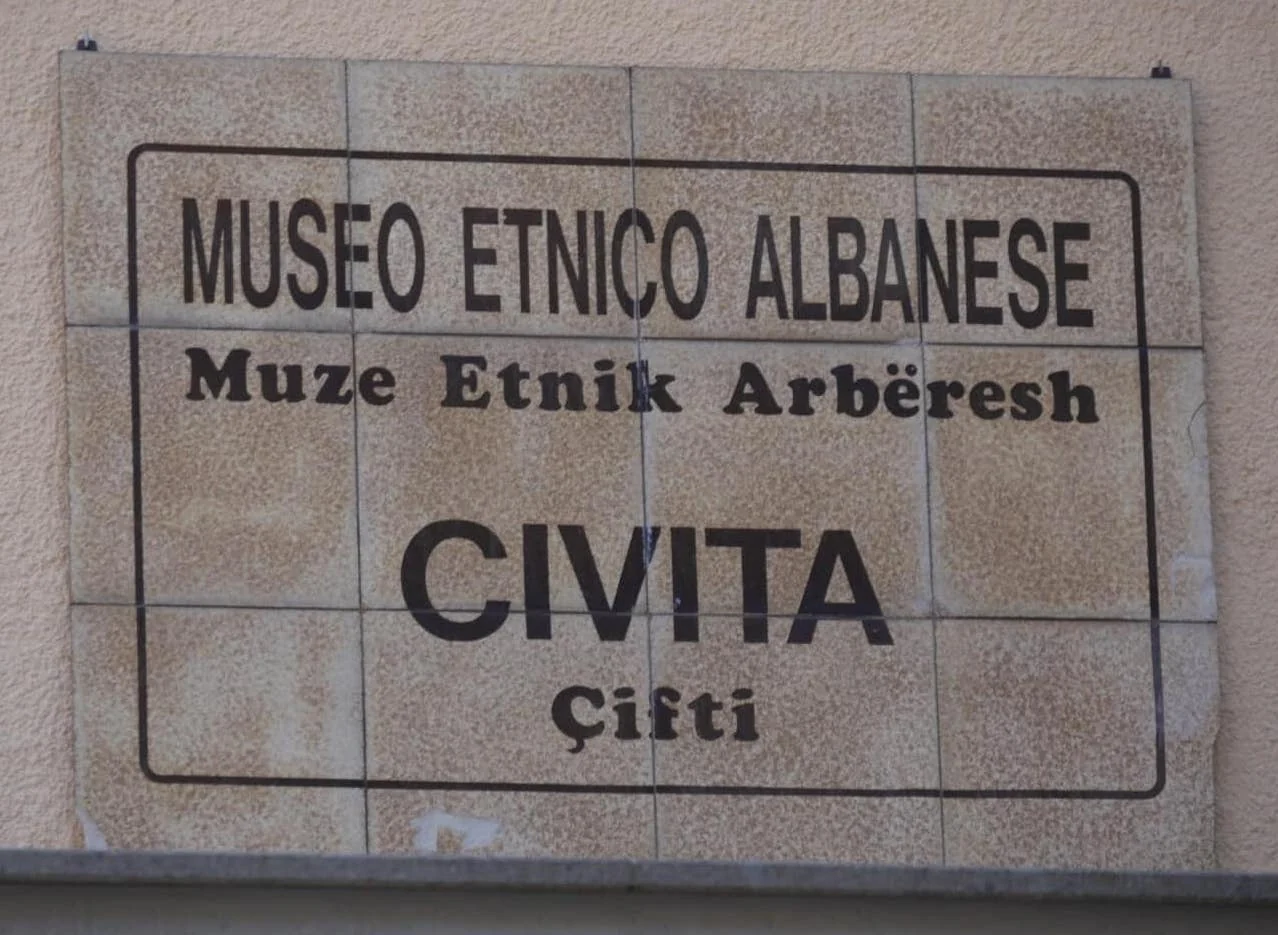
Italia.it's itinerary through Pollino Arbëreshë culture links several museums. In Frascineto, six kilometres from Civita, the Museum of Dolls and Arbëreshë Costume tells of the 15th-century migrations and Albanian traditions; nearby is a museum of icons and Byzantine tradition. In Civita the Arbëreshë Ethnic Museum, on the main square, has a library of about 530 volumes published in Italy and over 600 published in Albania, a loom room with farm objects, material on the legend of Skanderbeg and the Devil's Bridge, and a costume room. On the Basilicata side, the ethnographic museum of San Paolo Albanese, founded in 1975, explains the broom-fibre cycle, and the San Costantino Albanese ethno-museum holds dairy tools, costumes and a workshop for the surdulina, a wind instrument similar to bagpipes.
Sources: Italia.it — Parco nazionale del Pollino, cultura arbëreshë e tradizioni
On the table: Pollino produce
Pollino Arbëreshë cooking uses the same local produce the National Park documents on its food page. Cheeses include hard pecorino from sheep and goat milk and ricotta infornata, typical of some small dairies on the Calabrian side, dry-salted and baked in ceramic or terracotta pots, then aged from a few weeks to six months. Calabrian soppressata is seasoned with salt, pepper and sweet or hot pepper; sausage with wild fennel. The Park mentions Cerchiara bread, made with sourdough and wood-fired, the figure-of-eight tarallo, the fresa, and the Easter sweet bread piccidat, typical of the whole Pollino area. Honey, wild berry jams, liqueurs from herbs and wild fruit and moscato di Saracena complete the table.
Sources: Parco nazionale del Pollino — Sapori
A cuisine handed down at home
In the institutional sources we consulted we found no official sheets on individual Arbëreshë recipes from Civita, so we do not describe their methods. This fits the nature of the cuisine: it is handed down in families, in the gjitonia and on feast days, and tied to the religious calendar, starting with Easter, which in the Byzantine rite has its own timing and forms. The best way to discover it is to ask, at the table or in a shop, which dishes are made for feasts and which pastas are still made by hand, listening to the names in Arbëreshë. Alongside the dishes, look at the bread, Easter sweets and local cheeses: they tell the same interweaving of Albania and Calabria seen in costumes and churches.
Visiting with respect
Civita is a lived-in village, not an open-air museum. During liturgies, especially in Holy Week, enter church quietly, without flash and without interrupting the chants; watch the vallje and, if invited, join the circle. Dates of Byzantine Easter and the feasts should be checked each year with the parish or town council. Outside feast days the village can be seen in half a day, with the Devil's Bridge and the viewpoint over the Raganello; walkers can spend another day in the gorge, taking due care and, for harder routes, a guide. For lunch, choose a place serving local dishes and ask what they are called in Arbëreshë: it is a good way to start a conversation. Workshop visits must be arranged with operators.
A thread for your journey
Journey idea: a day in Civita among the Kodra houses, Santa Maria Assunta church, the Arbëreshë Ethnic Museum and the Devil's Bridge, with lunch based on Pollino produce; the next day Frascineto and its museums, or Lungro, seat of the Eparchy. If possible choose Holy Week or the Easter period, checking dates in the Byzantine calendar. Visits to workshops and dairies arranged with operators.
Talk to us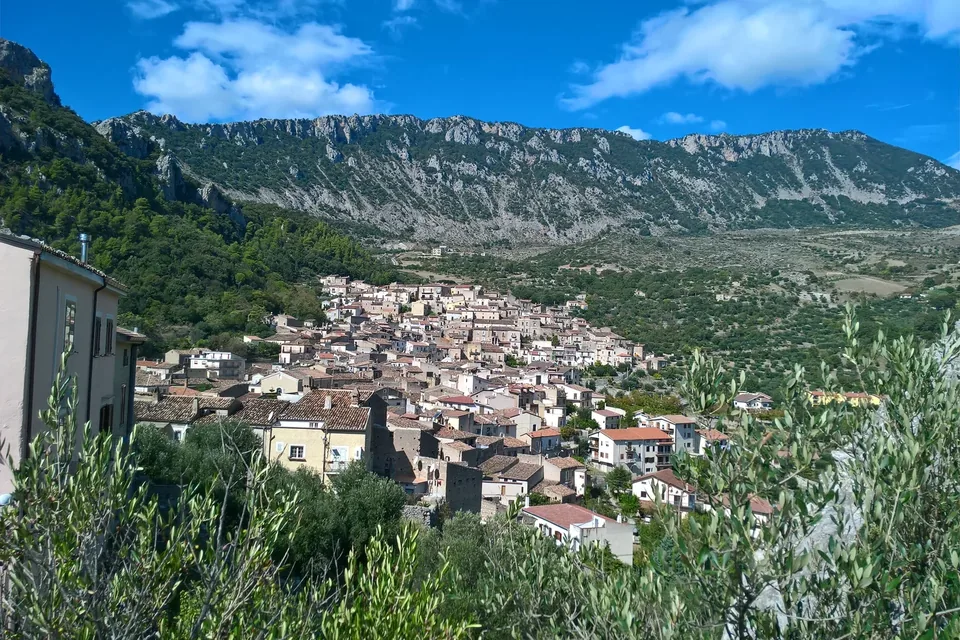

.jpg)


