
Why go
Altomonte is a medieval village in the province of Cosenza, at almost five hundred metres above sea level, on a promontory skirted by the Esaro river. The municipality notes that it belongs to the Most Beautiful Villages in Italy and is a City of Bread and a Slow City; the Calabria Region’s tourism portal lists it among the region’s most important artistic centres.
Two things make the visit more than a scenic stop. The first is art: the church of Santa Maria della Consolazione is one of the finest examples of Angevin Gothic in Calabria, and the Civic Museum holds fourteenth-century Tuscan works, including a panel by Simone Martini. The second is bread, which here is a recognised culture, with a museum, a festival and a centre devoted to bread tasting.
Then there is the landscape. From the village the view takes in the Pollino massif, the Sila, the Sibari plain and the Ionian Sea: mountains, plain and coast on one horizon. This geography helps make sense of onward travel in northern Calabria and makes Altomonte a natural stop between the Pollino and the Sibaritide.
Sources: Comune — storia e patrimonio di Altomonte · Regione Calabria — Altomonte · Regione Calabria — Historic centres and old villages, Altomonte · Regione Calabria — Alla scoperta di Altomonte tra i Borghi più belli d’Italia
History
The place was already known in Roman times: Pliny the Elder mentions Balbia for its wine, Balbino. The present name dates from the fourteenth century, when under the Angevins the county passed to the Sangineto family and then to the Sanseverino, princes of Bisignano connected with the Ruffo of Calabria. The castle at the centre of the village dates from the twelfth century and was given the title of castrum in 1342.
The Angevin period left the strongest mark. Filippo Sangineto, first count of Altomonte and a knight of King Robert of Anjou, had the church of Santa Maria della Consolazione built in the first half of the fourteenth century over a Norman chapel dedicated to Santa Maria de’ Franchis; sources give different dates between 1330 and 1345. He enriched it with works by Simone Martini, Bernardo Daddi and the school of Giotto, so that the municipality speaks of an island of fourteenth-century Tuscan art in Calabria.
In the fifteenth century Countess Cobella Ruffo Sanseverino founded the convent, which passed to the Dominicans with the church in 1443 and became a centre of theological and scientific study. Tommaso Campanella stayed here and wrote his Philosophia sensibus demonstrata around 1589; the storyteller Matteo Bandello also spent time here. After the nineteenth-century suppressions the complex declined, until in 1980 it became the home of the Civic Museum.
Sources: Comune — storia e patrimonio di Altomonte · Comune di Altomonte — Chiesa di Santa Maria della Consolazione · Comune di Altomonte — Convento dei Domenicani · Regione Calabria — Tour della Calabria angioina · Regione Calabria — Altomonte
What to see
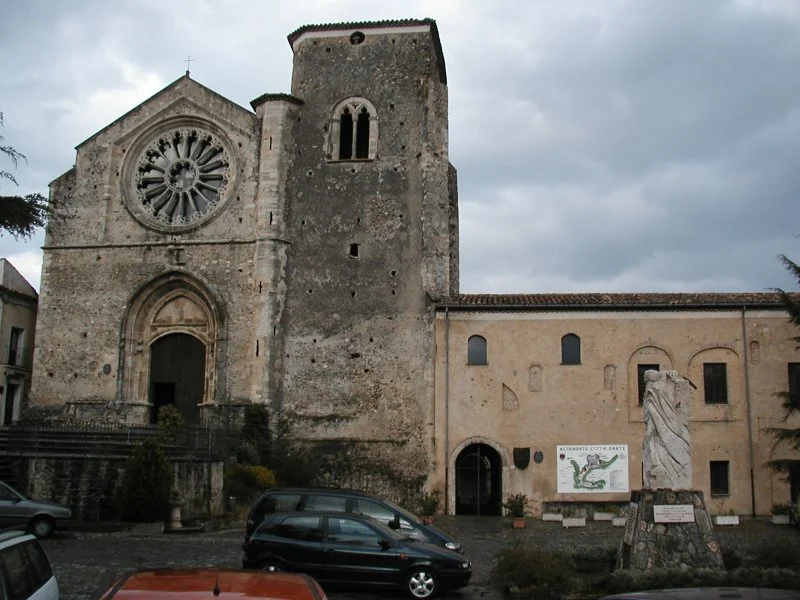
The starting point is Piazza Tommaso Campanella. Here the façade of Santa Maria della Consolazione, flanked by a massive bell tower, shows features of French origin: the large rose window and a portal with a straight lintel and a plant motif running round the splayed arch. The single-nave interior holds the Sangineto funerary monument, the floor tomb of Cobella Ruffo, the chapel of the princes of Bisignano and a wooden choir of thirty-seven stalls. It is a good place to begin with one detail, the rose window or the portal, before widening the view to the square.
Next door, in the former Dominican convent, the Civic Museum keeps the Saint Ladislaus painted by Simone Martini in 1326, the Madonna of the Pears by Paolo di Ciacio, a pupil of Antonello da Messina, works by Bernardo Daddi, Neapolitan-school paintings, vestments and wooden sculpture; it is entered from the cloister.
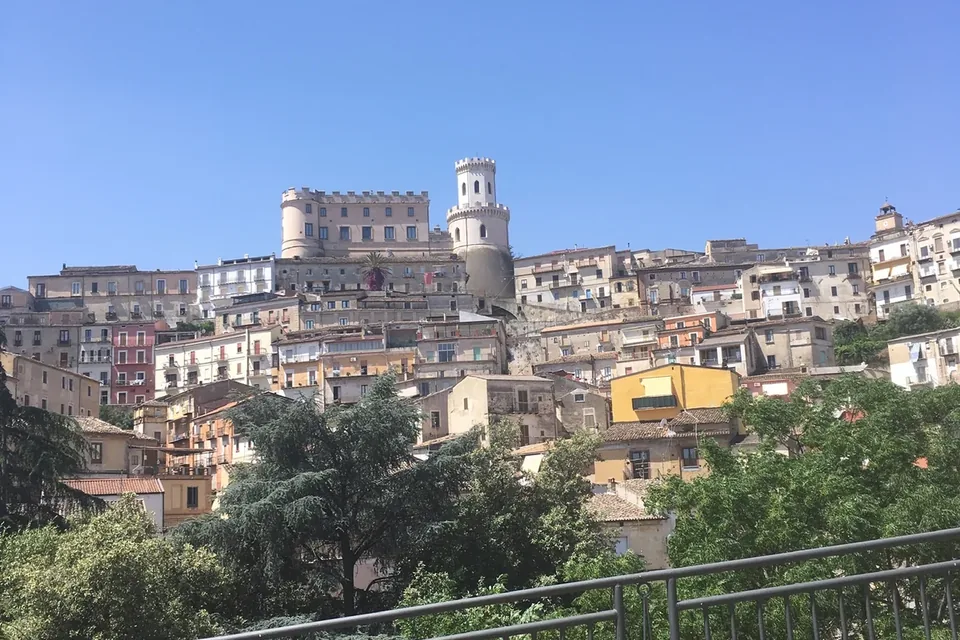
At the top of the village stands the feudal castle, with a panoramic loggia facing the Pollino and roof trusses frescoed with late sixteenth-century mythological scenes. Nearby, the Pallotta Tower, of Norman foundation and restored in 1991, houses the gallery devoted to the painter Franco Azzinari. The walk is completed by the church of San Giacomo, recorded as early as 1182, the San Francesco di Paola complex with its cloister, now the town hall, the noble palaces of the Giacobini, Scaramuzza, Coppola and Pancaro families, and the Belluscio Theatre, with about a thousand seats and mosaics inspired by Greek theatre. Between the monuments, lanes and steep stairways trace a very old urban layout.
Sources: Comune di Altomonte — Chiesa di Santa Maria della Consolazione · Comune di Altomonte — Museo Civico · Regione Calabria — Alla scoperta di Altomonte tra i Borghi più belli d’Italia · Regione Calabria — Tour della Calabria angioina · Comune di Altomonte — Castello Feudale · Comune di Altomonte — Torre Normanna · Comune di Altomonte — Chiesa di San Giacomo Apostolo · Comune di Altomonte — Complesso monastico di San Francesco di Paola · Comune di Altomonte — Palazzi · Comune di Altomonte — Teatro Costantino Belluscio · Regione Calabria — Historic centres and old villages, Altomonte
Food and wine
Bread is the common thread. Altomonte belongs to the national City of Bread association, and in 2009 Palazzo Battaglia became the home of the National Institute of Bread Tasters, which works to teach how to recognise quality. In the same palace the Museum of Mediterranean Food offers a multimedia, sensory room on breadmaking, a display of local products and food education courses. A good pause here is a simple tasting with a clear explanation: the crust, the crumb, what to eat it with.
Wine has ancient roots, since Pliny already mentioned Balbino. Today the Borgo DiVino wine tour, usually in June, organised with the Most Beautiful Villages association under the patronage of the Wine Cities association, brings local and national labels into the old centre with a guided route on food pairing. Along the lanes you also find liqueurs, sweets and local products, and the municipality presents the town as a symbol of traditional Calabrian cooking.
Nearby villages widen the table. Saracena produces Moscato al governo di Saracena, a passito from moscato grapes with malvasia and guarnaccia, a Slow Food Presidium; Castrovillari has the Cipolla bianca di Castrovillari, with a municipal designation. A food itinerary can link these products in a day, with visits arranged in advance with the producers.
Sources: Regione Calabria — Alla scoperta di Altomonte tra i Borghi più belli d’Italia · Comune di Altomonte — Manifestazioni · Comune di Altomonte — Museo dell’Alimentazione Mediterranea · Comune — storia e patrimonio di Altomonte · Regione Calabria — Saracena · Regione Calabria — Castrovillari
Things to do
The fullest visit alternates art and everyday life. The morning can go to the church and the Civic Museum, taking time to see how the stone changes in the light and how the façade relates to the square, and the afternoon to the Museum of Mediterranean Food and the workshops of the centre, where the municipality points to items in clay, wood and wicker, wooden postcards, old embroidery and liqueurs. There is no need to exhaust every collection: pace matters as much as the number of stops.
For nature there is the municipal Farneto Park, some two hundred hectares of woodland with oaks, heather and poplars, a small artificial lake with areas for fishing, picnics and barbecues. Altomonte also opens onto the foothills of the Pollino National Park, Italy’s largest nature park, with trails for trekking and mountain biking and rivers where qualified operators lead rafting, canyoning and canoeing.
In summer the open-air Belluscio Theatre hosts shows, concerts and exhibitions. The village is also a popular wedding venue, with hundreds of ceremonies a year: worth bearing in mind if you are looking for a quiet weekend.
Sources: Comune — storia e patrimonio di Altomonte · Regione Calabria — Alla scoperta di Altomonte tra i Borghi più belli d’Italia · Comune di Altomonte — Museo dell’Alimentazione Mediterranea · Comune di Altomonte — Teatro Costantino Belluscio · Regione Calabria — Parco Nazionale del Pollino
When to go
Events bring the village to life all year, but May is the most characteristic month. In its last week the Great Bread Festival turns the old centre into one big bakery, with the old ovens opened and restored for the occasion, guided visits, tastings, school competitions and an exhibition of breads from all over Italy organised with the City of Bread association. Also in May, the theatre hosts the School Theatre Festival, founded in 1998, which brings Italian and European students onto the stage.
Summer is the season of the big shows. June brings the Dance Festival for schools and usually the Borgo DiVino wine tour; in the warm months the Euro-Mediterranean Festival offers drama, music, operetta, exhibitions and talks, alongside events of the Most Beautiful Villages circuit and the Altomonte Rock Festival.
Spring and autumn are the best times to combine the village with walks in the Pollino: in spring orchids, violets and gentians come into flower. Dates and programmes change from year to year and should be checked with the municipal tourist office before travelling.
Sources: Comune di Altomonte — Manifestazioni · Regione Calabria — Alla scoperta di Altomonte tra i Borghi più belli d’Italia · Regione Calabria — Altomonte · Comune di Altomonte — Teatro Costantino Belluscio · Regione Calabria — Parco Nazionale del Pollino
Getting there and around
The Calabria Region’s tourism portal lists the main gateways. By rail, Trenitalia high-speed trains and Italo serve the stations of Paola, Lamezia Terme, Reggio Calabria and Sibari; Sibari lies on the plain visible from Altomonte’s viewpoint. Calabria has three airports: Lamezia Terme, Crotone and Reggio Calabria. Numerous coach lines connect Calabria with the rest of Italy.
For travel within the region there are Trenitalia and Ferrovie della Calabria regional trains and coaches run by numerous operators; the Region’s tourist infomobility portal collects connections to and from the airports. Timetables and routes should be checked on the operators’ official websites.
Altomonte is an inland village and the places around it, from the Pollino to the Ionian coast, are spread over a wide area: for a full itinerary a car, rented at stations and airports, or a chauffeured service arranged in advance is the practical choice. Once there, the old centre is explored on foot, through lanes and stairways.
Sources: Regione Calabria — Come arrivare in Calabria · Regione Calabria — Come muoversi in Calabria · Comune — storia e patrimonio di Altomonte
Where to stay
The municipality notes that Altomonte welcomes many visitors each year and has several hundred beds, with modern facilities and plenty of places to eat. Travellers who want to enjoy the village in the evening can stay in the old centre, where the municipal list includes hotels, bed and breakfasts in the town’s palaces and squares, and a hostel.
In the rural districts around the village, among vineyards and countryside, there are agriturismi and rural accommodation, suited to those who prefer quiet and a base for exploring the Pollino and the Sibari plain. They are also convenient for travellers with a car.
The village is much sought after for weddings, and on fine-season weekends availability can be limited, so it is worth planning ahead. Apulica selects accommodation case by case, with no availability guaranteed in advance.
Sources: Comune di Altomonte — Strutture ricettive · Comune — storia e patrimonio di Altomonte
Nearby
Castrovillari, at the foot of the Pollino and the park’s largest town, has its medieval core in the Civita: the Aragonese castle attributed to Francesco di Giorgio Martini, the Franciscan Protoconvent of 1220 with the Archaeological Museum and the Sybaris Theatre, and a historic Carnival. A little further north, Morano Calabro is a nativity-scene village clinging to a hill, with the church of Saints Peter and Paul, the Maddalena with Bartolomeo Vivarini’s polyptych and the Museum of the History of Farming and Pastoralism.
Saracena, inside the park, keeps an Arab-style street plan, the church of Santa Maria del Gamio with its Sacred Art Museum and the Andrea Alfano gallery; walks lead from the area to the Grotta di San Michele and Lake Tavolara. Lungro, founded by Albanian refugees in the fifteenth century, is the religious capital of the Arbëreshë, with the cathedral of San Nicola di Mira, Byzantine-rite liturgy and the rock-salt mine museum.
Those following the Angevin thread can continue to Rossano, in the municipality of Corigliano-Rossano, where the cathedral of the Madonna Achiropita was enlarged at the wish of King Robert of Anjou. Higher up in the Pollino National Park are the ancient beech forest of Pollinello, a UNESCO site, and the Bosnian pine, the park’s symbol.
Sources: Regione Calabria — Castrovillari · Italia.it — Morano Calabro · Regione Calabria — Saracena · Regione Calabria — Lungro · Regione Calabria — Parco Nazionale del Pollino · Regione Calabria — Tour della Calabria angioina
Local tourist information
Local tourist offices help with opening times, events and transport on the day.
- Comune di Altomonte — Ufficio Turismo · Largo della Solidarietà 1, 87042 Altomonte (CS) · 0981 948041 · altomonteufficioturismo@gmail.com · Official website
Source: Comune di Altomonte — Manifestazioni · Comune di Altomonte — sito istituzionale · checked on
Where to stay
In the municipality of Altomonte the national database of the Ministry of Tourism lists 9 accommodation businesses with a verified CIN code: 3 hotels, 3 other licensed accommodation and 3 other types such as B&Bs and private rentals.
Sources: Ministero del Turismo – Banca Dati Strutture Ricettive (dashboard pubblica), 2026-10-12
YOUR JOURNEY
How to shape a journey here
Art and bread in an inland town. Producer encounters require agreement; no existing partnership is assumed.
Talk to us about it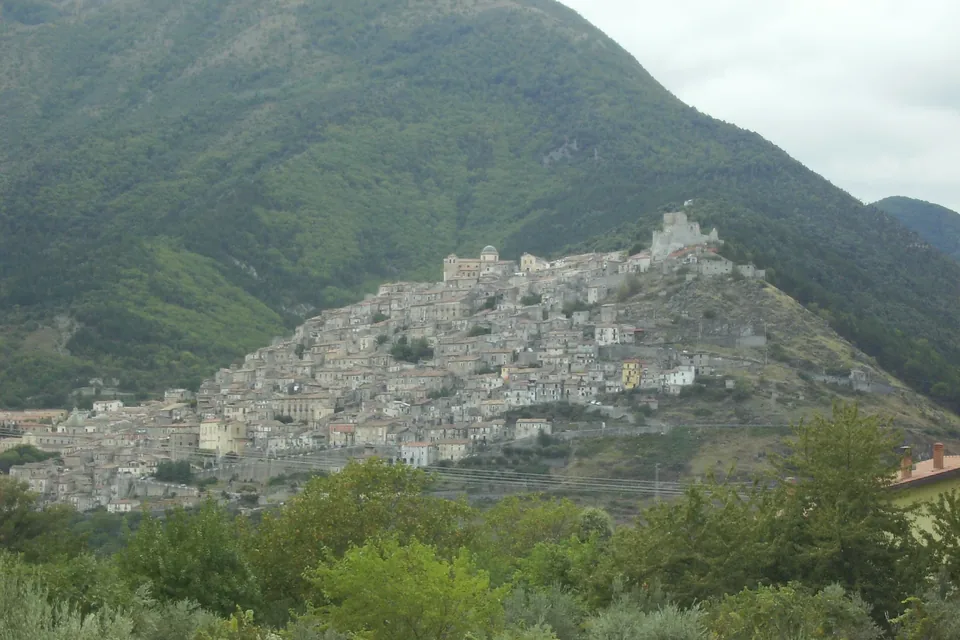


_luglio_2021_f01.jpg)
.jpg)
