
APULICA / Food guides
Cosenza figs: the Dottato fig dried in the sun between Pollino, Sila and two seas
In the province of Cosenza dried figs are not just a dessert: they are a whole rural culture, made of fruit left to wilt on the branches, cane racks spread in the summer sun and elaborate preparations such as crocette with walnuts, plaits and little crowns. Since 2011 Fichi di Cosenza has been a Protected Designation of Origin, tied to a single variety, Dottato, and a specific setting between the Tyrrhenian, the Ionian, the Pollino and the Sila. This guide explains the drying method, the documented history, the PDO rules, kitchen uses and how to fit figs into a slow journey through the Cosenza area.
A single variety: Dottato
The specification reserves the name for dried fruit of the domestic fig of the Dottato variety, also called Ottato. According to the text, the variety was described in 1715 by the scholar Anton Maria Salvini as particularly fine and by 1920 was present in the United States under several synonyms, including Kadota. Fresh fruit has pale, thin, elastic skin, full, sugary flesh and very few seeds, small and thin: Dottato is parthenocarpic, meaning it develops fruit without pollination. The specification explains that wild figs are scarce in the Cosenza area and caprification is not practised, indeed it is excluded, allowing the variety to show this trait to the full. Qualigeo describes the dried figs as elongated teardrops, with skin from straw-yellow to light beige and a very sweet, almost honeyed flavour.
Sources: Camera di Commercio di Cosenza — Disciplinare di produzione DOP Fichi di Cosenza · Qualigeo — Fichi di Cosenza DOP
Passuluni: the fig that wilts on the tree
The first stage happens on the tree. The specification explains that figs stay on the branches until they are well wilted, with average moisture between 39 and 43 per cent: their colour shifts from green to yellow with beige tones and the fruit bends on its stalk, still hanging. In this state they are locally called passuluni. Picking is by hand, between 10 August and 10 October. Climate, the text argues, is decisive: the area lies between two seas, shielded to the north by the Pollino against the tramontana and by the Sila against hot south-easterly winds; steady, moderate summer winds keep the Dottato's thin skin from drying too fast. The result is soft, even flesh and the chance to pick the fruit before it falls to the ground.
Sources: Camera di Commercio di Cosenza — Disciplinare di produzione DOP Fichi di Cosenza
In the sun on cane racks or under glass
After picking, drying is completed in three to seven days, depending on ripeness and method. With traditional drying, figs are laid on cane racks, the cannizze, raised off the ground so air can pass beneath, and left in the sun; in the first three days they must be turned at least twice a day and protected at night from damp and rain. Protected drying instead uses greenhouses with transparent covers, insect nets and a temperature kept below 50 degrees, for no more than five days, with racks 60 to 100 centimetres off the ground. At processing centres the dried figs, locally called ficu siccati or ficu janchi, are washed and may be blanched for up to two minutes or sterilised. Qualigeo calculates that about three kilos of fresh figs make one kilo of dried.
Sources: Camera di Commercio di Cosenza — Disciplinare di produzione DOP Fichi di Cosenza · Qualigeo — Fichi di Cosenza DOP
The PDO, the area and controls
The name Fichi di Cosenza is a PDO: Qualigeo gives its registration date as 21 June 2011, in the fruit and vegetables category. According to Qualigeo the production area covers the province of Cosenza between 0 and 800 metres above sea level; the specification traces its boundaries town by town, from the Tyrrhenian coast at San Nicola Arcella and Papasidero towards Mormanno, Morano Calabro, Castrovillari and Civita, to the Ionian coast from Rocca Imperiale to Cariati, and south to the Savuto valley. Specialised orchards may not exceed 400 trees per hectare and treatments with synthetic chemicals are excluded. The Cosenza Chamber of Commerce carried out controls until March 2023; from 14 March 2023, for the 2023-2026 period, the Ministry authorised a private certification body.
Sources: Qualigeo — Fichi di Cosenza DOP · Camera di Commercio di Cosenza — Disciplinare di produzione DOP Fichi di Cosenza · Camera di Commercio di Cosenza — Controlli di filiera DOP Fichi di Cosenza
Five centuries of history
The specification gathers rich historical evidence. Fig growing, probably introduced in the time of Magna Graecia, is recorded in the Cosenza area from the 16th century in Leandro Alberti's Descrittione di tutta Italia. Economic reports from the 18th and 19th centuries describe production, drying and trade; the Murat statistics of 1812 show that Cosenza figs were already exported outside the Kingdom of Naples. In 1927 the American scholar I. J. Condit reported that Paris and London merchants praised Cosenza's Kadota figs. In the early 20th century some firms began to move beyond family production. The text also recalls the fair of San Giuseppe, documented in Cosenza at least from the mid-19th century, among the events linked to the product, and the widespread custom of drying figs in the sun on home balconies.
Sources: Camera di Commercio di Cosenza — Disciplinare di produzione DOP Fichi di Cosenza · Qualigeo — Fichi di Cosenza DOP
Crocette, plaits and pitta 'mpigliata
From loose sun-dried figs, the specification notes, Cosenza farmers invented over the centuries many preparations, some genuine little works of art: montagnoli, crocette, nocchette, stuffed and baked figs, palloni, plaits, crowns, fig salami and fig honey, also rich in social and religious meanings. Qualigeo describes crocette, crucetti in dialect, made by arranging figs in a cross with walnuts or almonds and citrus peel and then baking them, as well as plaits, called jette, and little crowns. Figs also go into pitta 'mpigliata, a kind of filled cake, and many local sweets. They are eaten at the start or end of a meal. Sales run all year, peaking at Christmas; according to Qualigeo the PDO product is available from January to May and from October to December.
Sources: Camera di Commercio di Cosenza — Disciplinare di produzione DOP Fichi di Cosenza · Qualigeo — Fichi di Cosenza DOP
Cosenza and the Crati valley
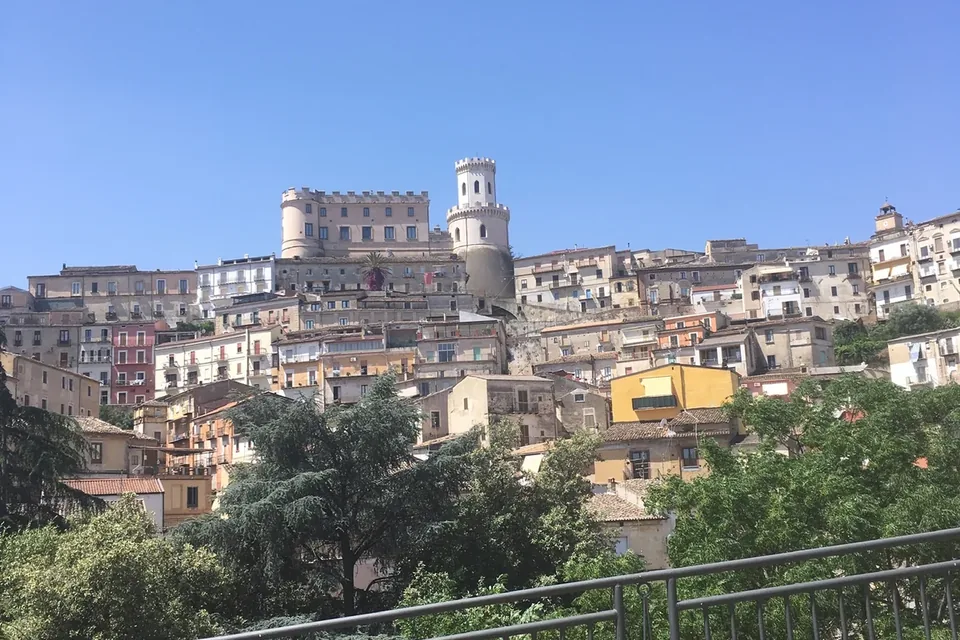
The city that gives the PDO its name deserves a day. Italia.it describes Cosenza as split by the Crati and Busento rivers: the old town, crowned by the Norman castle on Pancrazio hill, keeps a medieval atmosphere around the church of San Francesco d'Assisi, with houses with pergola-like outdoor staircases, 15th-century buildings and the Cistercian Gothic cathedral of Maria Assunta, which holds the tomb monument of Isabella of Aragon. The new town, grown since the late 19th century, hosts along corso Mazzini the MAB, the Bilotti open-air museum, with sculptures by Modigliani, Dalí and De Chirico. Where the two rivers meet rises the dome of San Domenico. Italia.it lists Fichi di Cosenza among Calabria's PDOs, alongside Liquirizia di Calabria and Caciocavallo Silano.
Sources: Italia.it — Cosenza · Italia.it — Calabria, gastronomia e prodotti tipici
When to go and what to take home
To see figs drying in the sun, go at the end of summer, from August to early October, when racks are being tended in the countryside and on balconies; visits to orchards and workshops must be arranged with operators, as this is the busiest time of year. For buying, autumn and winter offer the widest choice, with Christmas preparations. Dried figs travel very well: keep them cool and dry in a closed pack. To recognise the protected product, look on the label for the name Fichi di Cosenza with the PDO reference; elaborate preparations such as crocette or coated figs may or may not use PDO figs, so read carefully. Tasting a plain fig beside a baked crocetta shows the difference between raw material and craftsmanship.
A thread for your journey
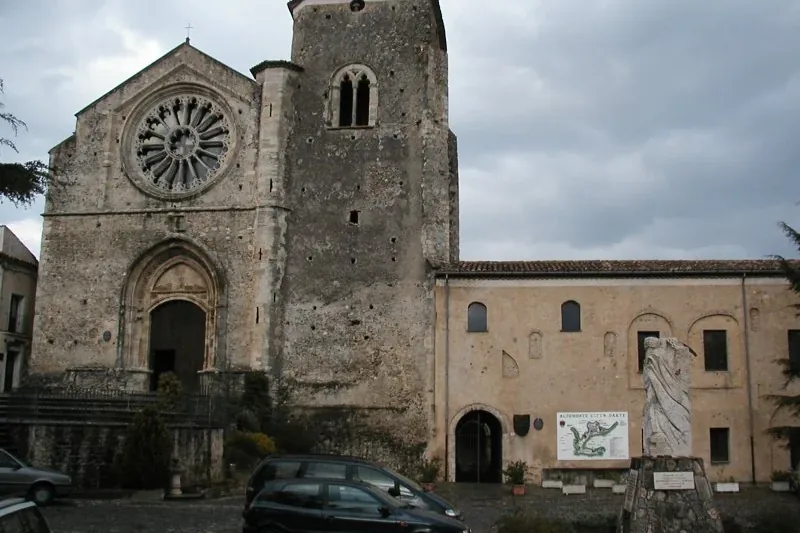
Journey idea: a day in Cosenza between the old town, the cathedral and corso Mazzini, with a side-by-side tasting of plain dried figs and crocette; the next day the Crati valley towards Altomonte and Civita, on the edge of the Pollino, in the season when figs dry on cane racks. Visits to orchards and workshops arranged with operators.
Talk to us


_luglio_2021_f01.jpg)