
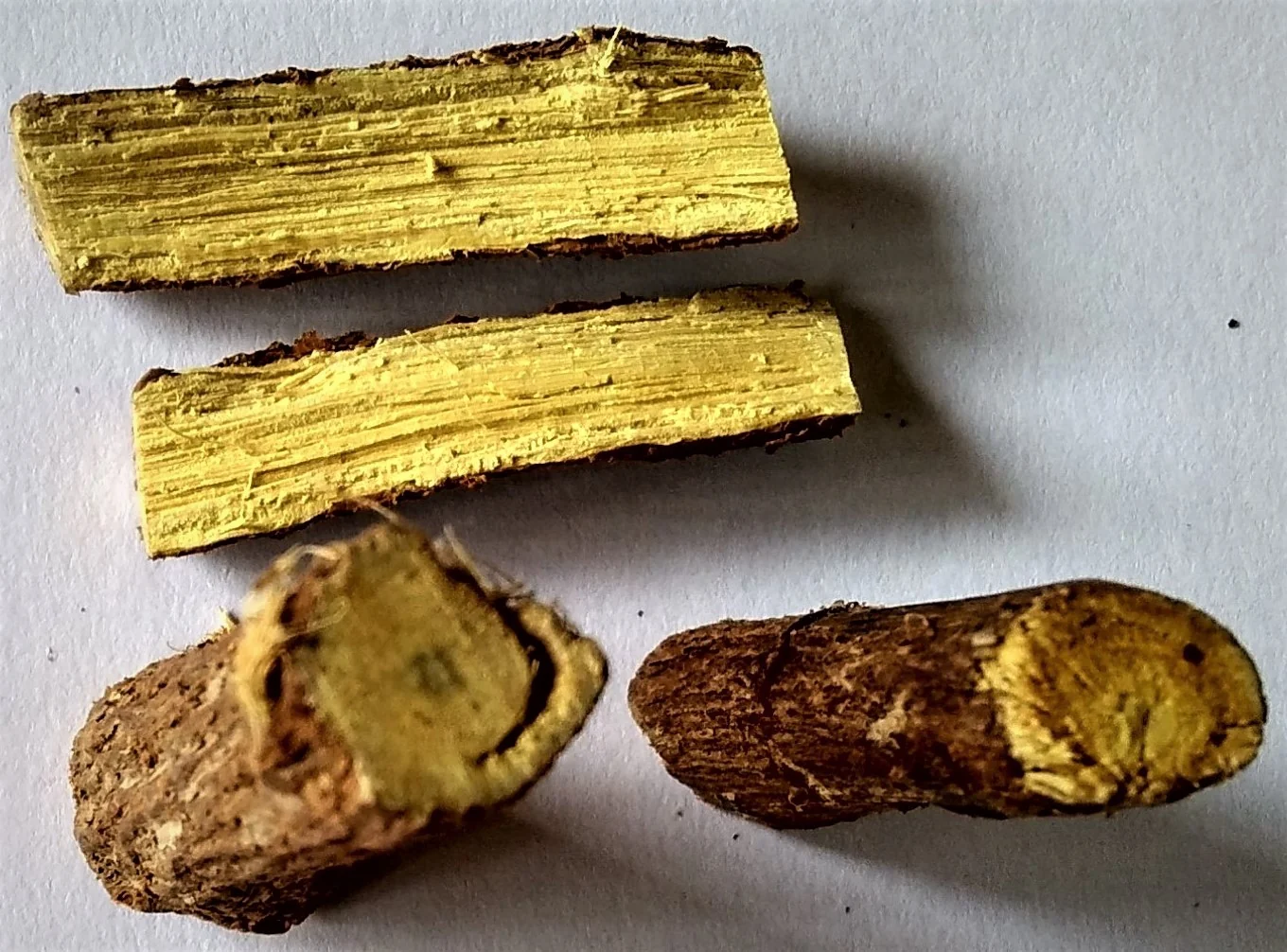
Three forms of one root
The specification reserves the PDO for fresh or dried liquorice and its extract, obtained from cultivated and wild plants of Glycyrrhiza glabra, of the legume family, in the variety known in Calabria as Cordara. There are therefore three types on sale: fresh root, dried root and root extract.
The fresh root is straw-yellow, with a sweet, aromatic, intense and lasting flavour. The dried root ranges from deep straw-yellow to ochre and is sweet, fruity and slightly astringent. The extract, from burnt-earth brown to black, tastes bittersweet, aromatic, intense and lasting.
The specification also sets the glycyrrhizin content, the substance responsible for sweetness: 0.60 to 1.40 per cent in the fresh root, 1.2 to 2.4 in the dried root and 3 to 6 in the extract. Qualigeo stresses that Cordara stands out from similar varieties precisely for its markedly lower glycyrrhizin and sugar content, and for compounds such as liquiritigenin and licochalcone A.
Sources: Masaf — Disciplinare di produzione DOP Liquirizia di Calabria · Qualigeo — Liquirizia di Calabria DOP
A designation covering Calabria
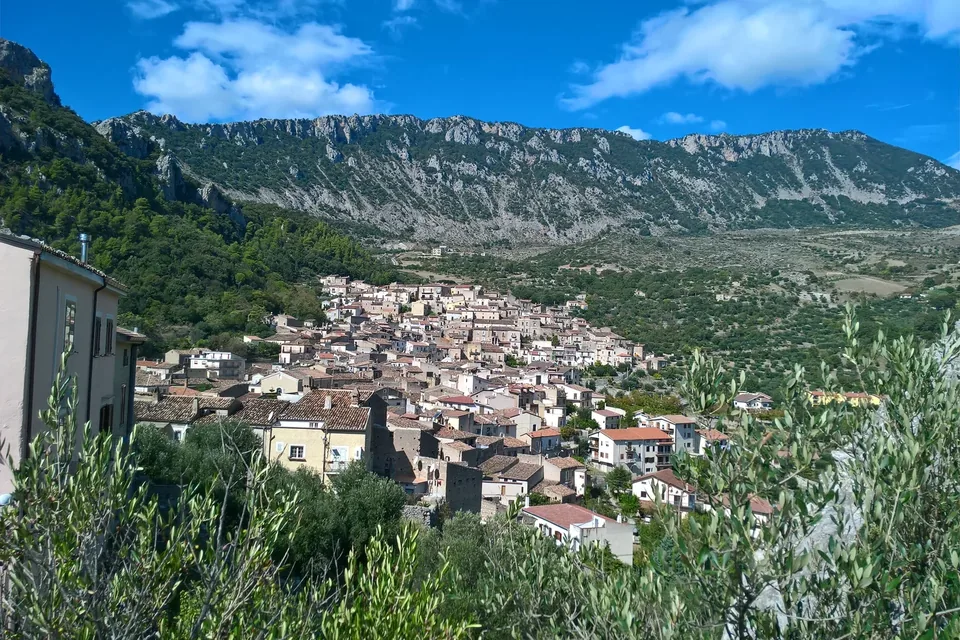
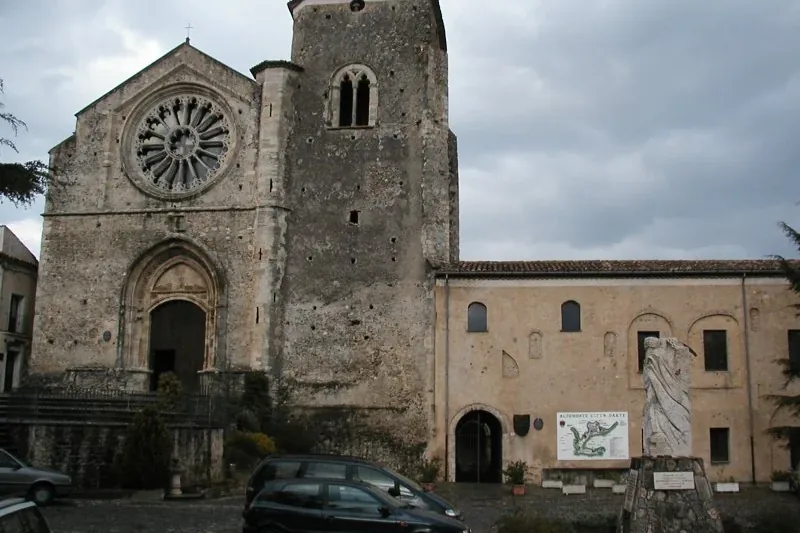
The production area, according to Qualigeo, covers 210 municipalities in all the Calabrian provinces, up to 650 metres above sea level. The specification lists them one by one: in the province of Cosenza, for example, Rossano, Corigliano, Cassano allo Ionio, Civita, Altomonte, Amantea and Cosenza itself; further south Lamezia Terme, Soverato and Squillace, Crotone and Cirò, Pizzo and Tropea, Locri, Gerace and Stilo.
European registration as a PDO dates from 24 October 2011, and Qualigeo lists 31 registered operators. The specification explains the link with the region through its shape: a long, narrow peninsula surrounded by about 800 kilometres of sea and split lengthwise by the Apennine ranges, with climate and soil conditions that over the centuries have selected a specific chemotype, namely Calabrian liquorice.
Traceability relies on lists kept by the control body, recording the cultivated plots, farmers, suppliers, producers and packers, and on declarations of the quantities produced. Wild liquorice stands also join the PDO only if they are registered.
Sources: Qualigeo — Liquirizia di Calabria DOP · Masaf — Disciplinare di produzione DOP Liquirizia di Calabria
Growing and harvesting the root
Before planting a new liquorice field the soil must be worked deeply and root cuttings replanted. Liquorice is a nitrogen-fixing plant and, as both the specification and Qualigeo note, it improves soil fertility. A liquorice field yields roots every three or four years, so autumn-winter catch crops such as fodder, vegetables and legumes are allowed in between, with tillage no deeper than 20 centimetres.
Mowing is possible on the field in spring and autumn. Harvesting takes place throughout the year, and wild liquorice, lush and widespread in Calabria, may also be gathered, provided the natural stands are registered with the control body.
Roots must not be dug out deeper than 60 centimetres, and the farmer must notify the start of harvesting at least five days in advance, stating the areas and plots involved. After harvest the roots may not be wetted; those intended for juice are cut, graded and washed with water only.
Sources: Masaf — Disciplinare di produzione DOP Liquirizia di Calabria · Qualigeo — Liquirizia di Calabria DOP
Why it is processed locally, and how to recognise it
The specification explains why all stages must take place within the designated area. When harvested, the root contains on average 50 per cent moisture, which encourages the rapid growth of moulds, especially if the roots are transported: in just two days fungi can appear that produce heat-resistant mycotoxins. Working quickly and close to the fields is therefore a safety guarantee.
Dried root is dried in open, ventilated and sunny places, in well-aired indoor rooms or in ventilated ovens; the specification sets the limit at 50 degrees, while the Qualigeo profile gives 60. Qualigeo describes the formats on sale, such as sticks, pieces and flakes.
Packs, from 5 grams to 25 kilos, may be cardboard, glass, metal, ceramic or plastic, and must be sealed. The label carries the logo, a rhombus with the words Liquirizia di Calabria on the upper sides and DOP on the lower ones, the sequential number assigned by the control body and the packing date. Adjectives such as pure, selected or choice are forbidden.
Sources: Masaf — Disciplinare di produzione DOP Liquirizia di Calabria · Qualigeo — Liquirizia di Calabria DOP
From the conci to export: the documented history
According to Qualigeo, numerous documents show that liquorice was widespread and used in Calabria as early as the seventeenth century. The specification describes the late eighteenth century: cultivation stretched along the whole Ionian coast, especially near the border with Lucania and on the broad Sibari plain, down to Crotone and Reggio Calabria, and was also plentiful in the Crati valley, which runs down from Cosenza to the plain, and along wide stretches of the Tyrrhenian coast.
Among the records, the specification cites a painting by Saint-Non from the late eighteenth century, Vincenzo Padula's 1864 text on the concari, the workers of the conci, the works where the juice was extracted, and several twentieth-century studies on the conci of the province of Cosenza from the 18th to the 20th century.
Its fame went beyond the region: a 1903 pharmacology treatise used the name Calabrian liquorice to distinguish this root from Russian liquorice, and the 1928 Encyclopaedia Britannica wrote that the quality most appreciated in Great Britain was made in Calabria. Today, the specification notes, the plant grows in the same areas, including in specialised plantations.
Sources: Qualigeo — Liquirizia di Calabria DOP · Masaf — Disciplinare di produzione DOP Liquirizia di Calabria
Rossano, between the Sila and the Ionian
Italia.it presents Rossano, now part of the municipality of Corigliano-Rossano, where the Sila mountains slope down to the sandy coast. Possibly founded by the Oenotrians, it passed to the Romans and then the Byzantines, under whom it flourished: between 540 and 1059 it was a strategic centre of the Empire, so much so that it was called the Ravenna of the South.
In the cathedral of Maria Santissima Achiropita the Codex Purpureus Rossanensis was found in 1879, one of the oldest surviving gospel books: 188 purple-dyed parchment leaves with the Gospel of Matthew and almost all of Mark, decorated with fourteen miniatures, recognised by UNESCO as documentary heritage and kept in the Diocesan Museum. Just outside town the church of Santa Maria del Patire preserves a floor mosaic, and on the coast the Norman Tower of Sant'Angelo has a star-shaped plan.
The guide notes that the area's microclimate favoured the growing and processing of liquorice, told in a museum displaying tools, objects and manuscripts of a family that for about four centuries worked the wild roots of the Ionian coast.
Sources: Italia.it — Rossano
The upper Ionian coast, from Rocca Imperiale to Corigliano
Italia.it suggests a four-stage itinerary along the upper Ionian coast of Cosenza, an area whose particular microclimate allows rice, liquorice, lemons and clementines to be grown. It starts at Rocca Imperiale, a medieval village with a Swabian castle from 1221 and its PGI lemon; every August a literary prize leaves a poem on a majolica tile set into a house wall.
Along the coast you reach Roseto Capo Spulico, an ancient Magna Graecia colony linked to Sybaris, with its Frederician castle overlooking a Blue Flag sea and the Anvil Rock. Then on to Sibari, in the Crati river mouth reserve: the Archaeological Park and the National Museum of the Sibaritide tell the story of Sybaris, Thurii and Copia. On the plain you can taste Sibari rice and Clementine di Calabria PGI.
The last stage leads to Corigliano, with its Ducal Castle, a well-preserved 11th-century fortress with frescoed rooms and sculptures, and the churches of Sant'Antonio di Padova and San Francesco di Paola, before climbing to Rossano. All these towns lie within the PDO area.
Sources: Italia.it — Alto Ionio Cosentino, tra agrumi e liquirizia · Masaf — Disciplinare di produzione DOP Liquirizia di Calabria
Civita, an Arbëreshë village in the PDO area
Among the municipalities listed in the specification is Civita, in the province of Cosenza, which Italia.it presents as one of the Most Beautiful Villages of Italy and one of the oldest guardians of the Arbëreshë minority, the community of Albanian origin settled in Calabria for centuries.
The community's eastern imprint shows in the architecture of houses and churches, in the Byzantine-rite liturgy, in the language, songs and dances. The village is known for its talking houses, also called Kodra houses, whose façades seem to look at passers-by. Visitors to Civita during Holy Week can watch the vallje, traditional Albanian circle dances recalling the tactics of the hero Giorgio Castriota Skanderbeg against the Turkish army.
On those occasions the community wears traditional dress, which can be seen all year in the Arbëreshë Ethnic Museum, along with everyday objects and gold jewellery of eastern style. A detour to Civita adds a page of different history and language to the liquorice journey, a short distance from the Sibari plain.
Sources: Italia.it — Civita, il borgo arbëreshë delle case parlanti · Masaf — Disciplinare di produzione DOP Liquirizia di Calabria
How to taste it
To understand Calabrian liquorice, start with the root: a dried stick chewed slowly releases a fresh, woody sweetness, very different from that of sweets. Then the pure extract, in small pieces, which is sweet and bitter at once and lingers in the mouth.
Only then would I try the preparations: liqueurs, ice creams, desserts, but also a pinch of powder on meat or cheese, where the bitterness adds depth. A tasting in sequence, from root to extract to a sweet preparation, is the simplest way to understand that this is one product in three different forms.
Qualigeo notes that liquorice is credited with digestive properties and is also used in herbal medicine and the pharmaceutical industry. For this very reason it is a product to enjoy in moderation: anyone with high blood pressure should ask a doctor before eating a lot of it. A small piece of extract after lunch is already a good way to get to know it.
A day in the Sibari plain and the journey home
Liquorice lends itself to slow travel because its landscape is not spectacular: it is made of farmland, river valleys, citrus groves and old production buildings. I would start in Rossano, with its old town, the Codex and the museum, then head down to the plain to look at the fields, and finish in Corigliano with its castle; those with more time can add Civita or the Sibari archaeological park.
We found no liquorice festival with fixed dates on official sources. Visits to farms and processing sites should be arranged with the operators.
Liquorice is one of the easiest food souvenirs to carry: dried root and extract do not mind moderate heat or long journeys, and at home they keep in a cool, dry place. To recognise the designated product, I would look on the label for the name Liquirizia di Calabria, the rhombus logo and the sequential number, distinguishing it from packs that speak generically of Calabrian liquorice. A root to chew, a pure extract and a sweeter preparation are enough to tell its story to those back home.
A thread for your journey
Journey idea: a morning in Rossano between the old town and the Codex Purpureus, lunch on the Sibari plain, an afternoon at Corigliano's Ducal Castle, tasting root, extract and a sweet preparation in sequence. Visits to production sites arranged with operators.
Talk to us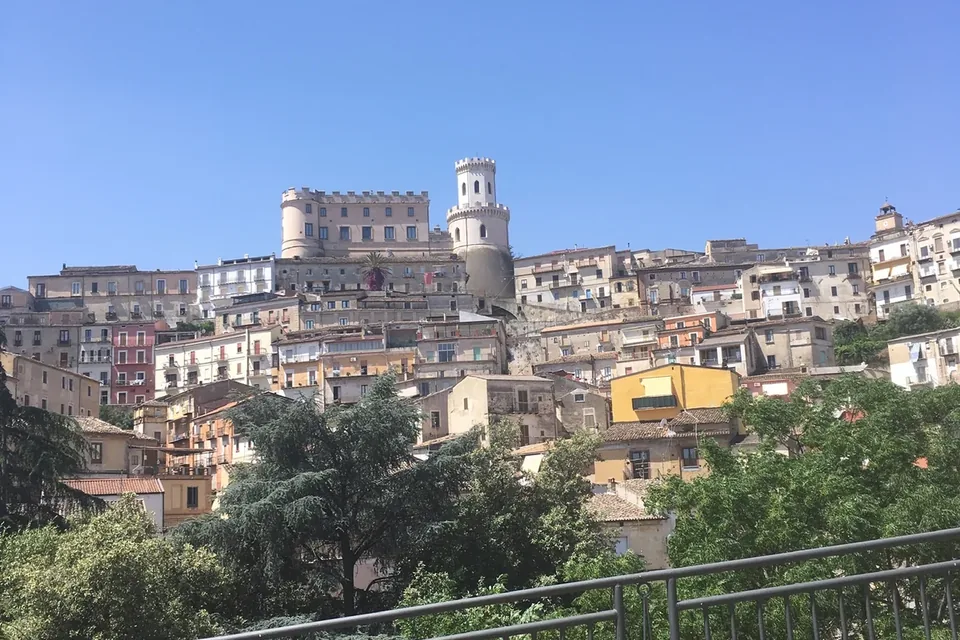

_luglio_2021_f01.jpg)

