
APULICA / CHEESES
Cacioricotta
PAT · Cheeses · Puglia, Basilicata, Calabria, Molise
In brief
- A cheese of sheep's, goat's, cow's or mixed milk, eaten fresh or after about two months of ripening. (Atlante dei PAT di Puglia — Cacioricotta)
- The milk is brought to the boil, left to cool to 40-45 °C, and only then is rennet added. (Atlante dei PAT di Puglia — Cacioricotta)
- Fresh it is white and soft; aged it has a straw-yellow rind and a paste that turns crumbly. (Atlante dei PAT di Puglia — Cacioricotta)
- It is on the national list for Puglia, Basilicata, Calabria and Molise. (Masaf — Elenco nazionale dei prodotti agroalimentari tradizionali, XXVI revisione (2026))
History and origin
The name says a lot: cacioricotta, cheese and ricotta together. It is a cheese born to waste nothing of the milk and to use all its proteins, including those that normally go into ricotta. That is why it was the cheese of the roughest areas, tied to goat herding, the goat being known in poor areas as the "poor man's cow".
Its tradition has been handed down through the generations all over Puglia, but cacioricotta belongs to a wider area of southern Italy: the national list of traditional food products recognises it for Puglia, Basilicata, Calabria and Molise.
Each area has its own version, depending on the animals raised there. On the Gargano it is made with the milk of the Garganica goat, a breed native to the promontory; in the Daunian Mountains, at Orsara di Puglia, goat's cacioricotta is linked to small family farms that keep their flocks at pasture on the hills all year.
Sources: Atlante dei PAT di Puglia — Cacioricotta · Masaf — Elenco nazionale dei prodotti agroalimentari tradizionali, XXVI revisione (2026) · Ente Parco Nazionale del Gargano — Capra garganica · Atlante PAT Puglia (Università di Bari, Regione Puglia) — Cacioricotta caprino orsarese
Area and method of production
Cacioricotta is made with sheep's, goat's, cow's or mixed milk. The milk is strained through a fine cotton cloth or sieve straight into the vat, traditionally of tinned copper, and heated over a direct flame to boiling point. The heat is then turned off, and rennet is added only once the milk has cooled to 40-45 °C.
After 25-30 minutes the milk coagulates; the curd is broken with a wooden stick, the ruotolo, into pieces the size of a grain of wheat or an almond, and rests briefly under the whey. The whole process in the vat takes 45-50 minutes. The curd is then scooped into plastic or rush baskets, the fische, pressed lightly, and the cheeses drain on wooden tables.
Some is sold fresh, a few hours later, unsalted. Cheeses meant for ageing stay in their baskets for a few days, sprinkled with coarse salt on both sides, and are turned and washed regularly.
How to recognise it
Cacioricotta is cylindrical, 10-20 centimetres across and 7-13 high, and its surface often bears the marks of the baskets. It is eaten fresh or after about two months of ripening, and the two versions are very different.
Fresh, it is white inside and out, tender, with a slightly sweet taste. Aged, its outside turns straw-yellow while the paste stays white; it loses its softness and becomes crumbly. Aroma and savouriness depend on the type of milk and on what the animals grazed.
The goat's cacioricotta of Orsara di Puglia has a shape of its own, like a pear, of about 400 grams, obtained by squeezing the curd in cloth. White and sweet when fresh, after 50-60 days of ageing it becomes hard, crumbly and almost chalky, with an ever more intense flavour.
Sources: Atlante dei PAT di Puglia — Cacioricotta · Atlante PAT Puglia (Università di Bari, Regione Puglia) — Cacioricotta caprino orsarese
In the kitchen
In Puglia aged cacioricotta is above all a grating cheese. Its most traditional use is on orecchiette with tomato sauce, with the cheese grated over the pasta. At village fairs and festivals it often appears just like this, as a topping for traditional dishes, or simply for tasting.
Fresh cacioricotta is eaten as it is. In Orsara di Puglia it was enjoyed with a few drops of honey or vincotto, as was done in the past; aged, it is grated on pasta here too, or served at the table.
The best time to find it is the warm season: milk, especially goat's milk, is most plentiful between Easter and autumn, when the pastures are lush.
Sources: Atlante dei PAT di Puglia — Cacioricotta · Atlante PAT Puglia (Università di Bari, Regione Puglia) — Cacioricotta caprino orsarese
Where to taste it
Cacioricotta is made all over Puglia and can be found at dairies, specialist shops, farms and agriturismi. Some areas keep special versions worth a detour.
In the Daunian Mountains, Orsara di Puglia is the home of goat's cacioricotta: here the farms are family-run and the goats graze on hills of meadows and broadleaf woods. Local products take centre stage at the Sagra dell'asparago, on the last Sunday of June, and at the Festa del vino in September. On the Gargano promontory, Garganica goat cacioricotta is one of the cheeses of the Slow Food Presidium devoted to the breed.
Beyond Puglia, the same cheese is part of the tradition of Basilicata, Calabria and Molise, where it is listed among traditional products: a thread linking the countryside of four regions.
Sources: Atlante dei PAT di Puglia — Cacioricotta · Atlante PAT Puglia (Università di Bari, Regione Puglia) — Cacioricotta caprino orsarese · Ente Parco Nazionale del Gargano — Capra garganica · Masaf — Elenco nazionale dei prodotti agroalimentari tradizionali, XXVI revisione (2026)
Protection
- Traditional agri-food product (PAT) — Puglia, n. 47, 26th revision (Masaf — Elenco nazionale dei prodotti agroalimentari tradizionali, XXVI revisione (2026) · Atlante dei PAT di Puglia — Cacioricotta)
- Traditional agri-food product (PAT) — Basilicata, n. 34, 26th revision (Masaf — Elenco nazionale dei prodotti agroalimentari tradizionali, XXVI revisione (2026))
- Traditional agri-food product (PAT) — Calabria, n. 44, 26th revision (Masaf — Elenco nazionale dei prodotti agroalimentari tradizionali, XXVI revisione (2026))
- Traditional agri-food product (PAT) — Molise, n. 41, 26th revision (Masaf — Elenco nazionale dei prodotti agroalimentari tradizionali, XXVI revisione (2026))
When
- Production: March–October (Atlante dei PAT di Puglia — Cacioricotta)
- Spring
- Summer
- Autumn
Where
Read more
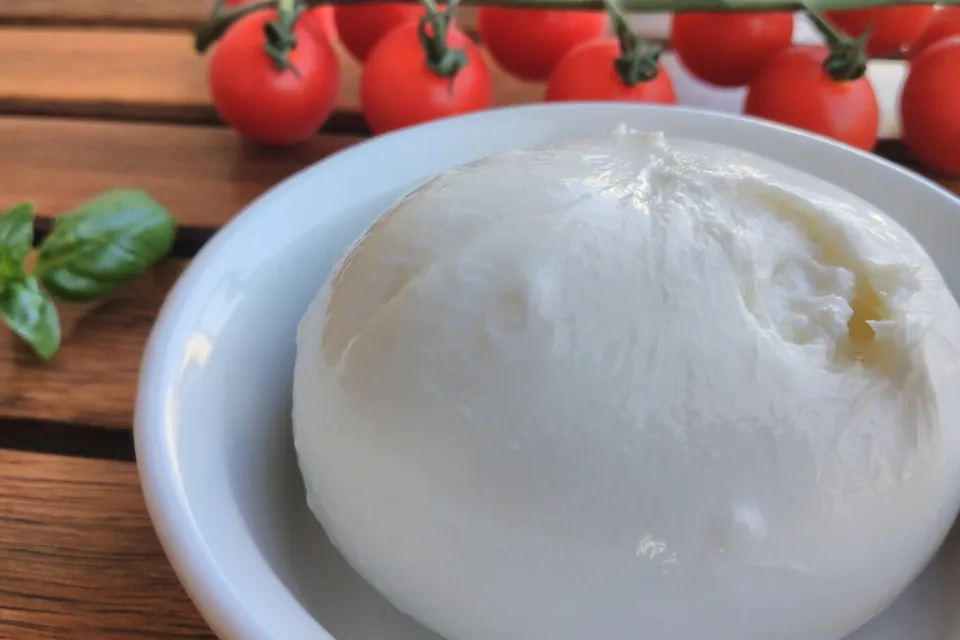
Puglian dairy and cheese
From burrata’s centre to Murgia cheeses: understanding textures, processes and places.
Read the guide →Photo: Popo le Chien / Wikimedia Commons — CC0 · Resized and converted to WebP.
