
APULICA / FRUIT, VEGETABLES AND PULSES
Rotonda red aubergine
PDO · Fruit, vegetables and pulses · Basilicata
In brief
- A vegetable of the species Solanum aethiopicum, round like a tomato, bright orange to red when ripe, with a spicy, slightly bitter taste. (Qualigeo (Fondazione Qualivita) — Melanzana Rossa di Rotonda DOP)
- It is grown in Rotonda, Viggianello, Castelluccio Superiore and Castelluccio Inferiore, in the Pollino park. (Qualigeo (Fondazione Qualivita) — Melanzana Rossa di Rotonda DOP)
- It is of African origin: Rotonda emigrants returning from the colonies brought it back in 1935. (Qualigeo (Fondazione Qualivita) — Melanzana Rossa di Rotonda DOP)
- It is picked by hand from July to November. (Qualigeo (Fondazione Qualivita) — Melanzana Rossa di Rotonda DOP)
History and origin
The red aubergine of Rotonda has African origins. During the colonial years many families from the town left for Africa to find work and, according to the history set out for the designation, in 1935, shortly before the Ethiopian war, those who came home brought back the seeds of this curious aubergine.
In the Mercure valley the plant adapted so well that it grew apart from its African forerunners, which share the orange colour but are streaked and longer in shape. Because it looks like a tomato, locals call it «merlingiana a pummadora» in dialect. A 1992 CNR study, based on interviews with the oldest farmers, confirms that it was widely used from the middle of the twentieth century.
The protected designation of origin was registered by the European Union in 2007, and a consortium based in Rotonda looks after it.
Sources: Qualigeo (Fondazione Qualivita) — Melanzana Rossa di Rotonda DOP · eAmbrosia — Melanzana Rossa di Rotonda (PDO-IT-0662)
Area and method of production
It is grown in four municipalities in the province of Potenza, all inside the Pollino National Park: Rotonda, Viggianello, Castelluccio Superiore and Castelluccio Inferiore. The plant belongs to the species Solanum aethiopicum, different from that of the common aubergine.
After ploughing, seedlings 10-15 centimetres tall with three to five leaves are transplanted between May and June; under the specification they must come from the production area itself and are set in furrows at the spacing used locally. The fields are fed with organic matter or green manure.
Picking is done by hand with scissors, leaving a short piece of stalk, from July to November. The specification also sets a maximum yield per hectare to protect the quality of the fruit.
Sources: Qualigeo (Fondazione Qualivita) — Melanzana Rossa di Rotonda DOP
How to recognise it
At first sight it looks like a tomato: it is round and weighs up to about 200 grams. As it starts to ripen it has greenish tints, then turns bright orange and finally a glossy red when fully ripe. The flesh is firm and meaty.
The aroma is intense and fruity, reminiscent of prickly pear; the taste is spicy, with a pleasantly bitter finish. A curious feature is the flesh, which stays white long after cutting: the specification links this to a very low content of chlorogenic acid, around 800 parts per million against about 4,300 in other fruits of the same species.
It is available from July to November, in containers of plant material, cardboard or net bags, always labelled Melanzana Rossa di Rotonda DOP.
Sources: Qualigeo (Fondazione Qualivita) — Melanzana Rossa di Rotonda DOP
In the kitchen
In Rotonda tradition it is kept «nzertata»: the aubergines are tied in bunches and hung under the eaves to dry, so they can be used in the cold months too. They are also excellent preserved in oil or vinegar.
Many Lucanian recipes use it. It is fried and flavoured with mint and garlic; it is paired with podolico caciocavallo to dress fusilli; it is mixed with sausage to make meatballs. The leaves are cooked as well, as they are more tender than those of other aubergines and different in shape and size.
Fresh fruit keeps in the fridge or in a dry place. Its spicy, slightly bitter taste makes it a bold side dish, often found in Rotonda next to the white beans of the town's other designation.
Sources: Qualigeo (Fondazione Qualivita) — Melanzana Rossa di Rotonda DOP
Where to taste it
The red aubergine is found above all in the four municipalities of the production area: Rotonda, Viggianello, Castelluccio Superiore and Castelluccio Inferiore, on the Lucanian side of the Pollino National Park. The season runs from July to November, when bunches hung up to dry appear under the eaves.
The most festive moment is «il Bianco e la Rossa», the summer event Rotonda dedicates to its two PDO products, the red aubergine and the white bean. It is organised by the protection consortia together with the municipality, the Basilicata Region and the Ministry of Agriculture, with tastings, live cooking, talks and music; in 2025 it reached its fifteenth edition.
A visit to Rotonda and Viggianello, among the Pollino landscapes, is the most direct way to taste it where it was born.
Sources: Qualigeo (Fondazione Qualivita) — Melanzana Rossa di Rotonda DOP · Qualivita — Una festa per la Melanzana Rossa di Rotonda DOP e i Fagioli Bianchi di Rotonda DOP (2025)
Protection
- Protected designation of origin (PDO) — PDO-IT-0662 (eAmbrosia — Melanzana Rossa di Rotonda (PDO-IT-0662))
When
- Harvest: July–November (Qualigeo (Fondazione Qualivita) — Melanzana Rossa di Rotonda DOP)
- Summer
- Autumn
Where
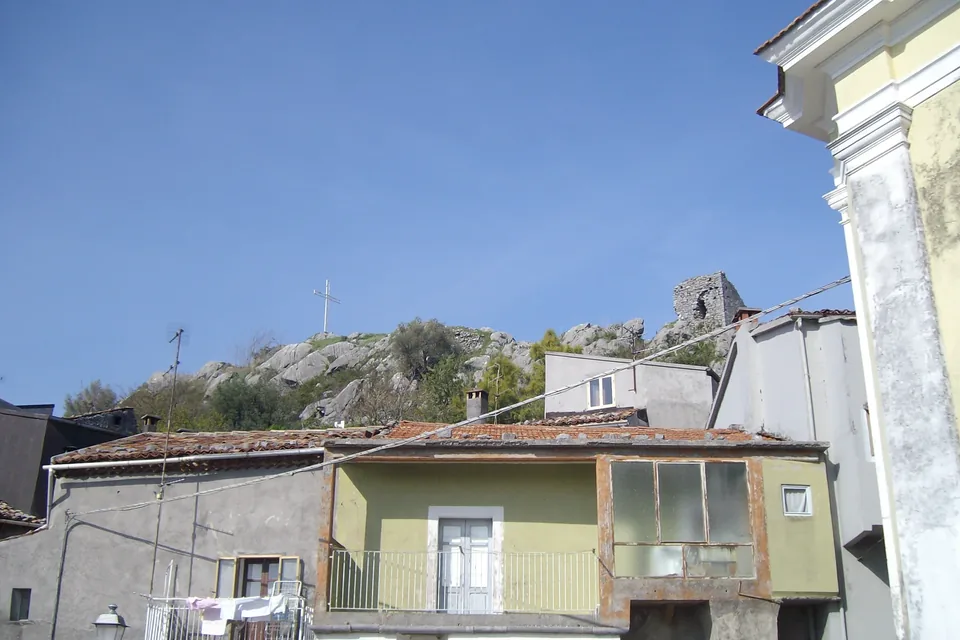
Rotonda
Rotonda: town and Pollino heritage.
Read the guide →Photo: Luca Raimondi / Wikimedia Commons — CC BY-SA 3.0 · Resized and converted to WebP.

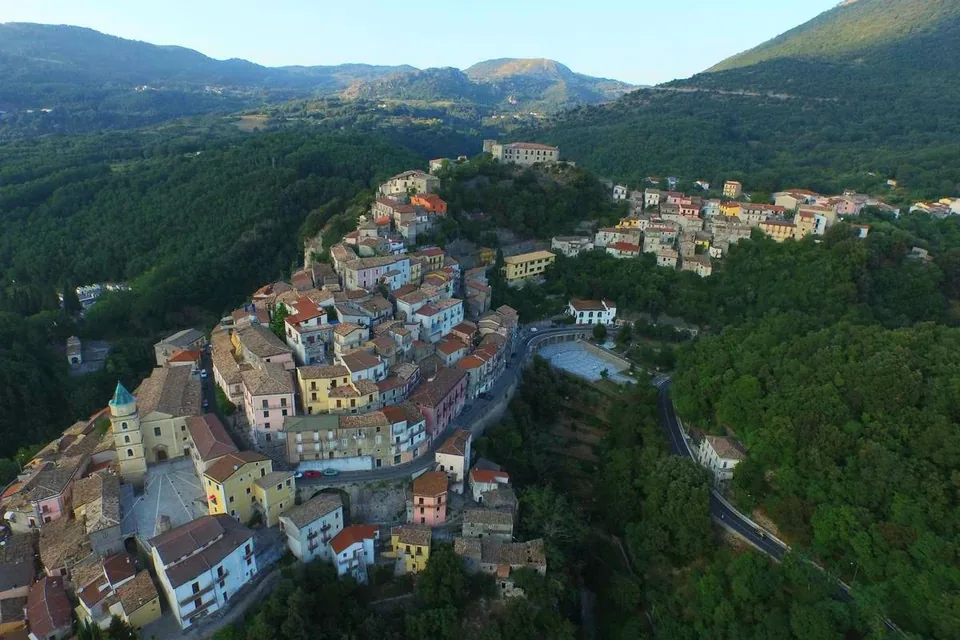
Viggianello
Viggianello: above the Mercure valley.
Read the guide →Photo: Millucci0 / Wikimedia Commons — CC BY-SA 4.0 · Resized and converted to WebP.


Pollino
A mountain landscape shared by Calabria and Basilicata, explored through walks, villages and a considered pace.
Read the guide →Photo: Gianni Lupindo / Wikimedia Commons — CC BY-SA 3.0 · Resized and converted to WebP.

Read more
Rotonda red aubergine and white bean
Two Lucanian kitchen-garden PDOs in the Pollino park: origins, growing on chestnut stakes, harvest, Garibaldi and the beans, recipes, preserving and a day between Rotonda and Viggianello.
Read the guide →