
APULICA / WALKS
Basilian Way
Lauria (Basilicata); the Calabrian section begins at Rocca Imperiale → Reggio Calabria · Over 1,560 km according to the official site's home page; other pages of the same site say over 1,500 km, while italia.it gives an earlier figure of 1,390 km. · 83 numbered stages on the official site, including variants and "wild" stages; the general introduction on the same page still says 81, and italia.it gives 73.
Key facts
| Start and finish | Lauria (Basilicata); the Calabrian section begins at Rocca Imperiale → Reggio Calabria |
|---|---|
| Length | Over 1,560 km according to the official site's home page; other pages of the same site say over 1,500 km, while italia.it gives an earlier figure of 1,390 km. (Cammino Basiliano - sito ufficiale (home) · Cammino Basiliano - Tutte le tappe · Discovering the Cammini di Calabria - italia.it (Ministero del Turismo)) |
| Stages | 83 numbered stages on the official site, including variants and "wild" stages; the general introduction on the same page still says 81, and italia.it gives 73. (Cammino Basiliano - sito ufficiale (home) · Cammino Basiliano - Tutte le tappe · Discovering the Cammini di Calabria - italia.it (Ministero del Turismo)) |
| Credential | There is a Basilian Walker's Passport, stamped by the places where you stay overnight; after at least 7 stages you can request the Walker's Certificate. (Cammino Basiliano - Passaporto) |
| Regions | Calabria, Basilicata |
| Official website | www.camminobasiliano.it |
In brief
- It begins in Basilicata, at Lauria, and runs down the full length of Calabria to Reggio. (Cammino Basiliano - Tutte le tappe · Cammino Basiliano - Un cammino di fede che si nutre di arte e biodiversità · Catalogo Cammini Religiosi - italia.it (Ministero del Turismo))
- It follows the traces of the Italo-Greek monks inspired by St Basil. (Cammino Basiliano - Un cammino di fede che si nutre di arte e biodiversità · Discovering the Cammini di Calabria - italia.it (Ministero del Turismo))
- It crosses four great mountain areas: the Pollino, the Sila, the Serre and the Aspromonte. (Cammino Basiliano - Un cammino di fede che si nutre di arte e biodiversità)
- There is no waymarking along the route: the official site recommends a hiking GPS device or a local guide. (Cammino Basiliano - FAQ)
- In August 2026 the site reported stage 38, Catanzaro-Tiriolo, as interrupted by a bridge collapse. (Attenzione: Tappa 38 Catanzaro-Tiriolo interrotta (2026-08-02))
Why walk it
The official site promises landscapes that change within a few kilometres: from a Mediterranean coast that is at times almost arid to the wooded uplands of the Sila and the Serre, by way of villages perched on cliffs above the sea and Mediterranean scrub. The last stage descends towards Reggio with open views over the Strait of Messina and the Sicilian coast.
It is also a spiritual journey: ruins of Basilian monasteries, great Latin abbeys and places of prayer cut into the rock, among the canyons of the Pollino, the forests of the Sila, the woods of the Serre and the crags of the Aspromonte. The association presents it as a choice that is cultural, spiritual and ecological at once.
You walk slowly, one stage a day, through mountain and valley communities. The association aims to introduce walkers to traditional crafts, to festivals and rites still genuinely lived by local people, and to Calabria's ritual cooking, such as the Easter sweets called cuddure or the musulupa cheese of the Greek-speaking area.
Sources: Cammino Basiliano - sito ufficiale (home) · Cammino Basiliano - Tutte le tappe · Cammino Basiliano - Un cammino di fede che si nutre di arte e biodiversità · Cammino Basiliano - Tappa 72 Armo - Reggio Calabria · Cammino Basiliano - Buoni motivi per fare il Cammino · Cammino Basiliano - Tradizioni
The route
The Cammino Basiliano is a walking route that its official site presents as a journey through history, art and religion across Basilicata and Calabria. It starts in Lauria, in Lucania, and runs down the whole of Calabria to Reggio, keeping to the Ionian side of the Apennines and crossing the mountain areas of the Pollino, the Sila, the Serre and the Aspromonte.
Its common thread is the Italo-Greek monks known as Basilians, who took St Basil as their model. italia.it describes it as the walk that joins Calabria's two souls, East and West; the official site calls it a "way of the East in the West", with Byzantine-style monasteries and churches alongside Latin and Norman abbeys and castles.
It is promoted by the Associazione Cammino Basiliano ETS, which points out that it promotes the route but does not organise it. Overall figures differ by source: the official home page gives 83 stages and over 1,560 km, the stages page over 1,500 km, and italia.it 1,390 km in 73 stages.
Sources: Cammino Basiliano - sito ufficiale (home) · Cammino Basiliano - Tutte le tappe · Cammino Basiliano - Un cammino di fede che si nutre di arte e biodiversità · Cammino Basiliano - Note importanti · Discovering the Cammini di Calabria - italia.it (Ministero del Turismo)
The itinerary
The Lucanian section has eight numbered stages: from Lauria to Castelluccio Superiore, then Rotonda, Viggianello and the Madonna del Pollino sanctuary, then Terranova di Pollino, from where you descend towards Alessandria del Carretto or San Lorenzo Bellizzi; a "wild" stage links the Madonna del Pollino to Civita. The first stage partly follows the old Calabro-Lucana railway line, now a cycle path.
In Calabria the route begins in the upper Ionian area of Cosenza at Rocca Imperiale and passes, among others, Oriolo, Alessandria del Carretto, Cerchiara, Civita, Cassano allo Ionio, San Demetrio Corone, Acri and Corigliano-Rossano. It then climbs into the Sila via Longobucco, Savelli, San Giovanni in Fiore and Lake Ampollino, and continues through Santa Severina, Petilia Policastro and Sersale to Catanzaro.
Further south it crosses Tiriolo, Squillace, Serra San Bruno, Bivongi, Stilo and Monte Stella, Gerace, Bova and Pentedattilo, ending with the Armo to Reggio Calabria stage overlooking the Strait. Each stage equals one day's walk, so the towns listed are also the overnight stops. Many sections have alternatives, and in 2024 the stages Squillace-Amaroni and Amaroni-Palermiti were added.
Sources: Cammino Basiliano - Tutte le tappe · Cammino Basiliano - Un cammino di fede che si nutre di arte e biodiversità · Cammino Basiliano - Tappa 74 Lauria - Castelluccio Superiore · Cammino Basiliano - Tappa 72 Armo - Reggio Calabria
Difficulty and terrain
The surface alternates between dirt roads, tracks, footpaths, old mule tracks and stretches of tarmac. Each stage carries a difficulty code: T for tourists, E for hikers, EE for expert hikers. The "wild" stages are the hardest and are meant for experienced walkers; several stages are marked as also suitable for mountain bikes.
The site warns that there is no waymarking along the route and that paths are often hard to make out: you need a hiking GPS device or a local guide. It advises against walking alone, since phone coverage is weak or absent on many stages, and recommends setting off at first light on the longer ones.
Where there are river beds or streams to ford, in rain or flood you should switch to public roads. Water sources are not marked everywhere, so carry at least one litre per person, two on "wild" stages. On the first Lucanian stage the tunnels of the old railway call for a head torch.
Sources: Cammino Basiliano - Tutte le tappe · Cammino Basiliano - Note importanti · Cammino Basiliano - FAQ · Cammino Basiliano - Tappa 74 Lauria - Castelluccio Superiore
Hospitality and passport
The Basilian Walker's Passport is shown at the places where you stay overnight, which stamp it with the stage number and the municipality. Anyone who has walked at least seven stages can ask the association for the Walker's Certificate by sending a photo of the passport.
For every stage the site lists places to stay: monasteries, B&Bs, scattered hospitality (rooms spread across a village), farm stays, trattorias and restaurants. The association warns that these are only pointers, that you should always book well ahead and that many places do not take cards, while several villages have no bank or cash machine: carrying cash is wise. You can start from any stage, and local guides are available for accompanied walks.
In August 2026 the official site reported that stage 38, Catanzaro-Tiriolo, was interrupted by a bridge collapse near the Corace river, with limited alternatives.
Sources: Cammino Basiliano - sito ufficiale (home) · Cammino Basiliano - Tutte le tappe · Cammino Basiliano - Passaporto · Cammino Basiliano - Note importanti · Cammino Basiliano - FAQ · Attenzione: Tappa 38 Catanzaro-Tiriolo interrotta (2026-08-02)
History and meaning
According to italia.it, the Basilian monks looked to the rule of St Basil the Great, who lived from 330 to 379, and played an important part in the growth of monasticism in the West. Besides hermitages, they left churches and monasteries of great artistic value, among them the monastery of San Giovanni Theristis at Bivongi and the Cattolica at Stilo.
The official site presents the walk as a journey through the cultures that followed one another in these lands: indigenous, Greek and Roman echoes, the Byzantine mark of the monks and the Norman one. On the final stage, Armo is recalled as the place chosen for prayer by St Arsenius, a ninth-century Basilian monk, together with his disciple St Elias the Speleot.
The association frames the walk as a cultural, spiritual and ecological choice: meeting communities and ancient cultures, ruined Basilian monasteries and prayer sites carved into rock, and crossing forests which, the site recalls, supplied timber for great building projects such as St Peter's Basilica and the Royal Palace of Caserta.
Sources: Cammino Basiliano - Un cammino di fede che si nutre di arte e biodiversità · Discovering the Cammini di Calabria - italia.it (Ministero del Turismo) · Cammino Basiliano - Tappa 72 Armo - Reggio Calabria · Cammino Basiliano - Partire · Cammino Basiliano - Buoni motivi per fare il Cammino
Places along the route
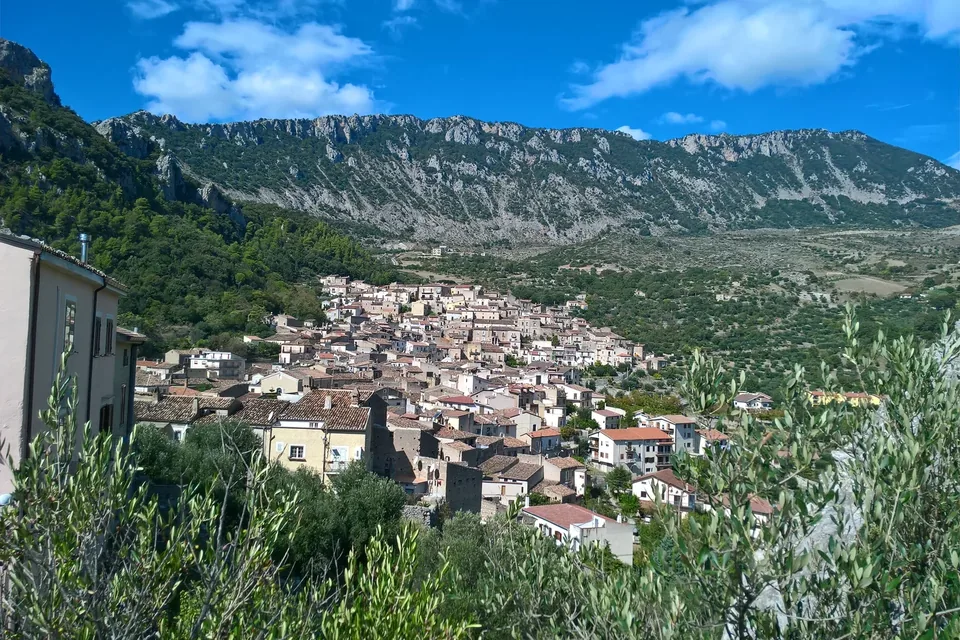
Civita
A Pollino village whose architecture and Italo-Albanian culture give the visit a distinct character.
Read the guide →Photo: Asia / Wikimedia Commons — CC BY-SA 4.0 · Resized and converted to WebP.

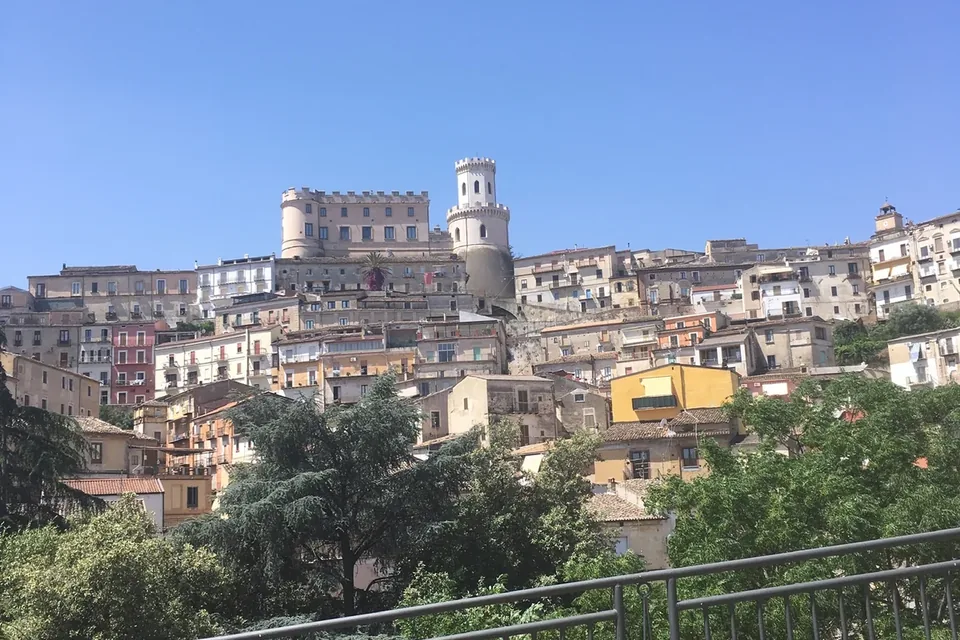
Corigliano-Rossano
Historic heritage, liquorice and coast: a connection to develop between inland Calabria and the Ionian Sea.
Read the guide →Photo: Marcok/itwiki / Wikimedia Commons — CC BY-SA 4.0 · Resized and converted to WebP.
_luglio_2021_f01.jpg)
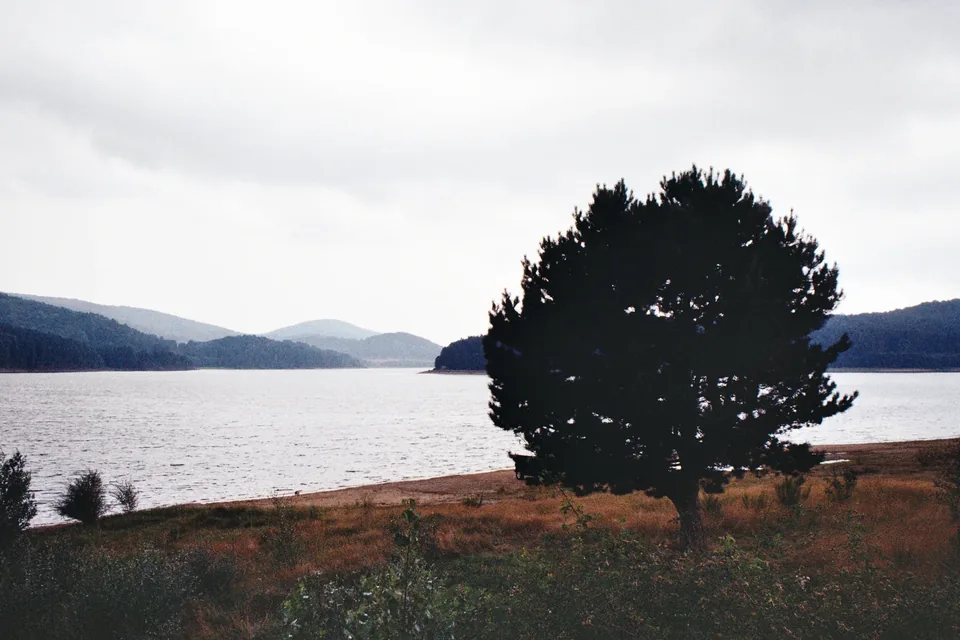
Sila
Sila National Park: a plateau of forests, lakes and pastures between Cosenza, Catanzaro and Crotone, and a UNESCO biosphere reserve.
Read the guide →Photo: Ugo Leonetti / Wikimedia Commons — CC BY-SA 4.0 · Resized and converted to WebP.


Pollino
A mountain landscape shared by Calabria and Basilicata, explored through walks, villages and a considered pace.
Read the guide →Photo: Gianni Lupindo / Wikimedia Commons — CC BY-SA 3.0 · Resized and converted to WebP.

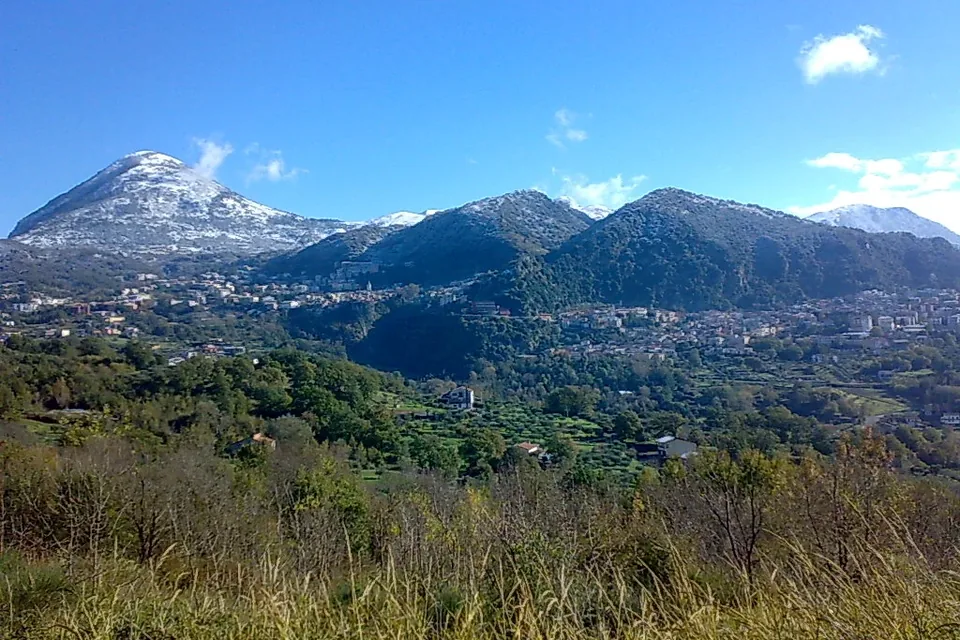
Lauria
Neighbourhoods, religious memory and cinema in the Noce Valley.
Read the guide →Photo: Gianni Lupindo / Wikimedia Commons — CC BY-SA 2.0 · Resized and converted to WebP.

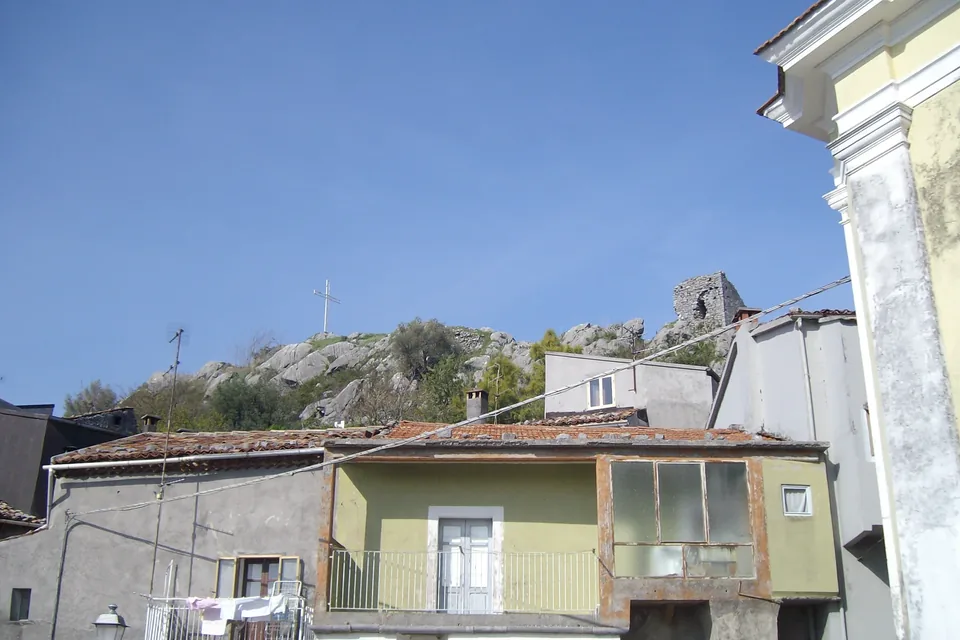
Rotonda
Rotonda: town and Pollino heritage.
Read the guide →Photo: Luca Raimondi / Wikimedia Commons — CC BY-SA 3.0 · Resized and converted to WebP.

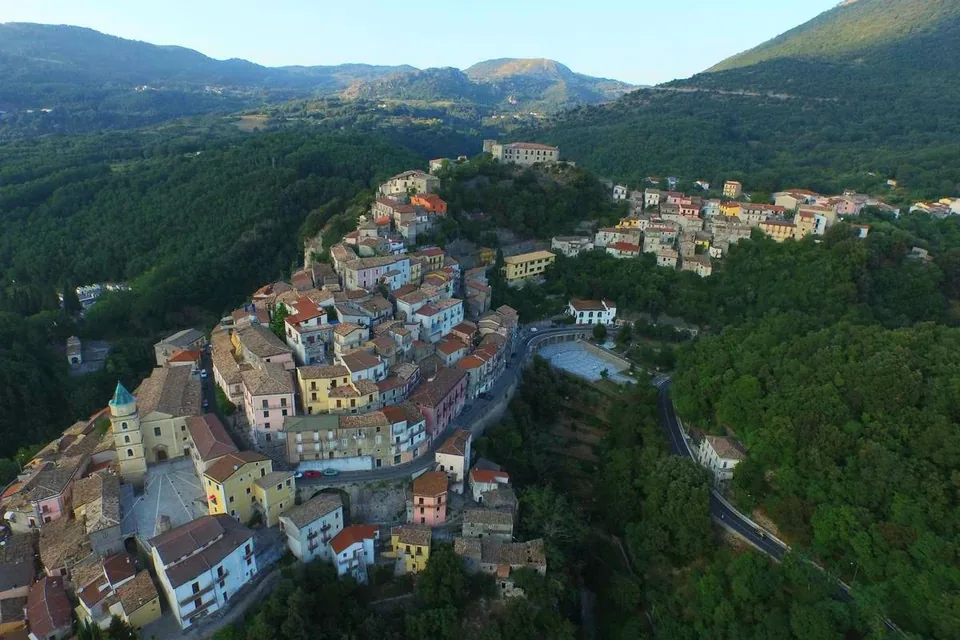
Viggianello
Viggianello: above the Mercure valley.
Read the guide →Photo: Millucci0 / Wikimedia Commons — CC BY-SA 4.0 · Resized and converted to WebP.

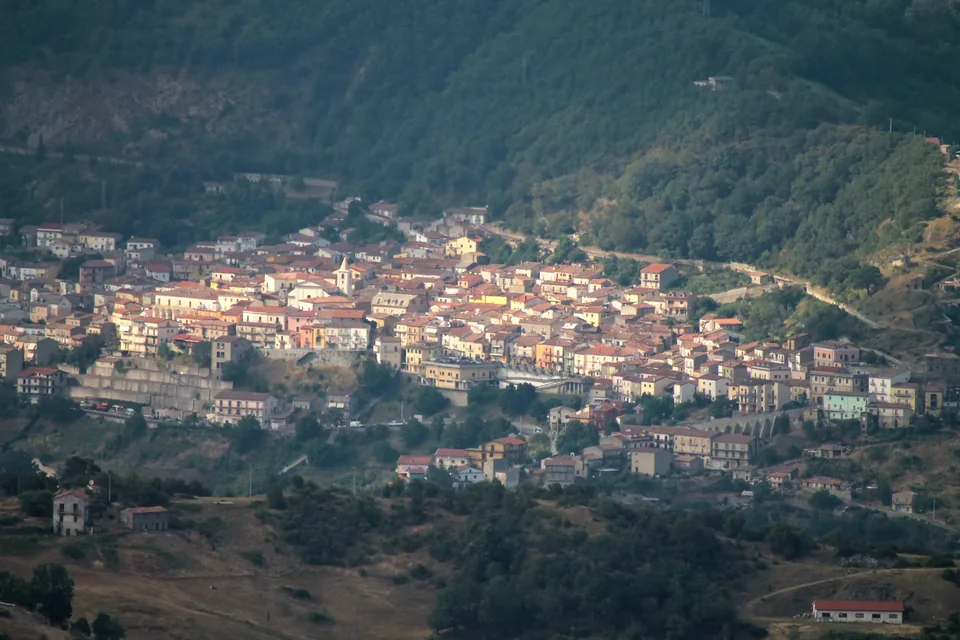
Terranova di Pollino
Terranova di Pollino: the Lucanian side.
Read the guide →Photo: Alfredo D'Ambrosio / Wikimedia Commons — CC BY 3.0 · Resized and converted to WebP.

Places of faith on the route
Sanctuary of the Madonna del Pollino
Sanctuary · San Severino Lucano · Madonna del Pollino
To taste along the way
Castrovillari white onion
Slow Food Presidium · Fruit, vegetables and pulses
Open the product page →Rotonda white beans
PDO · Fruit, vegetables and pulses
Open the product page →Poverello white bean
PAT · Slow Food Presidium · Fruit, vegetables and pulses
Open the product page →Rotonda red aubergine
PDO · Fruit, vegetables and pulses
Open the product page →Mischiglio
PAT · Slow Food Presidium · Fruit, vegetables and pulses
Open the product page →Patata della Sila (Sila potato)
PGI · Fruit, vegetables and pulses
Open the product page →Zagarise siccagno cherry tomato
Slow Food Presidium · Fruit, vegetables and pulses
Open the product page →Calabrian Podolica cattle
Slow Food Presidium · PAT · Meats and cured meats
Open the product page →Sources
- Cammino Basiliano - sito ufficiale (home)
- Cammino Basiliano - Tutte le tappe
- Cammino Basiliano - Un cammino di fede che si nutre di arte e biodiversità
- Cammino Basiliano - Passaporto
- Cammino Basiliano - Note importanti
- Cammino Basiliano - FAQ
- Attenzione: Tappa 38 Catanzaro-Tiriolo interrotta (2026-08-02)
- Discovering the Cammini di Calabria - italia.it (Ministero del Turismo)
- Catalogo Cammini Religiosi - italia.it (Ministero del Turismo)
- Cammino Basiliano - Tappa 74 Lauria - Castelluccio Superiore
- Cammino Basiliano - Tappa 72 Armo - Reggio Calabria
- Cammino Basiliano - Partire
- Cammino Basiliano - Buoni motivi per fare il Cammino
- Cammino Basiliano - Tradizioni