

Why go
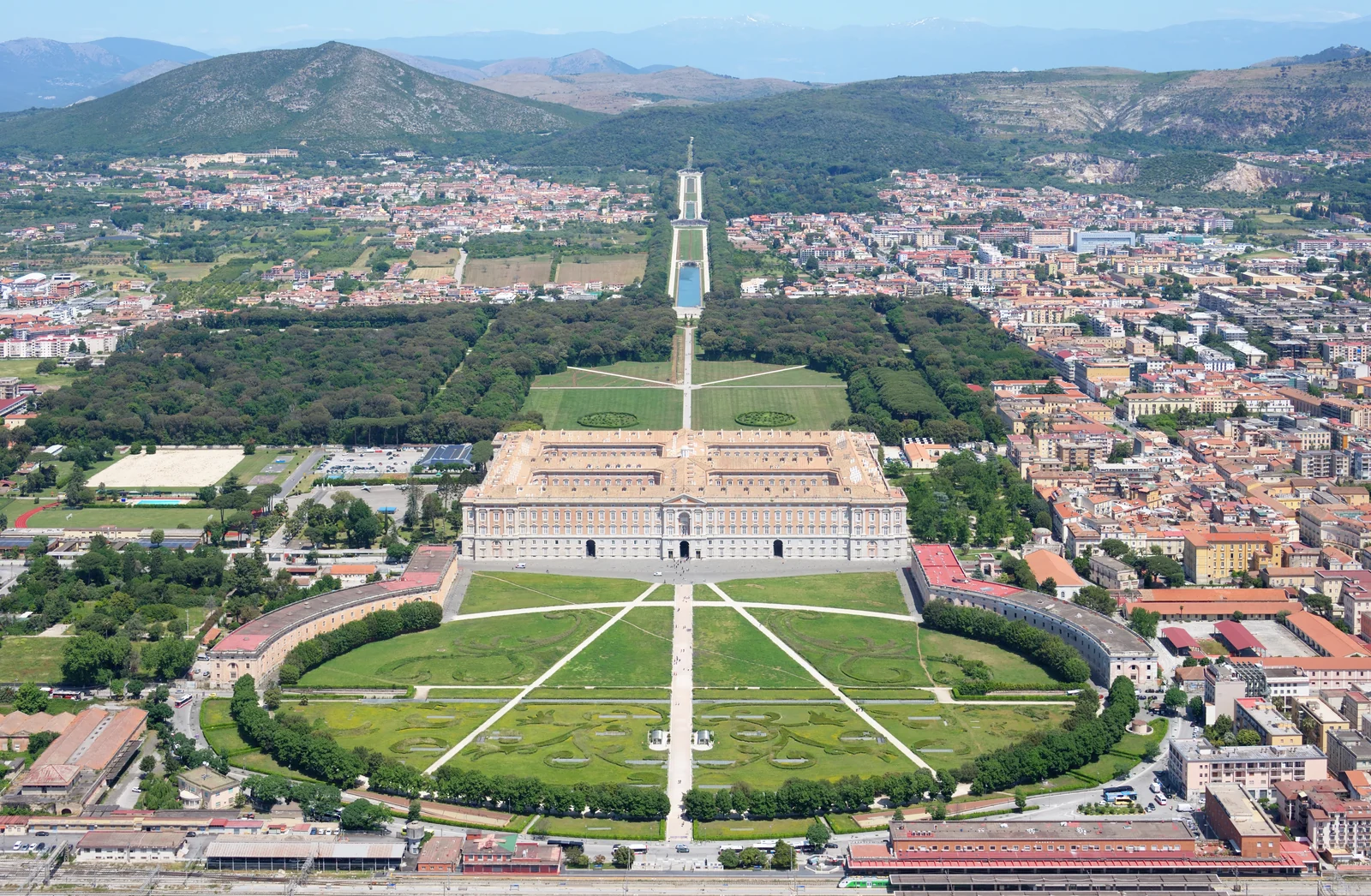
Caserta is the city of the Royal Palace. In 1750 King Charles of Bourbon bought the fief of Caserta and entrusted Luigi Vanvitelli with the design of a residence and a new capital not far from Naples: the palace that came out of it, with its 1,742 windows, the Royal Park, the English Garden and the three kilometres of the Via d'Acqua, is today one of the largest royal residences in the world and, since 1997, a World Heritage site together with the Carolino Aqueduct and the Belvedere of San Leucio.
But the palace is not the whole city. On the heights behind it lies Casertavecchia, the medieval village from which the population moved down to the plain, with the cathedral of San Michele Arcangelo and the remains of the castle; to the north, the Belvedere of San Leucio tells the story of the silk colony founded by Ferdinand IV. Below, around Piazza Vanvitelli and the main street, is the city that grew with the palace building site between the eighteenth and nineteenth centuries.
Caserta is a municipality in the province of Caserta, in Campania. Its ISTAT code is 061022. It is the capital of the province of Caserta. On 1 January 2025 it had 72,793 residents. The municipal territory covers 54.07 km² and ranges from 29 to 612 metres above sea level; the town hall stands at about 81 metres.
Sources: Ministero della Cultura, Reggia di Caserta — La Reggia di Caserta · Comune di Caserta, Luoghi — La Reggia di Caserta · Comune di Caserta, Luoghi — Il Borgo Medievale di Casertavecchia · Comune di Caserta, Luoghi — Complesso Monumentale del Belvedere San Leucio · Comune di Caserta, Luoghi — Piazza Vanvitelli e Centro Storico · Diocesi di Caserta — La storia · Italia.it (Ministero del Turismo) — Caserta · ISTAT, Codici statistici delle unità amministrative territoriali: elenco dei comuni al 21 febbraio 2026 · ISTAT, Popolazione residente per età, sesso e stato civile al 1° gennaio 2025 (POSAS) · ISTAT, Principali statistiche geografiche sui comuni: superficie e altimetria al 31 dicembre 2021
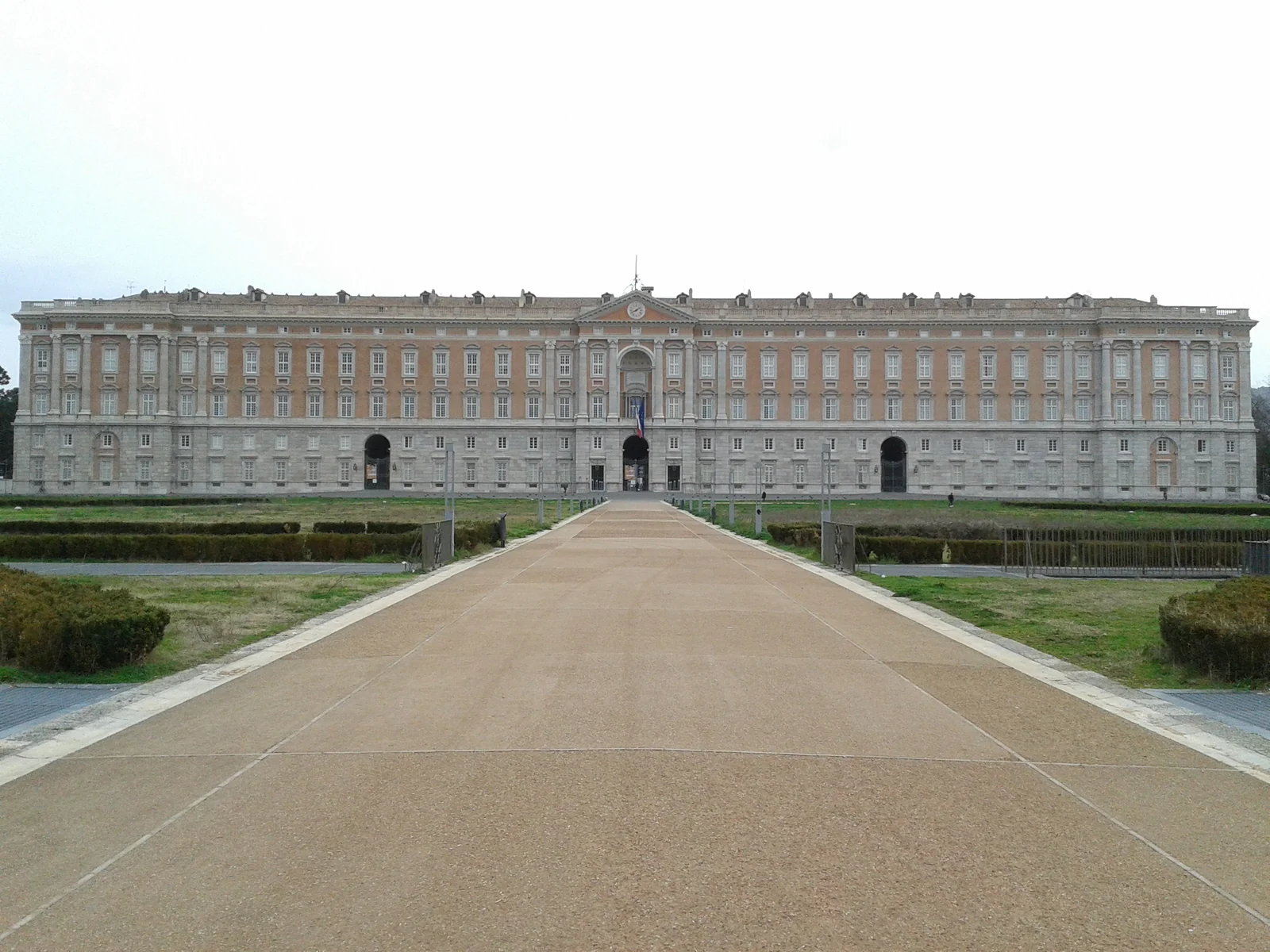
Photo: Carlo Napolitano / Wikimedia Commons — CC BY-SA 4.0 · Resized and converted to WebP.
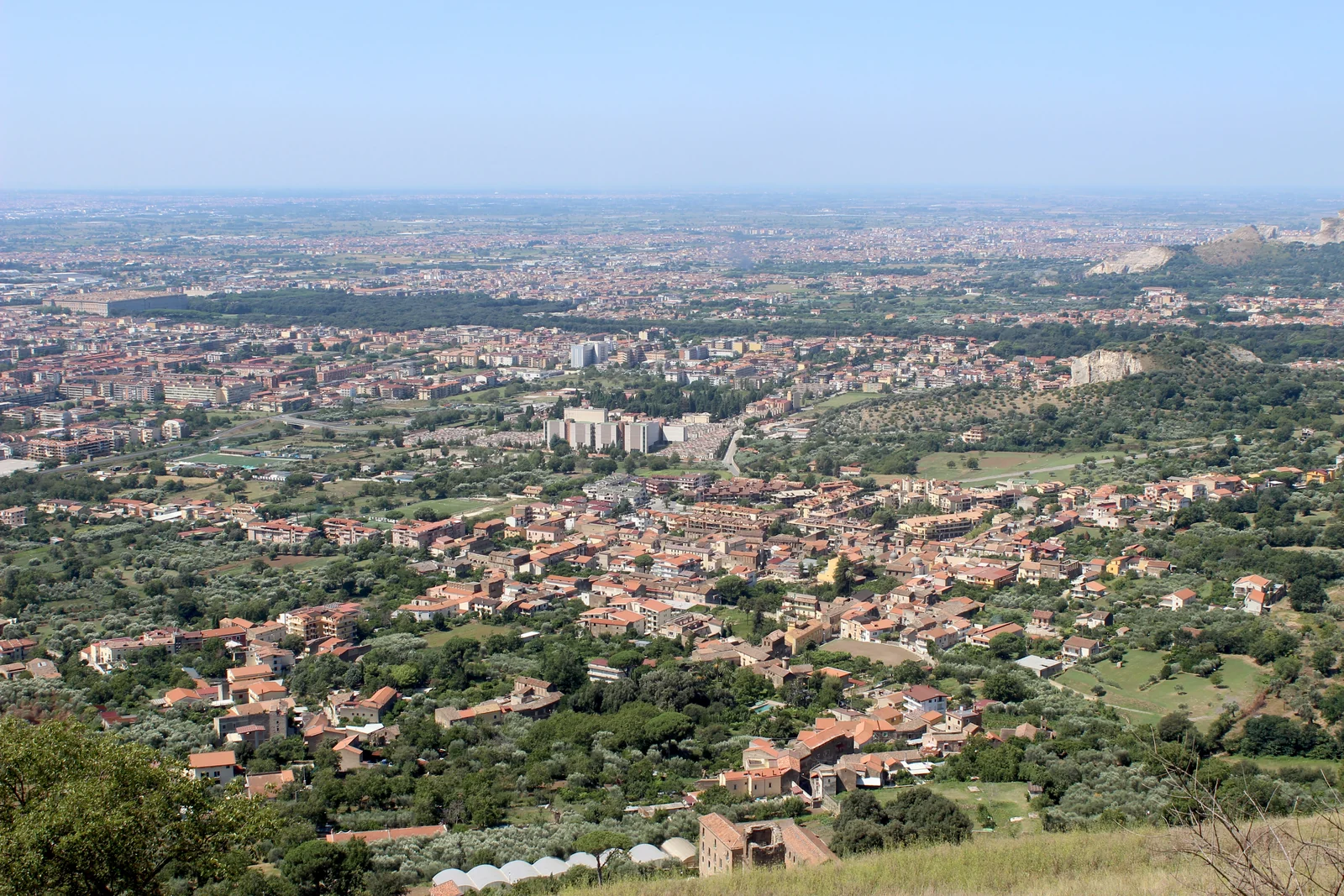
Photo: Miguel Hermoso Cuesta / Wikimedia Commons — CC BY-SA 4.0 · Resized and converted to WebP.
History
The first Caserta stood on the hill. The Lombard village of Casa-hirta, first mentioned by the chronicler Erchempert, offered a safe refuge from raids, and there, after the destruction of ancient Galatia in 880, the bishop moved too. The diocese dates its foundation to 1113: in that year Bishop Rainulf laid the foundations of the new cathedral of San Michele Arcangelo, consecrated in 1153; the bell tower, Romanesque with Arab-Sicilian influences, was completed in 1234. In the time of Frederick II the castle gained its great cylindrical tower.
In the following centuries life moved down towards the plain. The counts often stayed in their palace in the village of Torre, whose square had hosted a market since 1407, and at the beginning of the seventeenth century the bishops' residence was formally moved to Falciano, at the foot of the hill. The turning point came with the Bourbons: having taken the throne of Naples in 1734, Charles of Bourbon chose the village of Torre itself, on the site of the Gaetani residence, for his new palace.
The first stone was laid on 20 January 1752, the king's birthday and the feast of Saint Sebastian, patron of the village. The work lasted twenty years; when Vanvitelli died in 1773 the palace was finished but its rooms were still empty, and the decoration of the apartments went on through the first half of the nineteenth century under his son Carlo Vanvitelli and other architects. Around the building site the village grew quickly, and Vanvitelli himself rebuilt the church of Sant'Agostino almost from its foundations and built the De Gregorio di Squillace palace.
In 1776 Ferdinand IV, Charles's successor, settled the first 17 families of the silk colony at San Leucio, which in 1789 received its own code of laws. In 1841 the request to move the bishop's seat into the city was granted, made official on 1 February 1842, and the new cathedral rose on the site of the church of the Annunziata, to a design by Giovanni Patturelli. At Christmas 1849 Pope Pius IX, in exile from Rome, celebrated mass in the palace's Palatine Chapel.
Sources: Diocesi di Caserta — La storia · Ministero della Cultura, Reggia di Caserta — La Reggia di Caserta · Ministero della Cultura, Reggia di Caserta — Palazzo Reale · San Leucio di Caserta — Real Sito del Complesso Monumentale del Belvedere · Comune di Caserta, Luoghi — Complesso Monumentale del Belvedere San Leucio · Comune di Caserta, Eventi — Il Concerto per l’Epifania
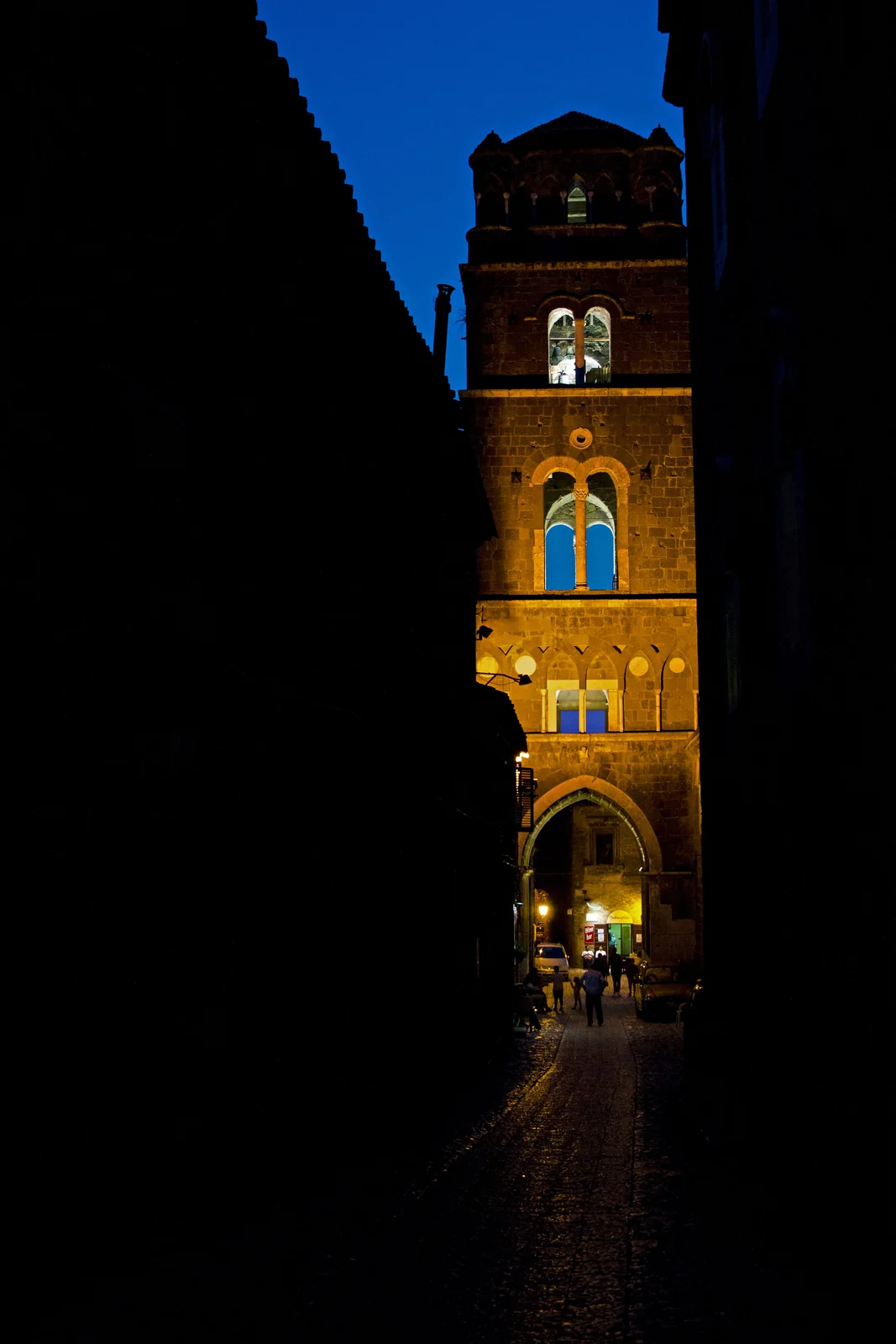
Photo: McMatteo / Wikimedia Commons — CC BY-SA 4.0 · Resized and converted to WebP.
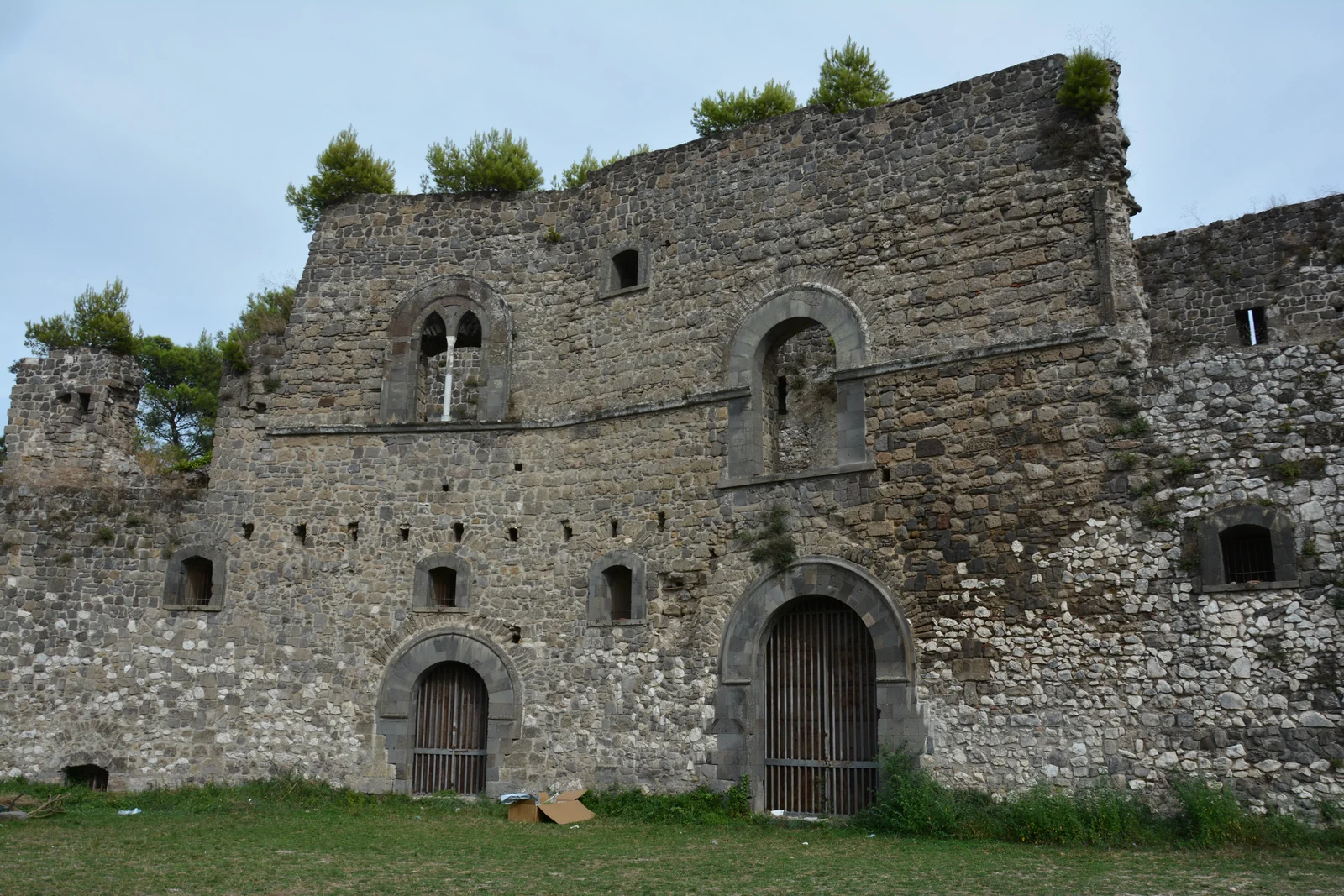
Photo: Mentnafunangann / Wikimedia Commons — CC BY-SA 4.0 · Resized and converted to WebP.
What to see
The Royal Palace is laid out over five floors, on a rectangular plan divided inside into four large courtyards. The royal staircase and the octagonal upper vestibule lead to the Royal Apartments, with the Throne Room, the Hall of Astraea, the Rooms of the Four Seasons, the Palatine Library, Maria Carolina's boudoir and Ferdinand IV's study. The palace also includes the Court Theatre, open on some days thanks to volunteers of the Touring Club Italiano, and the Palatine Chapel, where mass is celebrated on Sundays.
The Royal Park, the work of Luigi Vanvitelli and his son Carlo, combines models of the Italian Renaissance with the French solutions introduced at Versailles by André Le Nôtre. Beyond the Old Wood and the parterre, the Via d'Acqua lines up six fountains, from the Margherita Fountain to those of the Dolphins, Aeolus, Ceres, Venus and Adonis and Diana and Actaeon, up to the waterfall below the Torrione of Monte Briano; the water arrives through the 38 kilometres of the Carolino Aqueduct. The English Garden, 23 hectares, hides the Bath of Venus, the Cryptoporticus and the greenhouses, today the Graefer Greenhouses, named after the royal gardener Johann Andreas Graefer.
On the hill, at about 400 metres on Monte Virgo, Casertavecchia is a well-preserved medieval village, with the cathedral of San Michele Arcangelo, the bell tower, the cloister and the remains of the Norman castle; the centre is pedestrian and the view reaches the Caserta plain and the Bay of Naples. At San Leucio, in the Belvedere monumental complex, the Silk Museum keeps working historic looms and the documents of the colony; it is visited on accompanied tours at set times.
In town, Piazza Vanvitelli and Corso Trieste are the nineteenth-century heart; the church of San Sebastiano, the patron saint's, bears the marks of Vanvitelli's work, and Villa Vitrone is one of the best-known examples of Caserta's Art Nouveau.
Sources: Ministero della Cultura, Reggia di Caserta — Palazzo Reale · Ministero della Cultura, Reggia di Caserta — Orari · Ministero della Cultura, Reggia di Caserta — Via d’Acqua · Ministero della Cultura, Reggia di Caserta — Parco Reale · Ministero della Cultura, Reggia di Caserta — Serre di Graefer · Ministero della Cultura, Reggia di Caserta — Biglietti · Comune di Caserta, Luoghi — Il Borgo Medievale di Casertavecchia · Diocesi di Caserta — La storia · Comune di Caserta, Luoghi — Complesso Monumentale del Belvedere San Leucio · Comune di Caserta, Luoghi — Piazza Vanvitelli e Centro Storico · Comune di Caserta, Luoghi — Chiesa di S. Sebastiano · Comune di Caserta, Luoghi — Villa Vitrone
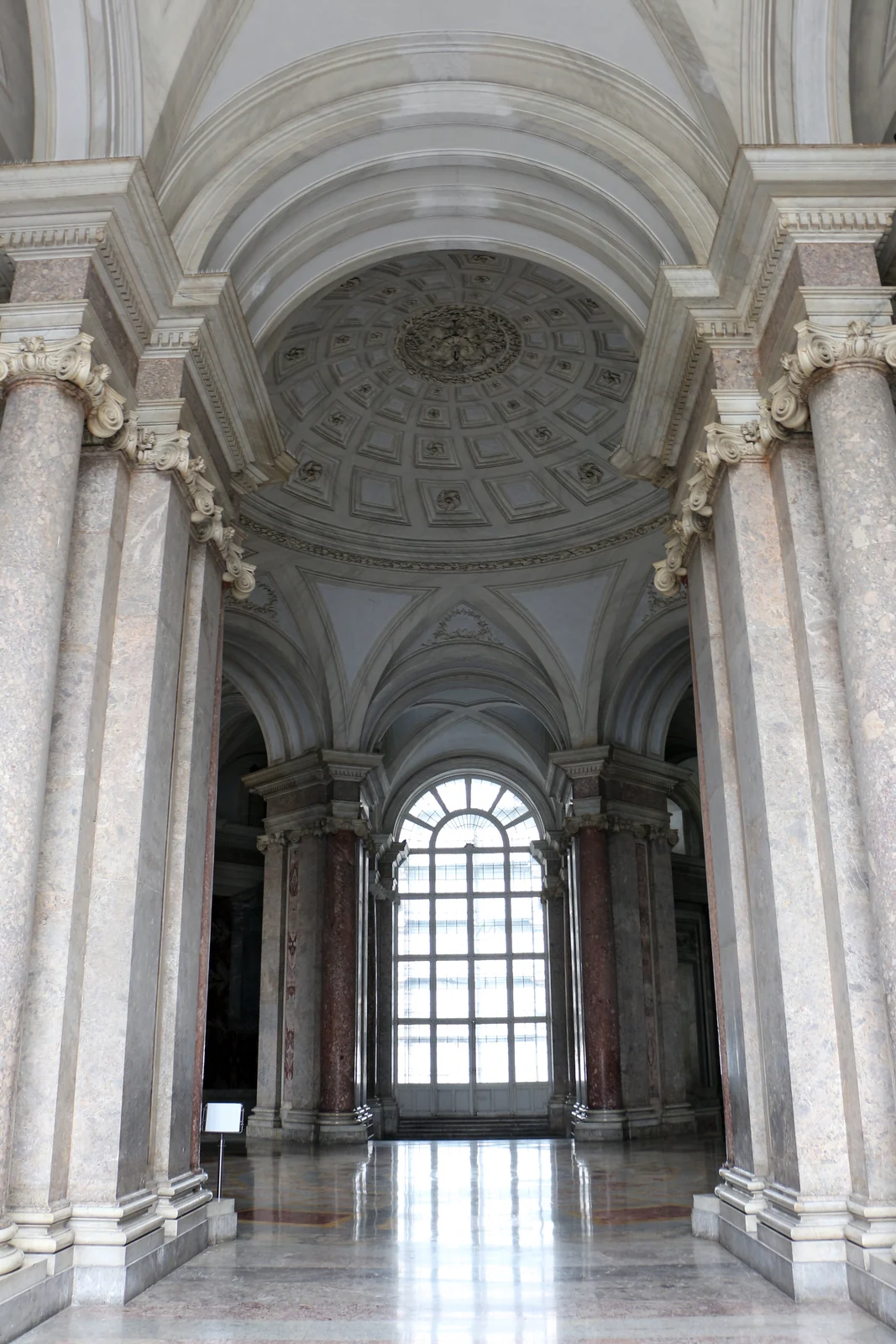
Photo: Sailko / Wikimedia Commons — CC BY 3.0 · Resized and converted to WebP.
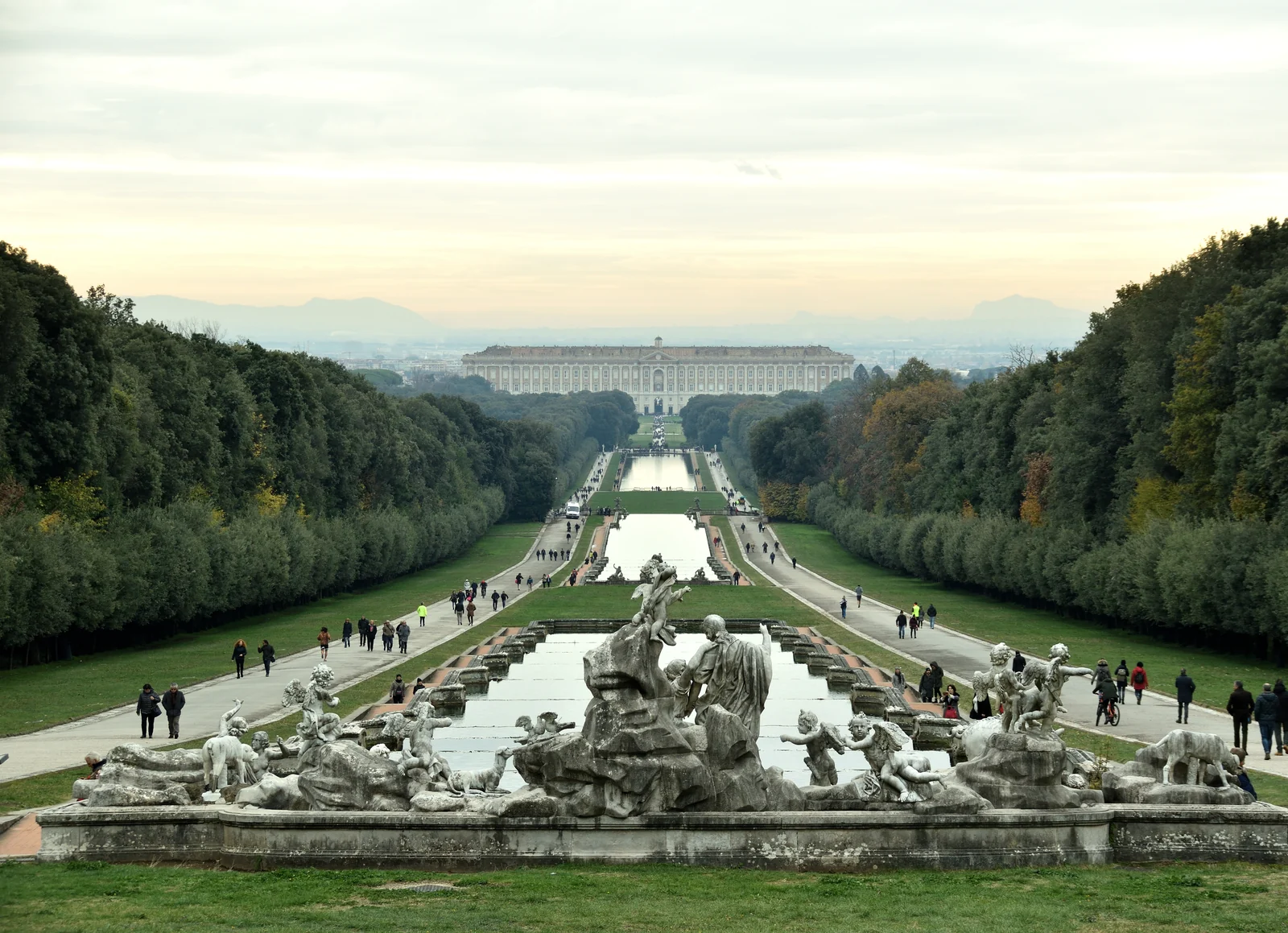
Photo: Flaviafors / Wikimedia Commons — CC BY-SA 4.0 · Cropped, resized and converted to WebP.
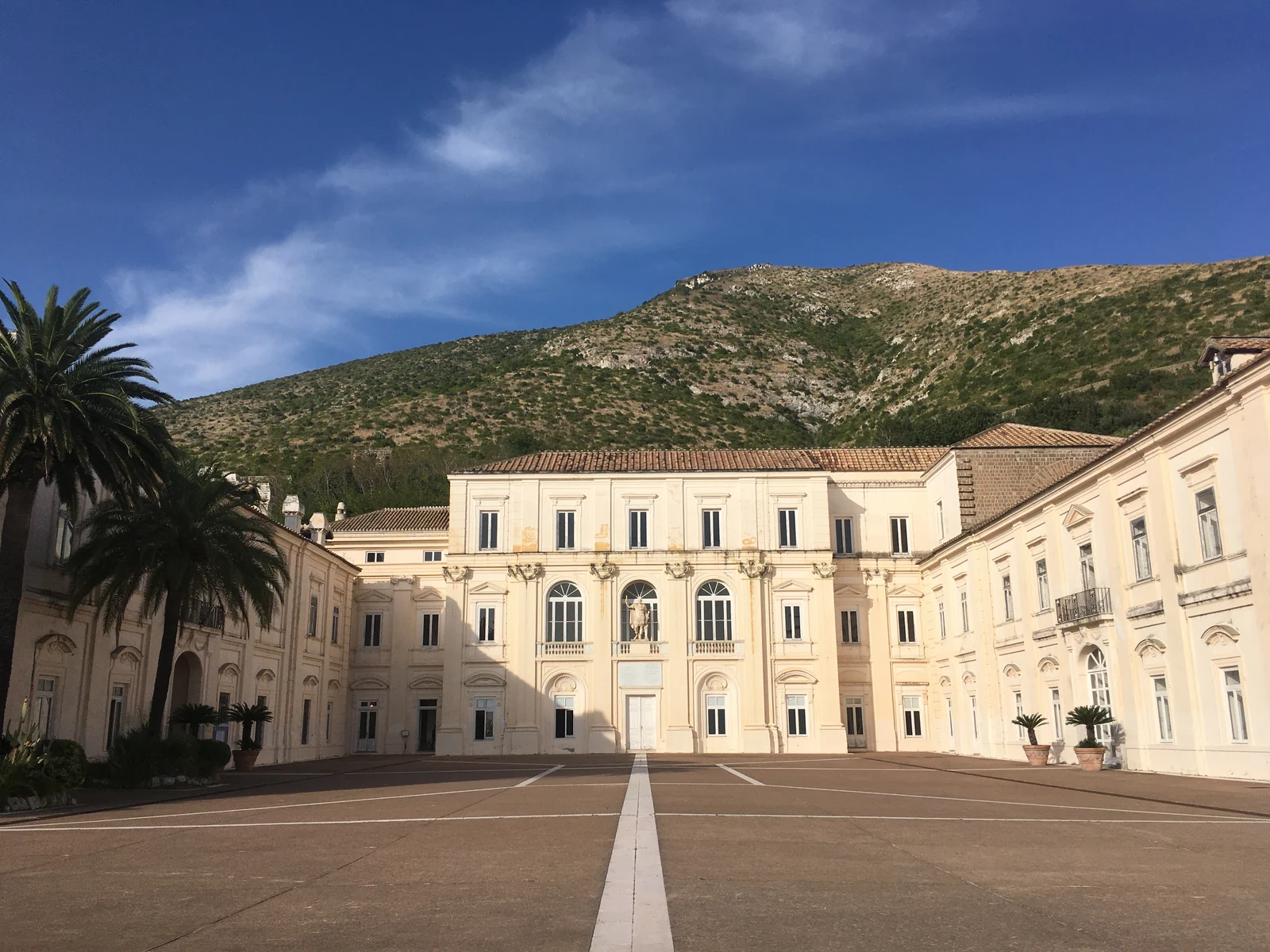
Photo: Mel22 / Wikimedia Commons — CC BY-SA 4.0 · Resized and converted to WebP.
Flavours
Caserta is at the heart of buffalo mozzarella from Campania, a PDO cheese: according to the protection consortium, the whole province of Caserta lies within the area of origin, and the Caserta area is its emblematic territory, thanks also to the Reggia, its local specialities and its villages.
In Slow Food's Osterie d'Italia 2026 guide, two places in the city hold the Snail, the award for hospitality and cooking rooted in the territory: Gli Scacchi and I Masanielli.
The silk tradition of San Leucio, told today by the Silk Museum, is the other Bourbon legacy the city has kept, along with the historic plants of the English Garden that the Graefer Greenhouses grow once more.
I Masanielli by Francesco Martucci (pizzeria), one of the food places featured by Apulica, is based in Caserta.
Sources: Consorzio di tutela Mozzarella di Bufala Campana DOP — Territorio · Slow Food — Tutte le Chiocciole di Osterie d’Italia 2026, regione per regione · Comune di Caserta, Luoghi — Complesso Monumentale del Belvedere San Leucio · Ministero della Cultura, Reggia di Caserta — Serre di Graefer · I Masanielli di Francesco Martucci, sito ufficiale
Things to do
The palace park is crossed on foot on a gentle climb, from the palace to the waterfall: the Reggia suggests about four hours for the Royal Park and English Garden and two and a half hours for the palace. Cyclists enter from the Corso Giannone gate, the only one open to bikes; the same gate gives direct access to the park.
You can go up to Casertavecchia and walk the lanes of the village, which hosts cultural festivals and historical re-enactments, then go down to San Leucio for an accompanied visit of the Belvedere and its silk looms. The Wood of San Silvestro, about 76 hectares on the hills of Monte Maiuolo and Monte Briano behind the park, was the Bourbons' hunting and farming estate, part of their "Royal Delights".
In the evening there is the Costantino Parravano municipal theatre on Via Mazzini, with drama, music and dance. Between January and March 2026 the municipality ran the Comunalia series, with free shows and concerts in the city's most characteristic places, such as the Epiphany concert partly inspired by "Ferdinandopoli", the San Leucio utopia. The Reggia Express also reaches the palace, the Fondazione FS historic train from Naples, with carriages from the 1930s and 1950s.
Sources: Ministero della Cultura, Reggia di Caserta — Biglietti · Ministero della Cultura, Reggia di Caserta — Come raggiungerci · Comune di Caserta, Luoghi — Il Borgo Medievale di Casertavecchia · Comune di Caserta, Luoghi — Complesso Monumentale del Belvedere San Leucio · Ministero della Cultura, Reggia di Caserta — Real Tenuta di San Silvestro · Comune di Caserta, Luoghi — Teatro Comunale Costantino Parravano · Comune di Caserta, Eventi — Al via «Comunalia, un inverno d’autore» · Comune di Caserta, Eventi — Il Concerto per l’Epifania
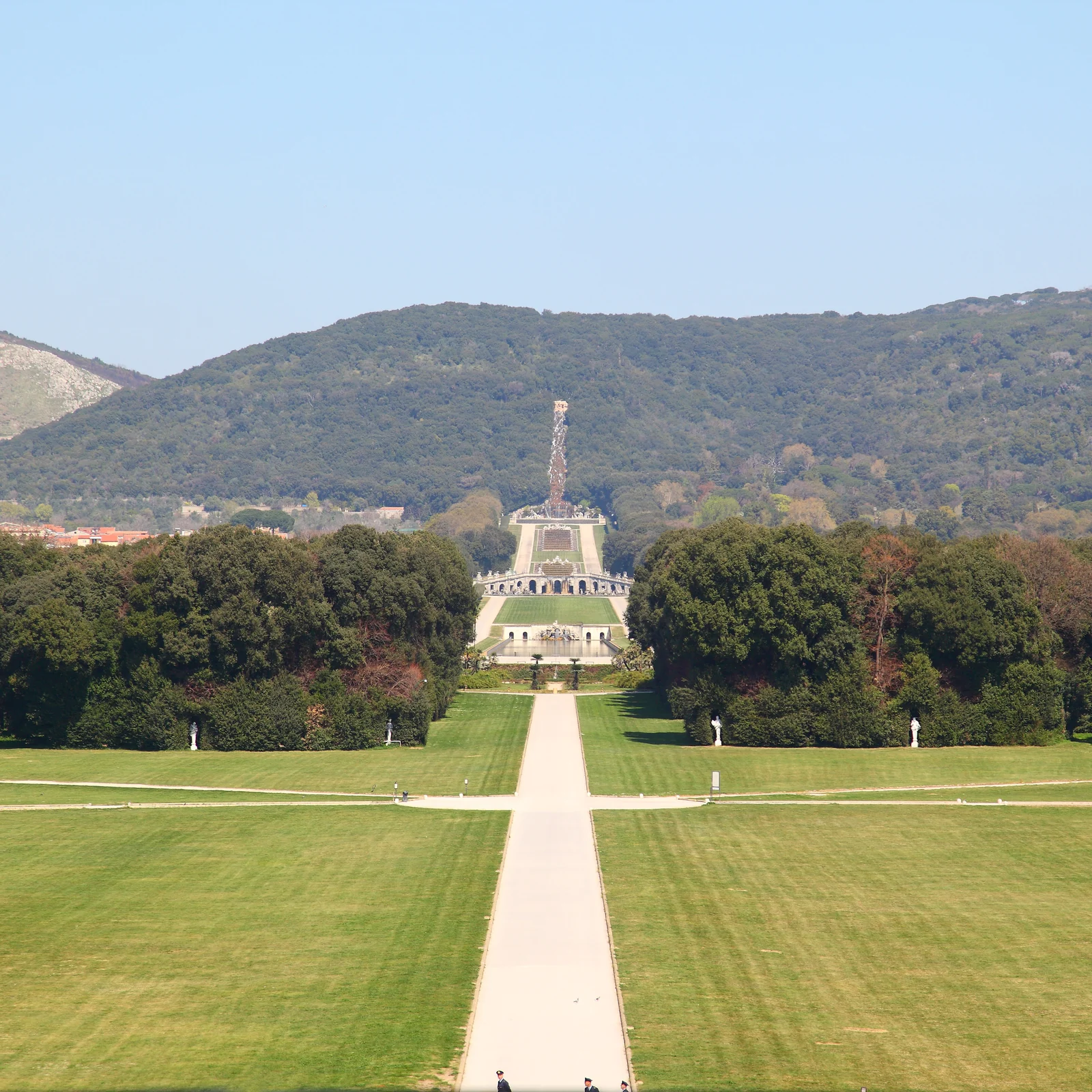
Photo: Franco Spinelli / Wikimedia Commons — CC BY-SA 3.0 · Resized and converted to WebP.
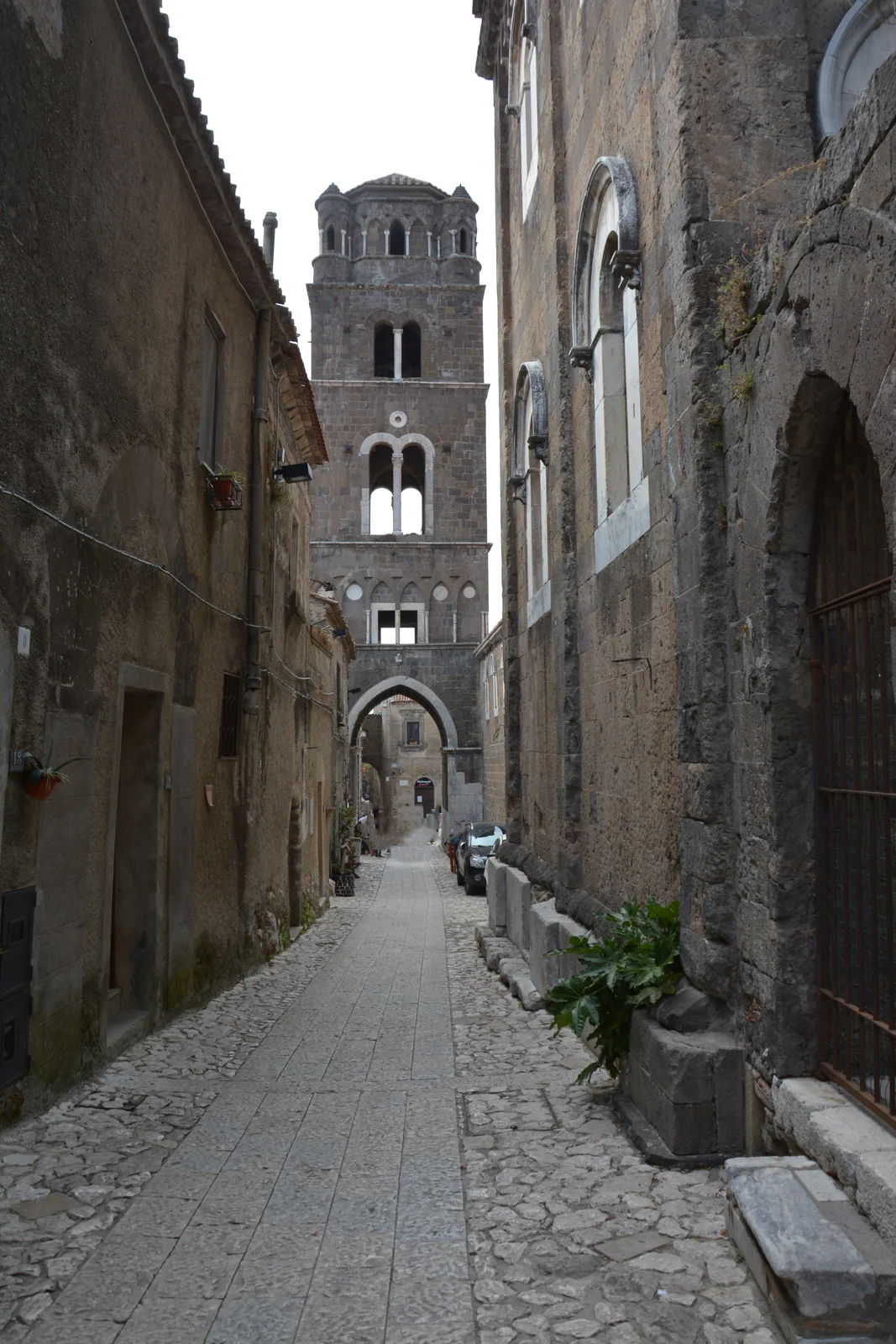
Photo: Mentnafunangann / Wikimedia Commons — CC BY-SA 4.0 · Resized and converted to WebP.
When to go
The Reggia is open all year except on Tuesdays, 1 January and 25 December; the opening hours of the Royal Park and the English Garden change from month to month, and in November the park closes at 15:30: check them on the Reggia's website before setting off. On free museum Sundays and free admission days the English Garden stays closed.
20 January is the feast of Saint Sebastian, the city's patron, the day in 1752 when the first stone of the palace was laid. Between January and March 2026 the municipality ran the free Comunalia series; the programme is on the municipality's website.
Sources: Ministero della Cultura, Reggia di Caserta — Orari · Ministero della Cultura, Reggia di Caserta — Biglietti · Ministero della Cultura, Reggia di Caserta — Parco Reale · Diocesi di Caserta — La storia · Comune di Caserta, Eventi — Al via «Comunalia, un inverno d’autore»
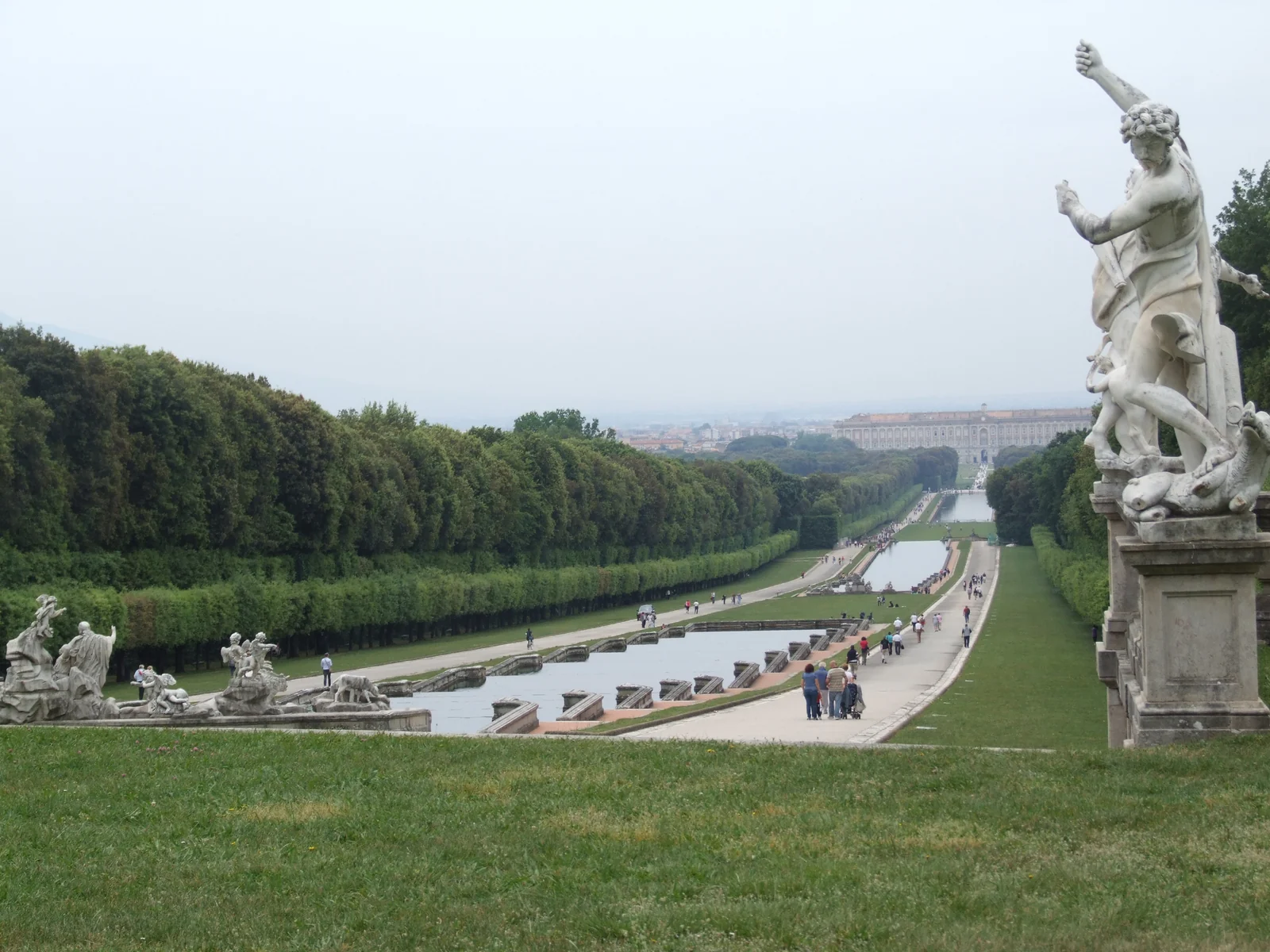
Photo: Franco Antonio / Wikimedia Commons — CC BY-SA 3.0 · Resized and converted to WebP.
Getting there and around
Caserta station stands opposite the Reggia: you leave on the Piazza Carlo di Borbone side and cross the square. It is also served by high-speed trains; it has six tracks, lifts and assistance for people with disabilities, booked with the Naples Sala Blu. Napoli Centrale and Napoli Afragola stations are the alternatives for those coming from further away.
Naples Capodichino international airport is about 26 kilometres from the Reggia, the port of Naples about 33. By car you leave the A1 motorway at Caserta Nord, and the A30 also has an exit for the city; the Reggia has no car park of its own, and campers can use the parking area of the Wood of San Silvestro. From the airport you reach the Reggia by bus or taxi.
The official website of the Comune di Caserta, registered in IndicePA, the index of the digital addresses of Italy’s public administrations, is the reference for the town council’s offices, opening hours and news. Its address is listed among the sources of this section.
Sources: Ministero della Cultura, Reggia di Caserta — Come raggiungerci · RFI — Stazione di Caserta · Comune di Caserta, sito istituzionale · IndicePA (AgID), Indice dei domicili digitali delle pubbliche amministrazioni: dataset Enti
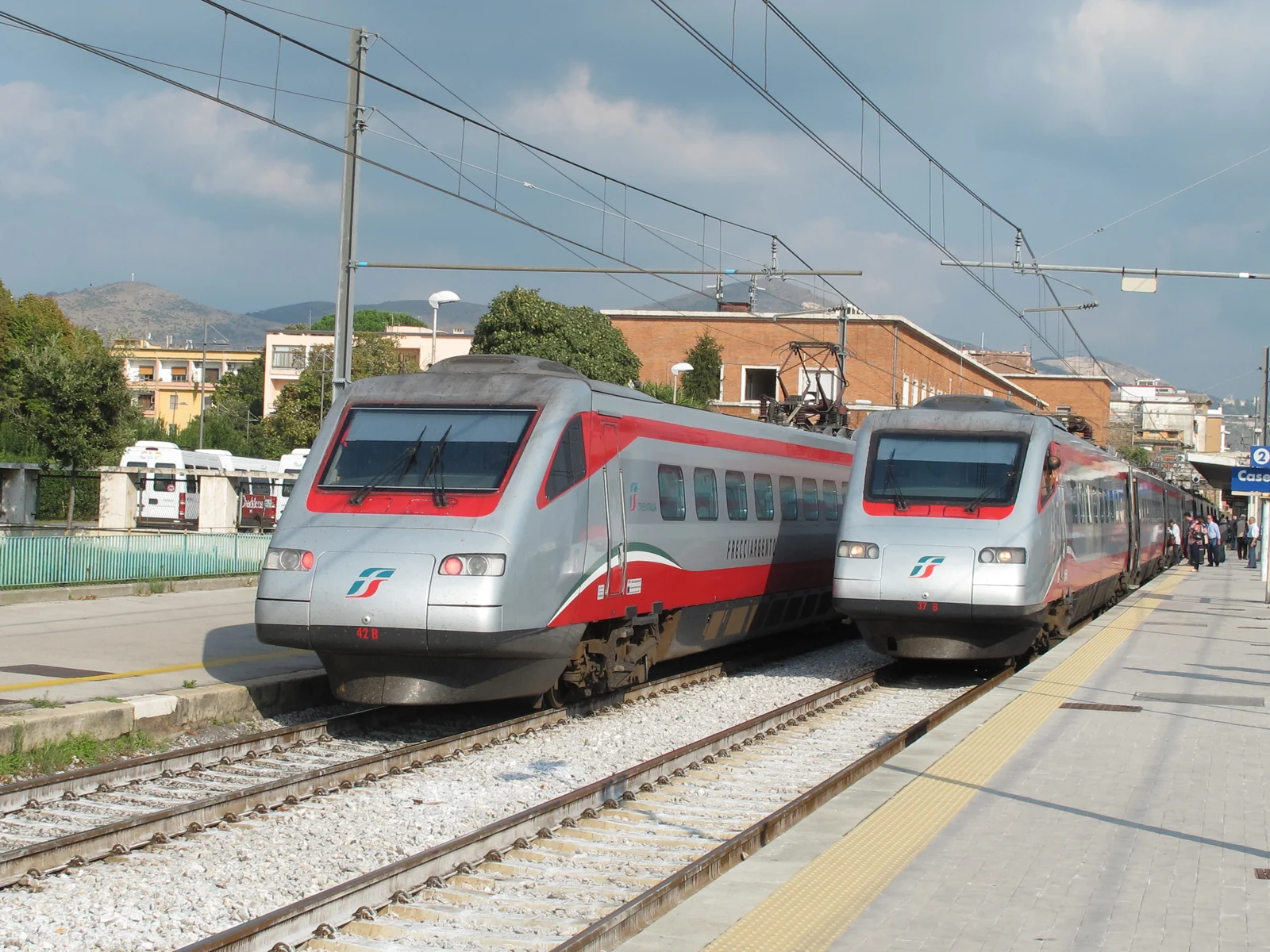
Photo: Manfred Kopka / Wikimedia Commons — CC BY-SA 4.0 · Resized and converted to WebP.
Where to stay
To stay in Caserta you choose between the centre, between the station, the Reggia and Piazza Vanvitelli, handy for trains and for entering the park early in the morning, and Casertavecchia, the hill village, which the municipality describes as pedestrian and equipped with tourist services and accommodation.
In the Ministry of Tourism’s national database of accommodation (BDSR), on 12 October 2026, Caserta had 304 establishments with a verified national identification code (CIN): 14 hotel-type establishments, 90 non-hotel establishments and 200 other establishments.
Those who visit the Reggia without hurrying can give it a whole day, and a second day to Casertavecchia and San Leucio, which look down on the city from just north of the historic centre.
Sources: Comune di Caserta, Luoghi — Piazza Vanvitelli e Centro Storico · Comune di Caserta, Luoghi — Il Borgo Medievale di Casertavecchia · Ministero della Cultura, Reggia di Caserta — Biglietti · Italia.it (Ministero del Turismo) — Caserta · Ministero del Turismo – Banca Dati Strutture Ricettive (dashboard pubblica)
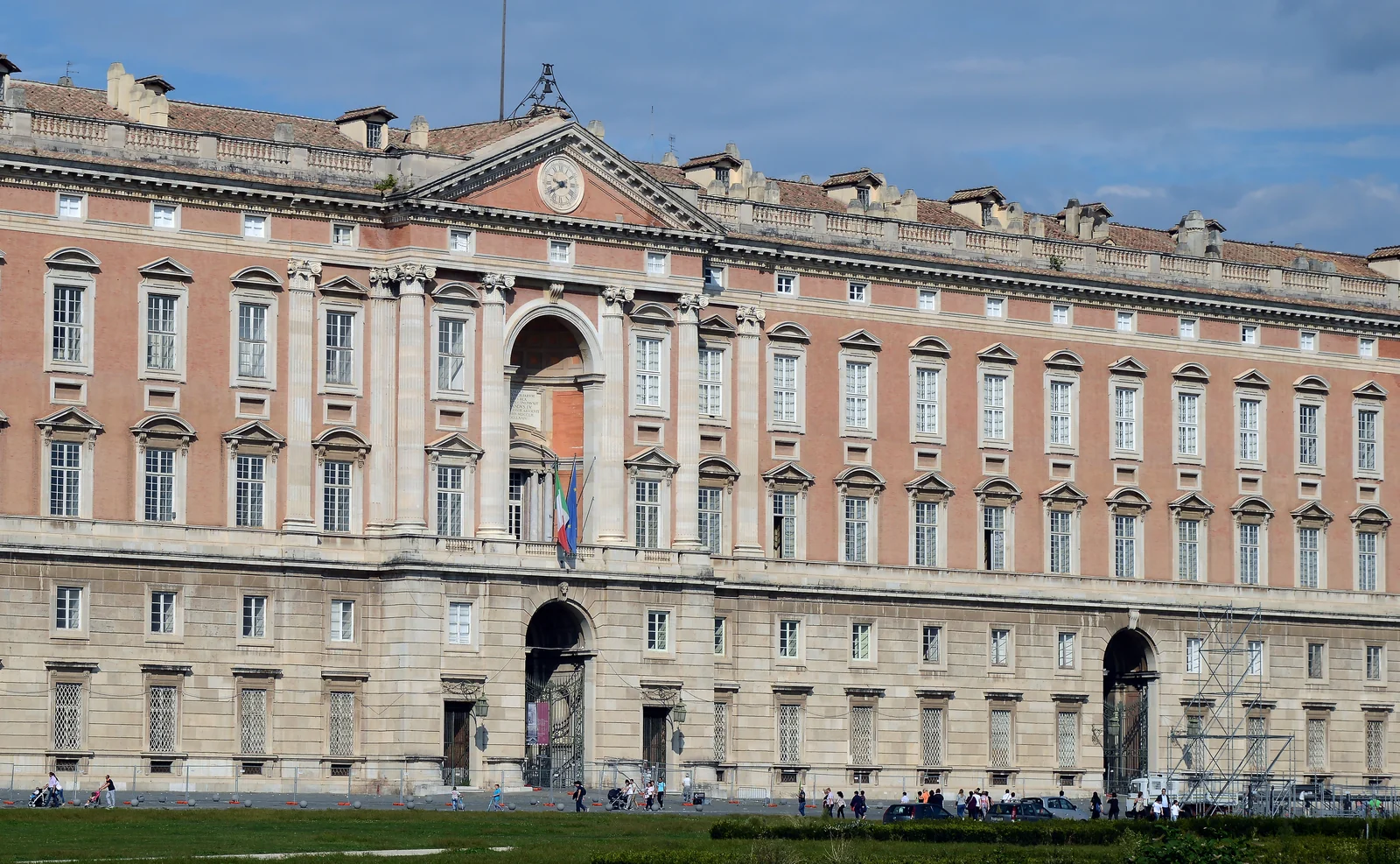
Photo: Livioandronico2013 / Wikimedia Commons — CC BY-SA 4.0 · Resized and converted to WebP.
Nearby
The Carolino Aqueduct, Vanvitelli's great hydraulic work that carries water to the Royal Park, runs for about 38 kilometres and also crosses the territory of Valle di Maddaloni; together with the Reggia and the Belvedere of San Leucio it makes up the World Heritage site.
The Wood of San Silvestro, with the lodge built between the 1790s and 1801 to a design by Giovanni Patturelli, was, with San Leucio, the Royal Park and the English Garden, one of the Bourbons' "Royal Delights", devoted to farming and hunting. Among the productive enterprises the king created, the Reggia also recalls the San Leucio silk works and the Carditello farming estate.
Sources: Ministero della Cultura, Reggia di Caserta — Tutela dell’Acquedotto carolino e del Bosco di San Silvestro · Ministero della Cultura, Reggia di Caserta — Parco Reale · Ministero della Cultura, Reggia di Caserta — La Reggia di Caserta · Ministero della Cultura, Reggia di Caserta — Real Tenuta di San Silvestro
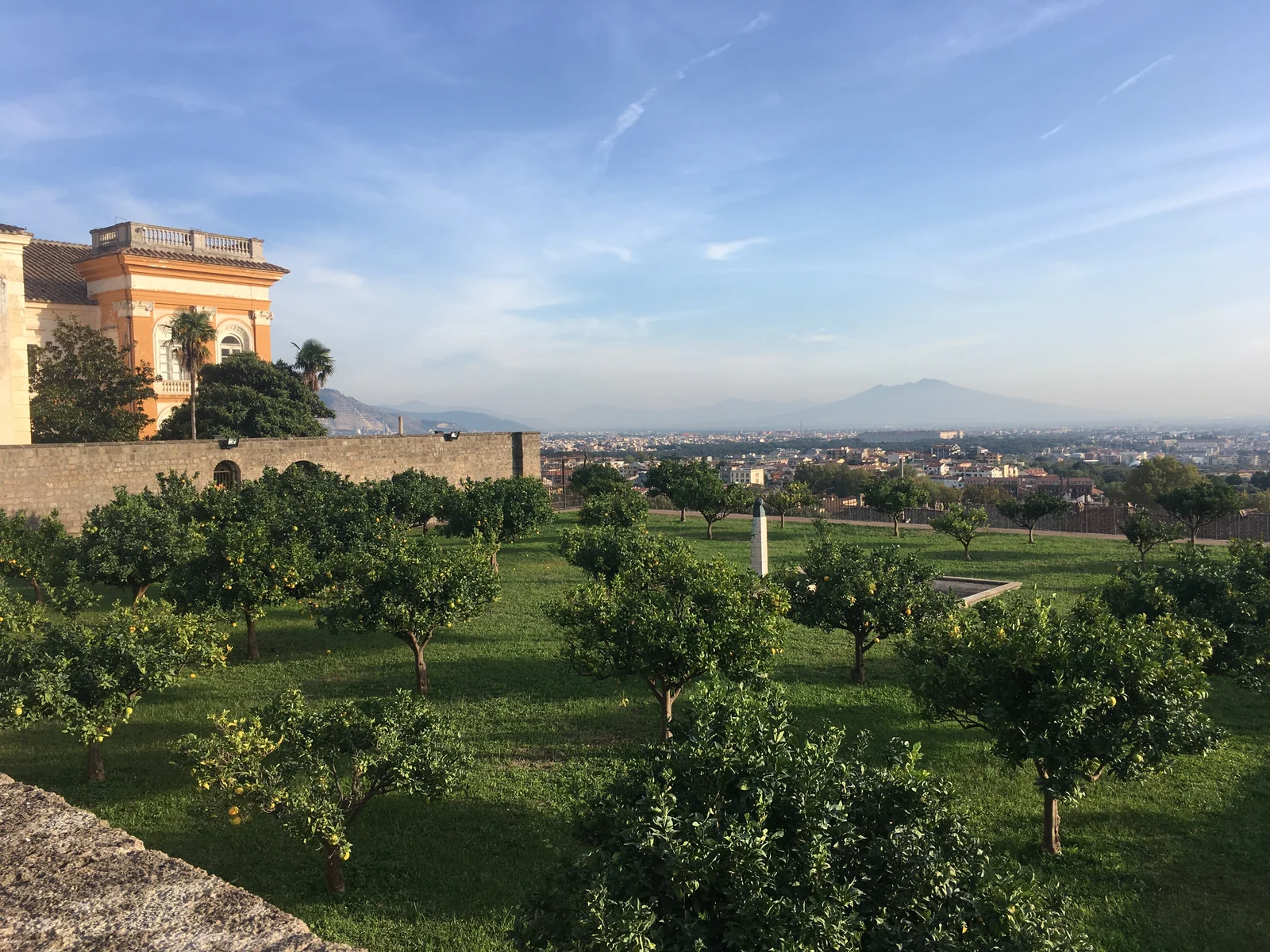
Photo: Mel22 / Wikimedia Commons — CC BY-SA 4.0 · Resized and converted to WebP.
Where to stay
In the municipality of Caserta the national database of the Ministry of Tourism lists 304 accommodation businesses with a verified CIN code: 14 hotels, 90 other licensed accommodation and 200 other types such as B&Bs and private rentals.
Licensed businesses from the official list of accommodation named as the source in this section. Where the list gives it, the property's official identification code appears next to its name: the national CIN code, or the code assigned by the Region or by the body that keeps the list. Private individuals are not listed. This list is the official census of licensed businesses, not a list of Apulica partners: to stay in Caserta you do not have to check one property after another yourself; write to Apulica and we look for the stay that suits your journey, checking availability and conditions before any confirmation.
9 Cento Resort
Hotel · ★★★★
Regional code (CUSR) 15061022ALB0002
L'Eremo
Farm stay
Regional code (CUSR) 15061022EXT0027
AFFITTACAMERE MANOUCHE
Guest rooms
Regional code (CUSR) 15061022EXTBVH5
Boutique Hotel Palazzo dei Vescovi
Hotel · ★★★★
Regional code (CUSR) 15061022ALB0193
AFRODITE GUEST HOUSE
Guest rooms
Regional code (CUSR) 15061022EXT0096
Bruman
Hotel · ★★★★
Regional code (CUSR) 15061022ALB0008
ANNARITA BOUTIQUE SUITE
Guest rooms
Regional code (CUSR) 15061022EXTX9J2
Cavalieri Caserta
Hotel · ★★★★
Regional code (CUSR) 15061022ALB0016
ARTISTIC CHARMING HOUSE
Guest rooms
Regional code (CUSR) 15061022EXT0155
Europa
Hotel · ★★★★
Regional code (CUSR) 15061022ALB0020
First the places that presented themselves to Apulica, the latest first; then one place of each type in turn, by official category and stars, then by name. No position is paid for.
All 66 entries in alphabetical order
Page 1 of 7
| Name | Type | Identification code |
|---|---|---|
| 9 Cento Resort | Hotel | Regional code (CUSR) 15061022ALB0002 |
| AFFITTACAMERE MANOUCHE | Guest rooms | Regional code (CUSR) 15061022EXTBVH5 |
| AFRODITE GUEST HOUSE | Guest rooms | Regional code (CUSR) 15061022EXT0096 |
| Amadeus | Hotel | Regional code (CUSR) 15061022ALB0005 |
| ANNARITA BOUTIQUE SUITE | Guest rooms | Regional code (CUSR) 15061022EXTX9J2 |
| ARTISTIC CHARMING HOUSE | Guest rooms | Regional code (CUSR) 15061022EXT0155 |
| B&B REVOLUTION | Guest rooms | Regional code (CUSR) 15061022EXT0228 |
| Belvedere | Hotel | Regional code (CUSR) 15061022ALB0006 |
| Boutique Hotel Palazzo dei Vescovi | Hotel | Regional code (CUSR) 15061022ALB0193 |
| Bruman | Hotel | Regional code (CUSR) 15061022ALB0008 |
Ask Apulica for a stay in Caserta We reply shortly, within a few hours at most, with a proposal for you to consider.
Sources: Ministero del Turismo – Banca Dati Strutture Ricettive (dashboard pubblica), 2026-10-12
YOUR JOURNEY
How to shape a journey here
We can organise a guided visit of the Reggia, from the palace to the waterfall, and a tour of Casertavecchia and San Leucio, with transfers from Naples airport and station. For a trip, a guide or a transfer you can write to Apulica with the button below.
Plan your trip“Come to Caserta as a guest, not as a tourist: that is how these places truly let you know them.”