

Why go
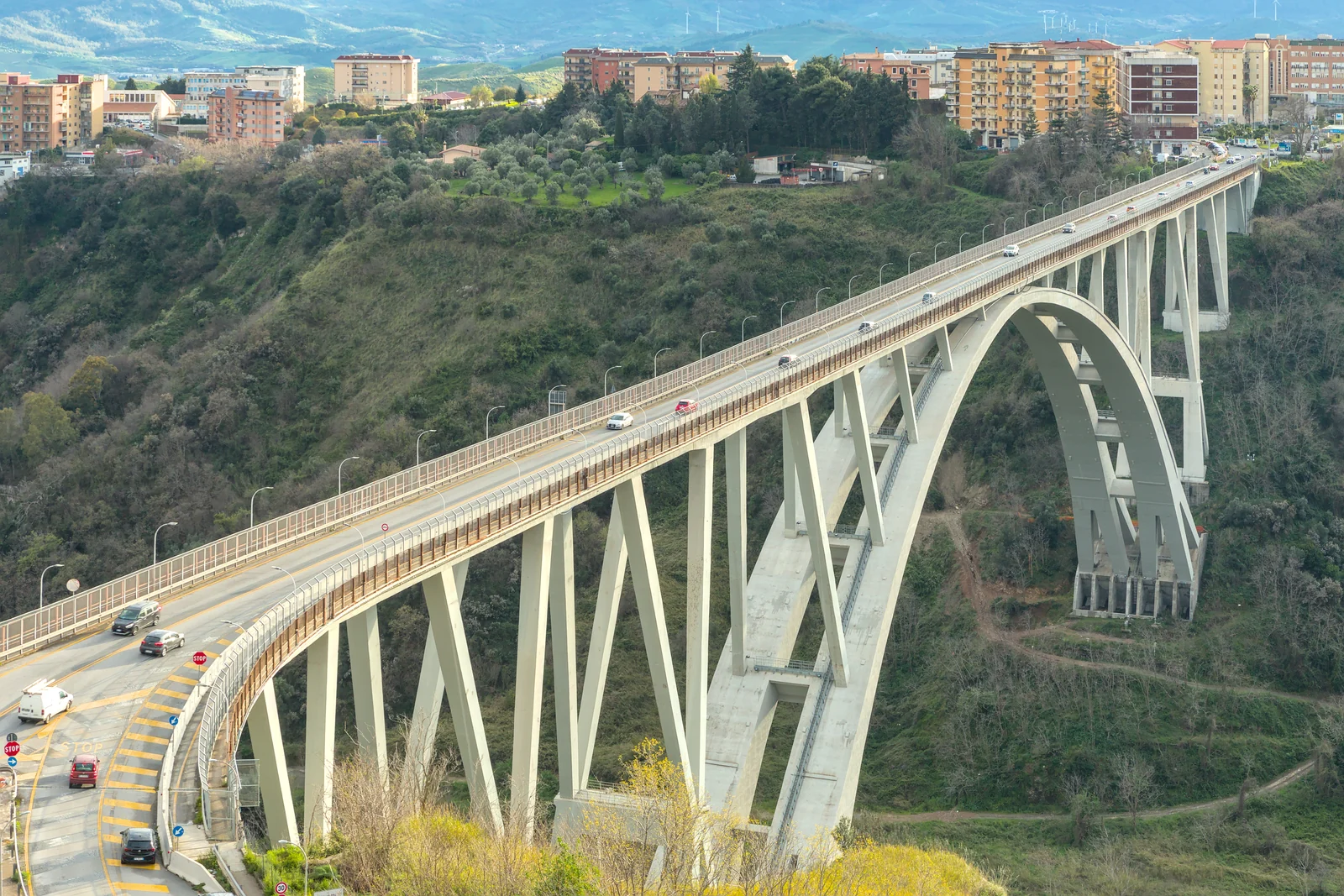
Catanzaro sits high on a spur between two river beds, where Calabria is at its narrowest. The Ministry's tourism portal recalls the nicknames it goes by: the "city of the three Vs", for the wind (vento) blowing from the Sila and the sea, for its long craft tradition of velvet (velluto) and for Saint Vitaliano, the patron saint; the "city of two seas", for its position on the isthmus between the Tyrrhenian and the Ionian; the "city of three hills", the Vescovato, San Rocco and San Giovanni, which look out over the Gulf of Squillace; and the "city of bridges", for the tall viaducts that link it to the surrounding land.
The old town keeps the layout of a city of Byzantine foundation, with winding lanes and medieval buildings, while Corso Mazzini is lined with nineteenth-century palazzi and monumental squares. Alongside this old city there is a contemporary one: MARCA, the Museum of the Arts, the House of Memory of Mimmo Rotella, the décollage artist born here in 1918, the open-air sculptures of the Mediterranean Biodiversity Park and murals around town.
And there is the sea. The Lido district, about 13 kilometres from the old town, has a two-kilometre pedestrian seafront with a 1,800-metre mosaic and a long beach, while towards Giovino the dunes and a pine wood remain. From the heights around the city, the municipality writes, on clear days you can see the Tyrrhenian and the Ionian at the same time.
Catanzaro is a municipality in the province of Catanzaro, in Calabria. Its ISTAT code is 079023. It is the capital of the province of Catanzaro. On 1 January 2025 it had 83,313 residents. The municipal territory covers 112.78 km² and ranges from -2 to 667 metres above sea level; the town hall stands at about 325 metres.
Catanzaro is also the capital of Calabria: the Region has its seat in the Cittadella regionale on Viale Europa, in the Germaneto area. In the same area, in the Corace valley, lies the "Salvatore Venuta" campus of the Magna Græcia University: more than 170 hectares, in use since 2004.
Sources: Italia.it (Ministero del Turismo) — Catanzaro · Comune di Catanzaro, Visit Catanzaro — L’Istmo di Catanzaro: il ponte naturale tra Tirreno e Ionio · Comune di Catanzaro — Casa della Memoria Mimmo Rotella · Ministero della Cultura — MARCA, Museo delle Arti Catanzaro · Comune di Catanzaro, Visit Catanzaro — Parco della Biodiversità Mediterranea Michele Traversa · Comune di Catanzaro — Lungomare «Stefano Pugliese» · Comune di Catanzaro, Visit Catanzaro — Catanzaro Marina · ISTAT, Codici statistici delle unità amministrative territoriali: elenco dei comuni al 21 febbraio 2026 · ISTAT, Popolazione residente per età, sesso e stato civile al 1° gennaio 2025 (POSAS) · ISTAT, Principali statistiche geografiche sui comuni: superficie e altimetria al 31 dicembre 2021 · Regione Calabria, portale istituzionale (sede: Cittadella regionale, viale Europa, località Germaneto) · Università degli Studi «Magna Græcia» di Catanzaro: il Campus
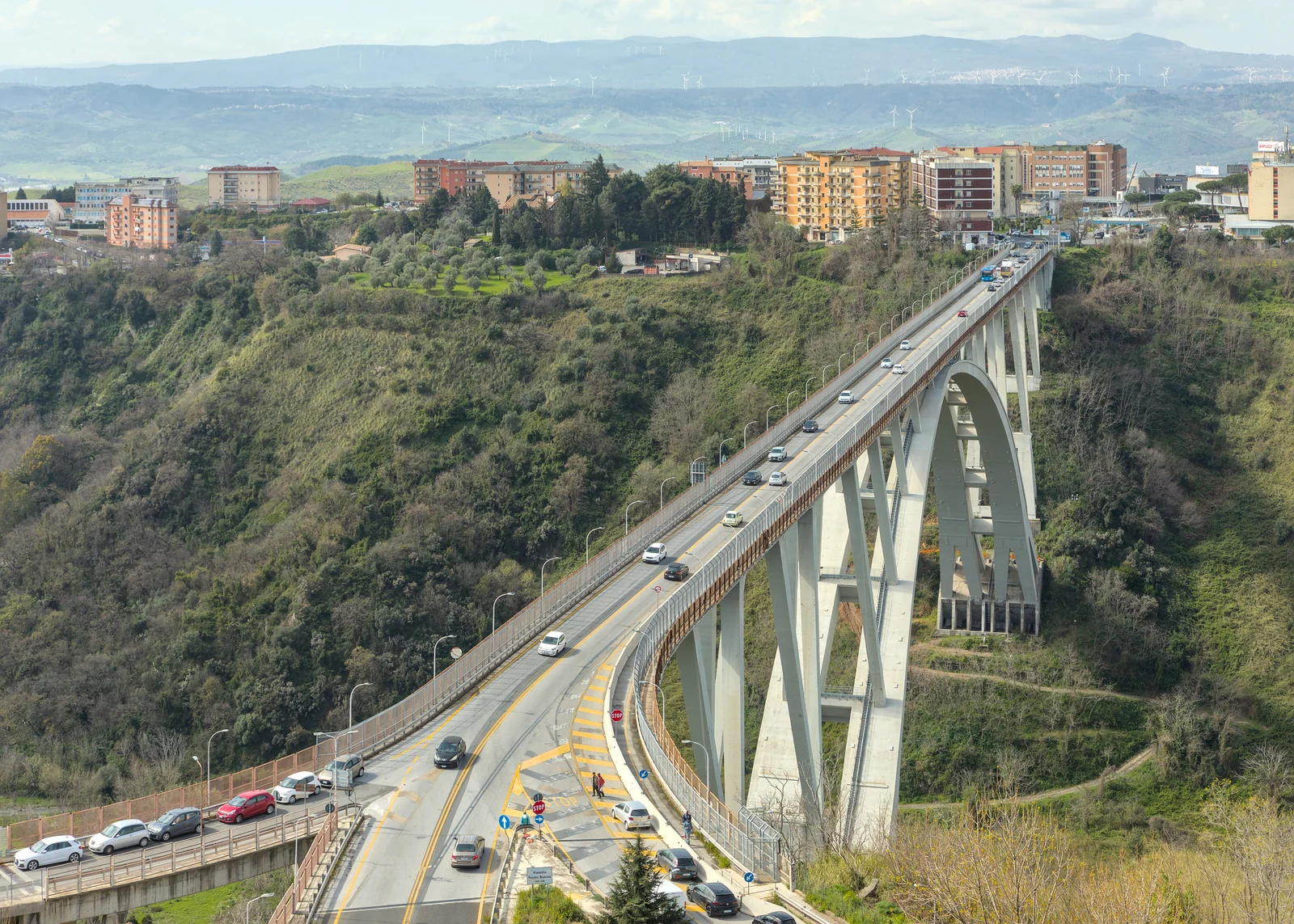
Photo: Benjamin Smith / Wikimedia Commons — CC BY-SA 4.0 · Resized and converted to WebP.
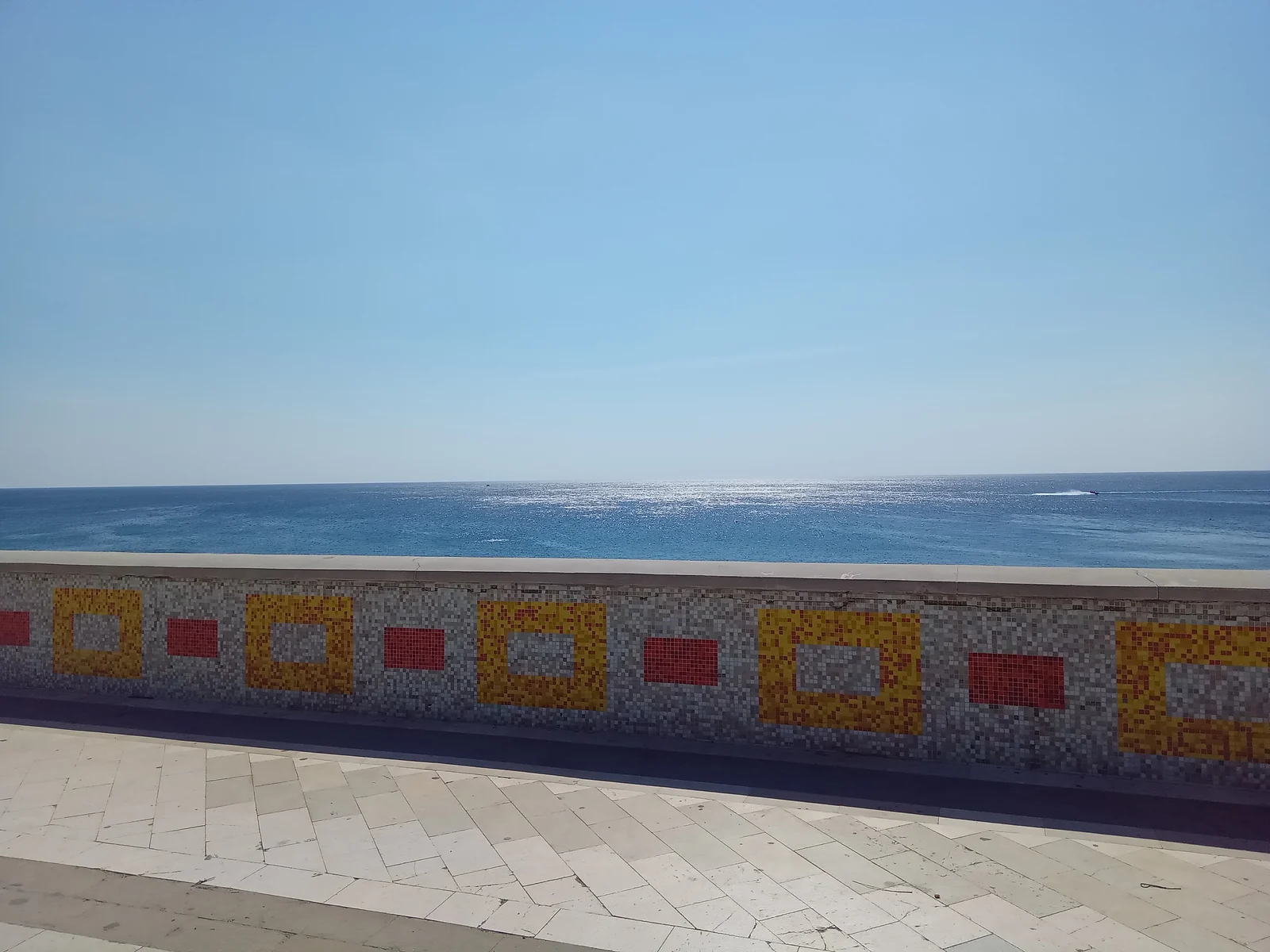
Photo: Nicholas Gemini / Wikimedia Commons — CC BY-SA 4.0 · Resized and converted to WebP.
History
Geography explains a great deal. The Catanzaro isthmus, the municipality writes, is the narrowest point of the peninsula: some thirty kilometres separate the Ionian from the Tyrrhenian, and in the depression between the Sila Piccola and the Serre the Amato flows west to the Tyrrhenian and the Corace east to the Ionian. For the same reason, in the first century BC, Marcus Licinius Crassus had a wall built across it to stop the march of Spartacus's slaves.
The medieval town grew around its castle. According to the municipality, in 1059 Catanzaro came under the Normans of Robert Guiscard and became a county; the Ministry of Culture recalls the Norman castle built by Robert Guiscard in the eleventh century on the site of today's San Giovanni complex, partly destroyed in the fifteenth century. Silk, the municipality stresses, already fed trade with other regions and with the East. In 1122, according to a sixteenth-century inscription copied from a parchment, Pope Callixtus II consecrated the cathedral and founded the diocese; the Archdiocese also records that Joachim of Fiore was ordained here in 1168.
1528 is the year the people of Catanzaro remember with pride. Besieged by the French troops of Odet de Lautrec and rebel barons, the city held out until the besiegers withdrew on 28 August. Charles V granted it the right to mint coins, inscribed "obsesso cathanzario", called it "Magnifica et Fidelissima" and gave it the imperial eagle with the motto "Sanguinis effusione": the coat of arms with the three hills is still on the city's banner.
Then came the earthquakes. The one of 1638 struck the city hard; that of 1783, which according to the Archdiocese caused almost 30,000 deaths in Calabria, brought the Cassa Sacra, which seized church property to pay for reconstruction. On the ruins of the castle, meanwhile, had risen the church of Saints John the Baptist and John the Evangelist, the confraternity of the Bianchi di Santa Croce (1563) with its hospice (1569) and the convent of the Teresians (1645), later turned into barracks and then prisons.
Between the nineteenth and twentieth centuries the city built its public spaces and monuments. In 1863 the provincial council set up the commission that created the Provincial Museum, opened in 1879; in 1898 the monument to Francesco Stocco, a Garibaldian general, carved by Francesco Scerbo, was unveiled in Piazza Stocco; in 1933 Michele Guerrisi made the First World War memorial in Piazza Matteotti. In 1927 the diocese became an archdiocese; in 1986 it was united with Squillace and in 2001 it became a metropolitan see. In 1962 Riccardo Morandi opened the viaduct over the river bed that the people of Catanzaro call the "Ponte Morandi".
Its origins, the municipality's tourism portal explains, lie between history and tradition. The inhabitants of ancient Scolacium, on the coast, left the shore because of Saracen raids and moved up to the heights led by two Byzantine captains, Cattaro and Zaro, from whom tradition derives the city's name: Luise Gariano's "Cronica di Catanzaro" dates the foundation to 12 April 793, another version links it to the Rocca di Niceforo, in 813. Around 1250 Frederick II placed Catanzaro in the royal domain and entrusted it to families such as the Ruffo.
Between the 11th and the 18th century Catanzaro was one of Europe's great silk centres. A parchment of 1205 already mentions the "cathasariti", the fabrics of Catanzaro; in 1397 King Ladislaus of Durazzo granted the manufacture tax relief, and in 1519 a diploma of Charles V approved the Chapters of the Silk Guild, with rules so precise that every damask had to have 7,600 warp threads. There were 500 looms in the 16th century, between 5,000 and 6,000 in the 17th and about 800 in the 18th; the damasks of the De Siena and Bianchi families remained famous until the early 20th century. The dyes, crimson, midnight blue, green and sky blue, came only from natural colourings.
On 27 August 1943 bombing destroyed much of the cathedral, including the chapel of the patron saint Vitaliano and the sacristy. Reconstruction began in 1955 to a design by Vincenzo Fasolo and Franco Domestico, and the new cathedral was consecrated in 1960.
Sources: Comune di Catanzaro, Visit Catanzaro — L’Istmo di Catanzaro: il ponte naturale tra Tirreno e Ionio · Comune di Catanzaro, Visit Catanzaro — I Normanni: la nascita di una nuova era per Catanzaro · Ministero della Cultura — Complesso monumentale San Giovanni di Catanzaro · Arcidiocesi Metropolitana di Catanzaro-Squillace — Cenni storici · Comune di Catanzaro, Visit Catanzaro — Carlo V e l’Assedio di Catanzaro nel 1528 · Comune di Catanzaro, Visit Catanzaro — Museo Archeologico Numismatico Provinciale · Comune di Catanzaro, Visit Catanzaro — Monumento a Francesco Stocco · Comune di Catanzaro, Visit Catanzaro — Monumento ai Caduti della Grande Guerra · Comune di Catanzaro, Visit Catanzaro — Viadotto Bisantis · Comune di Catanzaro, Visit Catanzaro — Da Scolacium a Catanzaro: la rinascita tra mito e storia · Comune di Catanzaro, Visit Catanzaro — I Bizantini e gli Arabi: le radici di Catanzaro · Comune di Catanzaro, Visit Catanzaro — L'antica capitale della seta: Catanzaro tra arte, colore e commerci · Comune di Catanzaro, Visit Catanzaro — Cattedrale di Santa Maria Assunta (Duomo)
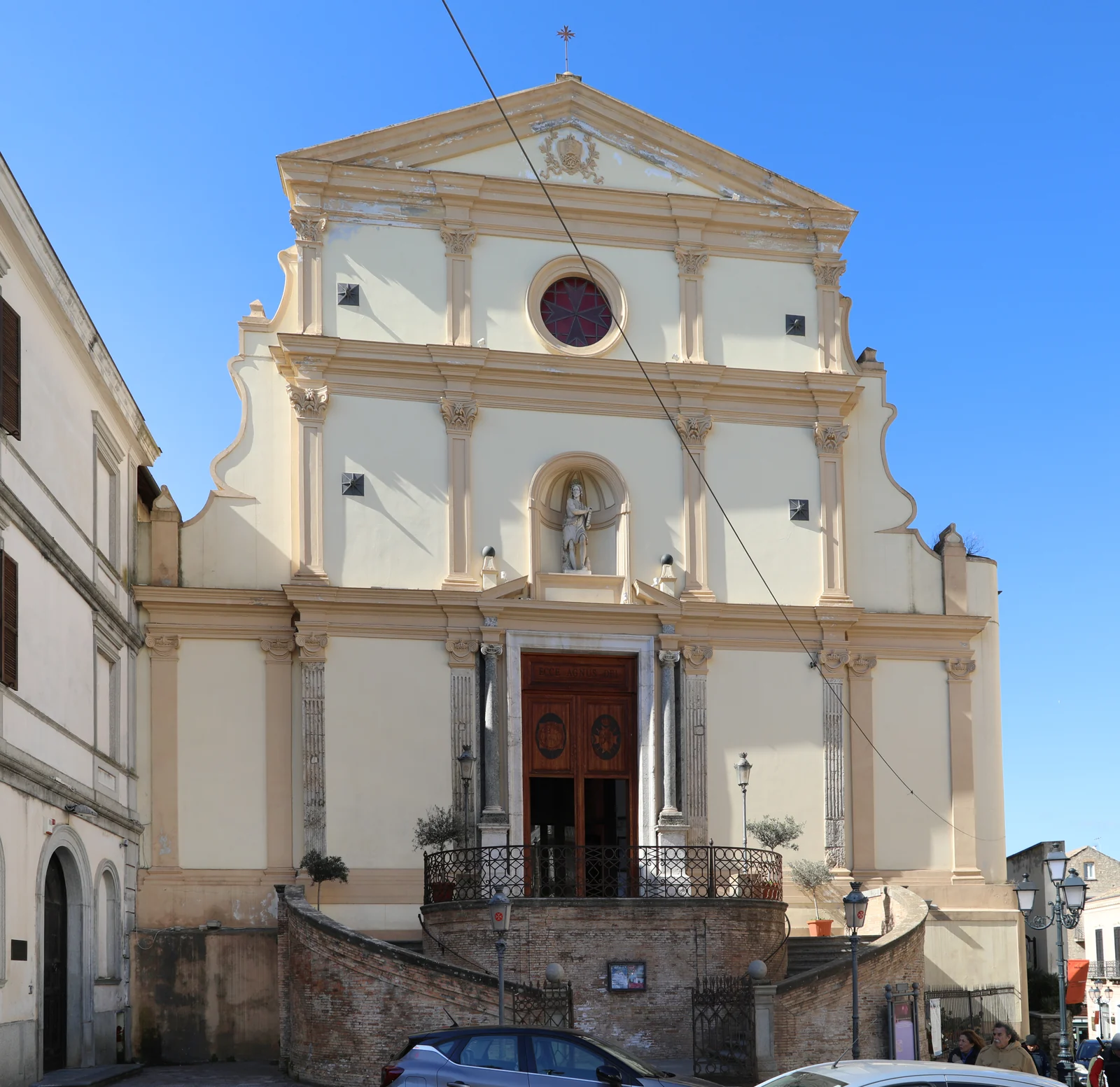
Photo: Sailko / Wikimedia Commons — CC BY-SA 4.0 · Resized and converted to WebP.
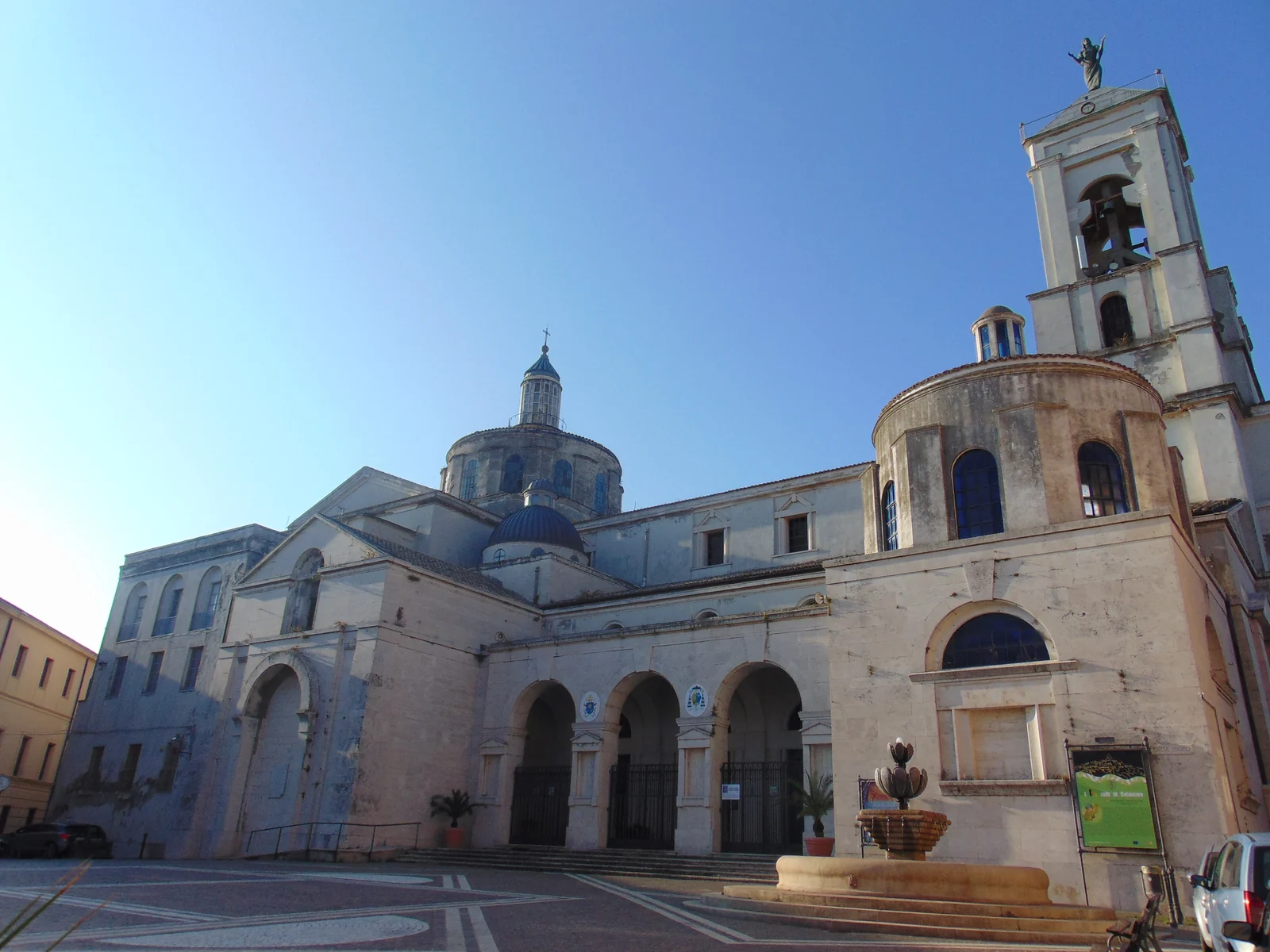
Photo: Nicholas Gemini / Wikimedia Commons — CC BY-SA 4.0 · Resized and converted to WebP.
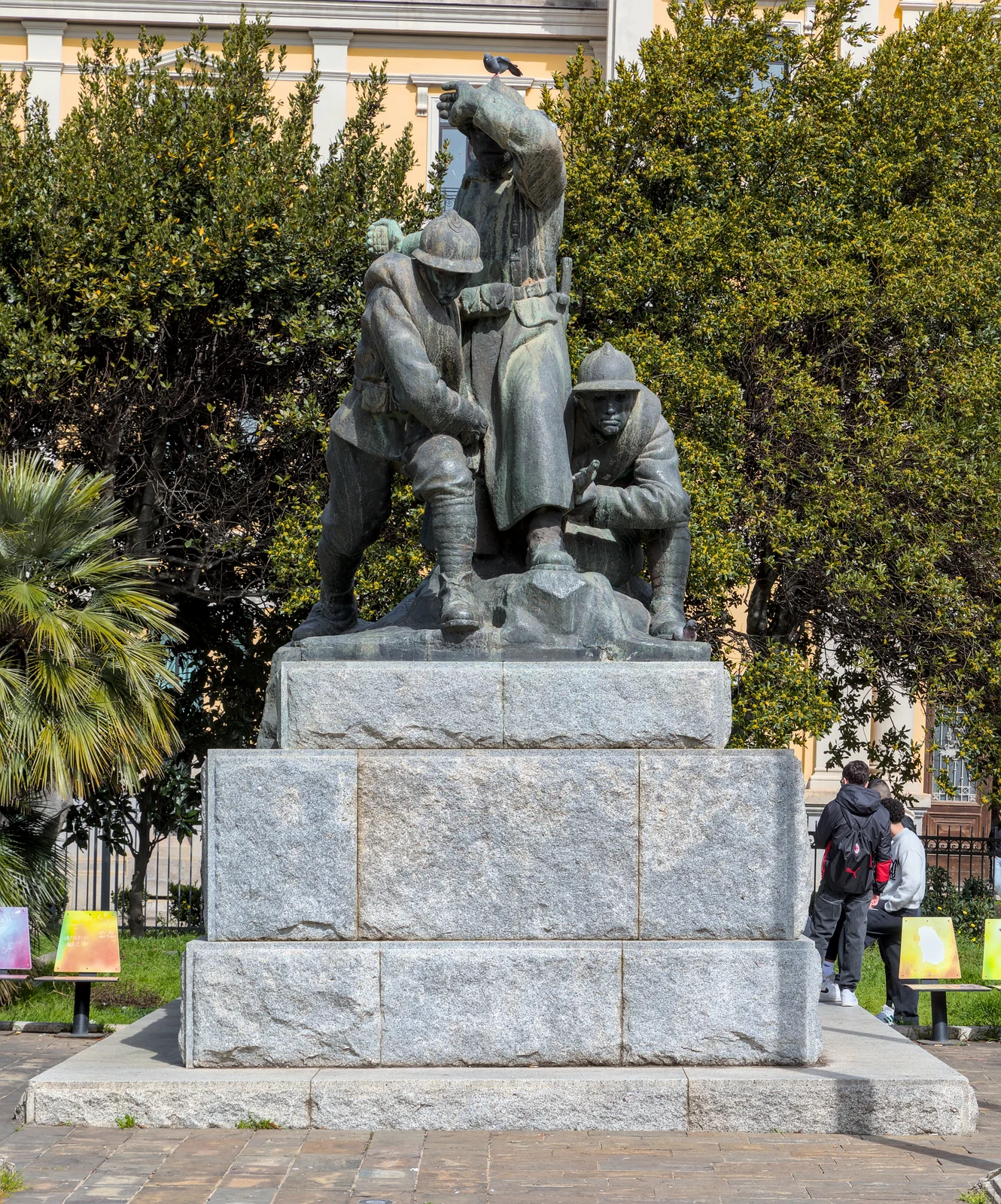
Photo: Benjamin Smith / Wikimedia Commons — CC BY-SA 4.0 · Resized and converted to WebP.
What to see
The starting point is the San Giovanni monumental complex, in Piazza Garibaldi, on the site of the Norman castle. Restored and opened in 1998 with an exhibition on Andrea Cefaly, followed in 1999 by one on Mattia Preti, it is now an exhibition centre and houses the municipality's culture offices, the museum and the Galleries of San Giovanni. Beneath Corso Mazzini, the passages of the Castle Galleries can be visited in groups of at most twenty, with a licensed tourist guide and by booking.
Along Corso Mazzini you meet the signs of the modern city. In Piazza Matteotti stands Giuseppe Rito's Cavatore (the quarryman), a bronze statue made between 1951 and 1954 in a niche in the San Giovanni walls, which is also a fountain: the water flows from the quarryman's tool. In the same square are Michele Guerrisi's war memorial, unveiled in 1933, and the former Liberty-style tram station of 1909, now an exhibition space. On the façade of the post office, at number 114, Mimmo Rotella's "Mural" tells the story of communication with envelopes, telegraphs, keyboards, telephones and carrier pigeons. In Piazza Cavour the cast-iron Fountain of Santa Caterina came out of the French Val d'Osne foundries at the end of the nineteenth century, to a design by the sculptor Mathurin Moreau.
The museums tell the whole history of the city. MARCA, founded in 2008 in an old-town palazzo that once housed an institute for the deaf and a printing works, shows the Province's picture gallery and plaster cast collection on the ground floor, with about 120 works and some thirty plasters and marbles by the sculptor Francesco Jerace, and Mimmo Rotella's permanent collection on the first floor; its terrace looks over the city. The Diocesan Museum of Sacred Art, on Via Arcivescovado, keeps the cathedral treasury, with Neapolitan and Sicilian silver, reliquaries from the fourteenth to the seventeenth century and vestments documenting Catanzaro's textile manufacture, as well as the marble frontal of the altar of Saint Vitaliano. At Villa Margherita the Provincial Museum holds archaeological and coin collections from Crotone, Strongoli, Crichi and Tiriolo, while the Museum of the Risorgimento, in the Florestano Pepe barracks, shows uniforms, weapons and documents.
In the old town, on Vico dell'Onda, the House of Memory is Mimmo Rotella's mother's house, restored by the architect Marcello Sestito and conceived by the artist "like a church, rigorous and white", with works, a library of 250 volumes, photographs and mementoes. The Teatro Politeama "Mario Foglietti", designed by Paolo Portoghesi and opened in 2002, has a horseshoe auditorium with five tiers of boxes decorated with about a thousand stars.
To understand the city from outside, look at the Bisantis viaduct: a single arch spanning 231 metres, designed by Riccardo Morandi and opened in 1962, at the time the second widest in the world.
In the old town you find the three main churches. The Cathedral of Santa Maria Assunta and Saints Peter and Paul, founded by the Normans, now has the form of its post-war reconstruction: a three-arched portico facing the square, the bell tower in the middle of the façade, a glazed dome and an interior faced with marble. The Basilica of the Immacolata, the church dearest to the people of Catanzaro, was founded in 1254 as the Franciscan church of the Holy Trinity; transformed from 1750 and consecrated on 6 December 1763, it was later enlarged with two side aisles and the dome. The church of San Domenico, or del Rosario, founded in 1401 by Count Nicolò Ruffo, has a neoclassical façade approached by the granite staircase built in 1897-1898.
The Bisantis viaduct is managed by ANAS: it is the stretch of the SS109 bis/dir between kilometre 0 and kilometre 0.5. Between 2018 and 2021 ANAS carried out repairs to its piers, with weight and speed limits during the works.
Sources: Ministero della Cultura — Complesso monumentale San Giovanni di Catanzaro · Comune di Catanzaro — Complesso Monumentale San Giovanni · Comune di Catanzaro, Visit Catanzaro — Gallerie del Castello · Comune di Catanzaro, Visit Catanzaro — Il Cavatore · Comune di Catanzaro, Visit Catanzaro — Monumento ai Caduti della Grande Guerra · Comune di Catanzaro, Visit Catanzaro — Piazza Matteotti · Comune di Catanzaro, Visit Catanzaro — «Mural» di Mimmo Rotella · Comune di Catanzaro, Visit Catanzaro — Fontana di Santa Caterina · Ministero della Cultura — MARCA, Museo delle Arti Catanzaro · Ministero della Cultura — Gipsoteca «Francesco Jerace» · Ministero della Cultura — Museo diocesano di arte sacra di Catanzaro · Ministero della Cultura — Museo provinciale · Ministero della Cultura — Museo del Risorgimento · Comune di Catanzaro — Casa della Memoria Mimmo Rotella · Comune di Catanzaro — Teatro Politeama «Mario Foglietti» · Comune di Catanzaro, Visit Catanzaro — Viadotto Bisantis · Comune di Catanzaro, Visit Catanzaro — Cattedrale di Santa Maria Assunta (Duomo) · Comune di Catanzaro, Visit Catanzaro — Basilica dell'Immacolata · Comune di Catanzaro, Visit Catanzaro — Chiesa di San Domenico (del Rosario) · ANAS: avanzano i lavori di manutenzione programmata sul viadotto Bisantis (progetto Morandi) a Catanzaro (13 aprile 2021)
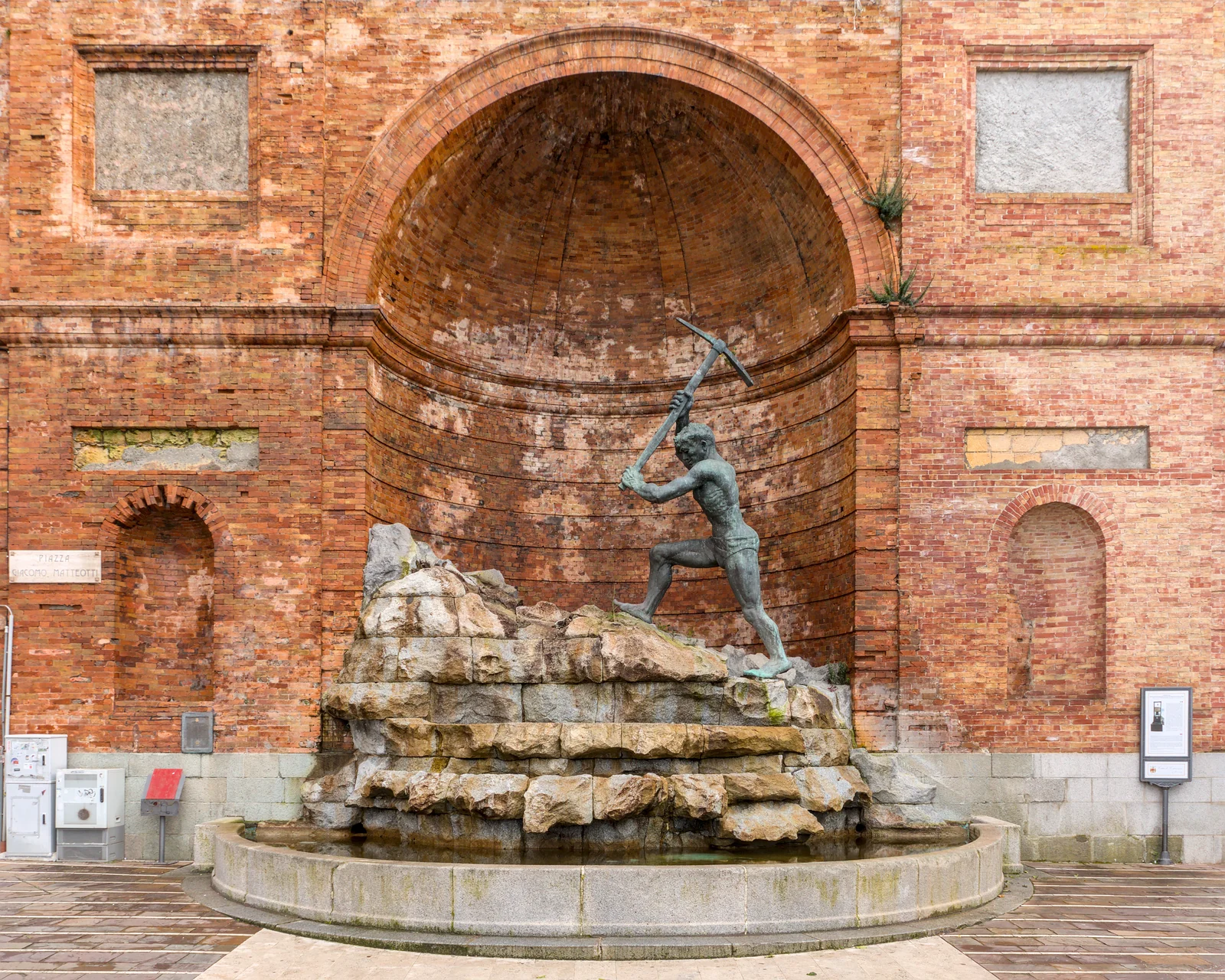
Photo: Benjamin Smith / Wikimedia Commons — CC BY-SA 4.0 · Resized and converted to WebP.
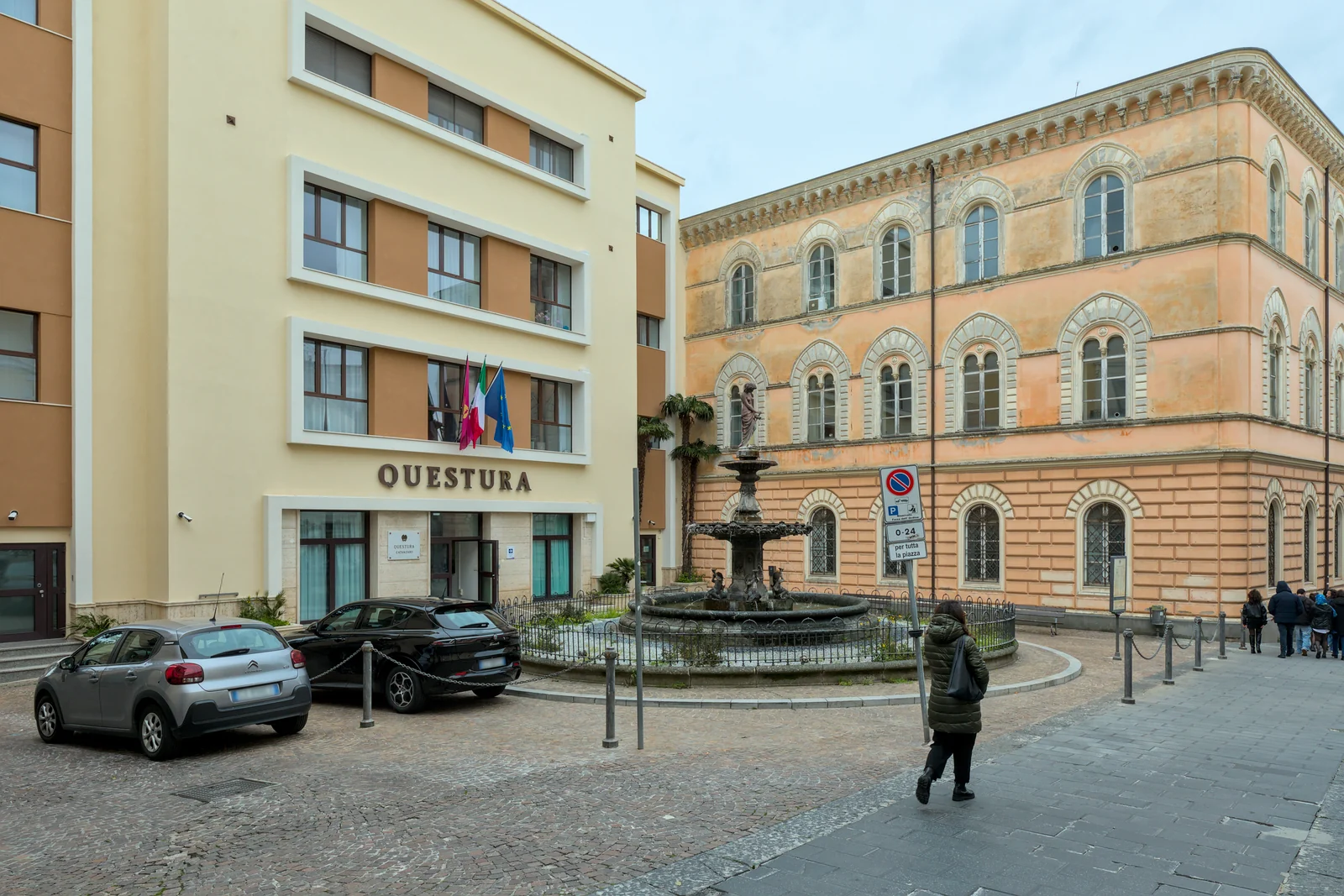
Photo: Benjamin Smith / Wikimedia Commons — CC BY-SA 4.0 · Resized and converted to WebP.
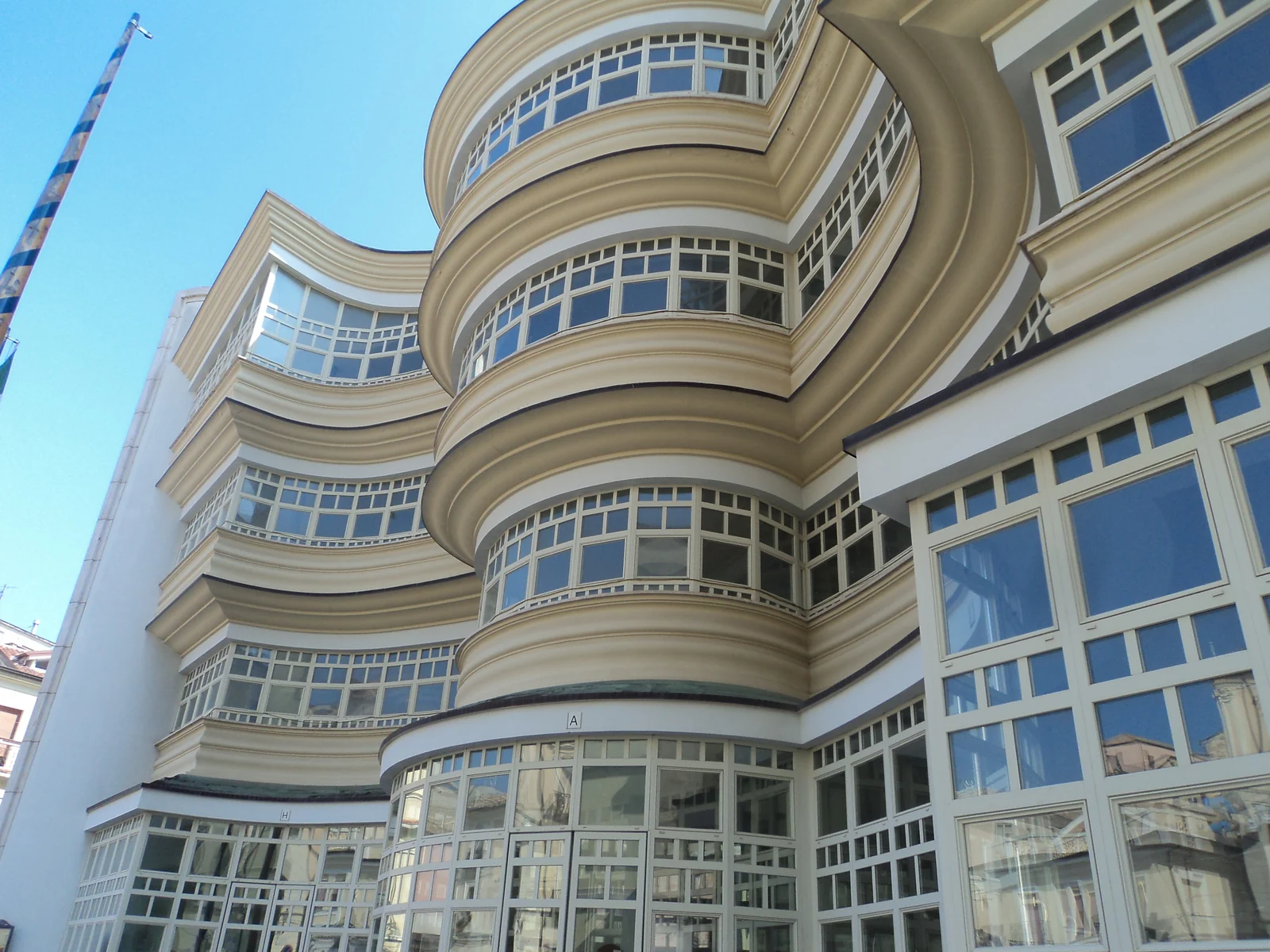
Photo: Nicholas Gemini / Wikimedia Commons — CC BY-SA 3.0 · Resized and converted to WebP.
Flavours
The city's dish is morzello, "morseddhu" in dialect. The Ministry's tourism portal describes it as a very spicy veal tripe dish, to be sought out in the traditional taverns the locals call "putiche"; the municipality adds that it is made with tripe and other veal offal, cooked with spices and tomato, and served with bread.
That bread is the pitta catanzarese, recognised by the municipality with a municipal designation (De.Co.): during the feast of Saint Vitaliano, in mid-July, the municipality puts it at the heart of tastings, workshops and an exhibition on its history, together with the city's bakers. Among wines the Ministry's portal points to Malvasia di Catanzaro.
For an address recognised by a guide, Da Talarico Salvatore is the only osteria in the city among Slow Food's Osterie d'Italia 2026 Snails in Calabria: one of fourteen in the region.
Morzello is also a symbol of the area: when the Region presented the logo of Calabria's identity De.CO labels in the Cittadella, the symbols chosen for the province of Catanzaro were the Morandi bridge, a view of the old town and morzello itself.
For produce from the land, on the second Sunday of every month Piazza Basilica Immacolata hosts the farmers' market, reserved for direct sales by farmers: in October 2026 the municipality put 30 stalls out to tender.
Sources: Italia.it (Ministero del Turismo) — Catanzaro · Comune di Catanzaro, Visit Catanzaro — Esperienza nella «Ruga del Morzello» · Comune di Catanzaro — Pitta Days e San Vitaliano il 15 e 16 luglio · Comune di Catanzaro — «Tutti festeggiano San Vitaliano» (2026) · Slow Food — Tutte le Chiocciole di Osterie d'Italia 2026, regione per regione · Regione Calabria: presentato in Cittadella il marchio De.CO identitaria · Comune di Catanzaro: mercato dei produttori agricoli nel centro storico, avviso per 30 posteggi (8 ottobre 2026)
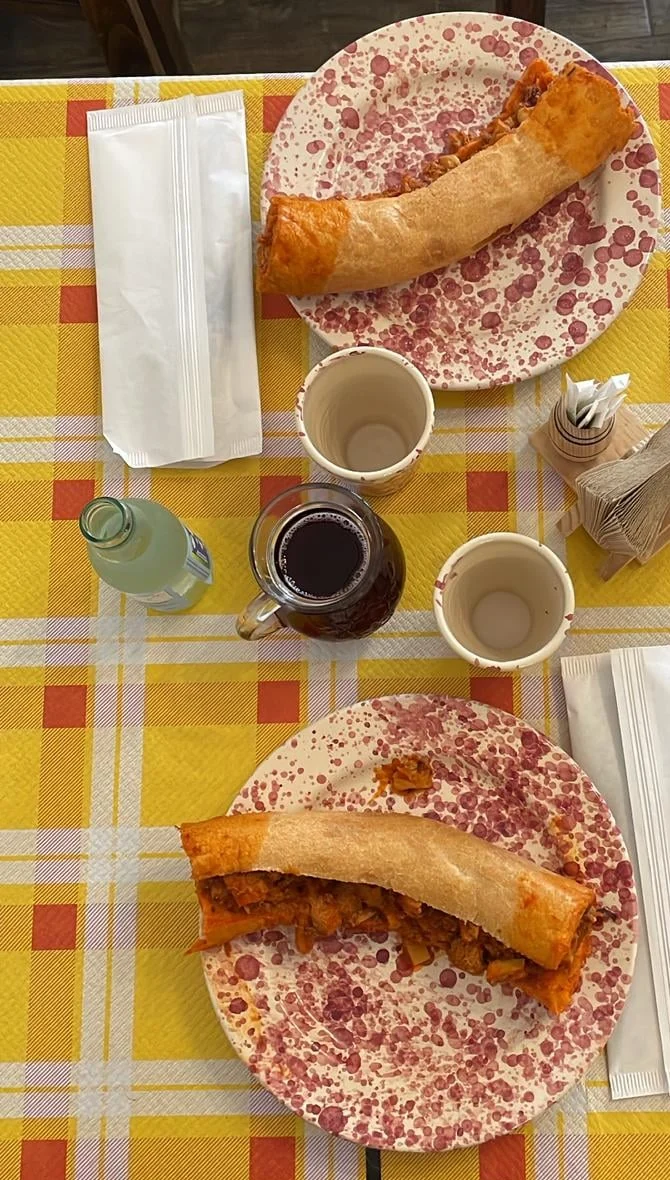
Photo: Roberto Talarico / Wikimedia Commons — CC BY-SA 4.0 · Cropped, resized and converted to WebP.
Things to do
The natural walk is along Corso Mazzini, from San Giovanni to Piazza Cavour and beyond, stepping into old-town lanes such as Vico dell'Onda, whose name, the municipality's tourism portal explains, comes from the watered, "wave" fabrics of the old silk workshops. To climb from the Sala district to the old town there is AMC's funicular, which takes three minutes, and the city has panoramic lifts.
For an afternoon outdoors there is the "Michele Traversa" Mediterranean Biodiversity Park, sixty hectares on the hills of Via Vinicio Cortese, created from the old agricultural school: paths, learning spaces and the installations of the International Sculpture Park. In the same park MUSMI, the "Brigata Catanzaro" military history museum, opened in 2007, tells two centuries of military history, from the Napoleonic age to the Second World War, through memorabilia, weapons and uniforms. Villa Margherita, at 320 metres, is the historic garden commissioned by mayor Francesco De Seta and laid out with the decorators Federico and Enrico Andreotti, with a view reaching the Sila.
In the evening you can go to the Politeama theatre, whose house holds about 900 people in all; the programme is published on the theatre's and the municipality's channels.
In summer the city goes down to the Lido. The "Stefano Pugliese" seafront is a two-kilometre pedestrian avenue decorated with the Atelier Mendini glass mosaic: 1,800 metres and more than five million tesserae, listed by Guinness World Records as the longest mosaic in the world. Wide stairways lead from the promenade down to the beach; at Casciolino there is the small harbour of refuge for pleasure boats.
In the old town the municipality has turned several stairways into art trails with the Scalin'Arte project, directed by Massimo Sirelli: "La Città in simboli" between Via Piave and Via Milano, the stairway dedicated to Peppino Impastato near the San Leonardo gardens, "Laundry" by Frelly between Via Daniele and Via Broussard and "Il Baco Tessitore" (the weaving silkworm) by Serena Lullo and Manuela Scarfò between Via Barbaro and Via Alberti. On Sundays Piazza Prefettura hosts the municipality's themed markets: vintage, art, crafts and modern antiques on the first and fourth Sunday of the month, the hobbyists' market on the third.
The Nicola Ceravolo stadium is the home of US Catanzaro. In February 2026 the city council approved the feasibility project for its redevelopment, 9 million euros of regional funds to demolish and rebuild the West stand closer to the pitch and to roof the North stand, removing the pillars that block the view.
The sea has its awards: in 2026 the FEE gave Catanzaro and Giovino beach the Blue Flag for the fourth year running. The Lido harbour has 310 boats at their moorings, and since August 2026 the municipal company Catanzaro Servizi has managed a further 90 berths. There, in October 2026, the municipality unveiled Massimo Sirelli's installation "Catanzaro Città di Mare", whose colours take up those that made Catanzaro silk famous in the 18th century.
Sources: Comune di Catanzaro, Visit Catanzaro — Casa della Memoria di Mimmo Rotella · AMC, Azienda per la Mobilità della Città di Catanzaro · Comune di Catanzaro, Visit Catanzaro — Parco della Biodiversità Mediterranea Michele Traversa · Italia.it (Ministero del Turismo) — Catanzaro · Comune di Catanzaro, Visit Catanzaro — MUSMI, Museo Storico Militare Brigata Catanzaro · Comune di Catanzaro, Visit Catanzaro — Villa Margherita · Comune di Catanzaro — Teatro Politeama «Mario Foglietti» · Comune di Catanzaro — Lungomare «Stefano Pugliese» · Comune di Catanzaro, Visit Catanzaro — Catanzaro Marina · Comune di Catanzaro: Scalin'Arte, il progetto che trasforma le scalinate del centro in opere d'arte · Comune di Catanzaro: mercati tematici ogni domenica in piazza Prefettura (11 maggio 2026) · Comune di Catanzaro: approvato il progetto di fattibilità per la riqualificazione dello stadio Ceravolo (27 febbraio 2026) · Comune di Catanzaro: Bandiera Blu per il quarto anno consecutivo a Catanzaro e alla spiaggia di Giovino (14 maggio 2026) · Comune di Catanzaro: porto, al via la gestione del terzo specchio d'acqua, 90 posti barca (31 agosto 2026) · Comune di Catanzaro: svelata al porto l'installazione «Catanzaro Città di Mare» (1° ottobre 2026)
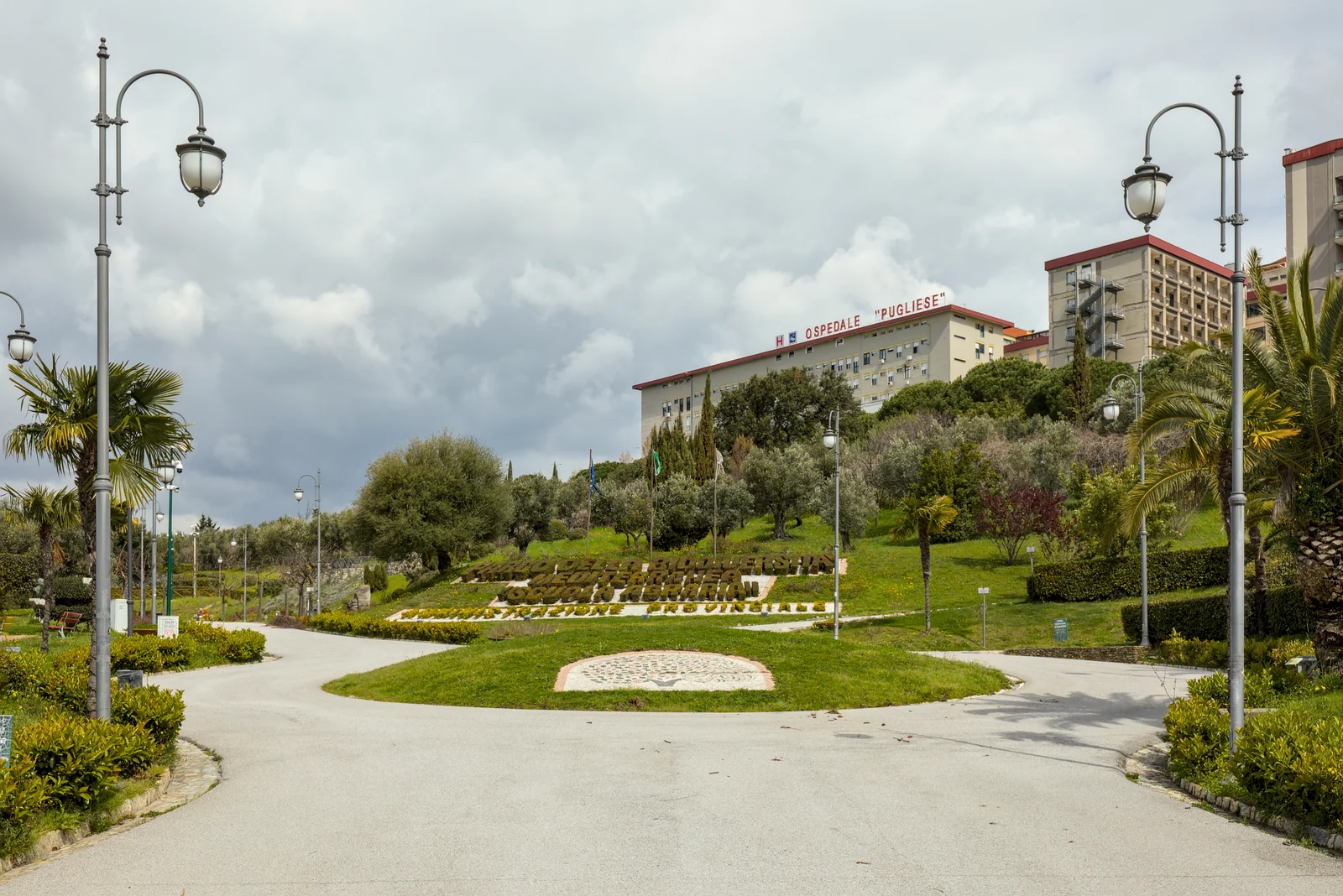
Photo: Benjamin Smith / Wikimedia Commons — CC BY-SA 4.0 · Resized and converted to WebP.
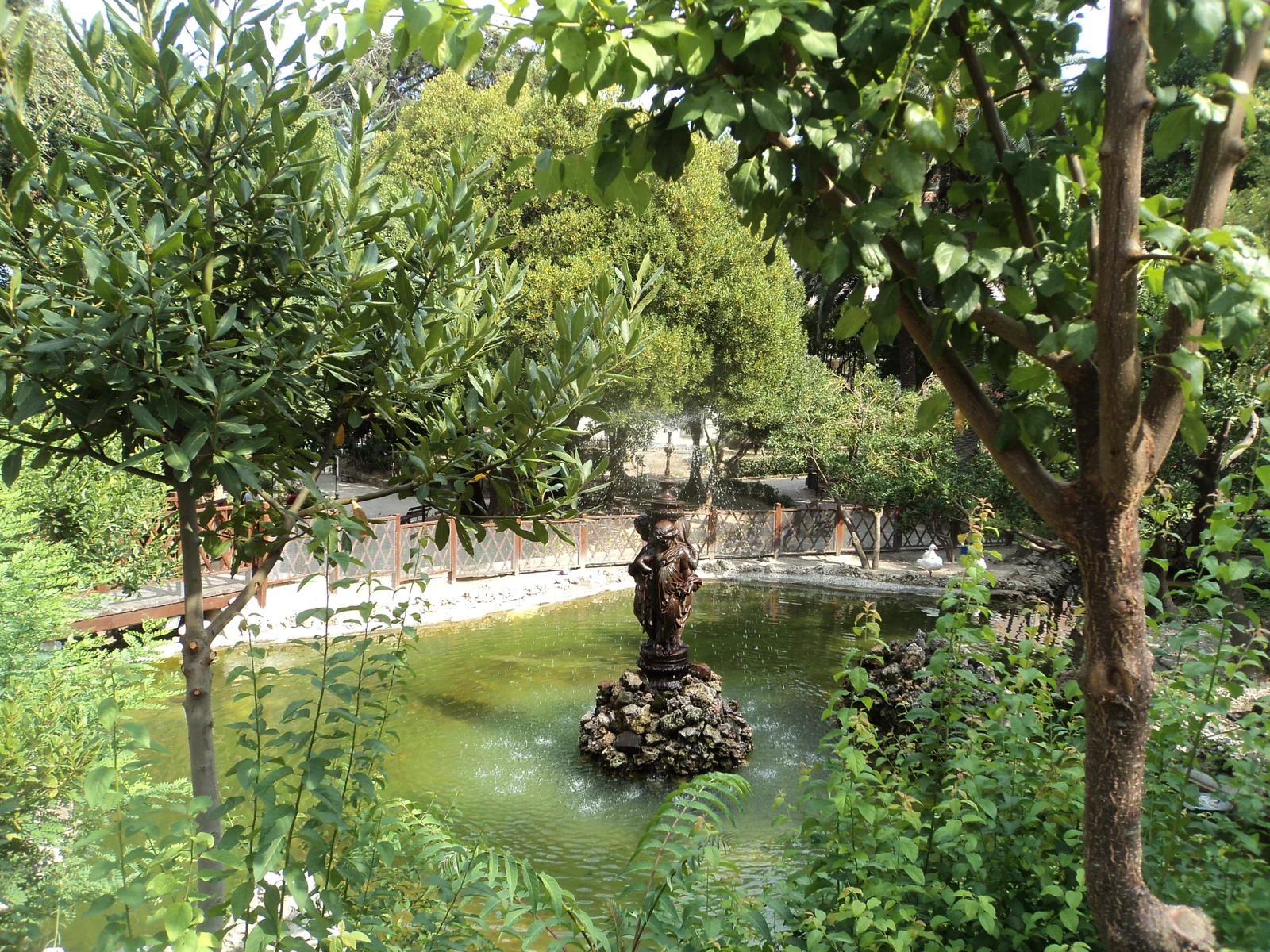
Photo: Nicholas Gemini / Wikimedia Commons — CC BY-SA 3.0 · Resized and converted to WebP.
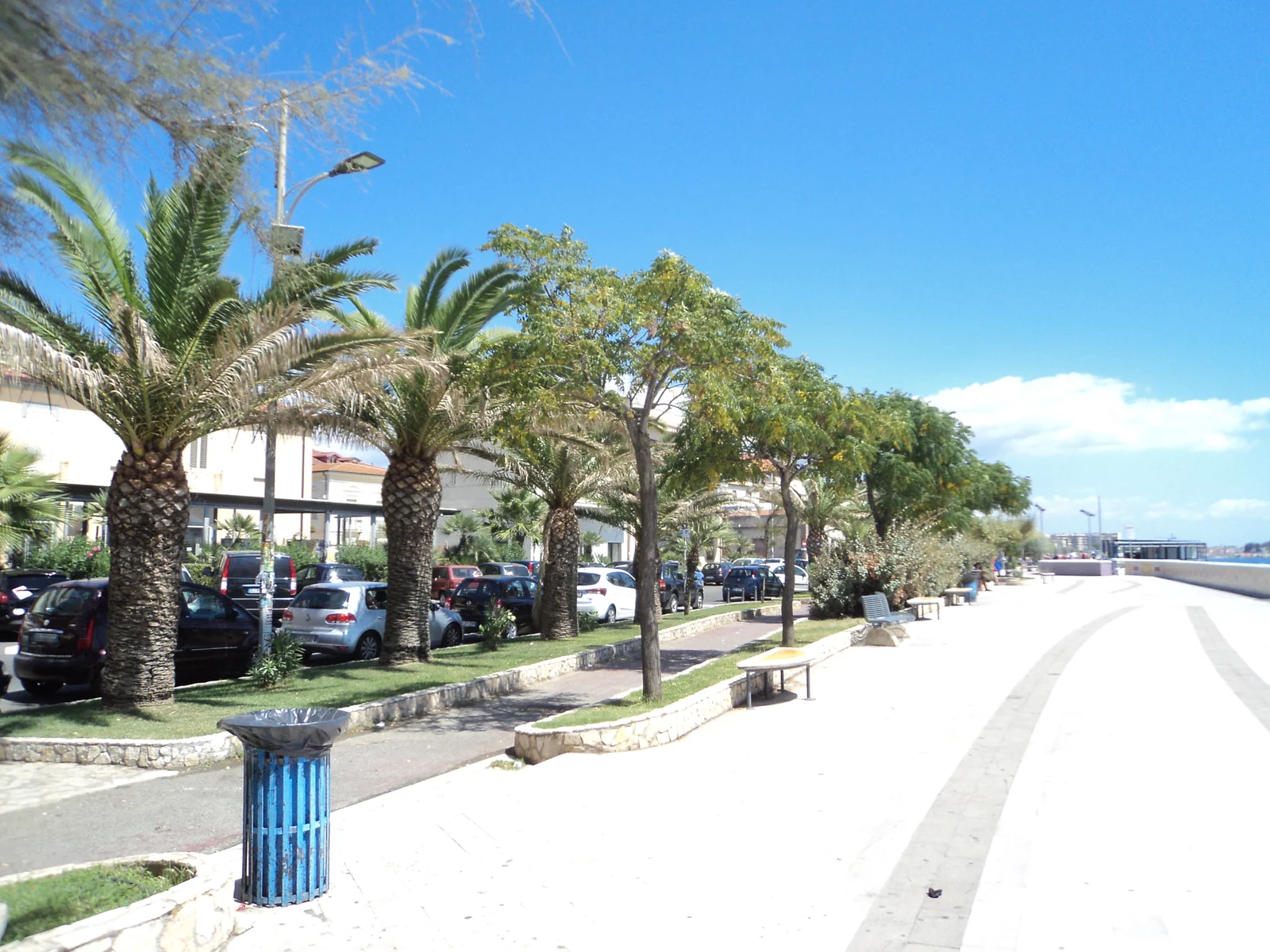
Photo: Nicholas Gemini / Wikimedia Commons — CC BY-SA 4.0 · Resized and converted to WebP.
When to go
Catanzaro can be visited all year: the old town and museums do not depend on the season, the Lido's sea is for summer, and two dates in the religious calendar set the city's tone.
On Good Friday the procession of the "Naca" crosses the old town. The municipality, which every year regulates traffic and parking along the route, in 2026 had it pass through Piazza Fiorentino, Via Tripoli, Via Jannoni, Piazza Matteotti, Corso Mazzini, Piazza Garibaldi and Piazza Basilica dell'Immacolata; on Maundy Thursday, for the Holy Week rites, Corso Mazzini becomes a pedestrian zone in the evening. Each year's times and route are given in the municipality's notices.
In mid-July the city celebrates its patron saint, Vitaliano. In 2026 the municipality built around the feast, on 15 and 16 July, a route through the old town between Corso Mazzini, the Nicholas Green Gardens and Piazza Prefettura, with tastings, workshops, shows, guided tours and the pitta catanzarese at its heart; the full programme is on the municipality's tourism portal.
In summer the Lido and Giovino beach are the centre of outdoor life; in spring and autumn clear days are the best for climbing the heights and looking for the two seas.
On 8 December the city renews its vow to the Immacolata. Spared by the plague in 1641, in 1660 Catanzaro pledged by public deed to defend the Immaculate Conception, two centuries before the dogma; since then, every year, the mayor, with the city council and before a notary, swears to recognise the Immacolata as the city's first patron.
In summer the feasts also have their fairs: besides the San Vitaliano fair, in 2026 the municipality put out to tender the stalls of the Madonna di Porto Salvo fair, on 25 and 26 July, and of the San Lorenzo fair, from 8 to 10 August in the Materdomini district. On New Year's Eve between 2025 and 2026 the "Stefano Pugliese" promenade at the Lido hosted Rai's New Year show "L'Anno che Verrà". In winter cultural life centres on the Politeama, where the 2026-2027 artistic season opens with a gala devoted to opera.
Sources: Comune di Catanzaro — Settimana Santa, ordinanze traffico e sosta per giovedì 2 e venerdì 3 aprile (2026) · Comune di Catanzaro — «Tutti festeggiano San Vitaliano» (2026) · Comune di Catanzaro — Visit Catanzaro, portale turistico della città · Arcidiocesi Metropolitana di Catanzaro-Squillace — I Santi Patroni · Comune di Catanzaro, Visit Catanzaro — Catanzaro Marina · Comune di Catanzaro, Visit Catanzaro — L’Istmo di Catanzaro: il ponte naturale tra Tirreno e Ionio · Comune di Catanzaro, Visit Catanzaro — Basilica dell'Immacolata · Comune di Catanzaro: avvisi per le fiere di San Vitaliano, della Madonna di Porto Salvo e di San Lorenzo (26 giugno 2026) · Comune di Catanzaro: Capodanno Rai «L'Anno che Verrà» a Catanzaro Lido · Fondazione Politeama Catanzaro: stagione artistica 2026-2027
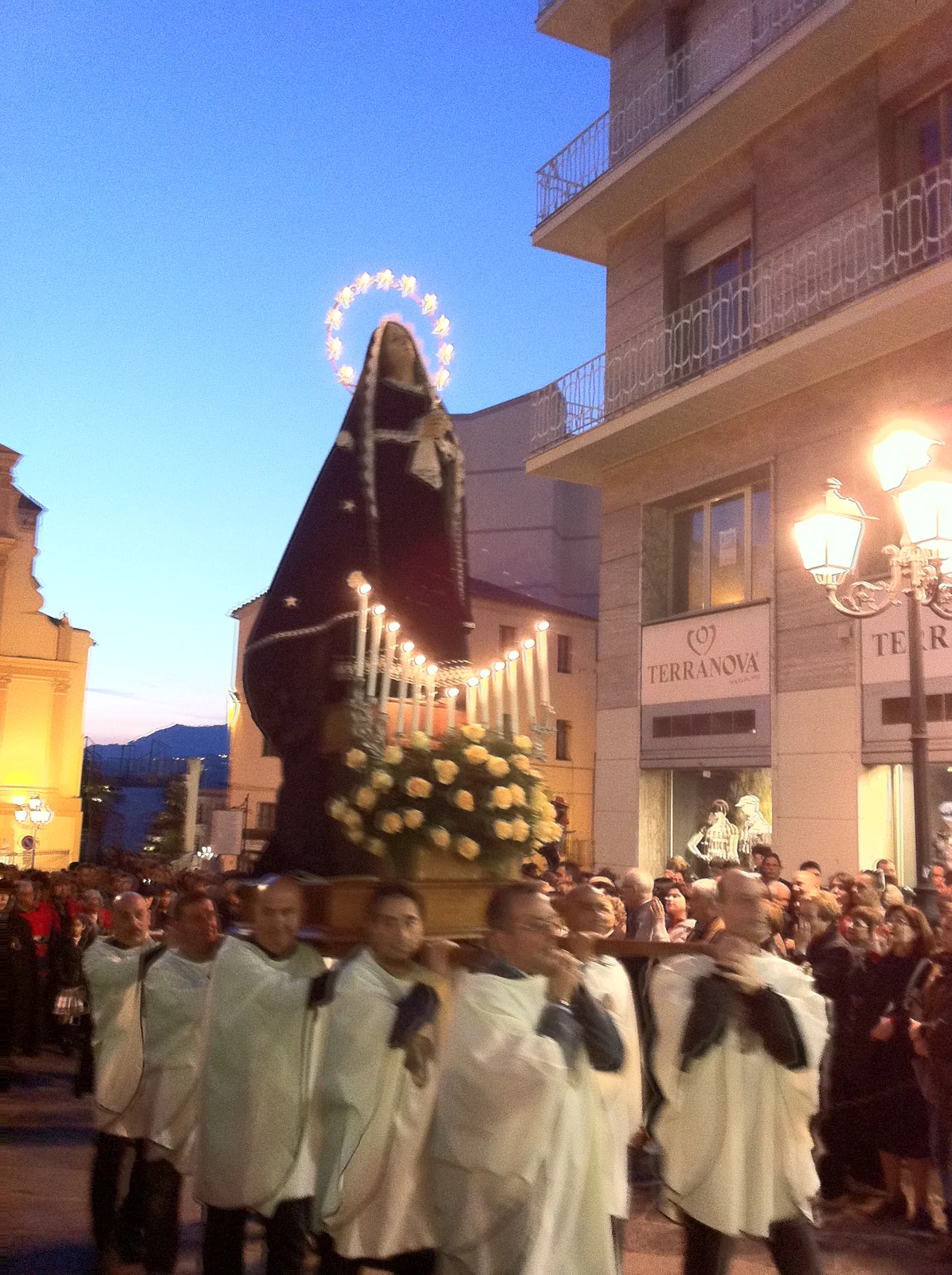
Photo: Emanuele 1982 / Wikimedia Commons — Public domain · Resized and converted to WebP.
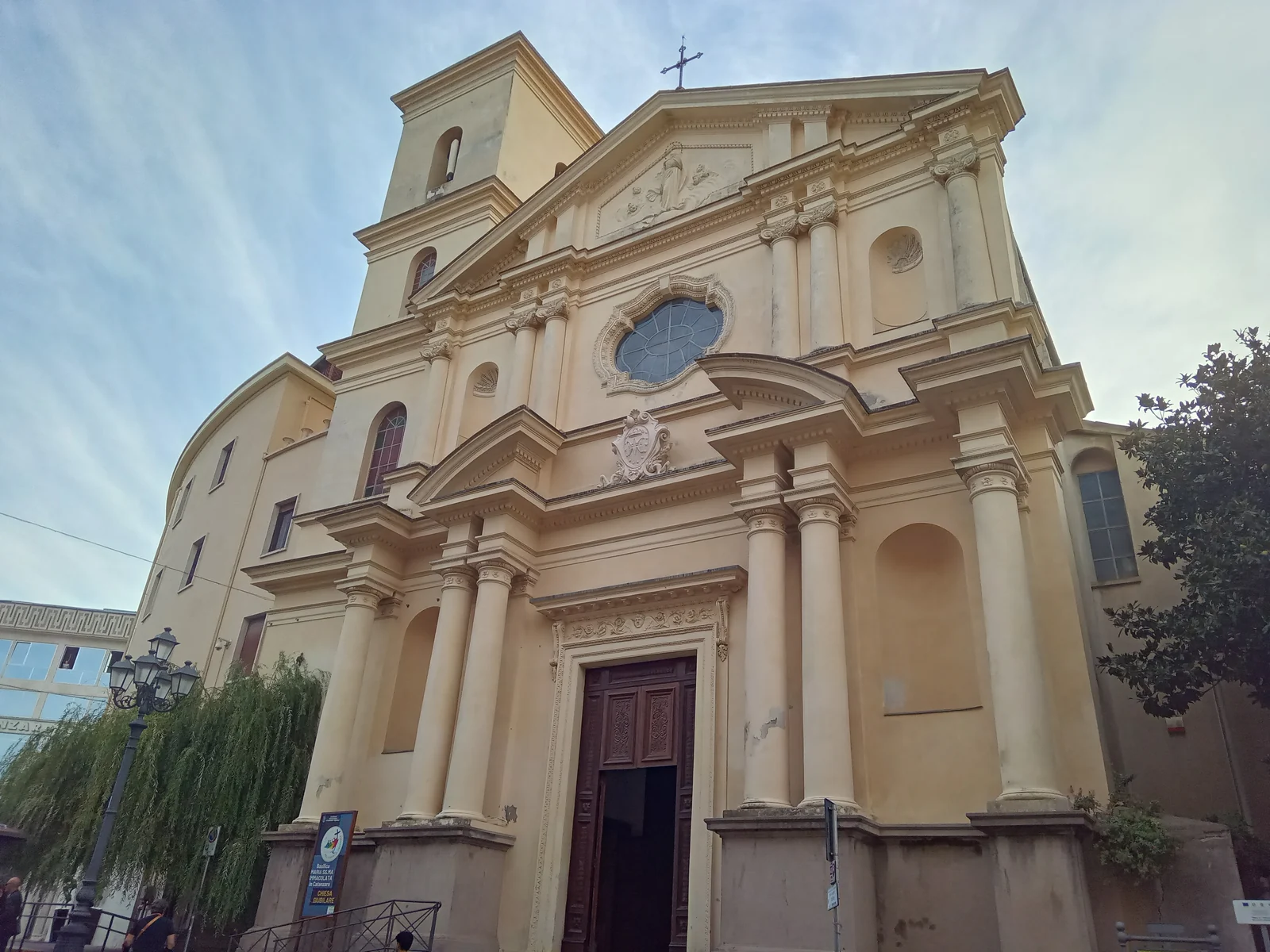
Photo: Nicholas_Gemini / Wikimedia Commons — CC BY-SA 4.0 · Resized and converted to WebP.
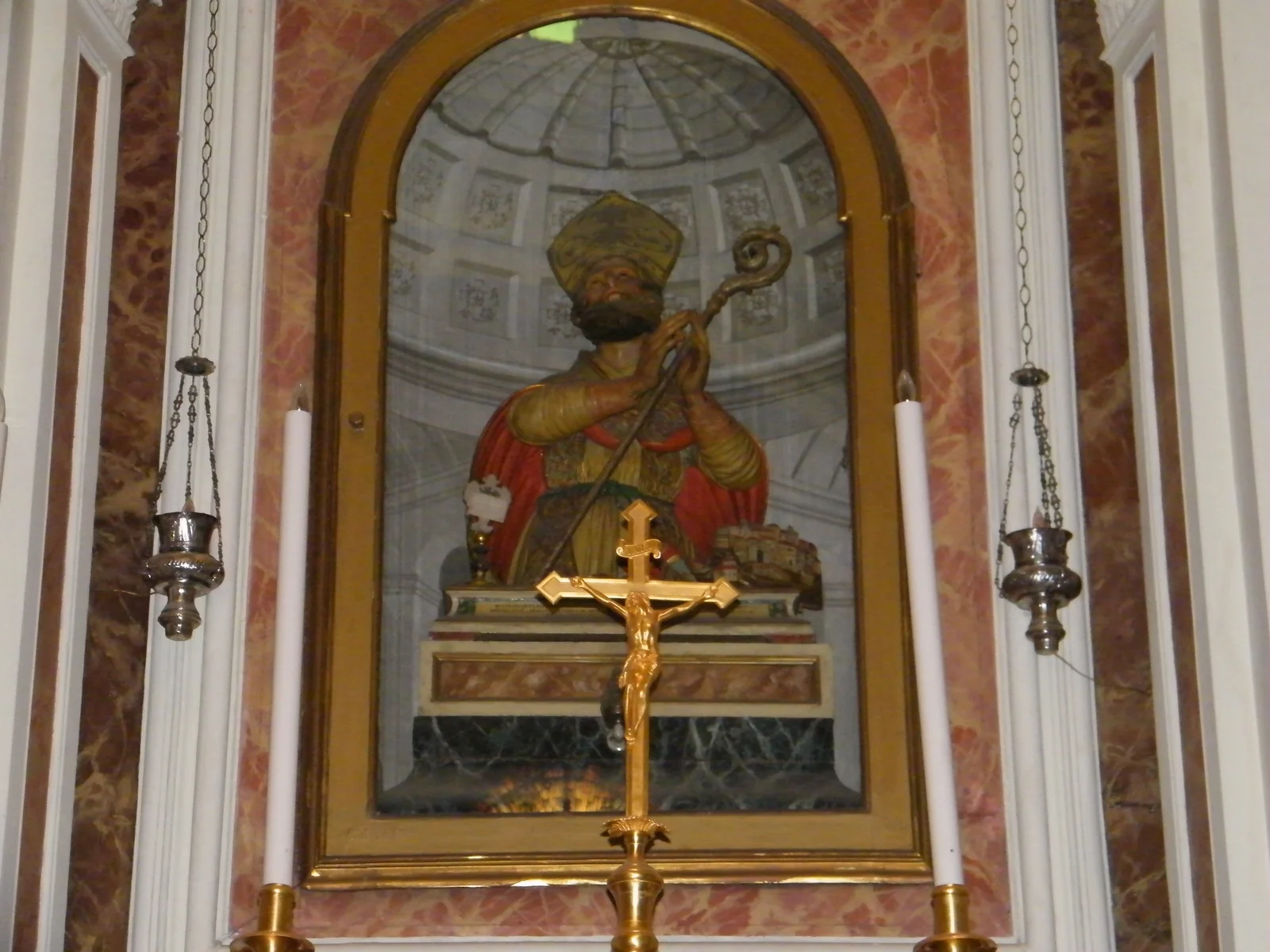
Photo: GJo / Wikimedia Commons — CC BY-SA 3.0 · Resized and converted to WebP.
Getting there and around
By car you arrive on the A2 motorway, exit Lamezia Terme, then along the SS280 "dei Due Mari", about 20 kilometres to Catanzaro; from the Ionian coast you take the SS106 Jonica, which leads straight to the seaside districts, and the SS18 links the city with the Tyrrhenian side, Cosenza and Vibo Valentia.
By air the airport the municipality points to is Lamezia Terme international airport, between the gulfs of Squillace and Sant'Eufemia, with buses from several operators, including Ferrovie della Calabria, to Catanzaro and Catanzaro Lido. By train, Lamezia Terme Centrale station, on the Tyrrhenian line, has high-speed, Intercity and regional services.
The city has two RFI stations. Catanzaro Lido, on the Ionian line, has five tracks, lifts, step-free and tactile routes, raised platforms for boarding and accessible toilets; assistance for people with disabilities is booked with the Reggio Calabria Sala Blu, up to twelve hours in advance. Catanzaro station has three tracks, a level step-free route and a tactile path to the platforms, raised platforms, a ticket office, a bar, a bus stop, bicycle parking and charging points.
To get around town, AMC runs 42 bus lines, the funicular between Catanzaro Sala and the old town and the panoramic lifts; Ferrovie della Calabria links Piazza Matteotti, in the centre, with Catanzaro Lido station, with stops in between.
The official website of the Comune di Catanzaro, registered in IndicePA, the index of the digital addresses of Italy’s public administrations, is the reference for the town council’s offices, opening hours and news. Its address is listed among the sources of this section.
For parking, AMC runs the blue-line spaces in the centre, such as Bellavista, Piazza Marconi, Via Acri and Via Milelli, at 1 euro an hour, the Campo Scuola car park, with 115 spaces, and at the Lido the Ente Fiera car park, with 450 spaces. Since 10 October 2026 Corso Mazzini, between Piazza Bernardino Grimaldi and Piazza Cavour, has been an urban pedestrian area with a limited traffic zone, called "Isola Ventidue": AMC links it by shuttle to the park-and-walk car parks of Normanni, Bellavista and Musofalo, and participating shops can give customers parking vouchers.
Buses, the funicular and the lifts use AMC fares: the standard ticket lasts 90 minutes, and the day ticket is also valid on the funicular. AMC gives a funicular service every 15 minutes; in June 2026 an AMC committee awarded the first lot of works on its mechanical, electromechanical and hydraulic equipment, which the municipality presents as a step towards fully restoring the funicular to the city's public transport.
For health care, the "Renato Dulbecco" university hospital has its seat at Via Tommaso Campanella 115, with the Pugliese hospital and the Mater Domini hospital at Germaneto; its website shows emergency department waiting times in real time.
Sources: Comune di Catanzaro, Visit Catanzaro — Come arrivare a Catanzaro in auto · Comune di Catanzaro, Visit Catanzaro — Aeroporto di Lamezia Terme · Comune di Catanzaro, Visit Catanzaro — Stazione Ferroviaria di Lamezia Terme · RFI — Stazione di Catanzaro Lido · RFI — Stazione di Catanzaro · AMC, Azienda per la Mobilità della Città di Catanzaro · Ferrovie della Calabria · Comune di Catanzaro, sito istituzionale · IndicePA (AgID), Indice dei domicili digitali delle pubbliche amministrazioni: dataset Enti · AMC Catanzaro: parcheggi e sosta · Comune di Catanzaro: area pedonale urbana e ZTL su corso Mazzini (8 ottobre 2026) · Comune di Catanzaro: nasce «Isola Ventidue», accordo tra AMC e Camera di Commercio (12 ottobre 2026) · AMC Catanzaro: tariffe bus, funicolare e ascensori · AMC Catanzaro, Azienda per la Mobilità della Città di Catanzaro: bus, funicolare, ascensori panoramici · Comune di Catanzaro: ammodernamento della funicolare, aggiudicati i lavori del lotto A (17 giugno 2026) · Azienda Ospedaliero-Universitaria «Renato Dulbecco» di Catanzaro · AOU «Renato Dulbecco»: accessi al pronto soccorso in tempo reale
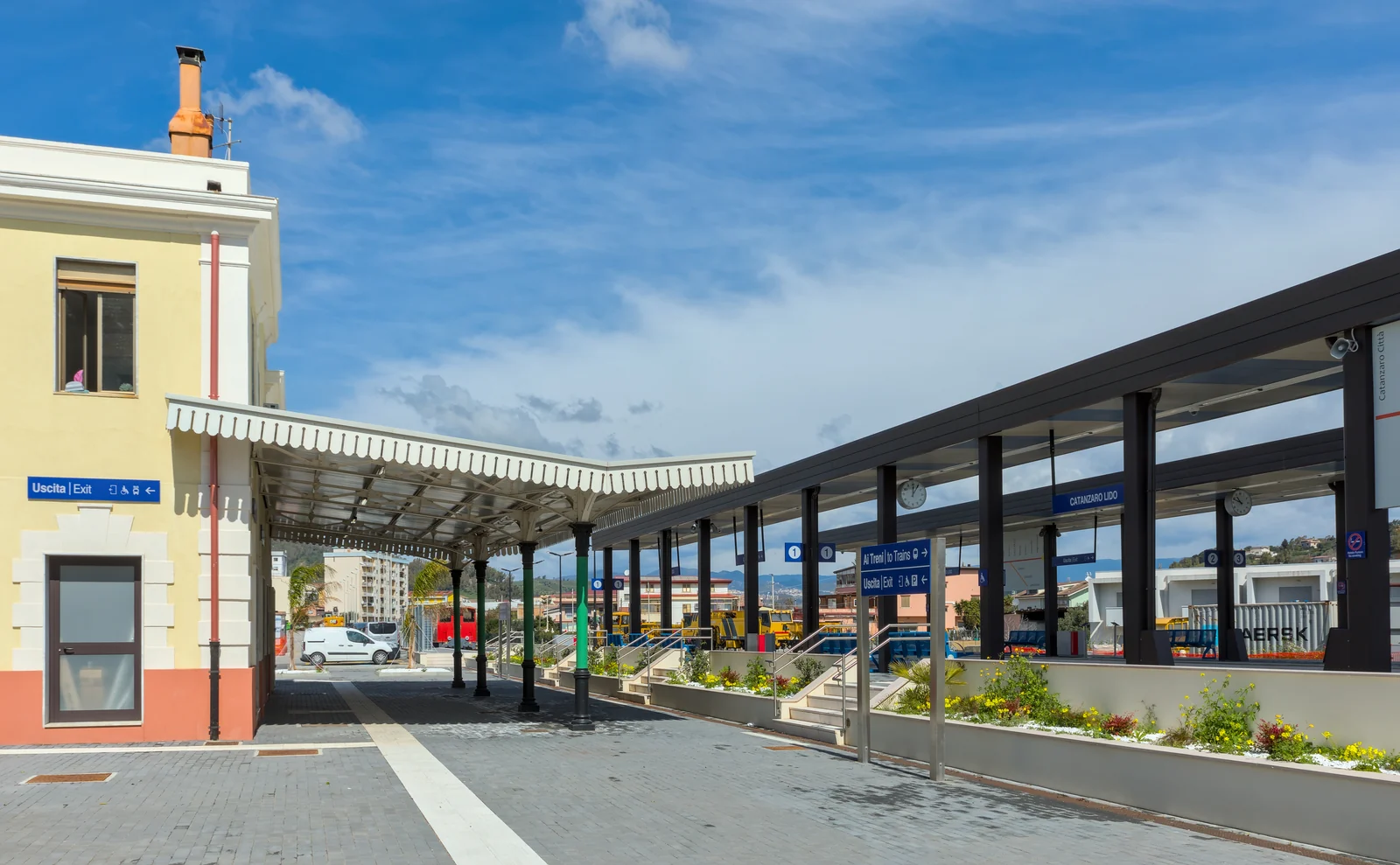
Photo: Benjamin Smith / Wikimedia Commons — CC BY-SA 4.0 · Resized and converted to WebP.
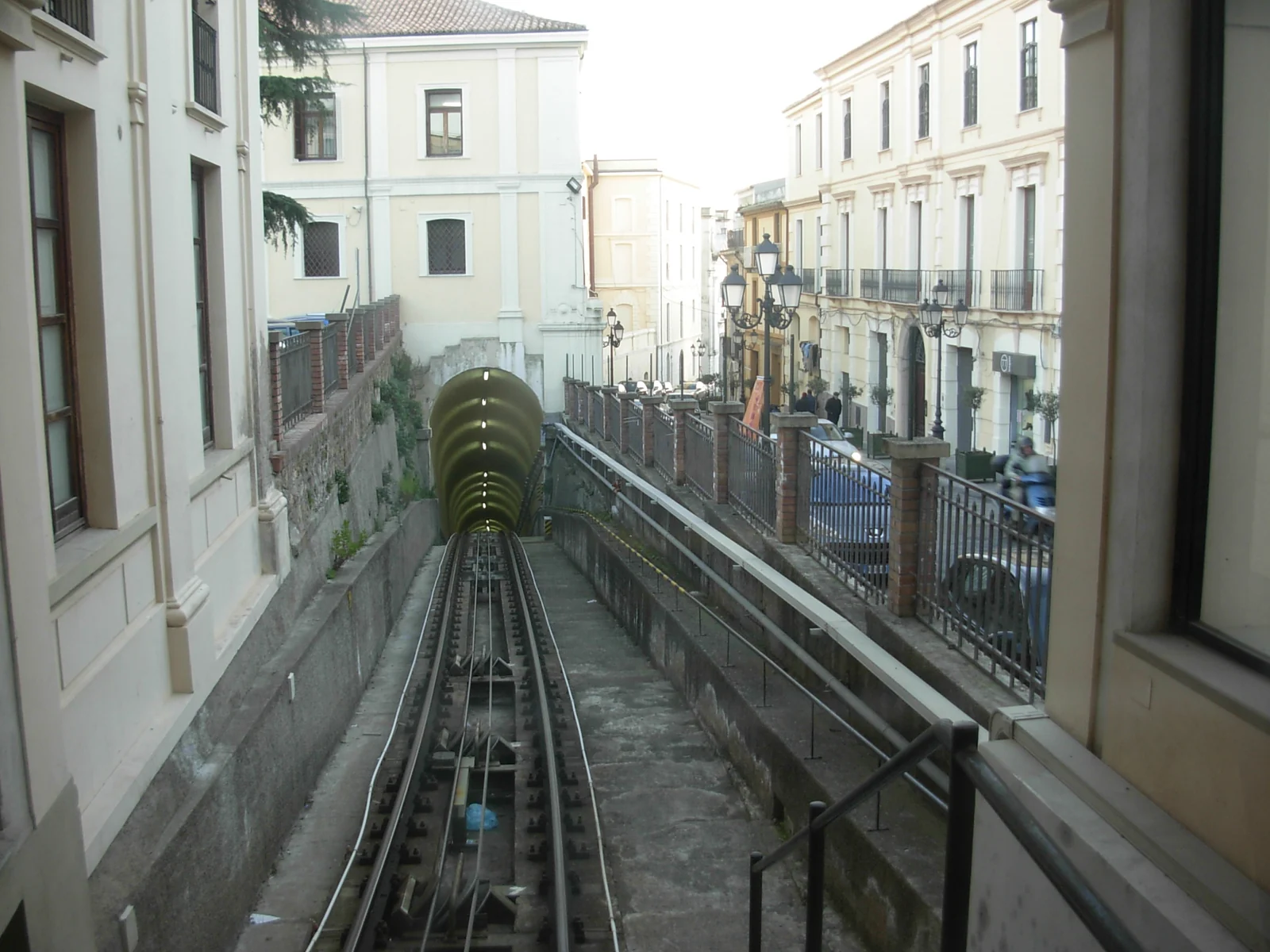
Photo: Salvatore Migliari / Wikimedia Commons — CC BY 3.0 · Resized and converted to WebP.
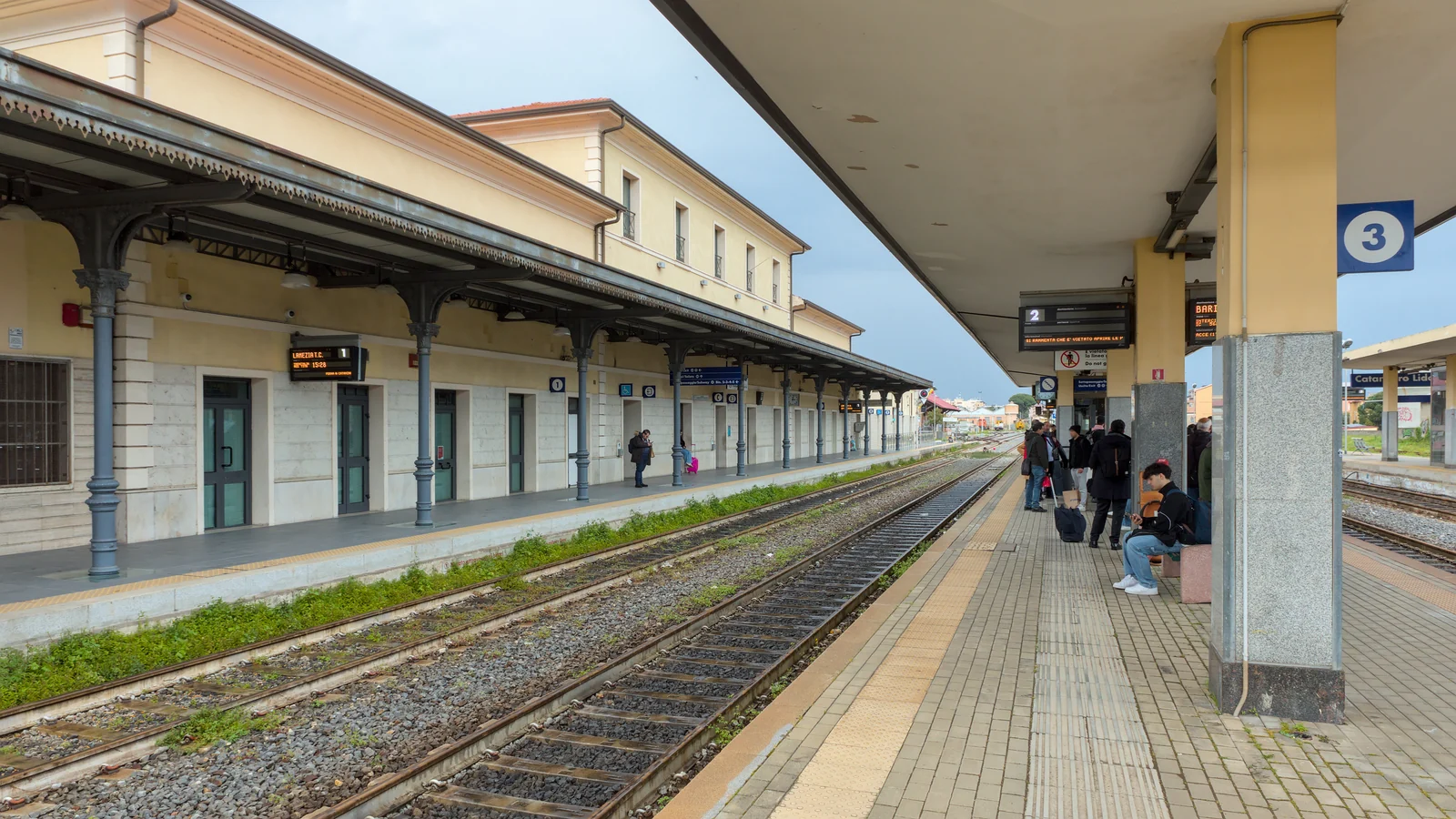
Photo: Benjamin Smith / Wikimedia Commons — CC BY-SA 4.0 · Resized and converted to WebP.
Tourism
Anyone staying overnight in Catanzaro who is not a resident, in a hotel, other accommodation or a short-term rental, pays the tourist tax, per person per night, for up to ten consecutive nights even when changing accommodation; those arriving from another accommodation in the town show its receipts. For 2026 the town executive confirmed the rates: 3 euros in five-star and higher hotels, 2.50 in four-star hotels, 2 in three-star hotels and in guest rooms and bed and breakfasts, 1.50 in one- and two-star hotels and in holiday homes, apartments and short-term rentals, 1 euro in farm stays, campsites, hostels and other accommodation. The 2023 regulation exempts among others under-18s, those coming to the town for medical visits and treatment and those assisting a hospital patient, with one companion (two if the patient is a minor), people with disabilities with one companion, school groups and students of the Magna Graecia University, on presenting the required documents; those over seventy pay half. The accommodation issues a numbered receipt in the guest’s name.
Sources: Comune di Catanzaro — Regolamento dell’imposta comunale di soggiorno (Delibera di CC n. 147 del 15 novembre 2023), dall’elenco degli atti tributari del Dipartimento delle Finanze · Comune di Catanzaro — Delibera di GC n. 699 del 12 dicembre 2025, tariffe dell’imposta di soggiorno per il 2026, dall’elenco degli atti tributari del Dipartimento delle Finanze
“Come to Catanzaro as a guest, not as a tourist: that is how these places truly let you know them.”
Where to stay
To stay in Catanzaro you choose between two different towns. In the old town, on the hill, you are close to the museums, Corso Mazzini, San Giovanni and the theatres, with the climbs to reckon with or the funicular to get there. At the Lido, about 13 kilometres away, hotels, bars and beach clubs line the seafront, and in summer the sea is on your doorstep; Catanzaro Lido station and the Ferrovie della Calabria line connect the two districts.
In the Ministry of Tourism’s national database of accommodation (BDSR), on 12 October 2026, Catanzaro had 114 establishments with a verified national identification code (CIN): 10 hotel-type establishments, 33 non-hotel establishments and 71 other establishments.
During Holy Week and the days of Saint Vitaliano, in mid-July, the old town fills up and some streets close to traffic: anyone coming on those dates does well to book early and check the municipality's traffic notices.
Sources: Comune di Catanzaro, Visit Catanzaro — Catanzaro Marina · Comune di Catanzaro — Lungomare «Stefano Pugliese» · AMC, Azienda per la Mobilità della Città di Catanzaro · Ferrovie della Calabria · Ministero del Turismo – Banca Dati Strutture Ricettive (dashboard pubblica) · Comune di Catanzaro — Settimana Santa, ordinanze traffico e sosta per giovedì 2 e venerdì 3 aprile (2026) · Comune di Catanzaro — «Tutti festeggiano San Vitaliano» (2026)
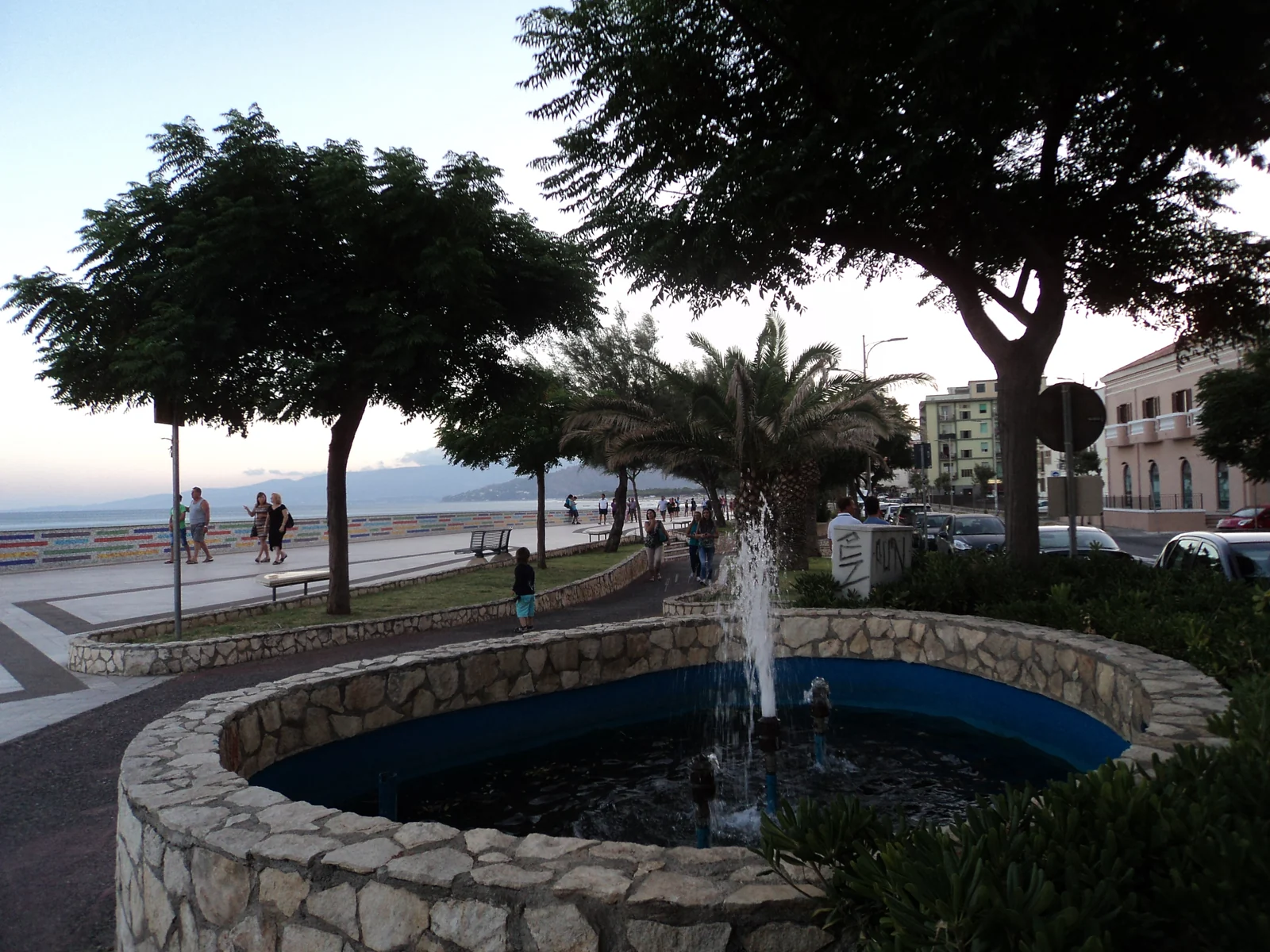
Photo: Nicholas Gemini / Wikimedia Commons — CC BY-SA 4.0 · Resized and converted to WebP.
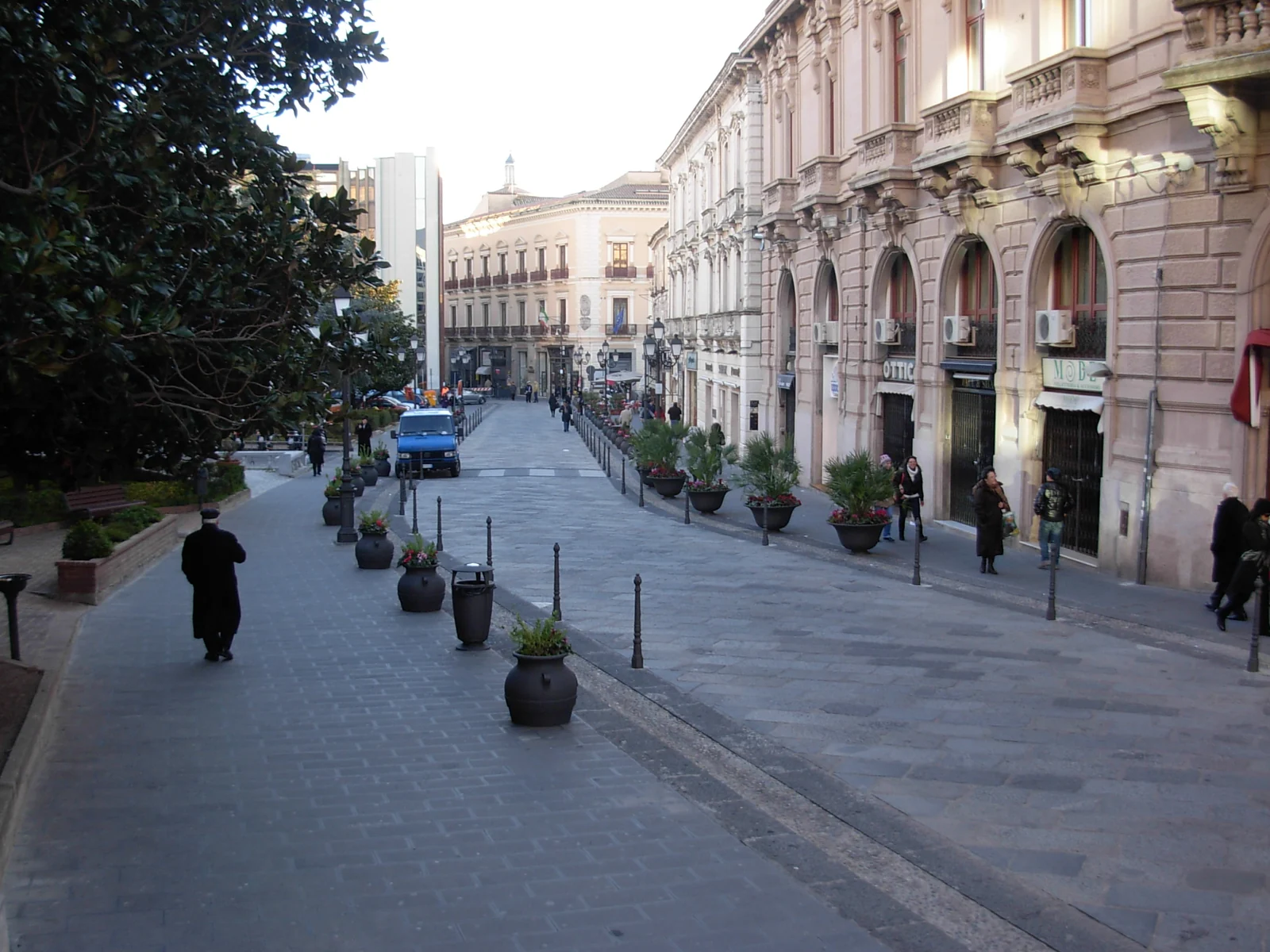
Photo: Salvatore Migliari / Wikimedia Commons — CC BY 3.0 · Resized and converted to WebP.
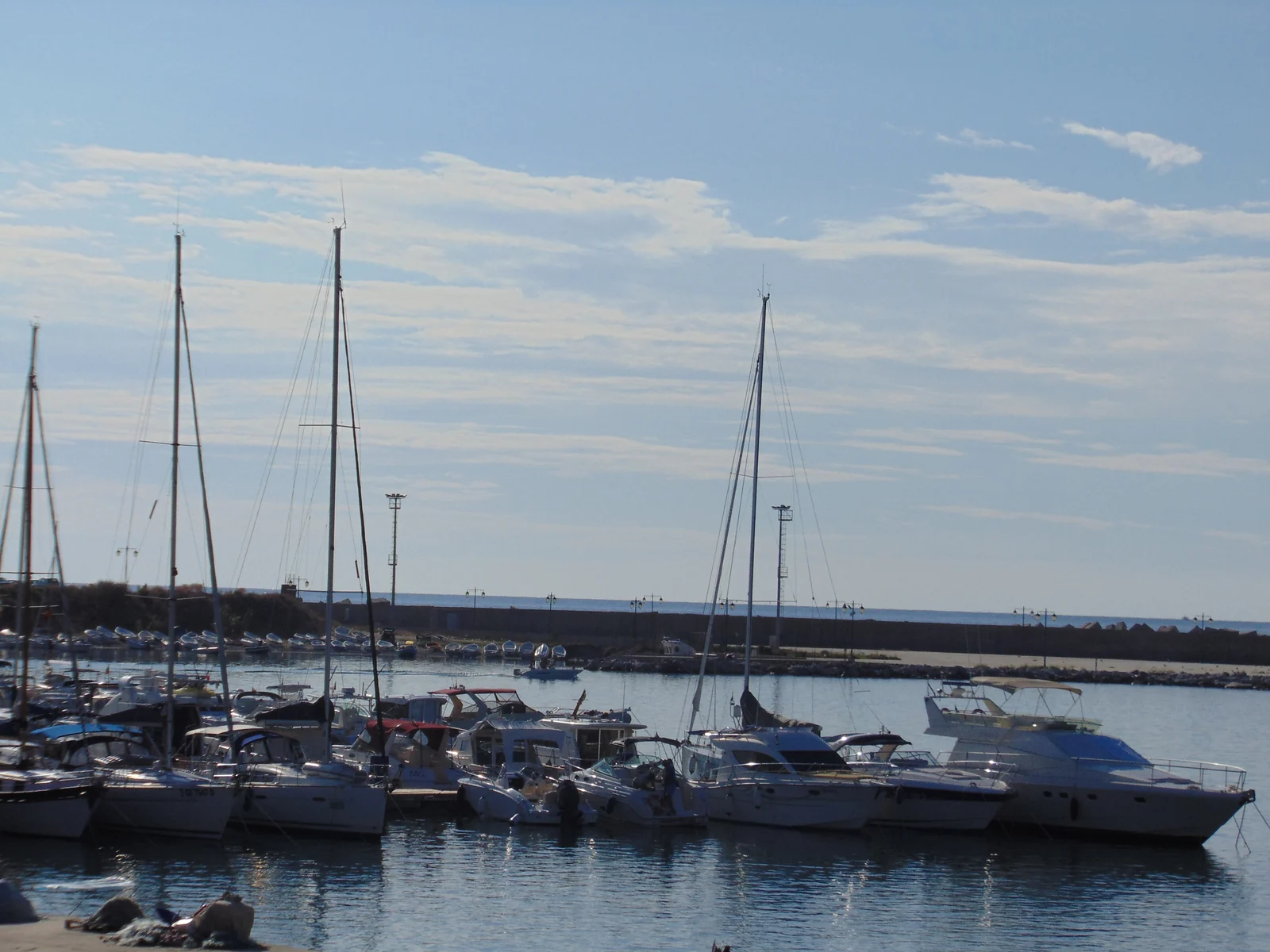
Photo: Nicholas Gemini / Wikimedia Commons — CC BY-SA 4.0 · Resized and converted to WebP.
Nearby
The municipal territory reaches the sea. At Giovino, in the Lido district, the dunes cover 15.5 hectares between the mouths of the Castace and Alli streams and the Corace river: sea daffodils flower there, Kentish plovers and loggerhead turtles nest, and today they form the "Le Dune di Giovino" regional nature reserve. Keep to the paths and leave the wildlife undisturbed. On the hill above the Lido, the Torre Cavallara is a square coastal tower, with the stable on the ground floor and the garrison upstairs, reached by an outside stair and a drawbridge; from the clearing the view takes in the Gulf of Squillace from Isola Capo Rizzuto to Punta Stilo.
Just beyond the Lido, at Roccelletta di Borgia, the Scolacium National Archaeological Museum and Park tells, among the olive trees, the story of Greek Skylletion, the Roman colony of Minervia Scolacium, the Byzantine settlement and the great Norman abbey that was never finished; the museum opened in 2005.
Inland, from the heights of Tiriolo and Marcellinara you can see both seas, as from Catanzaro, and the Marcellinara saddle, at 250 metres, is the lowest point of the Calabrian Apennines. Further north the Sila begins, the national park plateau that Apulica describes on its own page.
For the path network of the Dune di Giovino regional nature reserve the municipality obtained 100,000 euros of regional funding in 2026; the Region supports the running of the reserve with an ordinary grant.
The Scolacium park lies in the municipality of Borgia, not in Catanzaro, and is a state museum of the Regional Directorate of National Museums of Calabria. Visitors see the forum, whose brick paving has no equal in the Roman world, the remains of the curia, the Caesareum and the Capitolium, a 3,500-seat theatre and the only Roman amphitheatre in Calabria; the museum holds a cycle of Roman statues and portraits and a colossal bronze forearm, and the visit ends at the olive press built in 1934 by the Mazza family.
Sources: Comune di Catanzaro, Visit Catanzaro — Le Dune di Giovino · Comune di Catanzaro, Visit Catanzaro — Torre Cavallara · Comune di Catanzaro, Visit Catanzaro — Museo Archeologico Nazionale di Scolacium · Comune di Catanzaro, Visit Catanzaro — L’Istmo di Catanzaro: il ponte naturale tra Tirreno e Ionio · Comune di Catanzaro: Riserva naturale regionale delle Dune di Giovino, 100mila euro per la rete sentieristica (29 maggio 2026) · Regione Calabria: L.R. 28/2025, gestione e funzionamento della Riserva naturale regionale «Le Dune di Giovino», contributo ordinario 2025 · Ministero della Cultura, Direzione regionale Musei nazionali Calabria: Museo e Parco archeologico nazionale di Scolacium
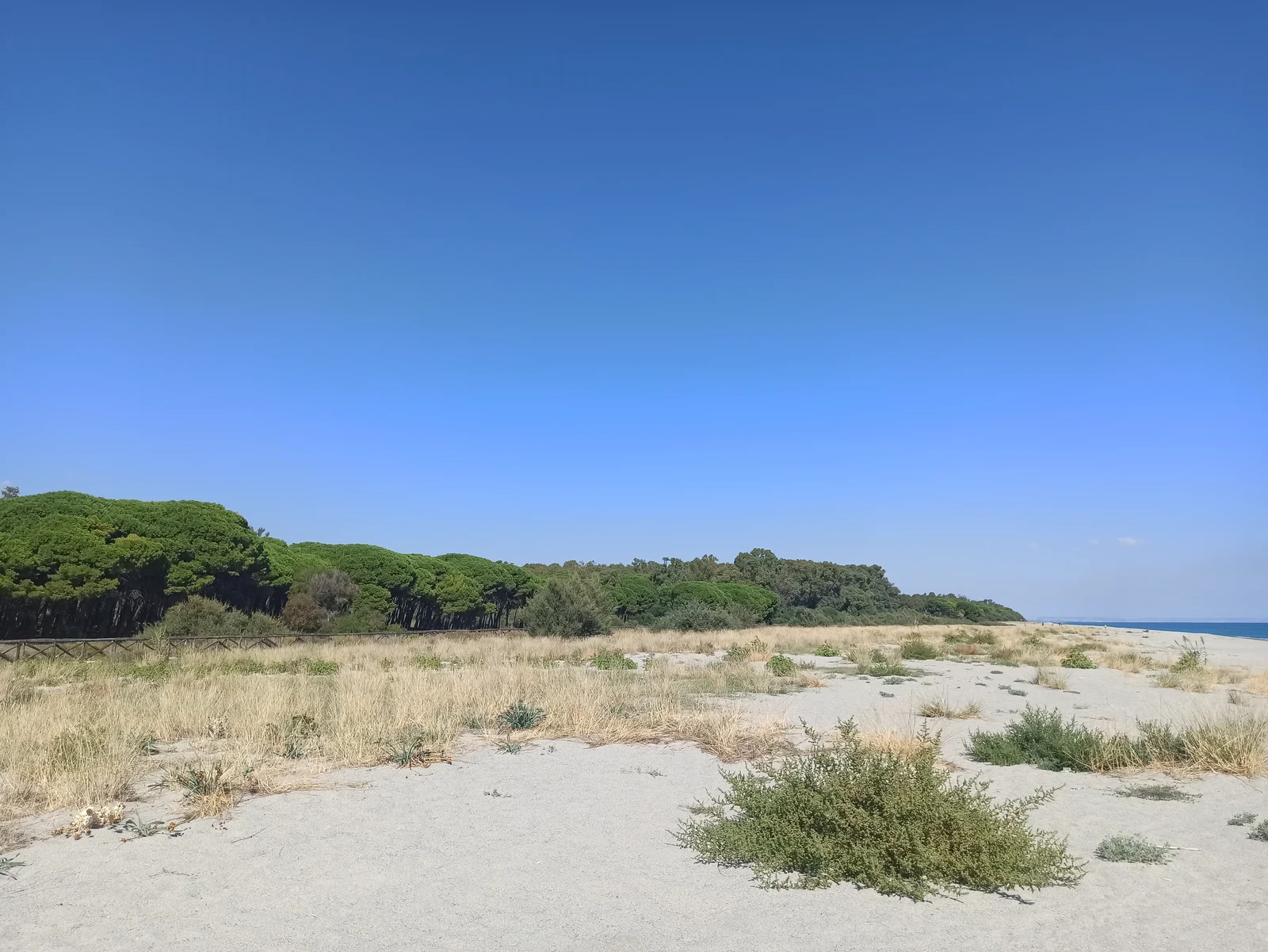
Photo: Ildivisore2 / Wikimedia Commons — CC BY-SA 4.0 · Resized and converted to WebP.
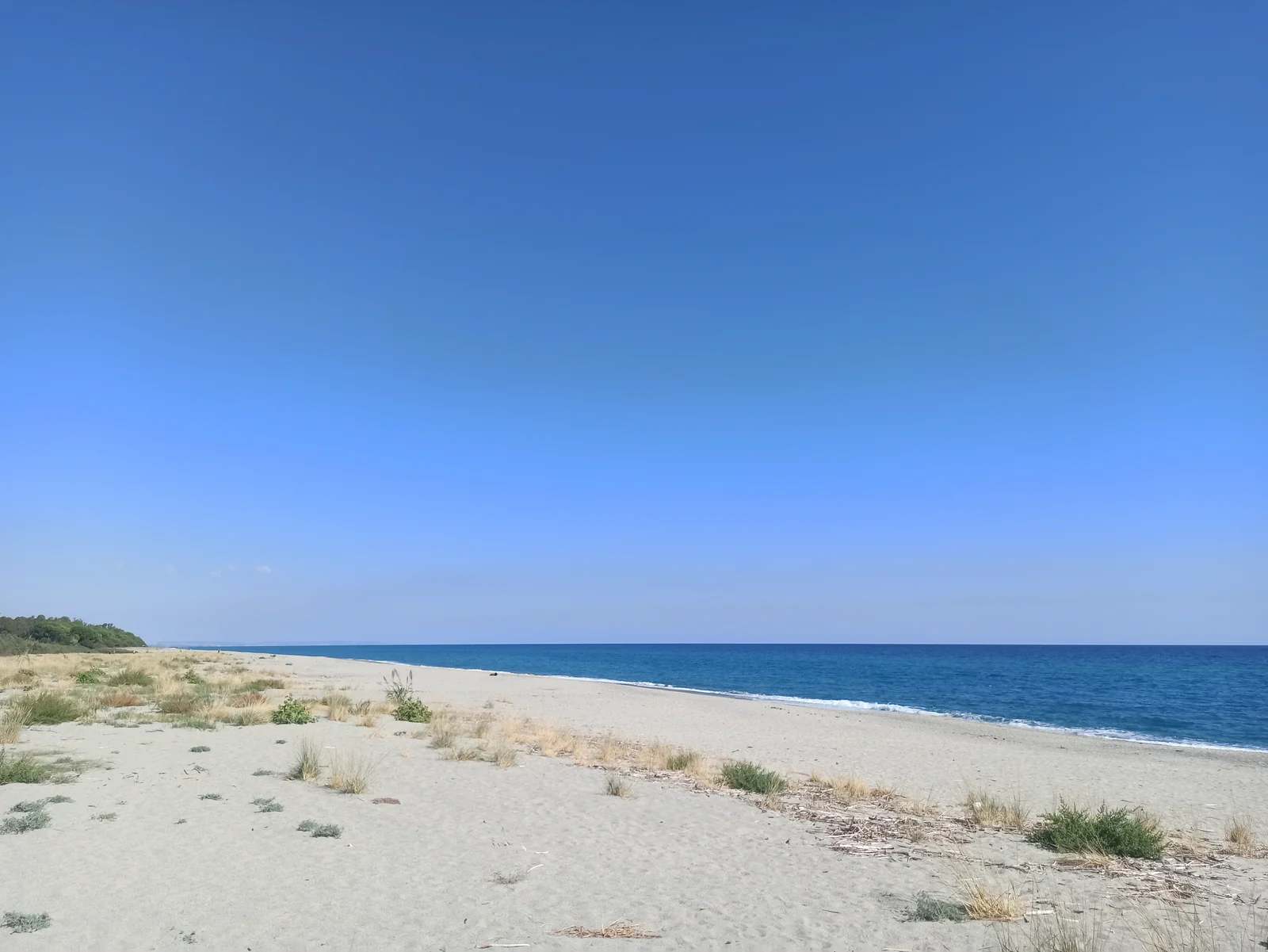
Photo: Ildivisore2 / Wikimedia Commons — CC BY-SA 4.0 · Resized and converted to WebP.
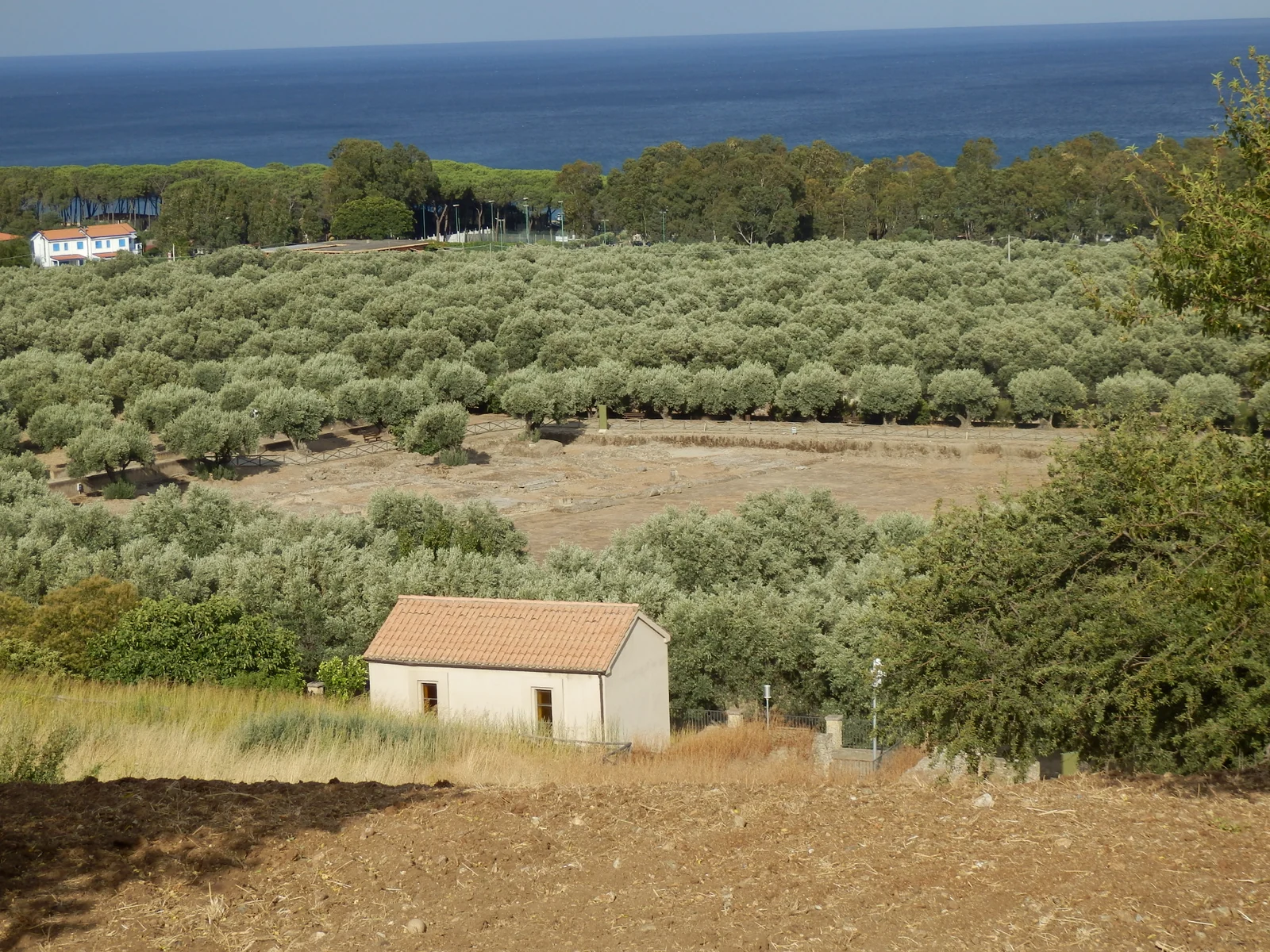
Photo: Michelvincenzo / Wikimedia Commons — CC BY-SA 4.0 · Resized and converted to WebP.
Where to stay
In the municipality of Catanzaro the national database of the Ministry of Tourism lists 114 accommodation businesses with a verified CIN code: 10 hotels, 33 other licensed accommodation and 71 other types such as B&Bs and private rentals.
Licensed businesses from the official list of accommodation named as the source in this section. Where the list gives it, the property's official identification code appears next to its name: the national CIN code, or the code assigned by the Region or by the body that keeps the list. Private individuals are not listed. This list is the official census of licensed businesses, not a list of Apulica partners: to stay in Catanzaro you do not have to check one property after another yourself; write to Apulica and we look for the stay that suits your journey, checking availability and conditions before any confirmation.
GRAND HOTEL PARADISO
Hotel · ★★★★★
CIN IT079023A1FDJ9KYGN
Azienda Agricola Mazzei
Farm stay
Regional agritourism list 2023
B&B ANGELO AZZURRO
B&B
CIN IT079023B4D9T4P7ZW
A DUE PASSI DAL MARE
Guest rooms
CIN IT079023B4BYPN3N6A
LE 2 PALME
Holiday home
CIN IT079023B442COTCSG
ALTAVILLA
Hotel · ★★★★
CIN IT079023A1HKR68PNY
Azienda Agricola Pavone
Farm stay
Regional agritourism list 2023
B&B DOMUS
B&B
CIN IT079023B4PLSGZNRQ
B&BIOSPA
Guest rooms
CIN IT079023B4OSDGRKZK
LUXHOME
Holiday home
CIN IT079023B457SNQT7U
First the places that presented themselves to Apulica, the latest first; then one place of each type in turn, by official category and stars, then by name. No position is paid for.
All 45 entries in alphabetical order
Page 1 of 5
| Name | Type | Identification code |
|---|---|---|
| A DUE PASSI DAL MARE | Guest rooms | IT079023B4BYPN3N6A |
| ALTAVILLA | Hotel | IT079023A1HKR68PNY |
| Azienda Agricola Mazzei | Farm stay | Regional agritourism list 2023 |
| Azienda Agricola Pavone | Farm stay | Regional agritourism list 2023 |
| Azienda Agricola Raffaella | Farm stay | Regional agritourism list 2023 |
| Azienda Alli - Bagattera - Cucullera | Farm stay | Regional agritourism list 2023 |
| B&B ANGELO AZZURRO | B&B | IT079023B4D9T4P7ZW |
| B&B DOMUS | B&B | IT079023B4PLSGZNRQ |
| B&B OLTREMARE GIOVINO | B&B | IT079023B4P3Y4HOMM |
| B&B VILLA GIGLIO HOSPITAL | B&B | IT079023B49B9CXLGS |
Ask Apulica for a stay in Catanzaro We reply shortly, within a few hours at most, with a proposal for you to consider.
Sources: Ministero del Turismo – Banca Dati Strutture Ricettive (dashboard pubblica), 2026-10-12
YOUR JOURNEY
How to shape a journey here
We can organise a guided visit of the city, from San Giovanni to the museums and the Castle Galleries, or a trip for Holy Week or Saint Vitaliano, with transfers from Lamezia Terme airport, to Scolacium and to the Sila. For a trip, a guide or a transfer you can write to Apulica with the button below.
Plan your tripKeep exploring
Sila
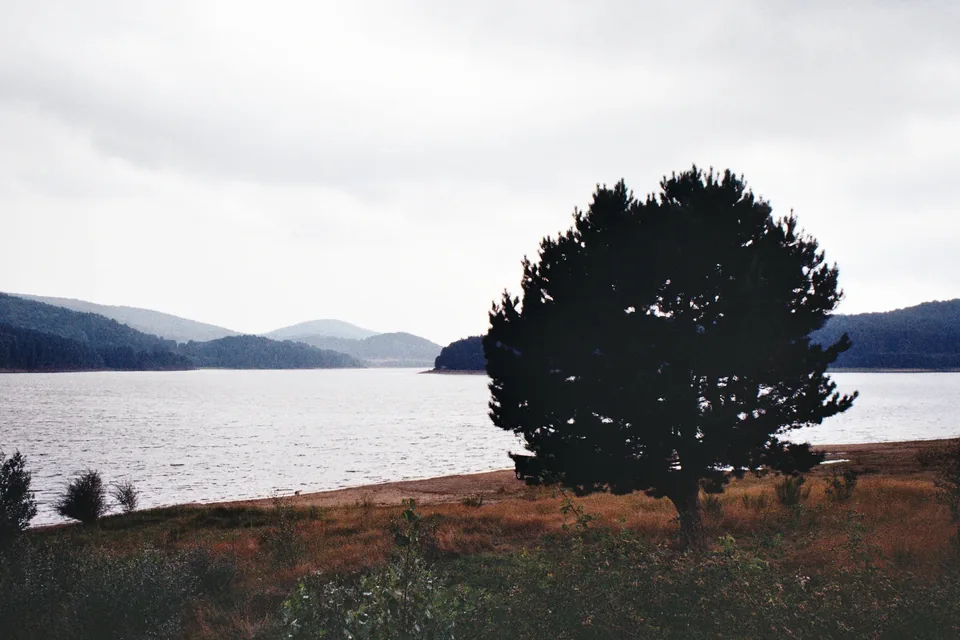
Sila National Park: a plateau of forests, lakes and pastures between Cosenza, Catanzaro and Crotone, and a UNESCO biosphere reserve.
Read the guide →Photo: Ugo Leonetti / Wikimedia Commons — CC BY-SA 4.0 · Resized and converted to WebP.

Pizzo
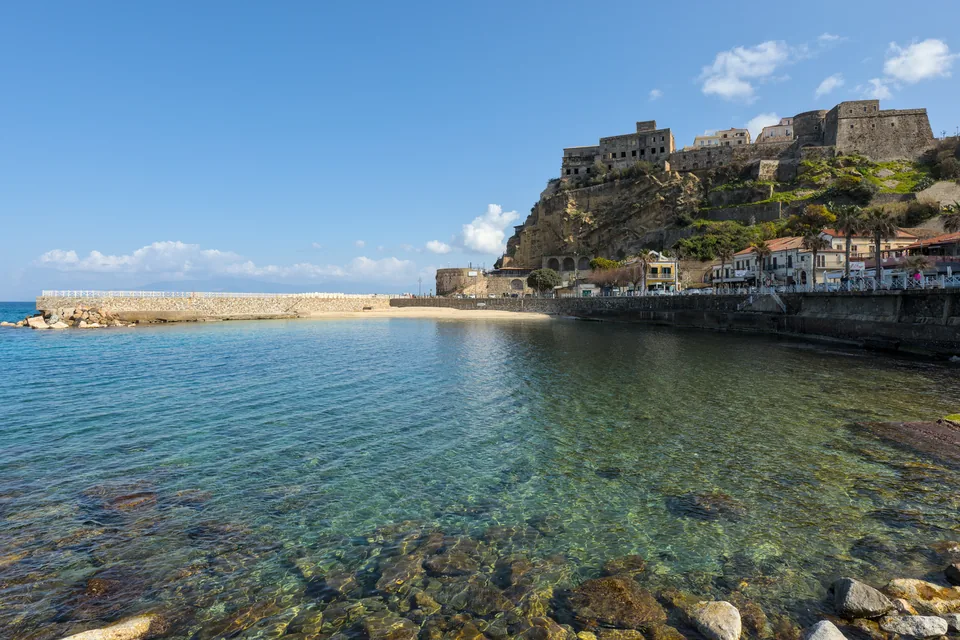
Pizzo (VV), Calabria: 8,744 residents, 22.76 km². The official facts of the municipality, its town council website and its registered accommodation. The Aragonese castle where Joachim Murat was shot, the little church of Piedigrotta carved out of the tuff by the sea, the Tartufo di Pizzo ice cream and the beaches of the Costa degli Dei.
Read the guide →Photo: Benjamin Smith / Wikimedia Commons — CC BY-SA 4.0 · Resized and converted to WebP.
